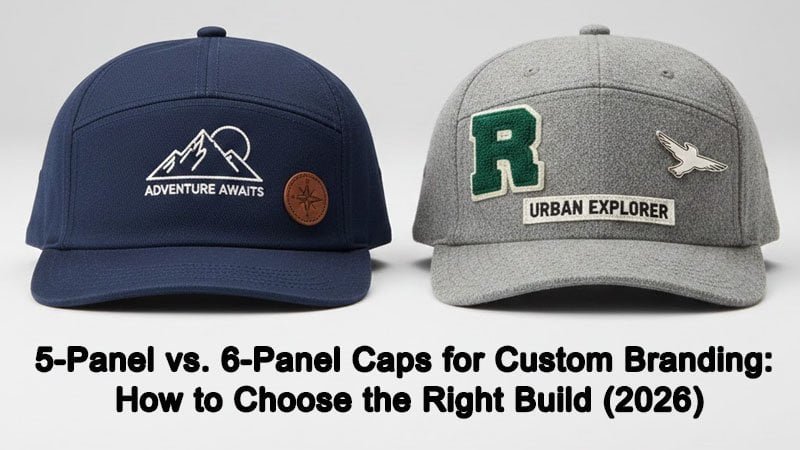
If you’re sourcing custom caps for a brand drop, team program, or promotional campaign, choosing between a 5-panel and 6-panel cap is not just a style decision—it impacts logo performance, fit comfort, production feasibility, cost, and ultimately customer satisfaction.
At GUANGZHOU EASTLUCKY Hat & Garment Co., Ltd., we’ve spent 15 years manufacturing high-end custom headwear and embroidered accessories for global clients. Guided by our philosophy “Quality as Root, Innovation as Soul,” we provide one-stop OEM/ODM solutions—from design and sampling to mass production—helping brands run an efficient, high-quality supply chain.
This guide is written like a sourcing checklist: clear, practical, and designed to help you choose the right cap build for your audience and your customization goals.
Quick Definition: What “Panels” Really Mean
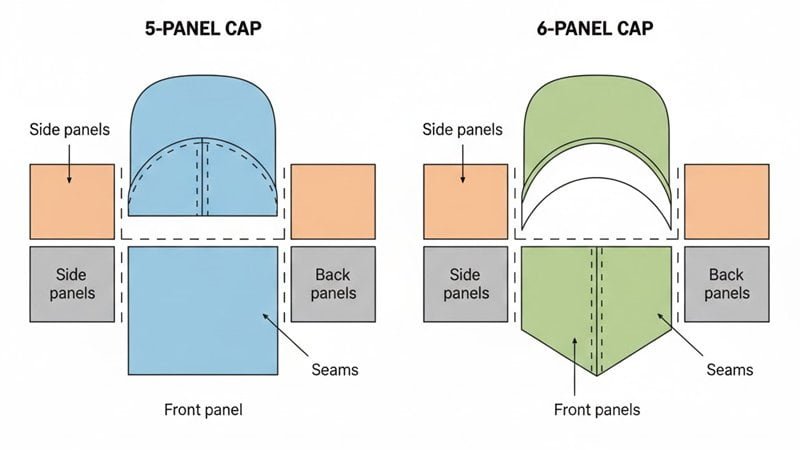
A cap “panel” is one of the fabric sections stitched together to form the crown (the top of the hat). Panel count influences:
-
Seam layout (especially on the front)
-
Crown contour and overall silhouette
-
Branding real estate and how graphics sit on the cap
Pro note: Panel count affects seam placement and contour, but real-world fit is primarily driven by crown height, structure (stiff vs. soft), and closure range.
Construction: 5-Panel vs. 6-Panel at a Glance
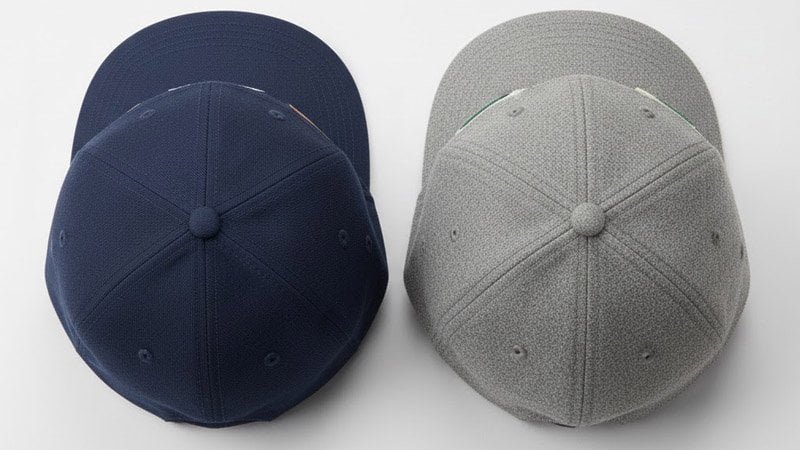
5-Panel Cap (Clean Front Canvas)
Most 5-panel caps feature:
-
1 large front panel (typically seam-free down the center)
-
2 side panels
-
2 back panels
-
Often a flatter, streetwear-forward silhouette (common in camp cap builds)
Best for: bold graphics, clean layouts, modern “drop” aesthetics.
6-Panel Cap (Classic Baseball Structure)
A 6-panel cap typically includes:
-
2 front panels with a center seam
-
2 side panels
-
2 back panels
-
Wide styling range from relaxed to structured “baseball” builds
Best for: classic branding, teams, and versatile everyday wear.
“Build” Options Checklist (What You’re Actually Choosing)
When buyers say “we need a custom cap,” what they really need is a build spec. Here are the core build options that define how your caps look, fit, and decorate:
-
Panel count: 5 / 6
-
Crown height (profile): low / mid / high
-
Structure: structured / unstructured (front reinforcement)
-
Brim: flat / curved (plus stitch lines if needed)
-
Closure: snapback / metal buckle / velcro / fitted
-
Fabric: cotton twill / canvas / nylon / polyester / mesh / corduroy, etc.
If you can align these six items early, sampling becomes faster and production results become far more consistent.
What Actually Determines Fit & Comfort (The 6 Variables Buyers Should Know)
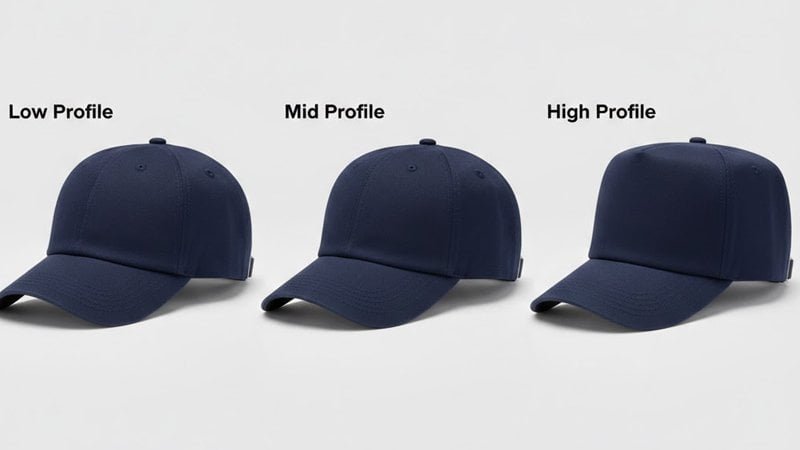
Panel count shapes the crown, but these variables decide whether customers keep the hat—or return it.
1) Crown Height (Low / Mid / High)
-
Low profile: closer to the head, modern and sleek
-
Mid profile: balanced, fits most head shapes
-
High crown: more volume, stronger presence, common in snapback and trucker looks
Sourcing tip: If your customers include larger head sizes or high hair volume, avoid overly low crowns unless you test fit.
2) Structure (Structured vs. Unstructured)
-
Structured: reinforced front that holds shape and looks crisp on shelf and camera
-
Unstructured: softer “dad hat” feel for relaxed, long-wear comfort
3) Brim Shape (Flat vs. Curved)
-
Flat brim: streetwear, statement vibe
-
Curved brim: classic and broadly wearable
4) Closure Type (Fit Range Matters)
-
Snapback (plastic)
-
Strapback (fabric)
-
Metal buckle (often premium)
-
Velcro (quick adjustment)
-
Fitted/elastic (clean look, size-specific)
5) Sweatband & Inner Taping (Comfort + Durability)
Upgraded sweatbands and clean internal finishing reduce complaints in warm climates and long-wear use.
6) Front Panel Reinforcement (Key for Decoration)
Reinforcement affects:
-
embroidery sharpness
-
puckering risk
-
shape retention after wear and washing
Branding & Decoration: What Works Best on Each Build
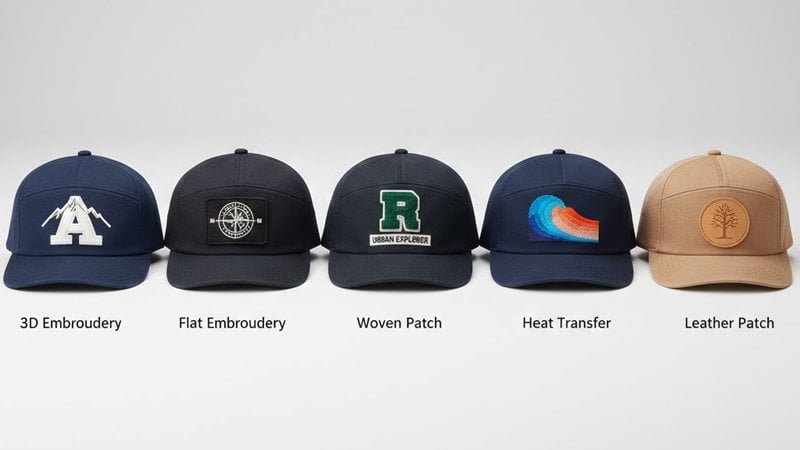
In custom branding, decoration success depends on the front surface, structure, and seam placement. Generally:
-
5-panel builds shine with clean, uninterrupted graphic layouts.
-
6-panel builds excel with classic front embroidery and patch programs.
Recommended Logo Size & Placement (Practical Ranges)
These are typical ranges for front branding (final depends on crown height and cap size):
-
Front embroidery / patch area: approx. W 6–11 cm × H 3–6 cm
-
Left/right side logo: approx. W 5–8 cm × H 2–4 cm
-
Back logo above closure: approx. W 4–7 cm × H 1–3 cm
If you’re unsure, send a reference photo—our pattern team can propose the safest placement and scale for your build.
The Center Seam Factor (6-Panel)
Because 6-panel caps have a front center seam, wide graphics and large text can face:
-
alignment challenges
-
slight distortion depending on structure and fabric
-
visual interruption of fine lines
OEM tip: We can optimize artwork placement, patch sizing, and reinforcement to minimize seam impact—especially for premium logo presentations.
Decoration Methods Mini-Table (Fast Sourcing Reference)
| Method | Best For | Works Best On | Notes / Risks |
|---|---|---|---|
| 3D Embroidery | Bold logos, athletic branding | Structured fronts (often 6-panel or reinforced 5-panel) | Softer fronts can pucker; stitch density must be managed |
| Flat Embroidery | Clean, premium logos | Most builds | Fine text needs good stabilization and correct needle count |
| Woven/Embroidered Patch | High detail, heritage look | Structured fronts | Consider seam alignment on 6-panel front |
| Heat Transfer | Full-color graphics, gradients | Clean, flatter front surfaces (often 5-panel) | Fabric heat sensitivity; edge lifting if low-quality film |
| Screen Print | Simple shapes, large fills | Flat areas with stable fabric | Not ideal for complex gradients; surface texture matters |
| Leather/PU Patch | Premium outdoor / workwear | Structured fronts | Thickness affects stitch line; placement planning is key |
Use Cases: What to Choose by Scenario
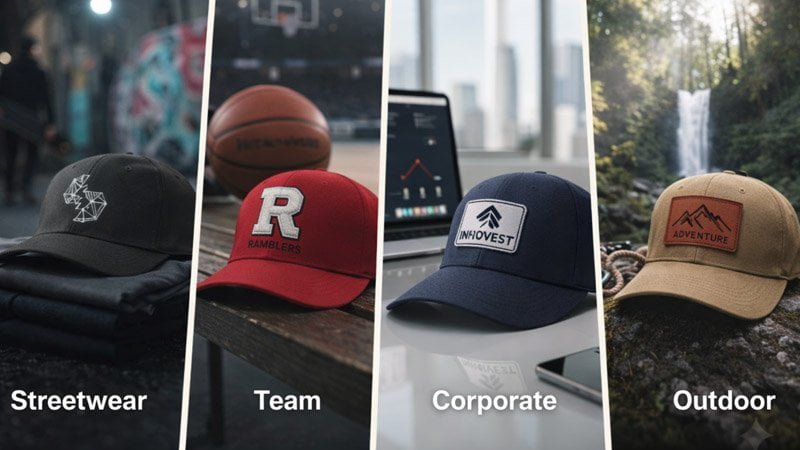
Choose a 5-Panel Build If You Want:
-
Streetwear or modern brand drops
-
Bold graphics and cleaner front layouts
-
A fashion-forward silhouette for lifestyle wear
-
A strong “clean canvas” branding effect
Choose a 6-Panel Build If You Want:
-
Classic baseball cap identity
-
Team programs, uniforms, and evergreen retail styles
-
Embroidery-heavy or patch-driven branding
-
Broad mainstream appeal across many head shapes
Buyer Decision Tree (Fast Selection)
Choose 5-Panel if most of these are “YES”:
-
I want a cleaner front surface for graphics/printing.
-
The design is wide, bold, and needs a flatter visual canvas.
-
The brand style is modern casual, streetwear, or drop culture.
Choose 6-Panel if most of these are “YES”:
-
I want a classic baseball cap feel.
-
The logo is embroidery-heavy or patch-driven.
-
I need a build that fits a broad consumer range.
-
This is for teams, uniforms, corporate gifts, or staple retail.
Common OEM/ODM Questions (That Reduce Risk)
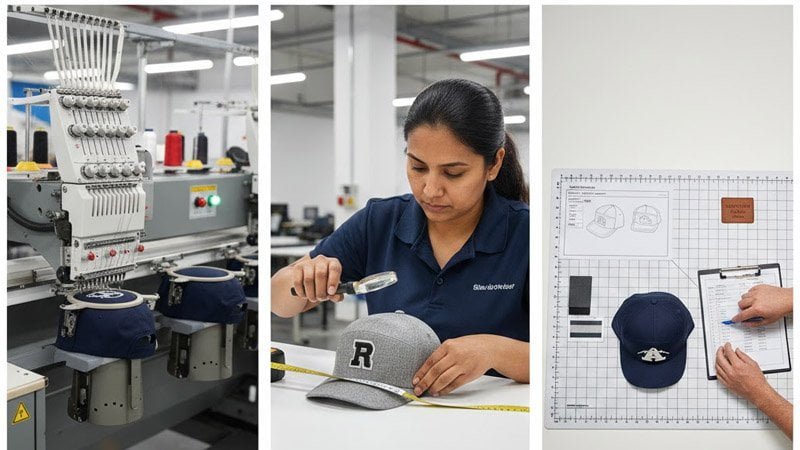
Can I do big prints on a 6-panel cap?
Yes, but plan around the seam. We typically recommend:
-
resizing and repositioning artwork
-
selecting the correct decoration method
-
reinforcing the front to reduce distortion
Which looks more premium: embroidery or patch?
It depends on your brand language:
-
3D embroidery: bold, modern, sporty
-
woven patch: sharp detail and fine lines
-
leather patch: premium outdoor / heritage tone
How do I reduce sampling mistakes?
Most issues come from missing spec details. If you provide the build and decoration plan early, sampling becomes faster and results are more predictable.
Quick Comparison Table
| Feature | 5-Panel Cap | 6-Panel Cap |
|---|---|---|
| Front Look | Cleaner front canvas (often no center seam) | Center seam creates classic structure |
| Typical Style | Modern, streetwear, camp-cap vibe | Traditional baseball / versatile casual |
| Best for Branding | Bold graphics, clean layouts, heat transfer/print | Embroidery, patches, classic logos |
| Fit Outcome | Depends heavily on crown height/structure/closure | Often broadly accepted across head shapes |
| Best Use | Lifestyle drops, casual wear | Teams, uniforms, retail staples |
Why Work With GUANGZHOU EASTLUCKY Hat & Garment Co., Ltd.
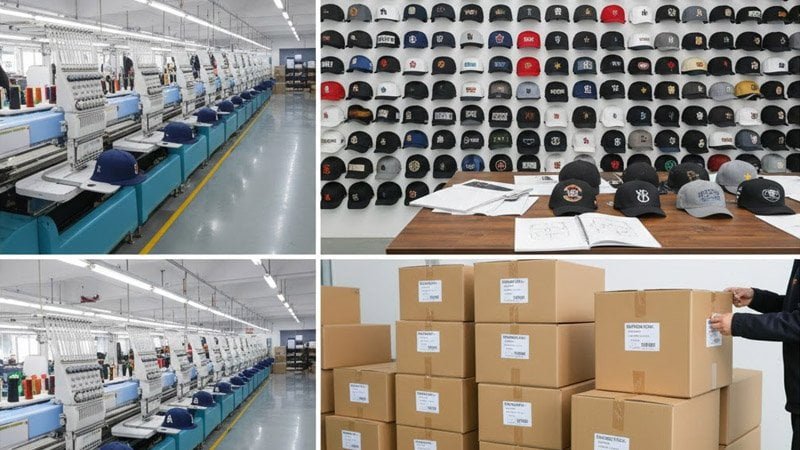
With 15 years of expertise in high-end custom hats and embroidered accessories, EASTLUCKY supports global brands with a quality-first, production-ready OEM/ODM workflow:
-
R&D and pattern development to match your target fit and silhouette
-
Efficient sampling → approval → mass production process for stable delivery
-
Decoration expertise across flat/3D embroidery, patches, and printing methods
-
Quality management aligned with “Quality as Root, Innovation as Soul”—focused on logo clarity, stitching strength, and consistent workmanship
-
Support for labels, packaging, and brand presentation to fit retail or promotional needs
If you’re building a cap line that needs both strong branding performance and reliable production, we’re ready to support you.
Request a Quote (RFQ Checklist for Fast Pricing)
To quote accurately and quickly, send the following:
-
Cap type: 5-panel / 6-panel
-
Build: crown height (low/mid/high) + structured/unstructured
-
Fabric & color: (and mesh if needed)
-
Brim: flat/curved + stitch lines (if any)
-
Closure: snapback / buckle / velcro / fitted
-
Decoration: flat/3D embroidery, patch type, screen print, heat transfer
-
Artwork: AI/PDF/PNG + placement notes + target logo size
-
Quantity: per color + total quantity
-
Target delivery date + shipping destination country
RFQ Template (Copy & Paste)
-
Cap type (5-panel/6-panel):
-
Crown (low/mid/high) + structure (structured/unstructured):
-
Fabric/color:
-
Brim (flat/curved) + stitch lines:
-
Closure:
-
Logo method + placement + size (cm):
-
Qty per color / total qty:
-
Target delivery date / ship-to country:
-
Reference images (if any):
Final Takeaway
5-panel and 6-panel caps aren’t “better or worse”—they’re different builds. The best choice is the one that matches your design intent, decoration method, and target customer fit.
If you want a clean, modern canvas for bold graphics, choose a 5-panel build.
If you want a classic structure with evergreen appeal, choose a 6-panel build.
When you’re ready, share your logo and a reference style—we’ll recommend the most suitable build and decoration approach and support you from sample to mass production.
Contact GUANGZHOU EASTLUCKY Hat & Garment Co., Ltd. to start your custom cap project today.