Best Fabric for Custom Baseball Caps: A Complete Guide for Bulk Buyers
Choosing the right fabric is one of the most important steps in custom baseball cap production. For many buyers, the first things they consider are cap style, logo design, color, and price. However, the fabric directly affects the comfort, durability, breathability, shape, logo effect, and final quality of the cap.
For bulk buyers, choosing the wrong fabric can lead to poor embroidery results, uncomfortable wear, color inconsistency, shrinkage problems, and higher after-sales risk. That is why fabric selection should be confirmed before sampling and mass production.
In this guide, we will explain the most popular fabric options for custom baseball caps, compare their pros and cons, and help brands, wholesalers, promotional companies, and OEM/ODM buyers choose the right material for different markets and applications.
Why Fabric Matters in Custom Baseball Cap Production
Fabric is not only the outer material of a cap. It is the foundation that determines how the cap looks, feels, and performs.
A good fabric can improve:
- Wearing comfort
- Breathability
- Durability
- Cap structure
- Embroidery quality
- Printing effect
- Color consistency
- Bulk production stability
For example, cotton twill is often used for classic embroidered baseball caps because it has a stable surface and natural hand feel. Polyester is widely used for sports and promotional caps because it is durable, colorfast, and suitable for bulk production. Nylon is preferred for outdoor and travel caps because it is lightweight and quick-drying.
As a high-end custom hat and OEM/ODM manufacturer based in Guangzhou, China, GUANGZHOU EASTLUCKY Hat & Garment Co., Ltd. has 15 years of expertise in professional R&D, production, and distribution of various hats and embroidered accessories. Guided by the philosophy “Quality as Root, Innovation as Soul,” EASTLUCKY provides global clients with one-stop solutions from design sampling to mass production, helping brands build efficient and high-quality custom hat supply chains.
Common Fabric Options for Custom Baseball Caps
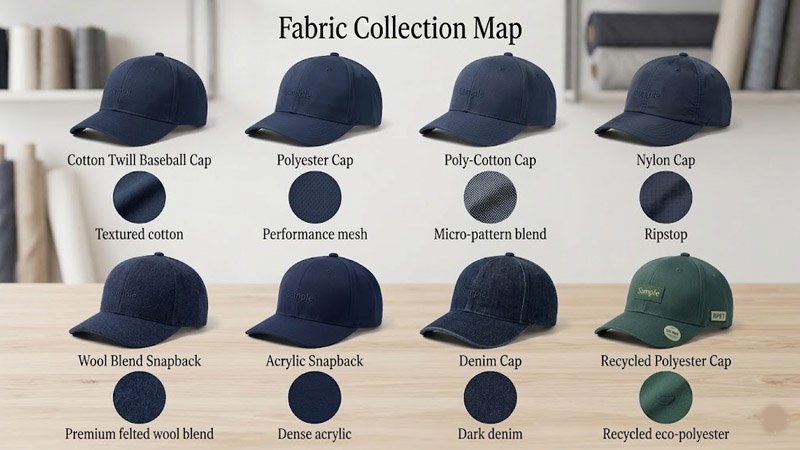
1. Cotton
Cotton is one of the most popular fabrics for custom baseball caps. It is soft, breathable, comfortable, and suitable for daily wear. Cotton caps are widely used for lifestyle brands, corporate gifts, school caps, retail merchandise, and embroidered baseball caps.
Cotton gives the cap a natural feel and classic appearance, making it a good choice for buyers who want a comfortable and premium-looking product.
Pros of Cotton Baseball Caps
Soft and Comfortable
Cotton feels natural and gentle on the skin, making it suitable for all-day wear.
Good Breathability
Cotton allows air to pass through more easily than many synthetic fabrics, which makes it a good option for warm weather and casual wear.
Suitable for Embroidery
Cotton twill provides a stable surface for flat embroidery, 3D embroidery, and embroidered patches.
Classic Appearance
Cotton caps often have a clean, casual, and timeless look, which is suitable for fashion brands and corporate branding.
Cons of Cotton Baseball Caps
May Shrink After Washing
Cotton can shrink if it is not properly treated or washed correctly.
Less Durable Than Synthetic Fabrics
Compared with polyester or nylon, cotton may not be the best option for heavy outdoor use.
Absorbs Sweat
Cotton absorbs moisture, which can make the cap feel heavier in very humid conditions.
Best For
Cotton baseball caps are best for casual wear, embroidered caps, school caps, corporate gifts, lifestyle brands, and retail collections.
Buyer Tip
For embroidered baseball caps, cotton twill is usually more stable than very thin cotton fabrics. If your logo includes small text, dense stitches, or fine details, it is better to confirm an embroidery sample before bulk production.
2. Cotton Twill
Cotton twill is one of the most commonly used fabrics for baseball caps. It has a diagonal weave that gives the fabric better strength and structure.
This fabric is especially suitable for classic baseball caps, dad hats, curved-brim caps, and custom embroidered caps.
Pros of Cotton Twill
Stable for Embroidery
The twill structure helps the embroidery stay clean and flat.
Good Shape Support
Cotton twill gives the cap a classic and slightly structured look.
Comfortable for Daily Wear
It keeps the natural softness of cotton while offering better durability.
Premium Look
Cotton twill is suitable for brand caps, retail caps, and high-quality promotional products.
Cons of Cotton Twill
Higher Cost Than Basic Polyester
Cotton twill may cost more than standard polyester fabric.
Needs Proper Washing Care
It may shrink or wrinkle if washed with high heat.
Best For
Cotton twill is best for custom embroidered baseball caps, corporate caps, brand merchandise, dad hats, and premium casual caps.
Buyer Tip
If your project focuses on embroidery quality, cotton twill is one of the safest fabric choices. It works well for both flat embroidery and 3D puff embroidery.
3. Polyester
Polyester is a synthetic fabric widely used in sports caps, promotional caps, event caps, and large-volume custom baseball caps. It is durable, colorfast, cost-effective, and easy to maintain.
For bulk buyers who need stable quality and competitive pricing, polyester is often a practical option.
Pros of Polyester Baseball Caps
Durable and Long-Lasting
Polyester has strong resistance to daily wear and is suitable for frequent use.
Good Color Retention
Polyester holds color well, making it suitable for bright brand colors and large promotional campaigns.
Cost-Effective for Bulk Orders
Polyester is usually more budget-friendly than many premium natural fabrics.
Suitable for Performance Fabrics
Moisture-wicking polyester can help keep the wearer dry during sports and outdoor activities.
Cons of Polyester Baseball Caps
Less Breathable Than Cotton
Standard polyester may feel warmer in hot weather if the cap does not have ventilation or mesh panels.
Synthetic Hand Feel
Some customers may prefer the natural feel of cotton.
Logo Method Needs Testing
For heat transfer or printing, temperature and pressure should be tested before bulk production.
Best For
Polyester caps are best for sports teams, promotional gifts, event caps, outdoor activities, company giveaways, and large-volume orders.
Buyer Tip
If your order quantity is large and your budget is limited, polyester is a good choice. For sports use, choose moisture-wicking polyester instead of standard polyester.
4. Poly-Cotton Blends
Poly-cotton blends combine the softness of cotton with the durability of polyester. This fabric is a balanced option for buyers who want comfort, durability, and reasonable cost.
It is commonly used for custom baseball caps, school caps, company uniforms, promotional caps, and daily-wear caps.
Pros of Poly-Cotton Caps
Balanced Comfort and Strength
Cotton improves softness, while polyester improves durability.
Better Shape Retention Than Pure Cotton
The polyester content helps the cap maintain its shape.
Suitable for Many Logo Methods
Poly-cotton can work well with embroidery, woven patches, and some printing methods.
Good for General Bulk Orders
It is practical for many markets and customer groups.
Cons of Poly-Cotton Caps
Not as Soft as 100% Cotton
The hand feel may be slightly less natural than pure cotton.
Not as Technical as Performance Polyester
For high-intensity sports or outdoor performance, technical polyester or nylon may be better.
Best For
Poly-cotton caps are best for corporate gifts, school caps, casual caps, event caps, and medium-to-large bulk orders.
Buyer Tip
Poly-cotton is a safe choice when you want a balance between price, comfort, and durability. It is especially suitable for promotional buyers who need reliable quality without choosing a premium material.
5. Nylon
Nylon is lightweight, strong, and quick-drying. It is commonly used for outdoor caps, running caps, hiking caps, fishing caps, travel caps, and performance headwear.
For brands that focus on outdoor activities or active lifestyles, nylon is a valuable fabric option.
Pros of Nylon Baseball Caps
Lightweight
Nylon caps are easy to wear and comfortable for sports or travel.
Quick-Drying
Nylon dries faster than cotton, making it suitable for humid environments and outdoor use.
Water-Resistant Options Available
Some nylon fabrics can be finished with water-resistant coatings.
Strong and Flexible
Nylon is durable while staying soft and packable.
Cons of Nylon Baseball Caps
Less Breathable Than Cotton
Without mesh panels or ventilation holes, nylon may feel warm.
Smooth Synthetic Feel
Some buyers may prefer the textured appearance of cotton twill or canvas.
Embroidery Requires Care
Thin nylon may need proper backing to avoid puckering during embroidery.
Best For
Nylon caps are best for outdoor brands, travel caps, fishing caps, running caps, hiking caps, and quick-dry performance caps.
Buyer Tip
For nylon caps, heat transfer logos, rubber patches, woven patches, or silicone labels are often better choices than heavy embroidery, especially when the fabric is thin.
6. Wool and Wool Blends
Wool and wool blends are often used for premium snapbacks, winter caps, structured baseball caps, and classic professional-style caps. Wool provides warmth, texture, and good shape retention.
For brands that want a high-end or traditional look, wool blend fabric is a strong choice.
Pros of Wool Baseball Caps
Premium Appearance
Wool gives the cap a refined and structured look.
Good Shape Retention
Wool blend caps can hold the crown shape well.
Warm for Cold Weather
Wool is suitable for autumn and winter collections.
Good for Embroidery and Patches
Wool blends work well with embroidered logos, woven patches, and leather patches.
Cons of Wool Baseball Caps
Higher Cost
Wool and wool blends are usually more expensive than cotton or polyester.
Requires More Care
Wool caps need careful washing and storage.
Not Suitable for Hot Weather
Wool is warmer and less breathable than cotton or nylon.
Best For
Wool caps are best for premium snapbacks, winter caps, retail collections, professional team-style caps, and high-end branded merchandise.
Buyer Tip
If your brand wants a premium snapback or structured cap, wool blend fabric can create a more upscale look. However, it may not be the best choice for summer events or low-budget promotional orders.
7. Acrylic
Acrylic is often used as a cost-effective alternative to wool. It is common in snapbacks, winter hats, and structured caps. Acrylic keeps its shape well and can be dyed in bright colors.
Pros of Acrylic Caps
Good Shape Retention
Acrylic helps structured caps maintain a firm shape.
Affordable Alternative to Wool
It gives a similar look at a lower cost.
Bright Color Options
Acrylic can be dyed in vibrant colors.
Suitable for Snapbacks
It works well for flat-brim caps and hip-hop-style hats.
Cons of Acrylic Caps
Less Breathable
Acrylic is not as breathable as cotton.
Synthetic Feel
It may not feel as natural as cotton or wool.
Not Ideal for Hot Weather
Acrylic is better for structured or cooler-weather designs.
Best For
Acrylic caps are best for snapbacks, hip-hop hats, structured caps, winter caps, and cost-conscious premium-looking designs.
Buyer Tip
Acrylic is a good option when buyers want the structure of a snapback but need better cost control than wool blend fabric.
8. Denim
Denim is a strong and stylish fabric used for fashion baseball caps, vintage caps, streetwear caps, and lifestyle collections. It gives the cap a unique texture and casual look.
Denim caps are especially suitable for brands that want a retro, youthful, or fashion-forward style.
Pros of Denim Baseball Caps
Fashionable and Unique
Denim gives the cap a strong casual and streetwear style.
Durable
Denim is strong and long-lasting.
Good for Vintage Designs
Washed denim caps are popular for retro and lifestyle brands.
Works Well with Patches
Denim pairs well with leather patches, woven patches, and embroidery.
Cons of Denim Baseball Caps
Heavier Than Other Fabrics
Denim may feel less comfortable in hot weather.
Less Breathable
It is not the best choice for sports or summer outdoor events.
Color Variation Needs Control
Washed denim may have color differences, so sample approval is important before bulk production.
Best For
Denim caps are best for fashion brands, streetwear collections, vintage-style caps, lifestyle merchandise, and retail gift products.
Buyer Tip
If you choose washed denim, confirm the washing effect and color shade before mass production. Denim color variation can be part of the style, but it should still meet brand requirements.
9. Recycled Polyester
Recycled polyester, often made from recycled plastic bottles or polyester waste, is becoming more popular among eco-conscious brands. It provides durability while supporting sustainability-focused marketing.
For brands targeting environmentally responsible products, recycled polyester is a strong option for custom caps.
Pros of Recycled Polyester Caps
Eco-Friendly Positioning
It helps brands communicate sustainability and responsible sourcing.
Durable and Practical
Recycled polyester keeps many of the same performance benefits as standard polyester.
Good for Bulk Orders
It can be used for promotional caps, event caps, and corporate gifts.
Suitable for Printing and Embroidery
It can support different logo decoration methods depending on the fabric structure.
Cons of Recycled Polyester Caps
Cost May Be Higher Than Standard Polyester
Recycled materials may have a higher price depending on availability and certification requirements.
Certification May Be Needed
Some buyers may require recycled material certification for brand compliance.
Best For
Recycled polyester caps are best for eco-friendly brands, corporate sustainability campaigns, outdoor events, schools, and promotional gifts.
Buyer Tip
If sustainability is important for your project, ask the supplier whether recycled material certification or eco-friendly packaging can be provided.
Fabric Comparison Table for Bulk Buyers
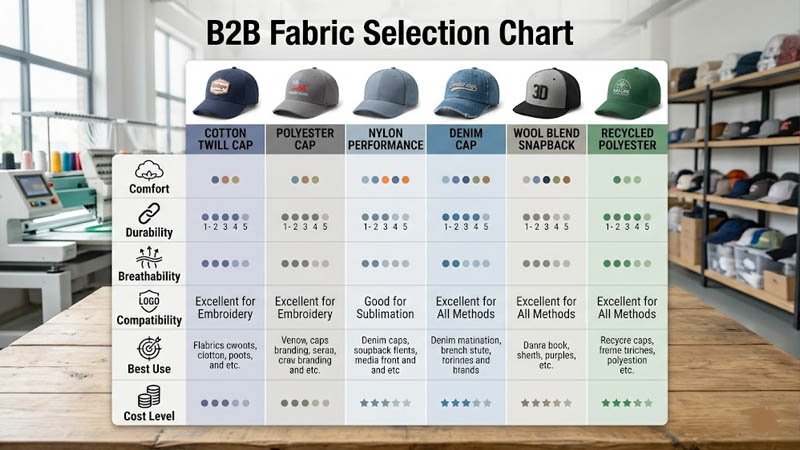
| Fabric | Comfort | Durability | Breathability | Best Logo Method | Best Use |
|---|---|---|---|---|---|
| Cotton | High | Medium | High | Embroidery, woven patch | Casual caps, brand caps |
| Cotton Twill | High | Medium-High | High | Flat embroidery, 3D embroidery | Classic baseball caps |
| Polyester | Medium | High | Medium | Printing, heat transfer, embroidery | Sports caps, promo caps |
| Poly-Cotton | High | High | Medium | Embroidery, patch | Corporate caps, bulk orders |
| Nylon | Medium | High | Medium | Heat transfer, rubber patch | Outdoor caps, travel caps |
| Wool Blend | Medium | High | Low-Medium | Embroidery, leather patch | Premium caps, winter caps |
| Acrylic | Medium | Medium-High | Low | Embroidery, patch | Snapbacks, structured caps |
| Denim | Medium | High | Low-Medium | Patch, embroidery | Fashion caps, vintage caps |
| Recycled Polyester | Medium | High | Medium | Printing, embroidery | Eco-friendly caps |
Best Fabrics for Different Logo Decoration Methods
Logo decoration is a key part of custom baseball cap production. The fabric you choose should match the logo method.
Best Fabric for Flat Embroidery
Flat embroidery works best on cotton twill, polyester twill, wool blend, and poly-cotton fabrics. These fabrics provide a stable surface, helping the embroidery stay clean and professional.
Best for:
- Corporate logos
- Brand names
- School caps
- Uniform caps
- Retail baseball caps
Best Fabric for 3D Puff Embroidery
3D puff embroidery requires a more structured fabric and cap crown. Cotton twill, acrylic, polyester twill, and wool blends are common choices.
Best for:
- Snapbacks
- Hip-hop hats
- Sports-style caps
- Streetwear brands
- Bold logo designs
Best Fabric for Woven Patches
Woven patches are suitable for logos with small details, fine lines, or multiple colors. They can be applied to cotton, polyester, denim, nylon, and wool blend caps.
Best for:
- Detailed logos
- Fashion brands
- Outdoor caps
- Premium promotional caps
Best Fabric for Heat Transfer Logos
Heat transfer works well on polyester, nylon, and performance fabrics. It is suitable for full-color logos, gradient graphics, and smooth visual effects.
Best for:
- Sports caps
- Running caps
- Event caps
- Outdoor caps
- Performance headwear
Best Fabric for Leather or Rubber Patches
Leather patches and rubber patches are suitable for cotton twill, denim, canvas, wool blend, and some polyester caps. They create a premium and textured brand effect.
Best for:
- Outdoor brands
- Workwear-style caps
- Lifestyle brands
- Premium retail collections
Best Fabric Choices by Budget Level
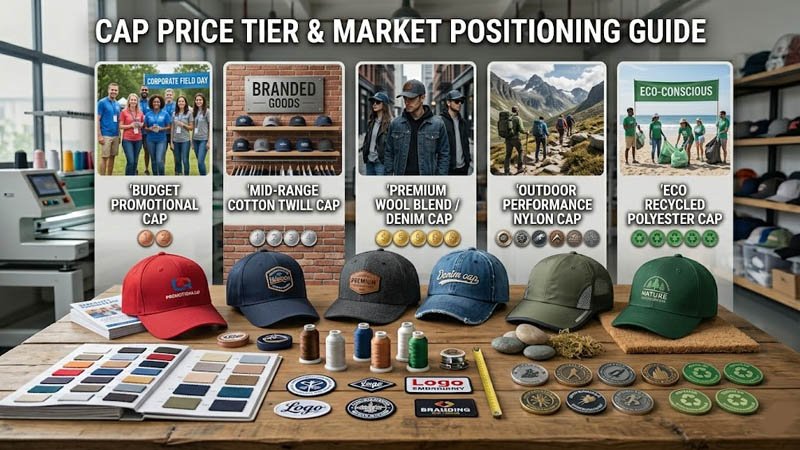
For bulk buyers, fabric selection is closely related to budget. The most suitable fabric depends on the product positioning and target market.
Budget-Friendly Promotional Caps
Recommended fabrics:
- Polyester
- Poly-cotton
- Standard cotton
These fabrics are suitable for events, giveaways, schools, corporate gifts, and promotional campaigns.
Mid-Range Brand Caps
Recommended fabrics:
- Cotton twill
- Washed cotton
- Poly-cotton
- Brushed cotton
These materials offer better comfort and appearance while keeping the cost reasonable.
Premium Retail Caps
Recommended fabrics:
- Heavy cotton twill
- Wool blend
- Denim
- Cotton canvas
These fabrics create a stronger brand image and are suitable for fashion brands, lifestyle brands, and retail collections.
Outdoor and Performance Caps
Recommended fabrics:
- Nylon
- Moisture-wicking polyester
- Lightweight polyester
- Recycled polyester
These fabrics are suitable for outdoor activities, travel, sports, fishing, hiking, and running.
Eco-Friendly Custom Caps
Recommended fabrics:
- Recycled polyester
- Organic cotton
- Recycled nylon
These are good options for brands that want to highlight sustainability and responsible production.
Best Fabrics for Different Cap Styles
Different cap styles require different fabric characteristics. Choosing the right fabric helps improve both appearance and function.
Baseball Caps
Recommended fabrics:
- Cotton twill
- Washed cotton
- Brushed cotton
- Poly-cotton
- Polyester twill
These fabrics are suitable for classic curved-brim baseball caps and embroidered brand caps.
Snapback Hats
Recommended fabrics:
- Acrylic
- Wool blend
- Polyester twill
- Cotton twill
Snapbacks usually require a stronger structure, especially for flat-brim styles and 3D embroidery.
Dad Hats
Recommended fabrics:
- Washed cotton
- Brushed cotton
- Soft cotton twill
Dad hats usually have a softer crown and relaxed shape, so soft cotton fabrics are ideal.
Trucker Caps
Recommended fabrics:
- Cotton front panel
- Polyester front panel
- Foam front panel
- Mesh back panel
Trucker caps need a front panel that supports logo decoration and a breathable mesh back.
5-Panel Caps
Recommended fabrics:
- Cotton canvas
- Nylon
- Polyester ripstop
- Washed cotton
These fabrics are suitable for outdoor, streetwear, and fashion-forward cap designs.
Performance Caps
Recommended fabrics:
- Lightweight polyester
- Nylon
- Moisture-wicking fabrics
- Stretch blends
Performance caps should be lightweight, breathable, quick-drying, and comfortable for active use.
Common Mistakes When Choosing Baseball Cap Fabrics
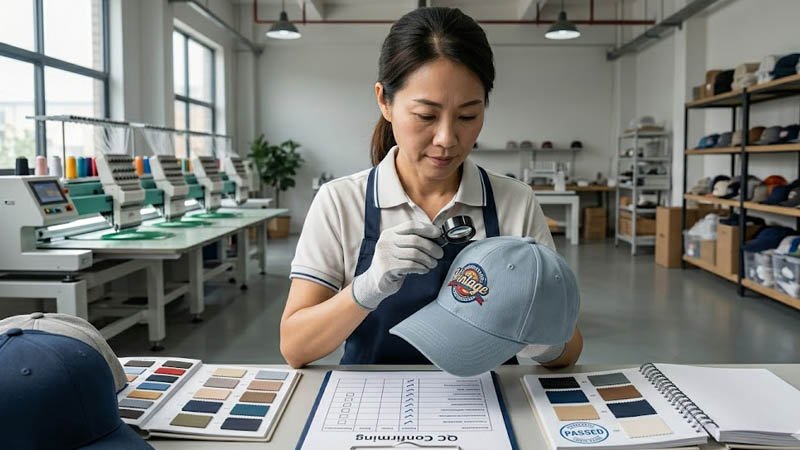
Many buyers focus only on price or appearance when choosing cap fabric. However, several common mistakes can affect the final product quality.
Mistake 1: Choosing Fabric Only by Price
The cheapest fabric may reduce product quality, comfort, and brand image. For long-term retail or brand projects, fabric quality should match the market positioning.
Mistake 2: Ignoring the Logo Decoration Method
Not every fabric works well with every logo method. For example, thin nylon may not be ideal for heavy embroidery, while polyester is often better for heat transfer logos.
Mistake 3: Using Thin Fabric for Dense Embroidery
Dense embroidery on thin fabric can cause puckering, uneven stitches, or deformation. Always test embroidery before bulk production.
Mistake 4: Not Checking Shrinkage
Cotton and some blended fabrics may shrink after washing. Shrinkage testing is important before confirming bulk production.
Mistake 5: Ignoring Color Fastness
Poor color fastness can cause fading or color bleeding. This is especially important for dark colors, outdoor caps, and washable caps.
Mistake 6: Choosing Non-Breathable Fabric for Summer Events
For hot weather or outdoor events, breathable fabrics, mesh panels, or moisture-wicking materials should be considered.
Mistake 7: Skipping Pre-Production Sample Approval
A pre-production sample helps confirm fabric, color, logo size, embroidery quality, cap shape, and packaging before mass production.
Quality Checks Before Bulk Production
Before placing a bulk order, buyers should confirm more than just the fabric name. A professional supplier should help check fabric performance and production details.
Fabric Weight
Fabric weight affects the cap’s structure and wearing feel. Heavy fabrics provide stronger shape, while lightweight fabrics are better for summer and sports caps.
Color Consistency
For bulk orders, fabric color should match the approved sample. This is especially important for brand colors and repeat orders.
Shrinkage Control
Cotton and blended fabrics should be tested for shrinkage to reduce size and shape problems after washing.
Embroidery Stability
If the logo uses embroidery, the supplier should test stitch density, backing support, and fabric stability.
Printing Compatibility
For heat transfer or printed logos, temperature, pressure, and adhesion should be tested before production.
Cap Shape and Panel Consistency
Fabric thickness and cutting accuracy affect the crown shape. Consistent panels help the cap look professional.
Packaging Confirmation
For retail or brand orders, packaging details such as labels, hangtags, barcodes, and cartons should be confirmed before shipment.
Care Tips for Different Baseball Cap Fabrics
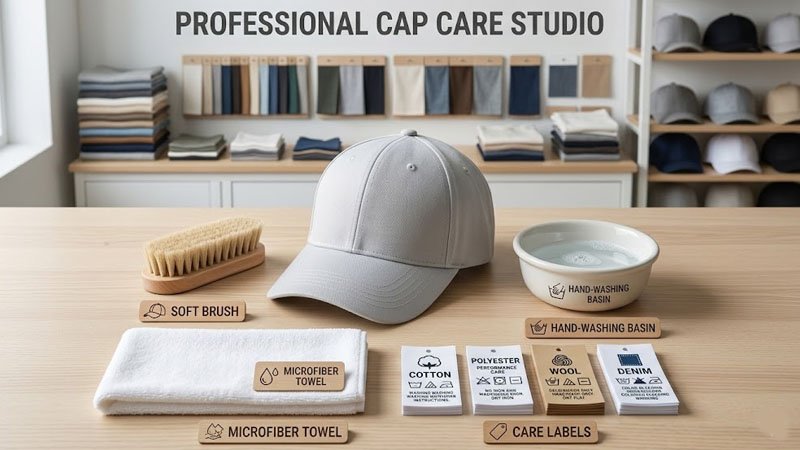
Proper care can extend the life of custom baseball caps and keep them looking good.
Cotton Caps
Wash gently with cold water and air dry. Avoid high heat to reduce shrinkage.
Polyester Caps
Polyester caps are usually easy to clean. Use a gentle cycle and avoid high heat.
Nylon Caps
Nylon dries quickly and is suitable for outdoor use. Avoid strong heat when drying.
Wool Caps
Wool caps should be hand washed or spot cleaned carefully. Do not wring or tumble dry.
Acrylic Caps
Acrylic caps can be spot cleaned or gently washed. Avoid high-temperature drying.
Denim Caps
Turn the cap inside out before washing to help protect the color and texture. Air drying is recommended.
Recycled Polyester Caps
Care instructions are usually similar to standard polyester, but always follow the supplier’s washing recommendations.
Conclusion
The best fabric for custom baseball caps depends on your target market, budget, logo method, and usage scenario.
Choose cotton twill if you want a classic embroidered baseball cap.
Choose polyester if you need durability, bright colors, and cost-effective bulk production.
Choose poly-cotton if you want a balance of comfort, strength, and price.
Choose nylon if your cap is designed for outdoor, travel, or performance use.
Choose wool blend or acrylic if you need a structured snapback or premium winter cap.
Choose denim or canvas if your brand wants a stronger fashion or vintage style.
Choose recycled polyester if sustainability is part of your brand story.
For brands and bulk buyers, fabric selection is not only a material decision. It affects the final cap quality, logo effect, customer experience, and brand value. Working with an experienced OEM/ODM hat manufacturer can help you choose the right fabric, logo method, and production solution before mass manufacturing.
FAQs
What is the best fabric for custom baseball caps?
Cotton twill is one of the best fabrics for classic custom baseball caps because it is comfortable, structured, and suitable for embroidery. For sports or outdoor use, polyester and nylon may be better options.
Is cotton or polyester better for baseball caps?
Cotton is softer and more breathable, making it suitable for casual and embroidered caps. Polyester is more durable, colorfast, and cost-effective, making it suitable for sports caps and promotional bulk orders.
What fabric is best for embroidered baseball caps?
Cotton twill, polyester twill, wool blend, and poly-cotton fabrics are good choices for embroidered baseball caps because they provide a stable surface for stitching.
What is the most durable fabric for baseball caps?
Polyester and nylon are among the most durable fabric options. They are suitable for outdoor activities, sports caps, and frequent use.
What fabric is best for summer baseball caps?
Cotton, lightweight polyester, nylon, and caps with mesh panels are good choices for summer. Breathability and moisture management are important for hot weather.
What fabric is best for snapback hats?
Acrylic, wool blend, cotton twill, and polyester twill are common choices for snapback hats because they provide good structure and shape retention.
Are nylon baseball caps good for outdoor use?
Yes. Nylon is lightweight, quick-drying, and can be water-resistant, making it suitable for outdoor, travel, hiking, fishing, and running caps.
Can baseball caps be made with recycled polyester?
Yes. Recycled polyester can be used for custom baseball caps. It is suitable for eco-friendly brands, corporate sustainability campaigns, and promotional products.
What is the best fabric for promotional baseball caps?
Polyester and poly-cotton are good options for promotional baseball caps because they are durable, cost-effective, and suitable for bulk customization.
What should buyers confirm before bulk cap production?
Buyers should confirm fabric type, fabric weight, color, logo method, embroidery or printing effect, sample quality, shrinkage control, color fastness, packaging details, and delivery time before mass production.