Stop Getting Burned on Snapbacks: A Factory Guide to MOQ, Pricing, QC & Compliance
Snapback caps look simple—but manufacturing details are unforgiving. A slightly wrong crown profile, a wavy brim, mismatched trims, or distorted embroidery can turn a strong design into a return problem. If you’re developing a snapback for retail, sports teams, or promotional campaigns, you need more than a basic overview. You need a factory-ready playbook: what to specify, how production flows, why MOQs change, where costs come from, and how to verify quality before shipping.
This guide breaks snapback cap manufacturing into clear, actionable steps—plus copy/paste templates and real buyer FAQs procurement teams actually ask.
About Us
GUANGZHOU EASTLUCKY Hat & Garment Co., Ltd. is a high-end custom hat and OEM/ODM manufacturer based in Guangzhou, China. With 15 years of expertise in professional R&D, production, and distribution of hats and embroidered accessories, we provide global clients with one-stop solutions from design sampling to mass production. Guided by the philosophy “Quality as Root, Innovation as Soul,” we help brands build efficient, high-quality supply chains.
1) What Makes a Snapback ?
A snapback is defined by:
-
An adjustable plastic snap closure (one-size-fits-most)
-
A structured crown, often high-profile
-
A flat or slightly curved visor
-
Strong compatibility with embroidery, patches, and printing
Snapback Anatomy (The Parts That Matter)
Most snapbacks include:
-
5 or 6 panels forming the crown
-
Buckram front panels that create a stiff, structured look
-
A visor insert (commonly PE or HDPE) to hold brim shape
-
An internal sweatband for comfort and sweat absorption
-
Eyelets for ventilation and a fabric-covered top button
-
Seam tape + labels for reinforcement and branding
2) The #1 Reason Snapback Projects Fail: Missing Specs
The fastest way to waste time and money is to send vague instructions like “make it premium” or “good embroidery.” Premium is not a feeling—it’s a set of measurable decisions. To get predictable outcomes, you need a clear tech pack.
3) Snapback Tech Pack Checklist (Copy/Paste Template)
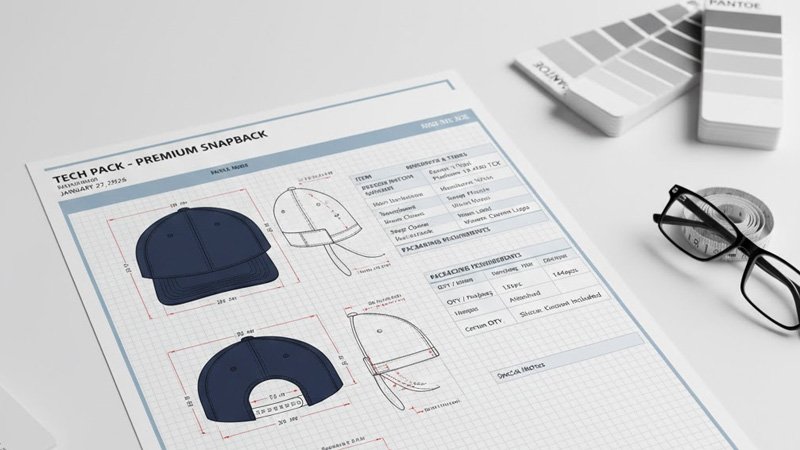
Use this checklist to reduce back-and-forth and lock your product standard.
A) Style & Fit
-
Panel count: 5-panel / 6-panel
-
Profile: high / mid
-
Front structure: full buckram / A-frame / soft front
-
Target size: adult / youth
-
Target head circumference: (example) 58–60 cm
-
Closure: snapback (color + hole count)
B) Fabrics & Colors
-
Crown fabric: cotton twill / wool blend / polyester / mesh / rPET
-
Underbrim: matching / contrast / printed
-
Color standard: Pantone / TCX / physical swatch
-
Structure target: soft / medium / firm (best with a reference cap)
C) Visor (Brim)
-
Shape: flat / pre-curved
-
Stitch rows: number of lines (e.g., 6–8)
-
Insert type: PE or HDPE
-
Stiffness target: soft / medium / firm (reference sample recommended)
D) Trims & Branding
-
Snap color: matching / contrast / custom
-
Eyelets: embroidered / metal
-
Top button: fabric-covered / custom
-
Labels: woven / printed + care label requirements
-
Seam tape: plain / printed
E) Decoration & Artwork
-
Method: flat embroidery / 3D puff / patch / screen / heat transfer / sublimation
-
Placement: front / side / back / underbrim
-
Size: width/height in mm
-
Colors: thread colors / print colors
-
Artwork files: AI/PDF vector preferred (and embroidery files if available)
F) Packaging & Shipping
-
Each cap: polybag / paper insert / hangtag / inner box
-
Carton marking: PO/SKU/barcodes/country-of-origin
-
Shipping mode: air / sea / express (affects carton planning)
G) Compliance Market
-
Target market: US / EU / UK / CA
-
Compliance requirements: CPSIA / REACH / Prop 65 / brand RSL
4) Materials: How to Choose the Right Build
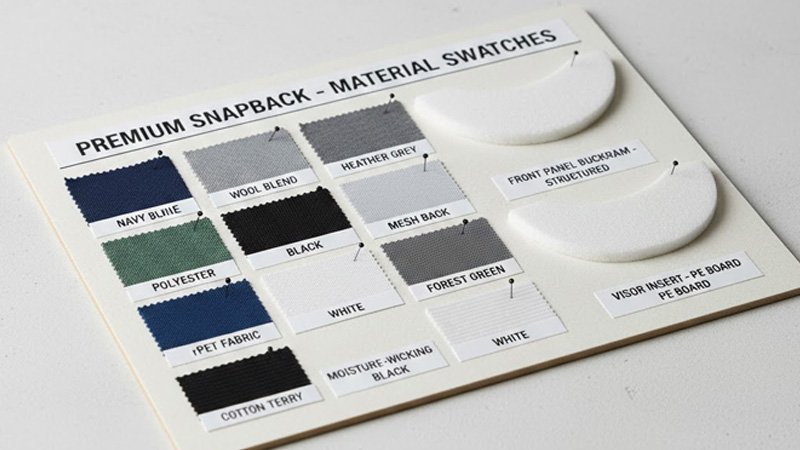
Crown Fabric Options (Common and Practical)
-
Cotton twill: classic, breathable, soft; great for retail
-
Wool blends: thicker, durable, premium feel; often used for sports and streetwear
-
Polyester/performance fabrics: stable, cost-efficient, moisture control
-
Mesh: ventilation and lighter weight (often paired with structured fronts)
-
rPET: sustainability story—best paired with documented compliance needs
Components That Control “Premium Feel”
-
Buckram: dictates stiffness and shape memory
-
Sweatband: cotton for comfort; polyester for moisture-wicking
-
Seam tape: reinforcement and a cleaner interior
-
Snap closure: quality closures prevent cracking and weak bite
Visor Insert: PE vs. HDPE (Practical Difference)
Both are widely used. What matters most is your required brim behavior:
-
Stiffness and shape retention
-
Consistency across batches
-
Stability under stitching tension and molding
If brim feel is a signature feature, choose inserts by reference sample and lock the spec.
5) Manufacturing Workflow (End-to-End) + What to Control
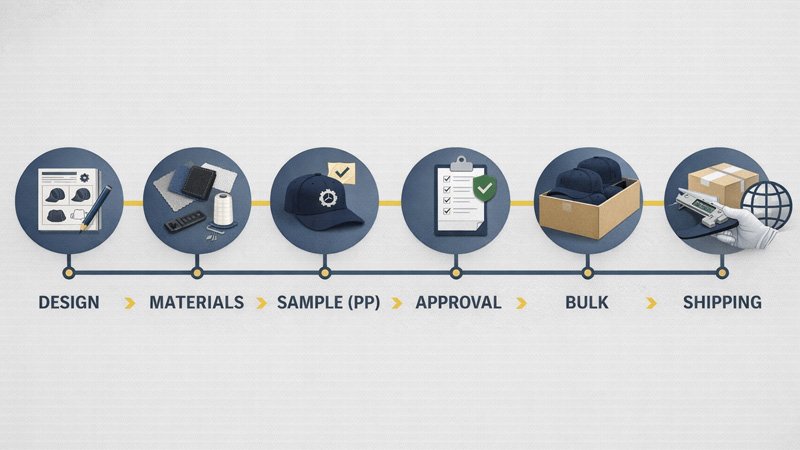
Standard Production Flow
-
Tech pack confirmation (measurements, trims, artwork, packaging, compliance)
-
Material sourcing (fabric, buckram, inserts, snaps, labels)
-
Pattern making + cutting
-
Crown assembly stitching
-
Eyelets + seam tape + interior finishing
-
Visor build (insert + fabric wrap + stitch rows)
-
Visor attachment to crown
-
Snap closure installation
-
Molding/steaming to set profile
-
Inline QC + final QC
-
Packaging + carton marking + shipment
PP Sample (Pre-Production): Your Best Insurance
Never skip PP approval. On the PP sample, check:
-
Crown profile and front height (side view matters)
-
Visor shape (flat vs curve), symmetry, stitch-row straightness
-
Color matching (fabric, snap, thread, labels)
-
Logo placement accuracy and decoration quality
-
Snap bite and retention
-
Inside finishing (seam tape/labels alignment, no loose threads)
6) Decoration Options: Choose Methods That Match Your Artwork
Most Common Decoration Methods
-
Flat embroidery: clean, durable, most versatile
-
3D puff embroidery: bold raised effect for simple lettering/shapes
-
Patches: woven/embroidered/leather for texture and premium layering
-
Screen/heat transfer: best for complex multi-color graphics
-
Sublimation panels: vibrant prints on selected parts
Artwork Rules That Prevent Problems
-
Tiny text and fine lines can fill in with embroidery—simplify small details
-
Puff embroidery performs best with bold shapes that hold edges
-
Designs too close to seams may distort on structured crowns
-
Multiple placements and mixed techniques increase cost and lead time
7) Sampling, MOQ & Lead Time: What Changes Your Schedule
Typical Planning Ranges
-
Sampling: about 10–14 days (depends on complexity)
-
Bulk production: about 25–35 days after approvals
Lead time can extend with custom dyeing, custom snaps, multiple decoration methods, or peak-season capacity.
Why MOQ Changes (And How to Keep It Manageable)
MOQ is driven by supplier minimums and setup costs:
-
Custom fabric dye lots
-
Custom snaps and special trims
-
High stitch-count embroidery, puff foam, multi-placement decoration
-
Custom labels/hangtags/printed seam tape
Low-MOQ strategy: use stock fabrics and standard snaps, then differentiate through decoration, label design, and packaging.
8) Cost Drivers: The 8 Levers That Move Unit Price
A snapback’s unit price is shaped by:
-
Fabric type and structure target
-
Buckram build (soft vs structured vs A-frame)
-
Decoration method (flat vs puff vs patch)
-
Stitch count and thread color changes
-
Extra placements (front + side + back)
-
Custom trims (snaps, labels, seam tape, hangtags)
-
Packaging level (polybag vs inner box)
-
QC scope and compliance testing requirements
Cost-control tip: If you want a premium look without runaway cost, make the exterior “brandable” and keep the hidden components standardized.
9) Quality Control: Use AQL + a Real Defect Standard
Many programs use AQL sampling (commonly Level II with 0/2.5/4.0 acceptance levels). But AQL alone isn’t enough—you need a measurable checklist and a shared defect standard.
Buyer-Facing QC Checklist
-
Panel symmetry and seam alignment
-
Stitch consistency and thread tension
-
Visor symmetry and stitch-row straightness
-
Snap closure bite and retention
-
Logo placement tolerance
-
Inside finishing (no loose threads, aligned labels, clean tape)
-
Color consistency between fabric, trims, and thread
Common Defects (Plus Root Causes)
-
Wavy brim: uneven tension, insert behavior, inconsistent feeding
-
Front panel bubble: buckram stability or molding conditions
-
Off-center top button: alignment issues
-
Embroidery puckering: stabilizer mismatch, tension, density
-
Profile collapse: buckram too soft or insufficient molding
-
Snap cracking/weak bite: low-grade closure or unstable supply
10) Compliance: Plan It Early, Ship Smoothly
If you sell internationally, compliance cannot be an afterthought.
Common Topics by Market
-
US: CPSIA-related requirements (especially for children’s products)
-
California: Prop 65 considerations for chemicals in plastics/inks
-
EU: REACH restrictions on certain substances
A Practical Compliance Workflow
-
Confirm target market and buyer requirements (brand RSL if applicable)
-
Choose compliant materials and request supplier certificates
-
Build a lab-test plan into the PO when required
-
Keep documentation organized for customs and retail audits
11) Real Procurement FAQs (What Buyers Actually Ask)
1) “What’s your MOQ—by color, by logo, or by style?”
MOQ is typically defined per design/style, and it can change based on:
-
Whether you need custom-dyed fabric or can use stock colors
-
Whether snaps and trims are standard or custom color-matched
-
Decoration complexity (puff, high stitch count, multiple placements)
If you want the lowest MOQ, choose stock fabric + standard snaps and focus on decoration and labeling for differentiation.
2) “Can I split quantities across multiple colors under one PO?”
Often yes, but feasibility depends on:
-
Fabric availability in each color
-
Decoration setup (thread colors, patch types, print screens)
-
Packaging and labeling requirements
A common best practice is to keep one core build and vary colorways within the same production schedule.
3) “How do you control color accuracy and batch consistency?”
A reliable approach includes:
-
Matching to Pantone/TCX or an approved physical swatch
-
Confirming under standardized lighting conditions
-
Locking shade with PP sample approval before bulk
-
Monitoring fabric/trim batches during production
If exact matching is critical, ask for a lab dip (for dyed fabric) before PP.
4) “Can you guarantee the crown profile will match our reference cap?”
The most dependable way is to:
-
Provide a clear reference photo (front/side/back/top) or a physical sample
-
Specify profile targets (high vs mid, A-frame vs full buckram)
-
Approve a PP sample where profile is checked from multiple angles
Once the profile is locked by PP, the factory can maintain consistency through controlled molding and QC.
5) “What is your sampling process—how many rounds are included?”
Most projects follow:
-
Digital confirmation of artwork + materials
-
Sample build → feedback → revised sample if needed
To keep sampling fast, send a complete tech pack (or use the checklist above) and confirm decoration method early.
6) “What files do you need for embroidery?”
Best-case inputs:
-
Vector artwork (AI/PDF) with clean shapes
-
Thread color references (Pantone or color chips)
-
Target logo size and placement
If you have existing embroidery files (DST/EMB), share them—otherwise digitizing is part of normal development.
7) “Is 3D puff embroidery suitable for our logo?”
Puff is best for bold lettering and simple shapes. It’s not ideal for:
-
Very small text
-
Fine lines
-
Highly detailed emblems
If you’re unsure, a quick method is to send the logo and target size; we’ll recommend flat embroidery, puff, patch, or print based on stitch behavior.
8) “How do you prevent wavy brims?”
Wavy brims typically come from tension and material interaction. Prevention includes:
-
Stable visor insert selection (and locking it by sample)
-
Controlled stitch tension and consistent feeding
-
Proper molding/setting to maintain shape
-
QC checks for symmetry and stitch-row straightness
9) “What QC standard do you follow—do you offer third-party inspection?”
A common setup includes:
-
Inline QC during assembly
-
Final QC before packing
-
AQL sampling if required by the buyer
For higher-risk launches or large POs, third-party inspection can be arranged to align with your acceptance criteria.
10) “What compliance can you support for US/EU markets?”
Compliance depends on your target market, age grading (adult vs kids), and brand RSL. The best practice is:
-
Confirm requirements before sampling
-
Choose compliant materials and request supplier documentation
-
Include testing/documentation needs in the PO where required
11) “How are caps packed, and how does packaging affect shipping cost?”
Packaging directly affects carton volume and therefore freight cost:
-
Polybag is the most space-efficient
-
Inner boxes and premium inserts increase volume
If shipping cost is sensitive, discuss packaging early so carton planning can optimize dimensional weight.
12) “What happens if there’s a quality issue after delivery?”
The cleanest path is to agree on:
-
A written defect standard and inspection method
-
Photo/video evidence requirements
-
A resolution mechanism (repair, remake, credit) based on verified defect rate
This protects both sides and keeps long-term supply stable.
12) Ready to Start Your Snapback Manufacturing Project?
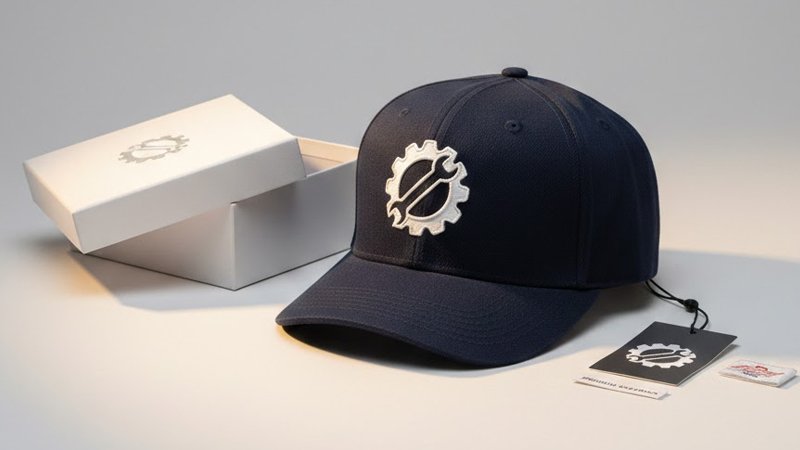
Snapbacks are a high-visibility product—small mistakes are obvious, and consistency matters. With a clear tech pack, smart material choices, controlled decoration, and verifiable QC standards, you can produce caps that look premium and perform reliably.
At GUANGZHOU EASTLUCKY Hat & Garment Co., Ltd., we provide one-stop OEM/ODM solutions from design sampling to mass production, backed by 15 years of R&D and manufacturing experience. Guided by “Quality as Root, Innovation as Soul,” we help global clients build efficient, dependable supply chains for premium caps and embroidered accessories.
To Get an Accurate Quote Faster, Please Send:
-
Your logo/artwork (AI/PDF preferred)
-
Target quantity per colorway
-
Reference photos (profile + decoration style)
-
Target market (US/EU/etc.) and compliance needs
-
Packaging and labeling requirements
If you’d like, we can also share a factory-ready tech pack checklist and a PP sample approval sheet to help your team approve samples faster and keep bulk production consistent.