Can Men Wear Hats Indoors? Modern Etiquette, Real-Life Situations, and Practical Style Advice
Hats have always been more than simple accessories. For centuries, they have signaled status, profession, personality, and style. From formal top hats to casual baseball caps, men’s headwear has long carried social meaning beyond pure function.
That is why one old rule still comes up so often today: should men remove their hats indoors?
The short answer is yes in some situations, no in others. In modern life, the issue is no longer just about following a rigid rule. It is about understanding the setting. A hat outdoors is often practical. A hat indoors becomes a social signal. In some places, it looks natural and stylish. In others, it can seem overly casual, distracting, or disrespectful.
So the real question is not simply whether men can wear hats indoors. The better question is this: what kind of room are you in, and what does your hat communicate there?
This article explores where the tradition came from, why modern attitudes have changed, when men should still remove their hats indoors, and how to make better decisions in real-life situations without overthinking it.
Why Men Traditionally Removed Hats Indoors
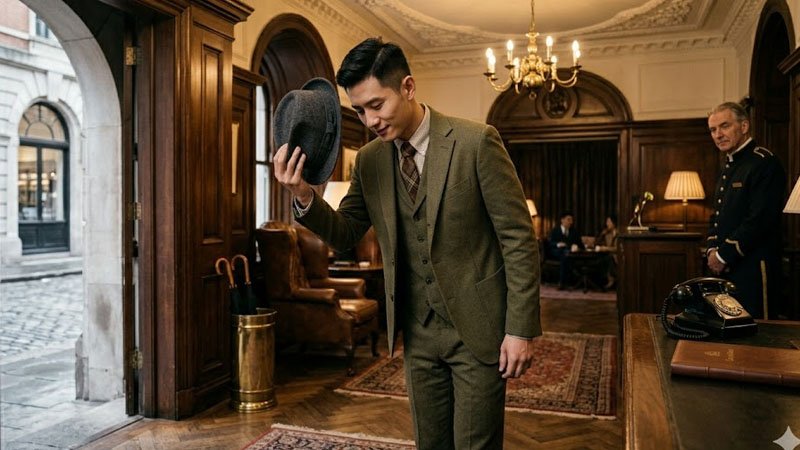
A Sign of Respect and Humility
The tradition of removing a hat indoors has deep roots in Western etiquette. Historically, when a man entered a home, church, formal meeting room, or other important indoor space, removing his hat was a visible gesture of respect.
This custom reflected more than manners. Hats often represented social standing, occupation, or authority. Taking one off indoors symbolized humility. It showed that the wearer was setting aside his public identity and entering the space with courtesy.
There was also a practical reason. Hats worn outdoors collected dust, mud, rain, and snow. Removing them indoors helped keep interiors cleaner and made social interaction feel more open and polite.
Formality, Ritual, and Social Order
In earlier centuries, etiquette was closely tied to social hierarchy. Men removed hats in front of hosts, elders, clergy, and authority figures. In places of worship, uncovering the head was associated with reverence. In military and formal civic settings, hat removal became part of institutional discipline and respect.
In other words, hats were not just fashion items. They were symbols. And removing them indoors was a way to acknowledge that a space demanded a different level of behavior.
Why Hats Indoors Are More Accepted Today

Modern Life Is More Casual
Many traditional dress rules have softened over time. Offices are less formal than they once were. Social gatherings are more relaxed. Personal style is more accepted in everyday settings. As a result, hats indoors no longer automatically signal bad manners.
Walk into a coffee shop, airport, shopping mall, co-working space, or casual restaurant today, and you will likely see men wearing baseball caps, beanies, or bucket hats indoors without anyone reacting negatively.
That does not mean etiquette has disappeared. It means etiquette has become more situational. Instead of following one rule for every building, people now judge clothing based on the mood, purpose, and formality of the space.
Hats Have Become Part of Personal Style
Streetwear, sports culture, music, and social media have all changed how hats are perceived. A cap or beanie is no longer just an outdoor necessity. It is often a key part of an outfit.
In many modern environments, hats communicate personality rather than disrespect. A clean baseball cap in a casual café, a fitted cap in a creative office, or a knit beanie in a laid-back social setting may look completely normal.
Today, hats often function as style markers, not just utility items.
Visibility Has Changed the Norm
Social media has also played a major role in changing expectations. When people constantly see celebrities, designers, athletes, influencers, and everyday consumers wearing hats indoors, the practice stops looking unusual. What once may have been labeled rude can now feel ordinary in many casual spaces.
Still, common does not always mean appropriate. That is where judgment matters.
The Modern Rule: Read the Room

The old rule was simple: take your hat off indoors.
The modern rule is more useful: read the room before deciding.
A good principle to remember is this:
- The more formal, sacred, solemn, or ceremonial the setting is, the more likely you should remove your hat.
- The more casual, transitional, expressive, or style-driven the environment is, the more acceptable it usually is to keep it on.
This shift is important. Modern etiquette is not mainly about memorizing old customs. It is about avoiding the wrong social signal.
Today, many people will not openly tell you that your hat seems out of place. They will simply notice it and form an impression. In that sense, wearing a hat indoors is not only a style choice. It is a small decision about tone, awareness, and respect.
When Men Should Remove Their Hats Indoors
Religious Spaces
Churches, temples, synagogues, chapels, and other sacred spaces are still places where traditional respect matters. In most cases, men should remove their hats when entering unless there is a specific religious, cultural, or personal reason not to.
Even if the space feels modern or informal, it is best to err on the side of respect in places connected to worship, prayer, or spiritual reflection.
Funerals, Memorials, and Weddings
These events carry emotional or ceremonial weight. At a funeral or memorial service, keeping a hat on can appear detached or overly casual. Removing it is a simple way to show respect for the deceased, the family, and the seriousness of the occasion.
Weddings are slightly more flexible depending on the style of the event, but during the ceremony itself, hats are usually best removed unless they are culturally appropriate, part of formal attire, or clearly expected in the setting.
Formal Business Situations
Not every workplace has the same expectations. In casual offices, creative teams, or start-up environments, hats may be acceptable. But in formal meetings, interviews, investor presentations, sales appointments, or client-facing situations, wearing a hat can make you seem less polished or less aware of professional norms.
A hat that feels completely fine during an internal brainstorming session may not be the right choice for a high-stakes business conversation.
At the Dining Table or in Someone Else’s Home
In casual private settings, hats may be acceptable. But when entering someone else’s home, especially for a meal or a more intentional gathering, taking off your hat is often the more polite choice.
At a dinner table in particular, many people still see hat removal as a sign of good manners, even in otherwise relaxed environments.
When It Is Usually Acceptable to Wear a Hat Indoors

Coffee Shops, Airports, Malls, and Transit Spaces
These are low-formality environments. People are moving through them, waiting, working casually, or dressing for comfort. In these spaces, hats rarely feel inappropriate.
A man wearing a baseball cap in an airport or a beanie in a café does not usually signal disrespect. In these settings, the hat is often perceived as part of an everyday lifestyle.
Casual Restaurants and Social Hangouts
In many modern casual restaurants, sports bars, and everyday social spaces, hats indoors are generally accepted. If the environment is informal and no one is dressed up, a hat is unlikely to stand out in a negative way.
That said, there is still a difference between a quick lunch spot and an upscale dining room. The more refined the setting, the more thoughtful you should be.
Creative Offices and Informal Workspaces
In design studios, fashion teams, media companies, music environments, and other creative workplaces, headwear may feel completely natural. In these settings, a hat can function as part of a person’s image or personal brand.
However, even within relaxed workplaces, context still matters. Internal office culture and external professional presentation are not always the same.
A Better Way to Decide: The 3-Step Indoor Hat Test
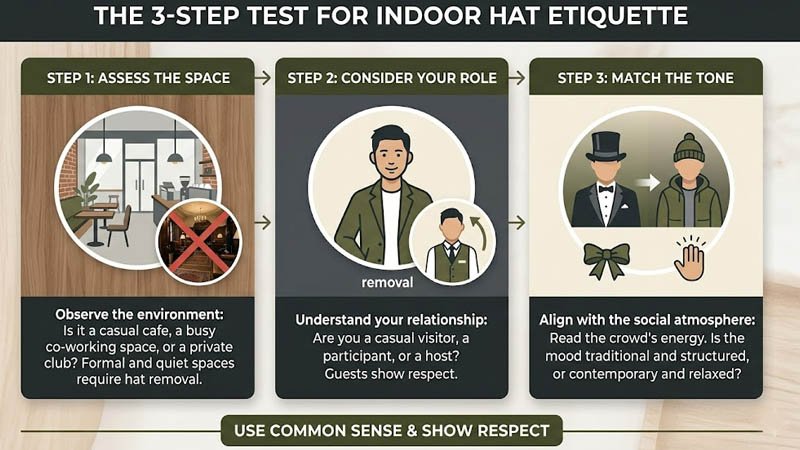
Instead of relying on an outdated one-rule-fits-all approach, use this simple test.
1. What kind of space is this?
Ask yourself whether the space is:
- formal
- casual
- sacred
- ceremonial
- private
- public
- style-driven
- transitional
If it is sacred, solemn, or formal, remove your hat. If it is casual, brief, or highly relaxed, keeping it on may be perfectly fine.
2. What role are you playing?
Are you:
- a guest
- a host
- a customer
- a friend
- a presenter
- a representative of a company or brand
The more responsibility your role carries, the more important visible respect becomes. If you are representing yourself professionally or entering someone else’s meaningful space, removing your hat is usually safer.
3. Does the hat match the tone?
A hat can either blend into a setting or feel visually disruptive. That is especially true indoors. A cap in a coffee shop may feel invisible. The same cap in the front row of a wedding ceremony may feel too casual and out of sync with the atmosphere.
Modern etiquette often comes down to this question: does your appearance support the moment, or pull against it?
Real-Life Situations: Quick Answers
Can men wear hats indoors at work?
Yes, in some workplaces. In casual, creative, or fashion-oriented offices, hats are often acceptable. In formal business environments or important meetings, taking your hat off is still the better choice.
Can men wear hats indoors at restaurants?
Usually yes in casual restaurants. Usually no, or at least less advisable, in fine dining spaces or more formal dinner settings.
Can men wear hats indoors at home?
In your own home, of course. In someone else’s home, it depends on the atmosphere, the relationship, and the occasion. If in doubt, remove it.
Can men wear hats indoors at weddings?
Sometimes during relaxed parts of the event, but usually not during the ceremony unless the hat is culturally appropriate or expected as part of the dress code.
Can men wear hats indoors at funerals?
In general, men should remove their hats at funerals and memorials as a sign of respect.
Can men wear hats indoors during video meetings?
In informal internal calls, yes. In interviews, presentations, or important client conversations, a hat may appear too casual unless it clearly fits your role and industry.
Cultural and Regional Differences Matter
Indoor hat etiquette is not identical everywhere. Attitudes vary across countries, generations, industries, and even cities. Some environments remain more traditional. Others are highly relaxed.
In many modern urban settings, casual hats indoors are common. In more conservative or formal cultures, removing headwear may still be more expected. Religious spaces across many regions also tend to preserve stronger etiquette standards.
This means one thing: avoid assuming your own norm applies everywhere. A hat that feels harmless in one setting may feel out of place in another.
Not All Hats Send the Same Message Indoors
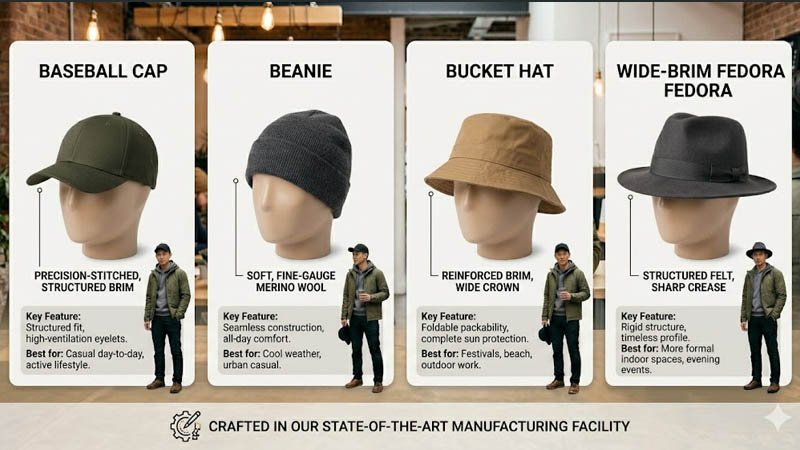
The type of hat matters too.
A clean, minimal baseball cap or understated beanie may work well in relaxed indoor settings. A large-brim statement hat, a heavily outdoor-coded performance cap, or an overly bold fashion piece may feel more intrusive indoors because it draws more visual attention.
If you plan to wear a hat indoors, it helps to choose one that is:
- clean
- well-fitted
- proportional
- appropriate to the rest of your outfit
- aligned with the level of formality around you
In more polished casual environments, structure, shape, and overall presentation matter. As a high-end custom hat and OEM/ODM manufacturer in Guangzhou, GUANGZHOU EASTLUCKY Hat & Garment Co., Ltd. understands that modern headwear is judged not only by style, but also by how its design, fit, and craftsmanship suit different real-life wearing occasions.
Practical Tips for Wearing Hats Indoors
When in doubt, take it off
This remains the easiest and safest rule. Removing your hat is rarely seen as a mistake in an uncertain setting.
Pay attention to transitions
A hat may be fine in the lobby, but not in the meeting room. Fine at the reception, but not during the ceremony. Fine before dinner, but not once everyone is seated. Sometimes the key question is not the building, but the moment.
Follow the atmosphere, not just the trend
Just because hats indoors are common on social media does not mean they work in every real-life setting. Visual trends do not replace situational awareness.
Use your hat to support your image, not hide behind it
Some men wear hats indoors out of habit, insecurity, or comfort. But in more personal, respectful, or formal situations, removing your hat can make you seem more engaged, present, and socially aware.
Watch what others are doing
You do not always need a written rule. Often, the room already tells you what is appropriate. If nearly everyone has removed their hats, that is useful information.
Conclusion: Tradition Has Softened, but Respect Still Matters
So, can men wear hats indoors?
Yes, in many modern situations they can. But that does not mean every indoor space treats hats the same way.
The old rule that men must always remove hats indoors no longer applies universally. Casual culture, changing dress codes, fashion influence, and social media have all made indoor hat-wearing more normal in everyday life.
At the same time, certain spaces still carry expectations. Religious venues, funerals, ceremonies, formal business situations, and more intentional private gatherings often call for visible respect. In those moments, removing your hat remains the better choice.
The smartest approach is not rigid tradition, and it is not blind self-expression either. It is context.
Because today, the real issue is not whether a man can wear a hat indoors. It is whether he understands when it helps, when it distracts, and what it says about him in that moment.
FAQs
Is it rude for men to wear hats indoors?
Sometimes. In sacred, solemn, or formal settings, it can still be considered rude or overly casual. In many casual public places, it is usually acceptable.
Why do men take their hats off indoors?
Historically, it was a sign of respect, humility, cleanliness, and social awareness. In some settings, that meaning still remains.
Can men wear baseball caps indoors?
Yes, in many casual settings such as cafés, malls, airports, and informal workplaces. But they may still feel too casual in formal situations.
Should men remove hats indoors at church?
In most cases, yes. Religious spaces are one of the clearest settings where removing a hat is still expected.
Can men wear hats indoors at a wedding reception?
Sometimes, depending on the style of the event. During the ceremony, however, removing the hat is usually the more respectful choice.
How to Choose the Best Hat Color for Your Skin Tone, Outfit, and Occasion
Choosing the right hat color can make a bigger difference than most people expect. Because a hat sits close to your face, its color affects how your skin looks, how balanced your outfit feels, and how polished your overall style appears.
Many people choose a hat based only on personal preference, then realize later that the color does not feel quite right once they put it on. The reason is simple: a hat is not just an accessory. It frames your face, influences visual contrast, and often becomes one of the first things people notice in your outfit.
The best hat color is not always the boldest or trendiest one. It is the color that flatters your skin tone, works with your wardrobe, suits the occasion, and reflects the image you want to project. In this guide, we will break down how to choose the best hat color in a practical and stylish way.
Why Hat Color Matters
A well-chosen hat color can make your face look brighter, your outfit look more intentional, and your personal style feel more refined. A poor color choice can do the opposite. It can make your complexion appear dull, compete with your clothing, or make the whole look feel slightly off.
That is why choosing a hat color should be treated as part of the styling process, not as an afterthought. Whether you are wearing a baseball cap, bucket hat, beanie, fedora, or snapback, color plays a major role in the final result.
Step 1: Start with Your Skin Tone
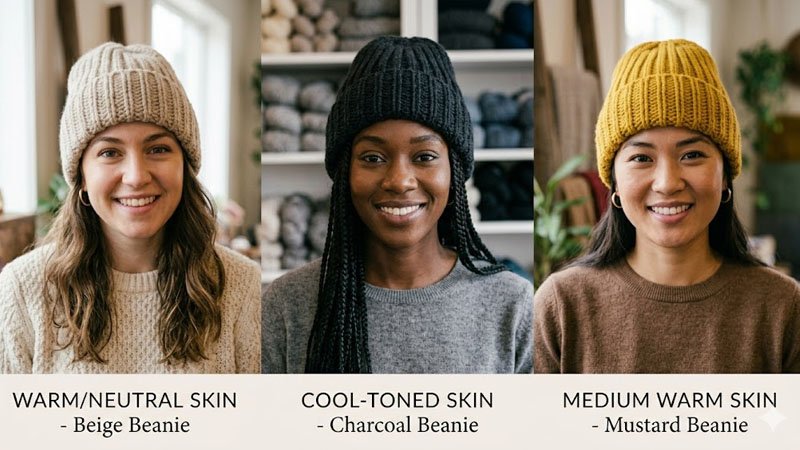
The easiest place to start is your skin undertone. In general, undertones fall into three categories: warm, cool, and neutral. Knowing your undertone can help you narrow down hat colors that naturally flatter your face.
Best Hat Colors for Warm Skin Tones
If your skin has yellow, peach, or golden undertones, you likely fall into the warm category. Warm skin tones usually look best in earthy, sun-inspired, and rich natural shades.
Good hat colors for warm skin tones include:
- camel
- beige
- brown
- mustard
- olive green
- rust
- terracotta
- warm red
These shades tend to bring warmth and life to the complexion. For example, a camel baseball cap paired with a cream T-shirt and dark denim can look effortless and flattering on someone with warm-toned skin.
Best Hat Colors for Cool Skin Tones
If your skin has pink, red, or bluish undertones, you are more likely to have a cool skin tone. Cooler complexions are often complemented by shades with blue or jewel-based depth.
Good hat colors for cool skin tones include:
- navy
- charcoal
- cool gray
- forest green
- burgundy
- plum
- lavender
- dusty rose
These colors create a cleaner contrast and often make cool-toned skin look brighter and more balanced. A navy cap or charcoal beanie is often a strong, reliable choice for people with cool undertones.
If you have a balance of warm and cool undertones, you likely have neutral skin. This gives you the most flexibility because both warm and cool shades can work well.
Good hat colors for neutral skin tones include:
- black
- beige
- taupe
- olive
- navy
- cream
- muted burgundy
- soft gray
If your undertone is neutral, focus less on strict color rules and more on the overall mood of the outfit.
How to Identify Your Undertone
If you are unsure about your undertone, here are a few simple ways to check:
Look at your veins.
Green-looking veins often suggest warm undertones. Blue or purple-looking veins usually suggest cool undertones. If it is hard to tell, you may be neutral.
Try on gold and silver jewelry.
Gold tends to flatter warm tones. Silver usually suits cool tones. If both look equally good, you may be neutral.
Pay attention to how your skin reacts to the sun.
If you tan easily, you may lean warm or neutral. If you burn quickly, you may lean cool.
Step 2: Consider Your Hair and Eye Color
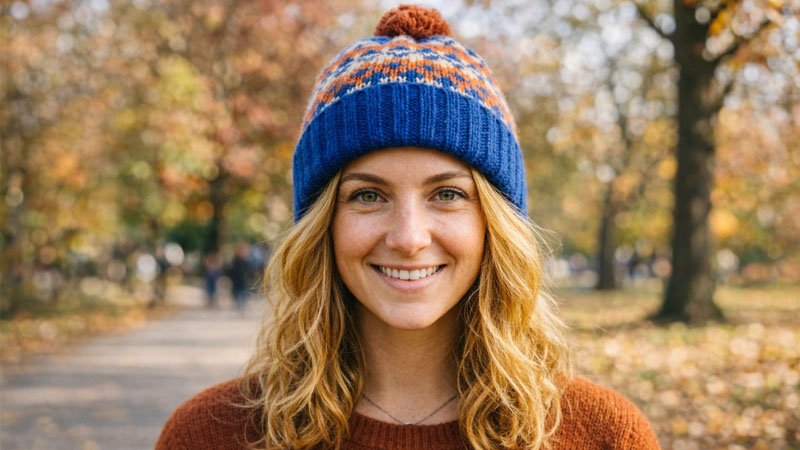
Once you understand your skin tone, the next step is to consider your natural coloring. Hair and eye color can influence which hat shades feel soft and harmonious versus sharp and high-contrast.
Best Hat Colors by Hair Color
Blonde hair usually pairs well with softer shades such as light gray, dusty blue, cream, muted pink, and navy. Extremely harsh or neon colors can sometimes overpower lighter hair.
Brown hair works well with deeper, richer shades such as burgundy, forest green, chocolate brown, charcoal, and dark navy.
Black hair can handle crisp contrast very well. Black, white, camel, emerald, burgundy, and royal blue often create strong and stylish combinations.
Red hair looks especially good with earthy and autumn-inspired tones such as olive, rust, camel, warm brown, and deep green.
Best Hat Colors by Eye Color
Blue eyes are often enhanced by navy, gray, teal, and muted blue tones.
Green eyes tend to stand out with olive, brown, plum, and earthy shades.
Brown eyes work beautifully with burgundy, deep green, navy, and jewel tones.
Hazel eyes often pair well with bronze, olive, warm neutrals, and muted gold-inspired shades.
Your hat does not need to match your eyes or hair exactly. The goal is simply to create a balanced and flattering look.
Step 3: Match the Hat Color to Your Outfit
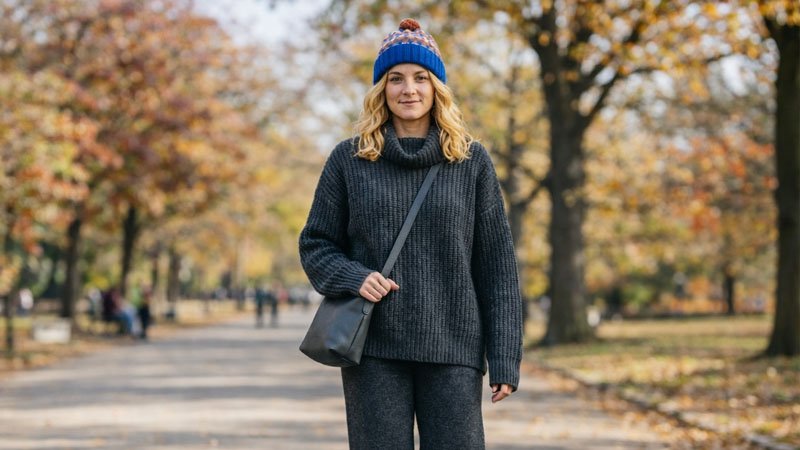
A hat should not only flatter your face. It should also work with the clothes you actually wear. If the color does not fit your wardrobe, it may look great in theory but sit unused in real life.
There are three simple ways to coordinate a hat color with your outfit.
Monochrome Styling
This approach uses a hat color that is similar to the rest of the outfit. It creates a clean, polished, and more minimal look.
Examples include:
- a black cap with a black bomber jacket
- a beige hat with a cream knit and tan trousers
- a navy cap with a navy overshirt or blazer
Monochrome styling is ideal if you want your look to feel refined without appearing too styled.
Contrast Styling
This method uses the hat to create visual tension and make the outfit more dynamic.
Examples include:
- a white cap with a dark jacket and black trousers
- a burgundy beanie with a gray sweater
- a navy cap with a light denim outfit
Contrast works especially well when the rest of the clothing is fairly simple. It helps the hat stand out without looking forced.
Accent Styling
In this case, the hat acts as the main pop of color in the outfit.
Examples include:
- a red cap with a white T-shirt and blue jeans
- a mustard beanie with a black coat and gray pants
- an olive cap with a beige overshirt and white sneakers
This can be a great approach if you like understated outfits but still want one detail to bring energy and personality.
Step 4: Choose Based on the Occasion
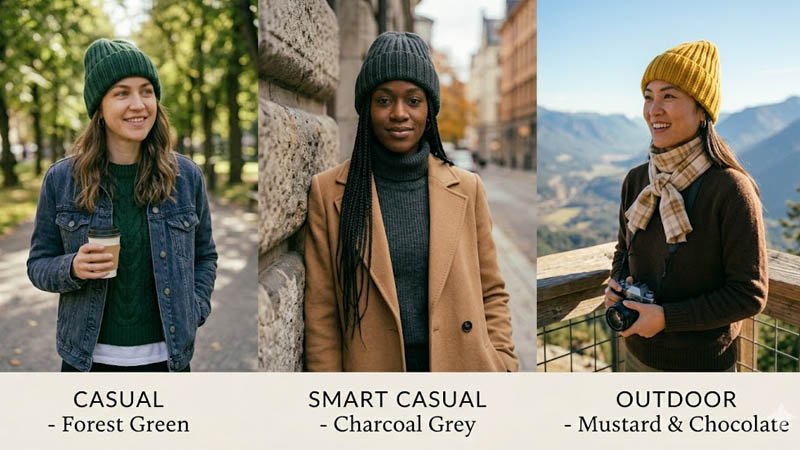
The best hat color also depends on where you plan to wear it. A shade that works for a weekend streetwear look may not feel right for a smart-casual event or a polished outdoor campaign.
Best Hat Colors for Everyday Casual Wear
For daily outfits, the most practical colors are usually the most versatile ones.
Safe and stylish choices include:
- black
- navy
- olive
- beige
- washed gray
- cream
- burgundy
These shades are easy to pair with denim, hoodies, jackets, T-shirts, and casual footwear. If you want one hat that works with most of your wardrobe, black, navy, or olive is often the best place to start.
Best Hat Colors for Smart-Casual or More Polished Looks
If you want a hat to feel more refined, darker and more understated colors tend to work best.
Strong choices include:
- black
- charcoal
- navy
- camel
- deep brown
- dark olive
- burgundy
These shades pair more naturally with tailored coats, knitwear, boots, and structured pieces. They also tend to look more mature and intentional than overly bright colors.
Best Hat Colors for Outdoor Activities
Outdoor hats need to work visually and practically. In warm weather, lighter colors can feel more seasonally appropriate and often reflect sunlight better.
Good outdoor choices include:
- white
- khaki
- sand
- beige
- light gray
- soft olive
For more rugged or utility-driven looks, deeper practical shades such as navy, olive, and charcoal can also work well, especially because they hide dust and wear more easily.
Step 5: Think About the Season
Season has a surprisingly strong effect on how natural a hat color feels.
Best Hat Colors for Spring and Summer
In warmer months, lighter and fresher colors usually feel more appropriate. These shades create an airy, relaxed look and tend to photograph well in natural light.
Good spring and summer hat colors include:
- white
- cream
- beige
- sand
- sky blue
- light gray
- soft olive
- pastel tones
A beige or cream cap is especially useful in spring and summer because it feels fresh without being too bright.
Best Hat Colors for Fall and Winter
During cooler months, richer and deeper shades usually feel more grounded and seasonally consistent.
Good fall and winter hat colors include:
- burgundy
- forest green
- mustard
- chocolate brown
- charcoal
- navy
- dark olive
- black
These tones work well with heavier fabrics such as wool, fleece, denim, and thicker outerwear.
The Safest Hat Colors If You Are Unsure
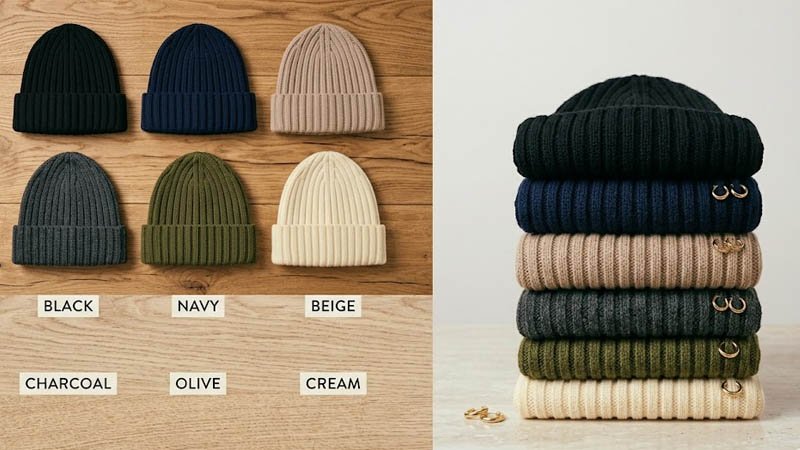
If you are buying your first hat or want a color that works with almost everything, start with the most versatile options.
The safest hat colors are:
- black
- navy
- beige
- charcoal gray
- olive green
- cream
These shades are reliable because they work across seasons, match a wide range of outfits, and suit many different personal styles. They may not always be the boldest choice, but they are usually the most useful.
When Bold Hat Colors Work Best
Bold hat colors can look fantastic when styled with intention. Bright tones are especially effective when you want the hat to become the focal point of the outfit.
Good situations for bolder hat colors include:
- music festivals
- travel outfits
- streetwear looks
- sports-inspired styling
- fashion-forward casual wear
Examples of bolder choices include:
- bright red
- cobalt blue
- mustard yellow
- orange
- emerald green
The key is balance. If your hat is vivid, the rest of the outfit should usually be simpler. A bright red cap with a white T-shirt and classic denim feels confident. A bright red cap with several competing statement pieces often feels too busy.
Choosing Hat Colors for Branding and Custom Orders
If a hat is being designed for a brand, team, event, or promotional campaign, color choice is about more than personal style. It also affects logo visibility, perceived quality, and how widely the hat will appeal to the target audience.
In custom production, neutral shades such as black, navy, beige, charcoal, and olive are often the safest choices because they are versatile, commercially proven, and easier to pair with embroidery or printed branding. High-contrast combinations also tend to perform best for logo clarity. As a professional OEM/ODM manufacturer, GUANGZHOU EASTLUCKY Hat & Garment Co., Ltd. understands that the right hat color is not only a fashion decision, but also an important factor in sampling, branding presentation, and the overall success of a finished product across different markets.
Common Mistakes to Avoid
Even a good outfit can be weakened by the wrong hat color. Here are some common mistakes people make.
Choosing a Color Only Because It Is Trendy
A color may look great in photos or on social media, but that does not mean it will suit your skin tone, wardrobe, or daily use.
Ignoring Your Face and Complexion
Because a hat sits so close to the face, it can either brighten your features or make them look dull. This is why flattering always matters more than trend.
Buying a Color That Matches Only One Outfit
Unless the hat is for a very specific event or look, choose a color that works with at least several pieces already in your wardrobe.
Going Too Bold Without Balance
Bright hats are effective when the rest of the outfit supports them. If everything is competing for attention, the result can feel messy rather than stylish.
Forgetting Practical Use
Light colors may feel fresh, but they can show dirt more easily. Very dark colors may feel polished, but they can absorb more heat in direct sun. Style and function should work together.
Final Thoughts
The best hat color is not the same for everyone. It depends on your skin tone, natural coloring, wardrobe, occasion, and personal style. Still, the process becomes much easier when you break it down step by step.
Start with what flatters your face. Then think about what fits your clothing, the season, and the setting where you plan to wear it. If you want the safest all-around options, choose black, navy, beige, gray, or olive. If you want more personality, move toward burgundy, mustard, forest green, or other richer shades that still feel wearable.
A great hat color does more than complete an outfit. It helps define it. When the shade feels right on you and works naturally with the rest of your style, the whole look becomes more confident, balanced, and memorable.
FAQs
What is the most versatile hat color?
Black, navy, beige, and charcoal gray are usually the most versatile hat colors because they work with many outfits and across different seasons.
What hat color goes with everything?
Neutral shades such as black, beige, cream, gray, and navy are the easiest to style with a wide range of casual and smart-casual outfits.
Which hat color is most flattering?
The most flattering hat color depends on your skin tone and natural coloring. Warm undertones often suit earthy colors, while cool undertones tend to look better in jewel tones, navy, and cool grays.
Is black the best hat color?
Black is one of the safest and most versatile choices, especially for everyday wear, but it is not automatically the best for everyone. Some people look softer and more balanced in navy, beige, or olive.
Are light or dark hats better?
Light hats are often better for spring, summer, and outdoor wear, while dark hats usually feel more polished and are easier to style in fall and winter.
How to Choose the Right Hat for Dreadlocks Without Causing Damage
Choosing the right hat for dreadlocks is not just about style. For people with locs, the wrong hat can cause frizz, flatten the hair, create pressure on the roots, and even lead to breakage over time. The right hat, on the other hand, can protect your scalp, support your personal style, and help keep your dreadlocks comfortable in different weather conditions.
So, can people with dreadlocks wear hats? Absolutely. The key is choosing a hat that works with the size, shape, and texture of your locs instead of pressing against them.
In this guide, we will look at how hats affect dreadlocks, what features to look for, which materials and styles work best, and how to protect your hair while wearing hats regularly.
Why Choosing the Right Hat Matters for Dreadlocks
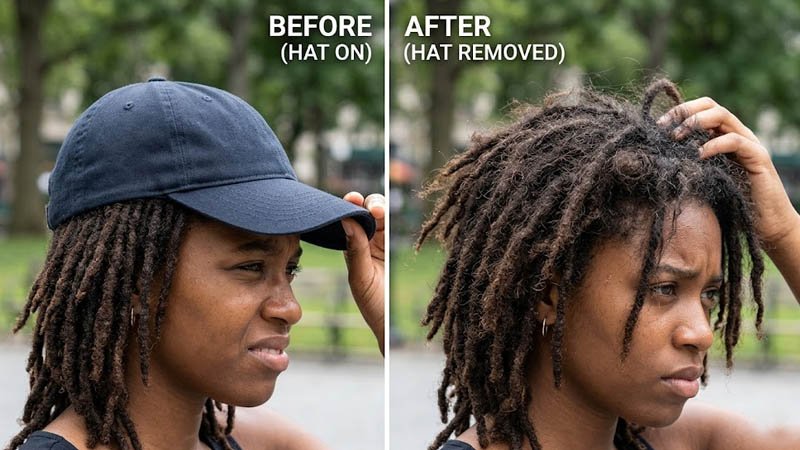
Not every hat is suitable for dreadlocks. A hat may look stylish on the outside, but if it is too tight, too shallow, or made with rough inner fabric, it can affect both the appearance and condition of your hair.
People with dreadlocks often deal with a few common issues when wearing the wrong hat:
Frizz from Friction
One of the biggest problems is friction. If the inside of the hat rubs against the surface of the locs, it can lift loose fibers and make the hair look fuzzy or messy. This is especially noticeable if you wear hats often or keep them on for long periods.
Flattening and Loss of Shape
Some hats do not have enough internal space for dreadlocks. When the crown is too shallow, the hat pushes down on the hair and causes the locs to flatten. Instead of looking full and defined, the hair may lose volume and shape.
Root Tension and Discomfort
A tight hat can place pressure on the scalp and hairline. Over time, this can create discomfort and strain at the roots. This is especially important for starter locs, fresh retwists, or tightly maintained locs, which are more sensitive to compression.
Heat and Sweat Buildup
Wearing a hat for hours can trap heat and moisture, especially if the material is not breathable. This can leave the scalp feeling hot, damp, or irritated, which is not ideal for healthy loc maintenance.
What Makes a Hat Dreadlock-Friendly?
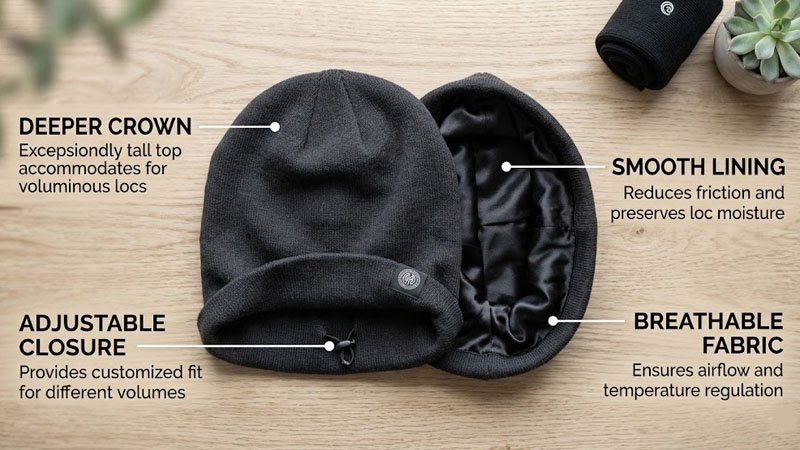
A good hat for dreadlocks should do more than look good. It should protect the hair, reduce friction, and provide enough room for the locs to sit naturally.
Here are the most important features to look for.
1. Enough Crown Depth
Crown depth is one of the most important details. A deeper crown gives dreadlocks more space and reduces pressure on the top of the head. This is especially important for medium, long, or thick locs.
If the crown is too shallow, the hat may flatten the hair and feel uncomfortable after a short time.
2. Adjustable Fit
Hats with adjustable closures are usually better than rigid fitted styles for people with dreadlocks. Snapbacks, strap-back caps, and other adjustable designs let you control how tight the hat sits on your head.
This helps reduce pressure around the roots and makes the hat easier to wear with different loc volumes or hairstyles.
3. Smooth Inner Surface
The outer appearance of a hat is important, but the inside matters just as much. A smooth interior helps reduce friction and lowers the risk of frizz.
Soft cotton linings, satin-like interiors, or well-finished inner panels are usually gentler on dreadlocks than rough woven or stiff synthetic surfaces.
4. Breathable Construction
A breathable hat is more comfortable for longer wear. Ventilation eyelets, lighter fabrics, and moisture-managing construction can all help reduce sweat buildup.
This matters even more in warm climates, during travel, or when wearing hats for daily outdoor use.
5. Flexible Shape
Some hat styles are naturally more forgiving than others. Hats with a softer structure tend to work better for fuller hairstyles because they adjust more easily to the natural shape of the hair.
How to Choose the Right Hat Based on Your Type of Dreadlocks
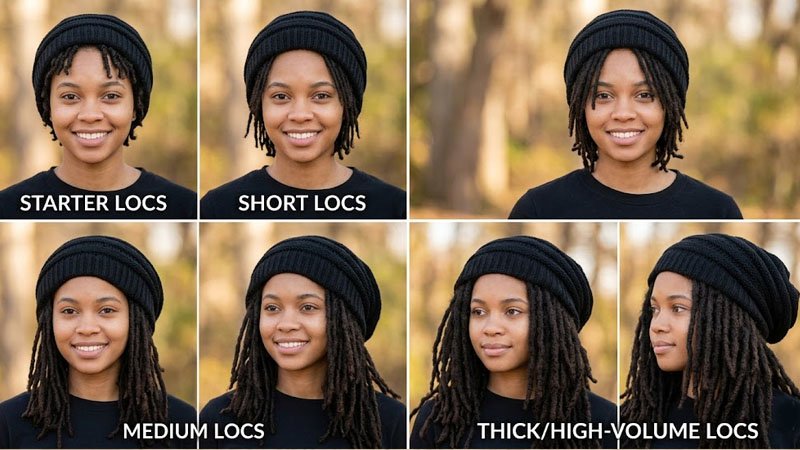
Not all dreadlocks are the same, so the best hat also depends on your loc stage, length, thickness, and how you usually style your hair.
Starter Locs
Starter locs are more delicate and easier to distort. At this stage, it is better to avoid tight fitted caps, rough fabrics, or structured hats that press down too much.
Better choices include:
- soft bucket hats
- relaxed caps with adjustable fit
- loose beanies with a smooth interior
The goal is to reduce friction and avoid changing the shape of the locs while they are still forming.
Short Locs
Short locs are often easier to manage under hats because they take up less space. Many hat styles can work well, including baseball caps, bucket hats, and beanies, as long as the fit is not too tight.
For short locs, comfort and inner texture are usually more important than extra crown depth.
Medium to Long Locs
Longer locs need more internal room. Deep-crown hats, slouchy beanies, and relaxed-fit caps are usually better choices than shallow or rigid styles.
If the hat feels like it is pressing down on the top of the head, it is probably not the best fit for longer dreadlocks.
Thick or High-Volume Locs
If your dreadlocks are thick or full, space becomes a major factor. Look for hats that allow the hair to sit naturally without compression.
For high-volume locs, the best hats are usually:
- deep caps
- oversized beanies
- soft-structured hats
- looser casual styles
Locs Worn in a Bun or Ponytail
If you often wear your dreadlocks up, a standard cap may feel restrictive. In this case, visors, open-back styles, or looser hats may work better.
You can also style your locs lower at the back if you want to wear a cap more comfortably.
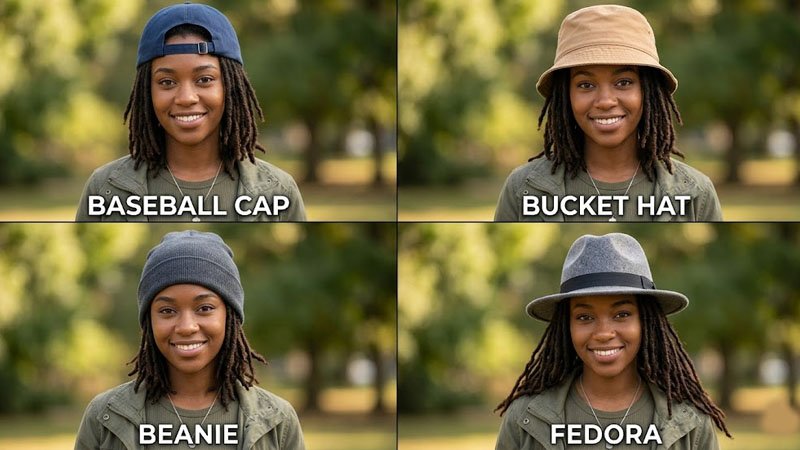
Different hat styles offer different levels of comfort, protection, and visual appeal. Here are some of the most practical options.
Baseball Caps
Baseball caps are a popular everyday option, especially if they have an adjustable back closure. They work best for short to medium locs and casual wear.
However, not all baseball caps are ideal. Shallow crowns and rigid front panels may flatten the hair, so a roomier fit is usually better.
Bucket Hats
Bucket hats are one of the more dreadlock-friendly styles because they usually provide a relaxed fit and less pressure than structured caps. They are a good option for casual daily wear and can work well for starter locs or medium locs.
Beanies
Beanies are useful in cold weather and can work very well with dreadlocks if they are loose and soft. Slouchy beanies are generally better than tight knit styles because they give the hair more room.
A tight beanie may compress the locs, especially if worn for many hours.
Fedoras and Fashion Hats
These can look stylish with dreadlocks, but comfort depends heavily on fit and internal structure. They are better for occasional wear than all-day use, especially if they are stiff or narrow inside.
Visors
Visors are a practical option when you want sun protection without covering the entire head. They are especially helpful for people with bulky or tied-up locs because they leave more room for the hair.
Best Materials for Hats Worn with Dreadlocks
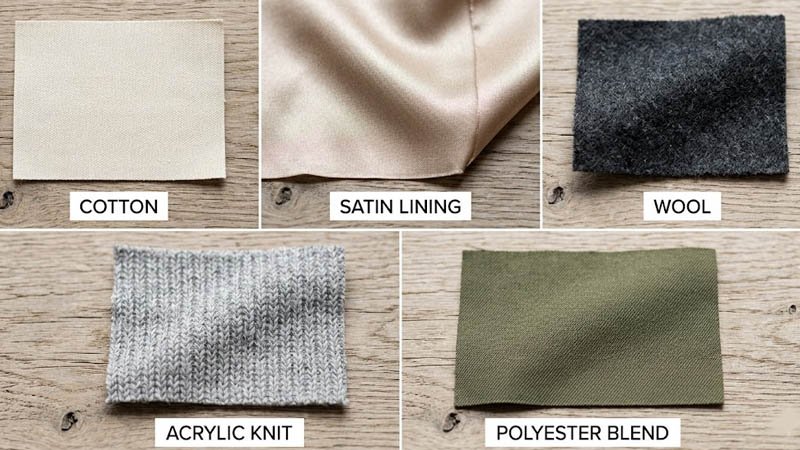
Material is a major part of comfort. Even a well-shaped hat may not work well if the fabric creates too much friction or traps too much heat.
Cotton
Cotton is breathable, soft, and generally a safe everyday option. It is comfortable for casual hats and usually feels gentler on the scalp than rougher materials.
Satin-Lined or Smooth-Lined Options
If reducing friction is a priority, hats with smoother inner linings are worth considering. A smoother interior helps protect the surface of the locs and can help reduce frizz during regular wear.
Wool
Wool is useful for warmth, especially in cold weather, but it may feel rough if it is not lined or softened inside. For dreadlocks, softer wool blends or lined winter hats are usually better.
Acrylic Knit
Acrylic is common in beanies and winter hats. It is lightweight and flexible, but it may create more static in dry weather. The comfort of acrylic depends a lot on how tight the knit is and how the inside feels against the hair.
Polyester Blends
Polyester blends are widely used in sports and promotional hats because they are durable and easy to maintain. For dreadlocks, what matters most is whether the hat has good ventilation and a comfortable inner finish.
How to Protect Dreadlocks While Wearing a Hat
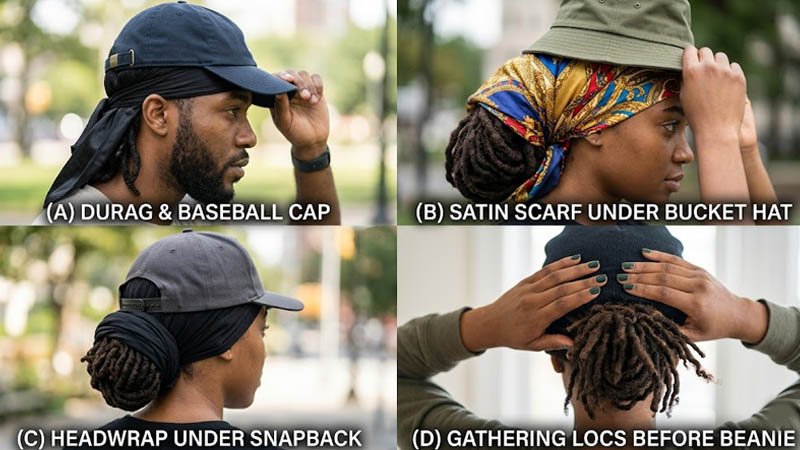
Choosing the right hat is important, but how you wear it also matters.
Keep Your Hair Clean and Dry
Try to wear hats on clean, dry locs whenever possible. Damp hair trapped under a hat for hours can lead to discomfort and scalp buildup.
Use a Protective Layer
A durag, satin scarf, or lightweight headwrap can create a barrier between the locs and the hat. This helps reduce friction and can help preserve the neatness of the hair.
Avoid Wearing Hats for Too Long
Even a comfortable hat should not stay on all day without a break. If possible, remove it every few hours to let your scalp breathe and let the locs settle back into shape.
Be Careful After a Fresh Retwist
Freshly maintained locs are more sensitive to compression. If you have recently retwisted your hair, choose a very soft and loose hat or avoid wearing one until the style has settled.
Common Mistakes to Avoid
If you want to protect your dreadlocks, avoid these common mistakes when choosing or wearing hats:
Choosing Style Over Fit
A hat may look great, but if it feels tight, shallow, or rough inside, it is not the right choice for regular wear.
Wearing Tight Hats Every Day
Repeated daily pressure can flatten the locs and create tension at the roots.
Ignoring the Interior Fabric
Many people focus only on the outside design, but the inside of the hat is what touches the hair directly.
Wearing Hats on Damp Locs
This can trap moisture and make the scalp uncomfortable.
Forcing Bulky Locs into Small Hats
If the hair clearly does not fit comfortably, the hat is not suitable.
Quick Checklist for Choosing a Hat for Dreadlocks
Before buying or wearing a hat, ask yourself these questions:
- Does the hat have enough depth for my locs?
- Is the fit adjustable or flexible?
- Does the inside feel smooth?
- Will it reduce or increase friction?
- Is the material breathable enough for long wear?
- Does it feel comfortable around my roots and hairline?
- Can my locs sit naturally inside it?
If the answer to most of these is yes, the hat is more likely to work well for dreadlocks.
A Better Hat Is About Design, Not Just Style
From a product development point of view, a good hat for dreadlocks depends on more than appearance. Crown depth, internal finish, closure type, softness, and ventilation all affect the wearing experience. GUANGZHOU EASTLUCKY Hat & Garment Co., Ltd. is a high-end custom hat and OEM/ODM manufacturer based in Guangzhou, China, with 15 years of expertise in professional R&D, production, and distribution of various hats and embroidered accessories. Guided by the philosophy “Quality as Root, Innovation as Soul,” the company provides global clients with one-stop solutions from design sampling to mass production, helping brands build efficient and high-quality supply chain support. For brands serving consumers with textured or fuller hairstyles, thoughtful hat construction can make a real difference in comfort, function, and inclusivity.
Conclusion
Choosing the right hat for dreadlocks does not have to be difficult, but it does require more attention than choosing a hat for flatter hairstyles. The best hat is one that gives your locs enough room, reduces friction, feels comfortable on the scalp, and supports the way you naturally wear your hair.
Instead of focusing only on appearance, pay attention to crown depth, fit, material, inner texture, and breathability. These details will help you avoid frizz, flattening, and unnecessary tension.
With the right choice, hats and dreadlocks can work together easily. You do not have to sacrifice style to protect your locs — you simply need a hat designed or selected with your hair in mind.
FAQs
Can wearing hats damage dreadlocks?
Yes, the wrong hat can cause frizz, flattening, root tension, and discomfort. A tight or rough hat worn too often may also increase the risk of breakage over time.
What type of hat is best for dreadlocks?
In general, hats with enough crown depth, adjustable fit, breathable materials, and a smooth interior are best for dreadlocks. Bucket hats, loose beanies, and roomier adjustable caps are often good choices.
Are baseball caps bad for dreadlocks?
Not always. Adjustable baseball caps can work well for short or medium locs, but shallow or very structured caps may flatten the hair.
Are beanies good for dreadlocks?
Yes, especially loose or slouchy beanies. Tight beanies may compress the locs and create friction if worn for long periods.
How do I stop my locs from getting frizzy under a hat?
Choose a hat with a smoother interior, avoid tight styles, and consider wearing a durag or satin scarf underneath.
Can I wear a hat with starter locs?
Yes, but you should choose soft, loose-fitting hats and avoid anything that puts too much pressure on the hair while the locs are still forming.
Men’s Hat Styles Explained: Complete Guide + Comparison & Buying Tips
From streetwear to luxury fashion, men’s hats are making a strong comeback. Whether it’s a classic fedora or a modern bucket hat, the right choice can define your entire look.
But with so many styles available, one question remains:
Which hat is right for you—or your brand?
This complete guide breaks down the most popular men’s hat styles, their differences, and how to choose the perfect option for both personal wear and custom branding.
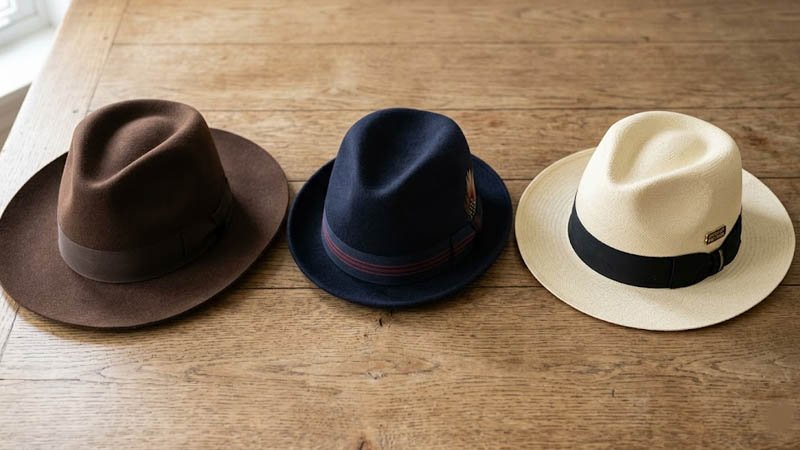
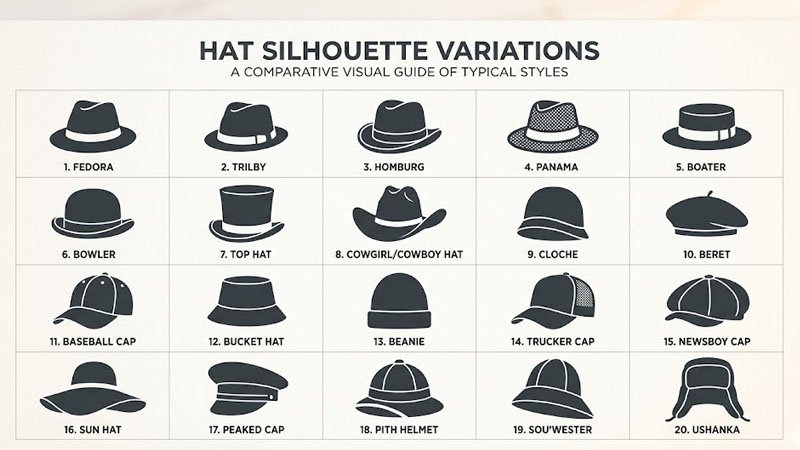
Classic hats offer timeless elegance and structured design, making them ideal for formal and smart-casual looks.
Fedora
Description: Soft brim, pinched crown, typically made from felt
Style Use: Smart-casual to formal outfits
Price Range: Mid to high-end
👉 Compared to a trilby, the fedora has a wider brim, making it more suitable for formal occasions and balanced proportions.
Homburg
Description: Felt hat with a stiff curled brim and center crease
Style Use: Formal events, business wear
Price Range: High-end
👉 Often associated with classic elegance and authority.
Trilby
Description: Narrow brim angled downward
Style Use: Trendy, modern outfits
Price Range: Mid-range
👉 Key Difference:
- Fedora = classic & formal
- Trilby = stylish & casual
Porkpie
Description: Flat crown with a circular crease
Style Use: Creative, artistic styling
Price Range: Mid-range
Boater
Description: Flat straw hat with a ribbon band
Style Use: Summer semi-formal events
Price Range: Mid-range
Panama Hat
Description: Lightweight, handwoven straw hat from Ecuador
Style Use: Summer elegance, travel, outdoor events
Price Range: Mid to premium
👉 Note: Authentic Panama hats are finer and more breathable than standard straw hats.
Casual & Sporty Hats
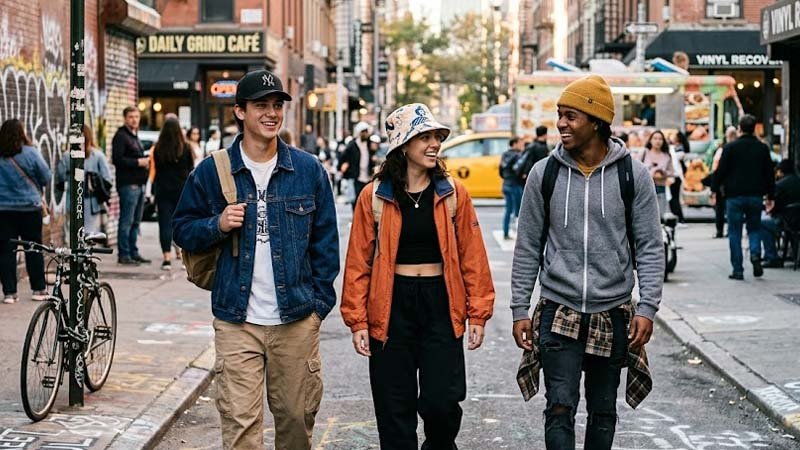
These styles are designed for everyday comfort, practicality, and modern fashion.
Description: Curved brim; trucker hats feature mesh backs
Style Use: Casual wear, sports, promotions
Price Range: Low to mid-range
👉 Best for Branding:
Large front panels make them ideal for embroidery and logo printing.
Description: Soft fabric with a downward brim
Style Use: Streetwear, festivals, outdoor use
Price Range: Low to mid-range
👉 Trend Insight: A major comeback driven by Gen Z and fashion influencers.
Beanie
Description: Knit cap for warmth
Style Use: Winter wear and urban style
Price Range: Low to mid-range
👉 Material Tip:
- Acrylic = affordable
- Wool = premium & warmer
Heritage & Regional Styles
These hats carry cultural significance and unique character.
Flat Cap / Newsboy Cap
Style: Vintage yet versatile
Best For: Smart casual outfits
Mariner’s / Peaked Caps
Style: Structured and practical
Best For: Windy conditions and nautical looks
Cowboy / Western Hats
Style: Wide brim and bold design
Best For: Outdoor use and statement fashion
Top Hat
Style: Formal and ceremonial
Best For: Weddings, performances, special occasions
Hat Style Comparison (Quick Guide)
| Style |
Formality |
Best Season |
Key Feature |
| Fedora |
High |
Fall/Winter |
Classic wide brim |
| Trilby |
Medium |
All |
Narrow brim |
| Baseball Cap |
Low |
All |
Casual & versatile |
| Bucket Hat |
Low |
Summer |
Soft & trendy |
| Panama |
Medium |
Summer |
Lightweight & breathable |
How to Choose the Right Hat
By Occasion
- Formal: Fedora, Homburg, Panama
- Casual: Baseball cap, bucket hat, flat cap
By Material
- Felt → warm & durable
- Straw → lightweight & breathable
- Knit → flexible & comfortable
By Face Shape
- Round face → structured hats
- Long face → wider brims
Sizing Tips
- Choose adjustable designs when possible
- Ensure a snug but comfortable fit
- For bulk orders, consistent sizing is essential
Hat Trends in 2025
The hat market continues to evolve with fashion and consumer behavior:
- Bucket hats → strong comeback in streetwear
- Vintage styles (flat caps, fedoras) → rising popularity
- Sustainable materials → increasing demand from global brands
- Custom logo hats → key tool for brand marketing
👉 Brands are increasingly using hats not just as accessories, but as branding assets.
Common Mistakes When Choosing a Hat
Avoid these common errors:
- Choosing the wrong size
- Ignoring face shape
- Wearing formal hats in casual settings
- Overlooking material suitability for the season
For Brands: Choosing the Right Hat for Customization
For businesses, selecting the right hat style is critical for both branding and market success.
- Baseball Caps: Best for logos and promotions
- Bucket Hats: Ideal for younger audiences and fashion brands
- Beanies: Perfect for seasonal campaigns
For brands looking to develop custom hat collections, choosing the right manufacturing partner is just as important as selecting the right style.
GUANGZHOU EASTLUCKY Hat & Garment Co., Ltd. is a high-end custom hat and OEM/ODM manufacturer with over 15 years of experience. With strong R&D capabilities, strict quality control, and efficient supply chain management, we provide one-stop solutions—from design sampling to mass production—helping global brands bring their ideas to market quickly and reliably.
Hat Care & Maintenance
Cleaning Tips
- Felt → brush gently
- Straw → wipe with damp cloth
- Knit → hand wash and air dry
Storage Tips
- Use hat stands or boxes
- Avoid direct sunlight exposure
Conclusion
Men’s hats are more than accessories—they’re tools for expression, function, and branding.
Whether you’re choosing a hat for personal style or developing a product line, understanding different styles, materials, and use cases will help you make smarter decisions.
Looking for Custom Hat Solutions?
- Free design mockup within 24 hours
- Flexible MOQ for bulk orders
- Global shipping with reliable lead times
👉 Contact us today to start your custom hat project.
FAQs
What hat styles are best for summer?
Panama hats, boater hats, and bucket hats are ideal due to breathability.
How do I know if a hat fits correctly?
It should feel secure without pressure and stay in place when moving.
Can I wear a fedora casually?
Yes, pairing a fedora with casual outfits can create a stylish contrast.
Which hat is best for branding?
Baseball caps are the most versatile and widely used for customization.
Why Are Backward Hats So Popular?
At first glance, wearing a hat backward seems like a small styling decision. But its popularity tells a much bigger story.
Backward hats have remained visible for decades—not because they are complicated, expensive, or exclusive, but because they do something very few fashion details can do so easily: they change the meaning of an ordinary item. A standard cap worn forward looks practical and conventional. The same cap worn backward feels more relaxed, more personal, and often more expressive.
That is why backward hats have lasted far beyond a single trend cycle. What started as a practical adjustment in sports gradually became a cultural signal, then a fashion habit, and eventually a timeless part of casual style.
So why are backward hats so popular? The answer lies in a unique combination of function, attitude, media influence, and design versatility.
The Backward Hat Started with Function, Not Fashion
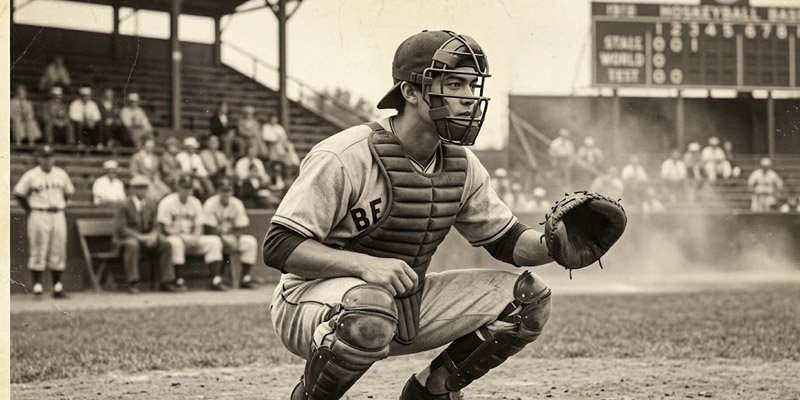
One of the main reasons backward hats became so influential is that they did not begin as an artificial trend. They began with a real purpose.
In the early history of baseball, players—especially catchers—sometimes turned their caps backward because the brim could interfere with face masks or limit convenience during movement. In those moments, wearing the hat backward was not about style at all. It was simply practical.
This origin matters because fashion often becomes more powerful when it grows out of real use. A style that begins with function tends to feel more natural than one invented only for visual effect. That practical beginning gave the backward hat authenticity long before it became part of mainstream culture.
In other words, people did not first wear hats backward to stand out. They wore them backward because, in certain situations, it made more sense. The cultural meaning came later.
Sports Helped Turn It into a Recognizable Look
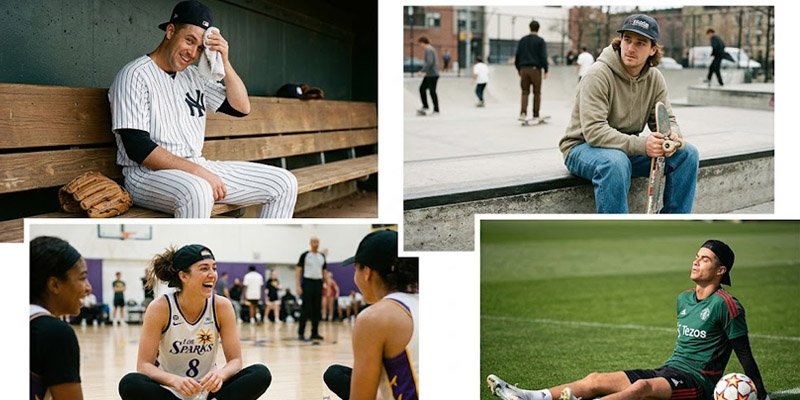
Once backward caps appeared in sports, they began to develop visual meaning.
Athletes have always had a strong influence on casual fashion, especially when sports move beyond competition and become part of everyday culture. Practice wear, travel outfits, and off-field appearances often shape how the public sees athletic style. A cap worn backward began to suggest motion, ease, and confidence. It looked less formal than a standard cap position and more spontaneous.
That image helped the look spread. Even people who were not athletes could understand what it communicated. A backward cap felt active, youthful, and informal. It looked like something worn by someone in motion, not someone dressing to follow rules.
This is one of the earliest reasons backward hats became popular: the style was simple, visible, and easy to imitate.
Popularity Grew Because It Was Easy to Copy
Many fashion trends fail because they are too expensive, too extreme, or too difficult for ordinary people to adopt. The backward hat succeeded for the opposite reason.
Anyone who owned a cap could wear it backward instantly. There was no need to buy a luxury item, follow a complicated styling formula, or change an entire wardrobe. That made the look accessible across age groups, social backgrounds, and style preferences.
This low barrier to entry is one of the strongest reasons the backward hat became so widely accepted. It gave people a way to signal attitude without much effort. The item itself stayed the same, but the message changed.
That is a powerful feature in fashion. When a small adjustment produces a noticeable difference in tone, the style becomes highly repeatable. Backward hats worked because they offered self-expression in one effortless move.
The 1990s Made Backward Hats a Cultural Symbol
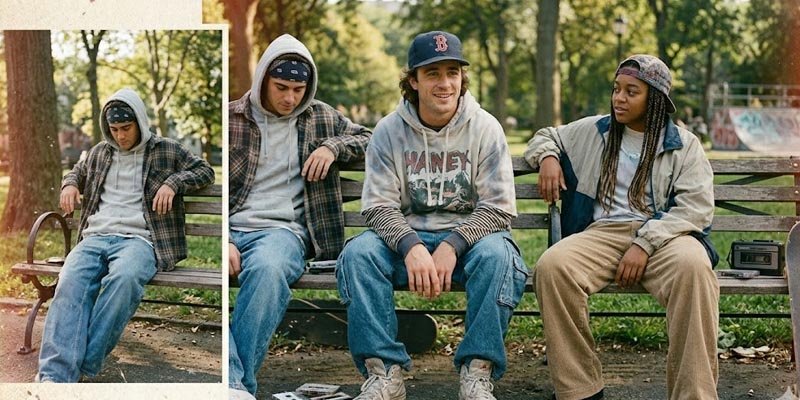
Although the backward hat began with utility, it became truly popular when popular culture gave it meaning.
By the 1990s, the look had clearly moved beyond sports and into music, television, and streetwear. At that point, wearing a cap backward no longer looked accidental. It became associated with youth culture, confidence, informality, and a subtle sense of rebellion.
This was an important transformation. A backward hat was no longer just a piece of headwear worn differently. It started to communicate identity.
In youth fashion, that matters a great deal. People are often drawn to styles that look casual but still say something. A backward hat suggested that the wearer was relaxed, self-directed, and not overly concerned with convention. It was rebellious in a mild but highly visible way.
That is one reason the look resonated so strongly with younger audiences. It did not feel polished or controlled. It felt natural, free, and personal.
Music, Television, and Celebrity Visibility Pushed It Even Further
Backward hats became even more popular because people kept seeing them in public culture.
When musicians, entertainers, athletes, and television personalities wore backward caps, they gave the look repeated visibility. More importantly, they placed it inside a broader style context. A backward cap often appeared with sneakers, denim, oversized silhouettes, team apparel, or street-inspired outfits. That made it feel like part of a complete lifestyle rather than an isolated styling trick.
Television helped normalize the look. Music culture helped energize it. Celebrity style helped commercialize it. Together, these forces transformed the backward hat from a specific subcultural gesture into a mainstream fashion image.
This stage is crucial in understanding why backward hats became so popular. Visibility alone is not enough. A style becomes durable when it is repeatedly attached to personalities and aesthetics people admire. The backward cap benefited from exactly that kind of cultural repetition.
Backward Hats Suggest Individuality Without Looking Too Hard
Another reason backward hats remain popular is that they offer a strong style signal without appearing forced.
Some fashion choices are dramatic. Others are subtle. The backward hat sits in a useful middle ground. It is noticeable, but not extreme. It changes the tone of an outfit without dominating the entire look.
That makes it especially attractive to people who want to appear casual, confident, or slightly unconventional without overstyling themselves.
This balance is important. A backward cap can suggest:
- ease
- youthfulness
- informality
- sporty confidence
- streetwear awareness
- personal attitude
And yet it can do all that with a very familiar object.
That is rare in fashion. The best long-lasting style details are often the ones that communicate personality without demanding too much attention. Backward hats achieve exactly that balance.
The Style Survived Because It Adapted to Different Fashion Eras
One reason backward hats never fully disappeared is that they kept evolving with the times.
In one era, they were closely associated with sports. In another, they became tied to hip-hop and street culture. Later, they appeared in skate style, celebrity casualwear, festival looks, and mainstream everyday fashion. More recently, they have remained relevant through social media, influencer styling, and the continued popularity of caps in general.
The backward hat survived because it was flexible enough to move between these worlds. It did not belong to only one group for very long.
That flexibility matters. Fashion accessories that stay confined to one subculture often fade when that subculture loses visibility. But backward hats adapted. They could be worn with athletic wear, graphic tees, denim jackets, hoodies, relaxed tailoring, or simple daily basics.
In other words, the backward hat remained popular because it kept changing its context without losing its identity.
It Still Feels Modern Because It Matches Today’s Fashion Values
Modern consumers often value comfort, authenticity, and versatility more than rigid dress rules. Backward hats fit perfectly into that shift.
Today, people are less interested in dressing according to strict standards and more interested in creating outfits that feel natural and personal. The backward cap supports that approach. It looks effortless. It feels familiar. And it allows the wearer to appear styled without seeming overly deliberate.
This is one reason the look continues to work across genders and generations. It is casual enough for daily wear, but expressive enough to remain visually interesting.
Its popularity also reflects the wider movement toward lifestyle dressing. People want clothing and accessories that work across multiple settings—outdoors, travel, casual work environments, events, and social content. A cap that can move between these settings while still looking relaxed has clear staying power.
Design Quality Also Plays a Big Role
Not all hats create the same visual effect when worn backward.
The popularity of backward hats is also connected to product design. Shape, crown structure, brim proportion, embroidery quality, fabric texture, and overall fit all influence how the cap looks from every angle. Since the back of the hat becomes more visible when worn this way, closure details, panel balance, stitching consistency, and finishing become even more important.
That is why premium cap manufacturing continues to matter. A backward hat may look effortless, but that effortless look depends heavily on good construction. For brands developing high-quality headwear collections, experienced manufacturing support can make a major difference from concept to final production. Companies such as GUANGZHOU EASTLUCKY Hat & Garment Co., Ltd., a high-end custom hat and OEM/ODM manufacturer based in Guangzhou, China, with 15 years of expertise in professional R&D, production, and distribution of various hats and embroidered accessories, provide one-stop solutions from design sampling to mass production for global brands.
Backward Hats Are Popular Because They Turn Utility into Identity
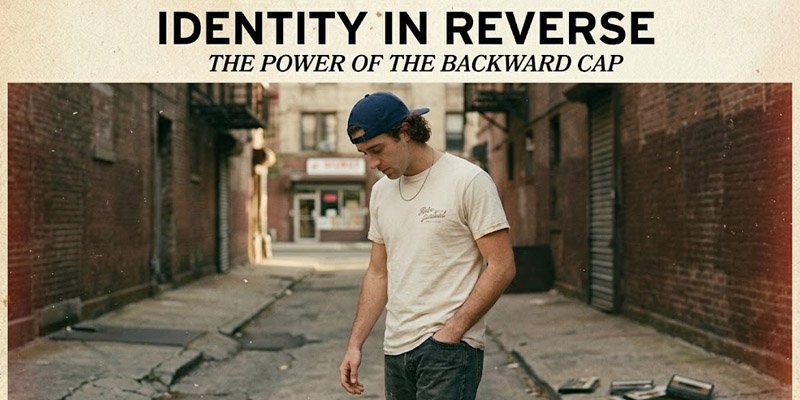
If we reduce the answer to its core, backward hats are popular because they transformed a practical adjustment into a lasting symbol of casual identity.
That transformation is what gives the style its longevity.
A cap worn backward is easy to understand visually. It suggests a different posture toward the same object. It says that the wearer is using something familiar in a more personal way. That small change creates a strong emotional and stylistic effect.
And because the change is so simple, it never becomes inaccessible. It remains open to reinterpretation by each new generation.
This is why backward hats continue to appear in so many different style environments. They are not just surviving as a leftover trend. They are surviving because they still perform a useful cultural function: they help people express ease, individuality, and confidence with almost no effort at all.
Most likely, yes.
The forms may evolve. Materials may improve. Branding, embroidery, sustainable fabrics, and hybrid silhouettes may continue to develop. But the basic appeal of the backward hat is unlikely to disappear anytime soon.
Its popularity rests on several durable strengths:
- it is easy to wear
- easy to recognize
- easy to personalize
- easy to pair with modern casual fashion
- and easy to reinterpret over time
Trends usually disappear when they are too narrow, too rigid, or too tied to one moment. The backward hat has avoided all three problems. It is broad, adaptable, and culturally familiar.
That is why it continues to return, remain, and reinvent itself.
Conclusion
Backward hats are popular for a simple reason: they do more than change the direction of a cap. They change the feeling of it.
What began as a practical solution in sports became a visual symbol of ease, youth, individuality, and cultural style. Over time, music, television, celebrity influence, and evolving fashion trends turned the backward cap into something much bigger than a functional accessory.
Its lasting appeal comes from its rare combination of accessibility and meaning. Anyone can wear a hat backward, but the effect is immediate: the same object suddenly feels more relaxed, more expressive, and more personal.
That is why backward hats remain popular today. They are one of the clearest examples of how fashion lasts—not when it tries too hard, but when a small, natural change gives an everyday object a whole new identity.
Different Types of Hats for Women and How to Choose the Right One
Hats are more than simple accessories. The right hat can frame the face, balance body proportions, complete an outfit, and add practical protection from the sun or cold weather. But not every hat flatters every woman in the same way. A style that looks effortless on one person may feel awkward on another if the shape, brim, material, or fit is wrong.
That is why knowing the different types of hats for women is only the first step. The more important question is how to choose the right one for your face shape, outfit, season, and lifestyle.
From casual baseball caps to elegant boater hats and practical sun hats, women’s hats come in many forms. Some are designed for comfort and everyday wear, while others are better for statement styling, special occasions, or seasonal function.
With 15 years of experience in custom hat development and OEM/ODM production, GUANGZHOU EASTLUCKY Hat & Garment Co., Ltd. understands that a great hat is never just about appearance alone. Design, material, structure, and fit all work together to shape how a hat looks and performs.
In this guide, we will walk through the most popular types of hats for women and explain how to choose the right one with more confidence.
Why Hats Are More Than Just Accessories
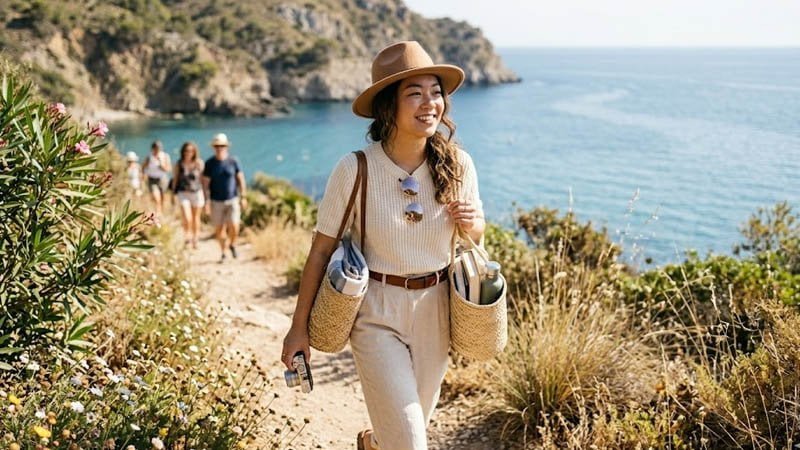
A hat can change the entire mood of an outfit. Even when clothing is simple, the right hat can make the overall look feel more polished, more relaxed, more feminine, or more fashion-forward.
Function Meets Fashion
Hats serve both practical and aesthetic purposes. A wide-brim sun hat helps protect the face and neck from UV exposure. A beanie keeps the head warm during winter. A visor improves comfort during outdoor activities. At the same time, each of these hats also creates a different visual effect and style identity.
Seasonal Adaptation
Not every hat works well in every season. Straw, paper braid, cotton, and lightweight fabrics are usually more suitable for warmer weather. Wool, felt, fleece, and knit materials are better for autumn and winter. Seasonal matching is not only about comfort, but also about visual harmony.
Personality and Style Expression
Hats are highly expressive. A beret can feel artistic and refined. A fedora can look confident and structured. A bucket hat may feel casual and youthful. The style of hat you choose often says as much about your taste as the clothes you wear.
Quick Guide: How to Choose the Right Hat
Before looking at individual hat types, it helps to remember a simple selection process.
1. Start with the occasion
Think about where you will wear the hat. Daily commuting, beach vacations, weddings, outdoor sports, and autumn streetwear all call for different styles.
2. Consider your face shape
Some hats soften the face, while others add height or width. Understanding this makes choosing easier.
3. Match the hat to the season
The right material matters just as much as the right shape. A wool fedora feels appropriate in fall, while a straw boater looks better in spring and summer.
4. Keep the proportions balanced
Brim width, crown height, and overall size should suit your body frame. A very dramatic hat may overwhelm a petite figure, while a tiny hat may look visually weak on a taller frame.
5. Prioritize fit and comfort
A beautiful hat will not become a favorite if it feels too tight, too loose, or unstable when worn.
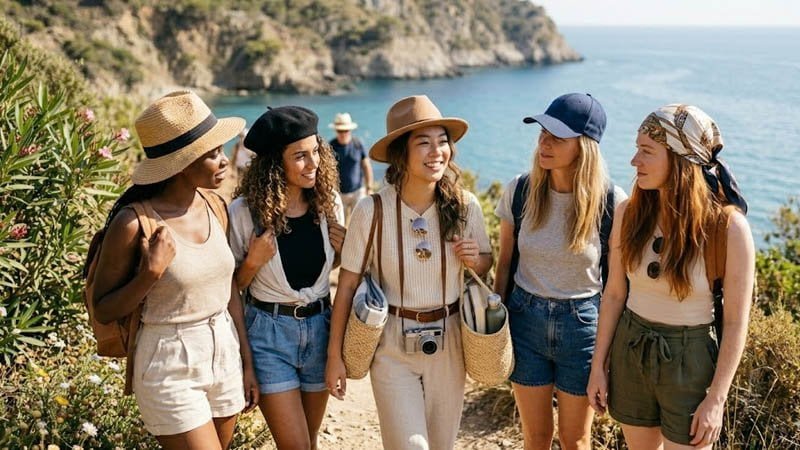
Casual and Sporty Hats
1. Baseball Cap
The baseball cap is one of the easiest hats to wear. It is practical, comfortable, and works well with everyday casual outfits.
Why women choose it:
- Easy to style
- Provides light sun protection
- Great for travel, errands, sports, and relaxed daily wear
Best for: Casual looks, sporty outfits, outdoor activities
Style advice:
Baseball caps pair best with clean casual pieces like jeans, leggings, sneakers, oversized shirts, or athleisure. They are especially useful when you want an outfit to feel effortless without looking unfinished.
2. Bucket Hat
The bucket hat has a soft crown and downward-sloping brim. It has become a popular choice for summer fashion, travel styling, and streetwear.
Why women choose it:
- Lightweight and easy to pack
- Trendy without being too formal
- Available in many materials and prints
Best for: Vacation outfits, casual summer looks, streetwear
Style advice:
Bucket hats look best with relaxed outfits such as denim shorts, loose shirts, simple dresses, or sporty separates. If you have a round face, choose a bucket hat with slightly more structure to avoid adding too much softness around the face.
The trucker hat features a structured front and a mesh back, combining breathability with a bold casual look.
Why women choose it:
- Comfortable in warm weather
- Works well with graphic branding and patches
- Adds a retro, sporty edge
Best for: Streetwear, outdoor fashion, relaxed styling
Style advice:
Trucker hats suit more confident casual looks. They work especially well with vintage-inspired outfits, oversized tees, cargos, denim jackets, and sneakers.
4. Fedora
The fedora is one of the most recognizable structured hats in women’s fashion. Its pinched crown and medium brim give it a refined and confident appearance.
Why women choose it:
- Timeless and stylish
- Works across smart casual and dressier outfits
- Adds instant structure to an outfit
Best for: Autumn styling, polished daywear, elevated casual looks
Style advice:
A fedora works best when the outfit has enough shape to support it. Tailored coats, ankle boots, fitted knitwear, blazers, and clean silhouettes usually pair better with this hat than very soft or oversized clothing.
5. Boater Hat
The boater hat has a flat top and a firm flat brim. It brings a neat, elegant, and slightly vintage feeling to an outfit.
Why women choose it:
- Refined and feminine
- Excellent for spring and summer
- Creates a polished occasion look
Best for: Garden parties, brunches, summer events, resort styling
Style advice:
Boater hats are usually more occasion-focused than everyday hats. They look especially good with linen outfits, dresses, skirts, and coordinated summer sets.
6. Beret
Soft, round, and elegant, the beret remains one of the most iconic women’s hats. It is simple, but it can completely transform an outfit.
Why women choose it:
- Instantly adds sophistication
- Lightweight and easy to wear
- Great for transitional seasons
Best for: Autumn outfits, artistic styling, polished casual looks
Style advice:
A beret is especially effective when you want an outfit to feel thoughtful without being too formal. It pairs well with knitwear, coats, loafers, ankle boots, and simple jewelry.
7. Cloche Hat
The cloche hat is a vintage-inspired style with a rounded crown and a close fit around the head. It feels elegant, feminine, and slightly nostalgic.
Why women choose it:
- Softens sharper facial lines
- Adds a refined vintage touch
- Suitable for dressier styling
Best for: Vintage-inspired fashion, autumn and winter dressing, feminine looks
Style advice:
Cloche hats work beautifully with tailored coats, gloves, heeled boots, and more classic outfits. They are less casual than baseball caps or bucket hats, so styling should feel intentional.
8. Sun Hat
A sun hat is designed for protection, but it can also be one of the most elegant choices in a woman’s wardrobe. Wide brims make this hat especially useful during sunny seasons.
Why women choose it:
- Helps protect the face and neck from strong sunlight
- Creates a feminine and graceful silhouette
- Perfect for vacations and outdoor activities
Best for: Beach trips, poolside wear, resort looks, outdoor lunches
Style advice:
Choose brim width carefully. A very large brim can look dramatic and beautiful, but if you are petite, it may dominate your frame. Medium wide brims often feel more balanced for daily wear.
9. Visor
The visor is a performance-driven option that protects the face while keeping the top of the head open and breathable.
Why women choose it:
- Keeps hair less compressed
- Great for movement and outdoor sports
- Practical in hot weather
Best for: Tennis, golf, walking, running, active lifestyles
Style advice:
Visors work best with sporty outfits. They are more functional than fashion-forward, so they usually pair better with activewear than with tailored or dressy clothing.
Seasonal and Trend-Focused Hats
10. Beanie
The beanie is a cold-weather essential. It is warm, comfortable, easy to wear, and available in many fits and textures.
Why women choose it:
- Keeps the head warm
- Fits naturally into casual winter dressing
- Easy to fold and carry
Best for: Winter outfits, commuting, travel, casual weekends
Style advice:
A fitted beanie creates a cleaner and neater impression, while a slouchy beanie feels more relaxed. Choose based on the mood of the outfit and your face shape.
11. Newsboy Cap
The newsboy cap, sometimes called a baker boy cap, has a fuller crown and a short brim. It adds personality and vintage charm to autumn and winter outfits.
Why women choose it:
- Strong seasonal appeal
- Creates a playful yet polished effect
- Works in textured fabrics like wool, corduroy, and tweed
Best for: Fall fashion, smart casual outfits, retro styling
Style advice:
Because the newsboy cap already has character, it works best when the rest of the outfit is relatively clean and coordinated.
12. Floppy Hat
The floppy hat is defined by its soft, wide brim and relaxed elegance. It is often associated with feminine summer dressing and vacation style.
Why women choose it:
- Soft and graceful appearance
- Provides sun coverage
- Adds a romantic or bohemian mood
Best for: Summer dresses, beachwear, holiday styling, outdoor events
Style advice:
Floppy hats suit flowing fabrics, maxi dresses, sandals, and vacation looks. They are less suitable for sharp tailoring because the hat itself is visually soft and fluid.
13. Cowboy Hat
The cowboy hat is bold, distinctive, and full of attitude. While not for everyone, it can be highly effective when styled with intention.
Why women choose it:
- Makes a strong statement
- Works for western-inspired fashion
- Adds personality instantly
Best for: Festivals, themed events, fashion editorials, statement looks
Style advice:
A cowboy hat should feel deliberate, not accidental. For a more modern look, pair it with clean pieces and avoid making the outfit feel too costume-like.
14. Panama Hat
Although often discussed as a summer classic, the Panama hat deserves its own place because of its light feel and versatility. It usually features a structured crown and a breathable woven body.
Why women choose it:
- Elegant but easy to wear
- Ideal for warm climates
- Works for both casual and smart vacation styling
Best for: Summer travel, city holidays, warm-weather casual chic
Style advice:
Panama hats pair especially well with linen shirts, neutral dresses, tailored shorts, and relaxed resort outfits.
How to Style Your Hat
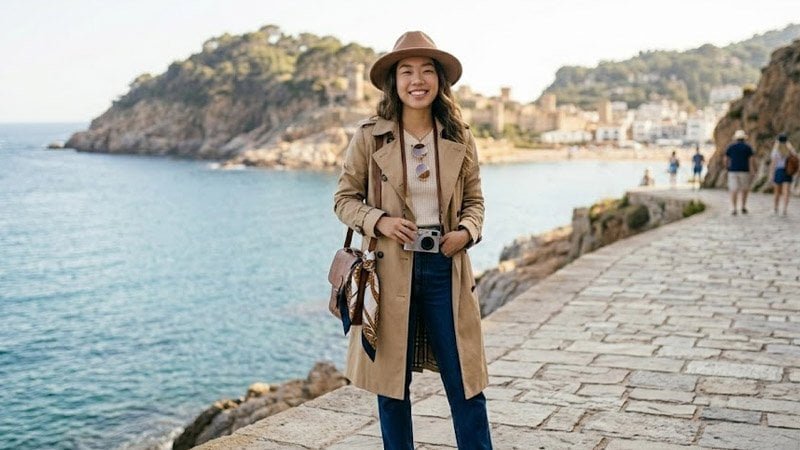
Casual Styling
For daily wear, choose hats that naturally match relaxed clothing. Baseball caps, bucket hats, beanies, and trucker hats work best with denim, sneakers, knitwear, leggings, and easy day dresses.
The goal is to make the hat feel like part of the outfit rather than an isolated statement.
Chic Styling
If you want a more polished effect, choose hats with clearer structure, such as fedoras, boater hats, cloche hats, or berets. These styles work well with trench coats, blazers, long skirts, dresses, boots, and tailored trousers.
The cleaner the silhouette of the outfit, the more elegant the hat will look.
Vacation and Outdoor Styling
Sun hats, floppy hats, Panama hats, and visors work especially well for outdoor use. They look natural with resort wear, swimsuits, linen sets, sandals, and oversized sunglasses.
This is where material matters most. Lightweight woven textures feel more seasonal and more visually appropriate.
Choosing the Right Hat for Your Face Shape
The most flattering hat is usually the one that creates visual balance.
Oval Face Shape
Oval faces can wear most hat styles successfully because the proportions are already balanced.
Best choices: Fedora, boater hat, baseball cap, beret, Panama hat
Round Face Shape
Round faces often look better in hats that create height or angles rather than extra roundness.
Best choices: Fedora, Panama hat, structured sun hats, medium brims with taller crowns
Best to avoid: Overly soft and very rounded shapes that add width near the cheeks
Square Face Shape
Square faces benefit from styles that soften the jawline and reduce sharpness.
Best choices: Beret, cloche hat, floppy hat, softer boater styles
Heart-Shaped Face
Heart-shaped faces often suit hats that help balance a broader forehead with a narrower chin.
Best choices: Medium to wide-brim hats, boater hats, floppy hats, softer crowns
How to Choose a Hat by Season
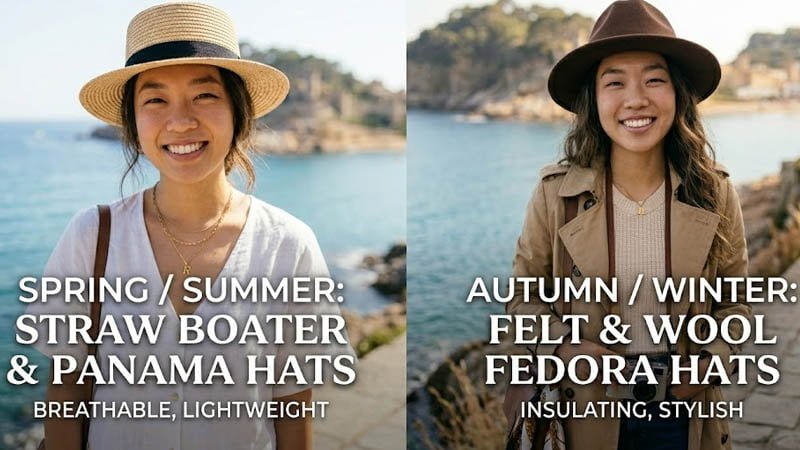
Spring and Summer
Look for lightweight and breathable materials such as:
- Straw
- Cotton
- Linen
- Mesh
- Paper braid
- Lightweight polyester blends
Best styles for warm seasons include:
- Sun hats
- Panama hats
- Bucket hats
- Boater hats
- Baseball caps
- Visors
Autumn and Winter
Choose warmer and more structured materials such as:
- Wool
- Felt
- Fleece
- Corduroy
- Knit yarns
- Cashmere blends
Best styles for cool seasons include:
- Beanies
- Fedoras
- Newsboy caps
- Berets
- Cloche hats
Common Mistakes to Avoid When Choosing a Hat
1. Choosing style over proportion
A hat may be trendy, but that does not always mean it is the most flattering for your face or frame.
2. Ignoring brim size
Brim width has a major effect on visual balance. Very wide brims can overpower smaller women, while very small hats may look less proportional on taller or broader frames.
3. Forgetting outfit structure
A strong hat such as a fedora or cowboy hat usually needs an outfit with enough shape or confidence to support it.
4. Choosing the wrong material for the season
A heavy felt hat in midsummer may look and feel wrong, just as a lightweight straw hat may feel out of place in deep winter.
5. Overlooking fit
No matter how stylish a hat is, it should feel secure and comfortable. The right fit affects both appearance and wearability.
Choosing the right hat is not only about shape. Material affects comfort, structure, durability, and overall appearance.
Straw and Paper Braid
These materials are breathable and ideal for spring and summer hats. They are commonly used for boater hats, sun hats, and resort styles.
Cotton and Canvas
Cotton-based materials are practical, washable, and easy for casual hats such as baseball caps and bucket hats.
Wool and Felt
These materials create more structure and warmth, making them ideal for fedoras, berets, cloche hats, and winter dress hats.
Knit Fabrics
Soft knit constructions are best for beanies and cold-weather casual use.
For women’s hats, the material should always match both function and style. A beautiful shape in the wrong fabric will still feel wrong when worn.
Conclusion: The Best Hat Is the One That Fits Your Style, Shape, and Purpose
There is no single best hat for all women. The right choice depends on how the hat works with your face shape, body proportions, wardrobe, season, and daily needs.
If you want a casual everyday option, a baseball cap or bucket hat may be the easiest place to start. If you prefer elegance, a beret, boater hat, or fedora may suit you better. If sun protection matters most, a sun hat, floppy hat, or visor is more practical. For colder weather, beanies, cloche hats, and newsboy caps remain reliable favorites.
The key is not simply knowing the names of women’s hat styles. It is understanding how shape, brim, material, and fit influence the final result.
Once you understand that, choosing the right hat becomes much easier.
FAQs
What is the most versatile hat for women?
A baseball cap is one of the most versatile casual hats, while a fedora is one of the most versatile structured hats for dressier styling.
Which women’s hats are best for summer?
Sun hats, Panama hats, bucket hats, visors, and boater hats are all strong choices for summer, especially in breathable materials.
What hats make your face look slimmer?
Hats with medium brims, some crown height, and more structure often help create a longer and more balanced look. Fedoras and Panama hats are common examples.
Are bucket hats still in style?
Yes. Bucket hats remain popular because they are easy to wear, practical, and well suited to casual and travel fashion.
How should a woman’s hat fit?
A hat should feel secure without being tight. It should sit comfortably on the head, not leave pressure marks quickly, and stay stable when moving.
Are wide-brim hats flattering for petite women?
Yes, but proportion matters. Medium-wide brims are often easier to wear than oversized dramatic brims, which can visually overpower a smaller frame.
Why a Baseball Cap Is One of the Best Accessories a Man Can Own
Baseball caps were once seen mainly as sportswear, but today they have become one of the most practical and stylish accessories a man can own. A good baseball cap does much more than complete an outfit. It offers sun protection, makes everyday dressing easier, and adds personality without trying too hard.
For many men, a baseball cap is one of the simplest items to wear well. Whether you are heading out on a sunny commute, dealing with a bad hair day, traveling, watching a game, or simply trying to make a casual outfit look more finished, a baseball cap is an easy and reliable choice.
That is exactly why it has remained popular for so long. It combines style, comfort, and everyday practicality in a way few accessories can.
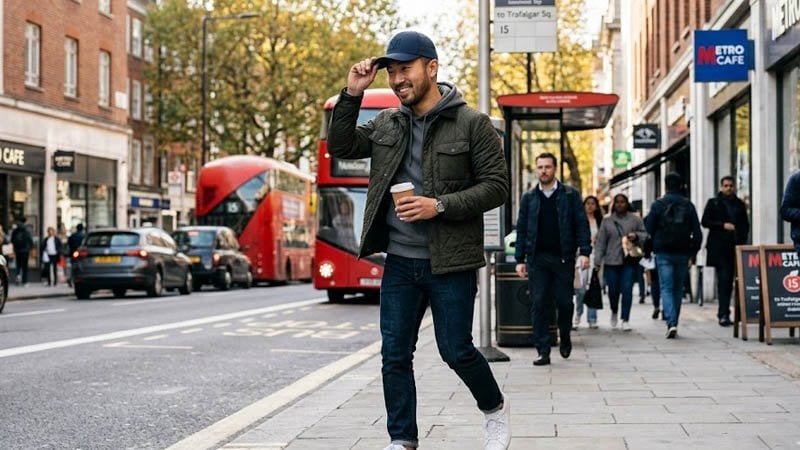
A baseball cap works because it fits naturally into modern life. It is easy to wear, easy to match, and useful in a wide range of situations. Unlike accessories that feel overly formal or trend-dependent, a baseball cap has lasting value because it is both functional and versatile.
It can sharpen a simple outfit, make casual dressing feel more intentional, and provide practical benefits throughout the day. That balance is what makes it one of the best accessories a man can own.
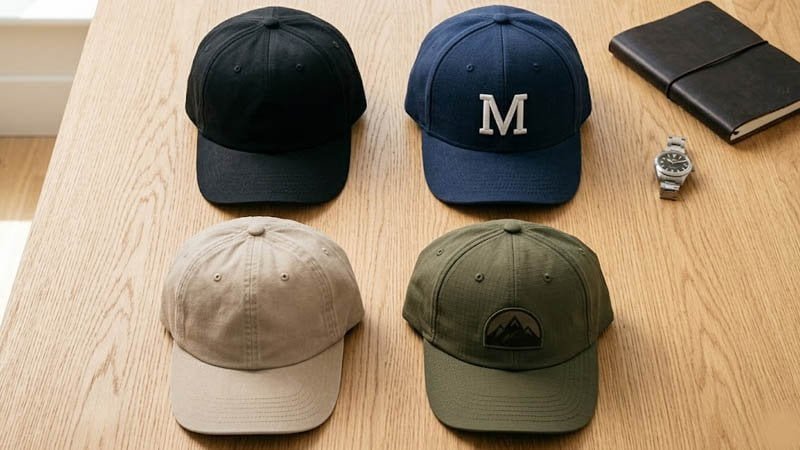
Easy Versatility
One of the biggest strengths of a baseball cap is its versatility. Very few accessories work across so many different looks. A baseball cap pairs naturally with T-shirts, polos, hoodies, sweatshirts, denim jackets, bomber jackets, and other casual staples. It can also help relax a smart casual outfit when styled carefully.
For example, if you are wearing jeans, sneakers, and a plain T-shirt, a baseball cap can make the outfit feel more complete. If you are dressed in chinos and a lightweight jacket, a simple cap in black, navy, beige, or olive can add a modern and effortless finish.
This versatility is what gives baseball caps long-term value. They are simple enough for everyday wear, yet stylish enough to influence the overall impression of an outfit.
A Simple Way to Show Personality
A baseball cap can also reflect personal style. Some men prefer plain caps with minimal branding for a clean and understated appearance. Others choose embroidered logos, patches, team designs, or bold graphics to show their interests and identity.
That is part of the appeal. A cap can add personality without becoming the only thing people notice. It works as a subtle statement piece, whether the goal is to show support for a sports team, add a streetwear touch, or simply introduce color and texture into a basic outfit.
Because there are so many variations in shape, fabric, color, and decoration, a baseball cap can feel classic, sporty, fashionable, or relaxed depending on how it is chosen and styled.
A Timeless Look Across Ages
Baseball caps continue to appear in sports, music, streetwear, and everyday fashion, but their staying power comes from more than trend influence. They remain popular because they suit different age groups and lifestyles.
A man in his 20s may wear a cap with oversized streetwear or athletic clothing. A man in his 30s or 40s may choose a more refined cap in a neutral color to pair with a polo shirt, casual jacket, or weekend outfit. The styling changes, but the accessory still works.
That kind of flexibility is rare. It is one reason baseball caps remain relevant year after year.

Beyond style, baseball caps offer real functional value. That is a major reason they continue to be such a common part of men’s wardrobes.
Sun Protection and Reduced Glare
One of the clearest benefits of a baseball cap is sun protection. The brim helps shade the forehead, eyes, and upper part of the face, which can make bright outdoor conditions much more comfortable.
This is especially useful for driving, commuting, walking, hiking, attending outdoor events, traveling, or watching sports. Even when the temperature feels mild, strong sunlight can still create eye strain and glare. A baseball cap helps reduce that discomfort quickly and effectively.
While it does not replace sunscreen, since it does not fully protect the ears, neck, or lower face, it is still a practical and valuable layer of everyday protection.
Hair Coverage and Grooming Convenience
Another reason men reach for baseball caps is grooming convenience. A cap can help shield the hair from direct sunlight, wind, and dust during outdoor activities. It can also make life easier on days when hair does not look its best.
This is one of the most practical advantages of all. If you are in a rush, between haircuts, leaving the gym, traveling, or dealing with messy hair after a long day, a baseball cap can provide a quick solution that still looks intentional.
Rather than looking careless, the right baseball cap can make you look relaxed, confident, and well put together.
Comfort and Everyday Convenience
Baseball caps are lightweight, easy to carry, and simple to wear on the go. Unlike some accessories that require more planning, a cap can be picked up and worn instantly. It fits easily into daily routines and is convenient to keep in a car, backpack, gym bag, or office drawer.
Many styles are also designed for comfort, with breathable fabrics, sweatbands, and adjustable closures. This makes them especially practical for men who spend time outdoors, travel often, or simply want something functional and easy to use.
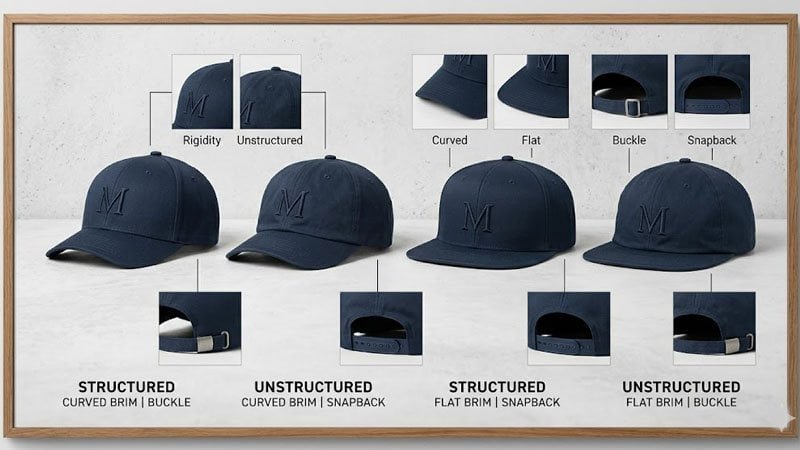
Not every baseball cap feels or looks the same. Choosing the right one makes a big difference in comfort, appearance, and long-term wearability.
Fit Comes First
Fit is the first thing to get right. A cap that is too tight can feel uncomfortable and leave marks on the forehead. A cap that is too loose may slide around, sit awkwardly, or look untidy.
The best fit should feel secure without squeezing the head. The brim should sit naturally above the eyes and provide shade without blocking vision. Adjustable closures such as metal buckles, snapbacks, hook-and-loop straps, or elastic backs can help create a better fit.
Men with thicker hair may prefer a roomier fit, while crown depth also matters. Some caps sit deeper and lower on the head, while others have a shallower profile. Finding the right balance improves both comfort and appearance.
Material Affects Comfort and Performance
The material of a baseball cap influences how it feels, performs, and looks.
Cotton is one of the most popular choices because it is soft, breathable, and comfortable for everyday use. It works especially well for casual wear.
Polyester and performance fabrics are often better for sports and outdoor use because they dry faster and handle sweat more effectively. Mesh-back caps can improve airflow, making them a good option for warm weather.
Heavier fabrics or wool blends may feel more premium or seasonal, but they are not always the best choice for hot climates. For daily wear, lighter and more breathable materials are usually the most practical.
Color also matters. Black, navy, beige, gray, and olive are among the easiest shades to match with everyday wardrobes. They are usually the safest choices for men who want versatility.
Structure and Shape Matter More Than Many People Think
A structured cap has a firmer front panel and a cleaner, more defined shape. It usually looks sharper and works especially well for embroidered logos and polished casual outfits.
An unstructured cap has a softer and more relaxed appearance. It feels more broken-in and easygoing, which makes it popular for everyday styling.
Brim shape also changes the overall look. A slightly curved brim is classic and works for most men. A flatter brim can feel more fashion-forward, but it does not suit every face shape or wardrobe.
Face shape can help guide the choice. Men with rounder faces often look better in caps with a slightly higher crown and a balanced curve in the brim, since that can add visual length. Men with longer or narrower faces may prefer lower-profile caps that do not add too much height.
Quality Makes a Difference
A well-made baseball cap does more than look better on day one. It should keep its shape, feel comfortable around the sweatband, and maintain clean stitching after repeated wear.
This is especially important for brands, retailers, and businesses developing custom products. For custom projects, the cap structure, fabric, and logo application method should all match the target market and wearing scenario. A cap designed for sports promotions may require very different materials and construction from one designed for a fashion collection or premium retail line.
For brands and businesses developing better custom headwear, working with an experienced manufacturing partner can make a clear difference. GUANGZHOU EASTLUCKY Hat & Garment Co., Ltd. is a high-end custom hat and OEM/ODM manufacturer based in Guangzhou, China, with 15 years of expertise in professional R&D, production, and distribution of various hats and embroidered accessories, offering one-stop solutions from design sampling to mass production for global clients.
Care and Maintenance
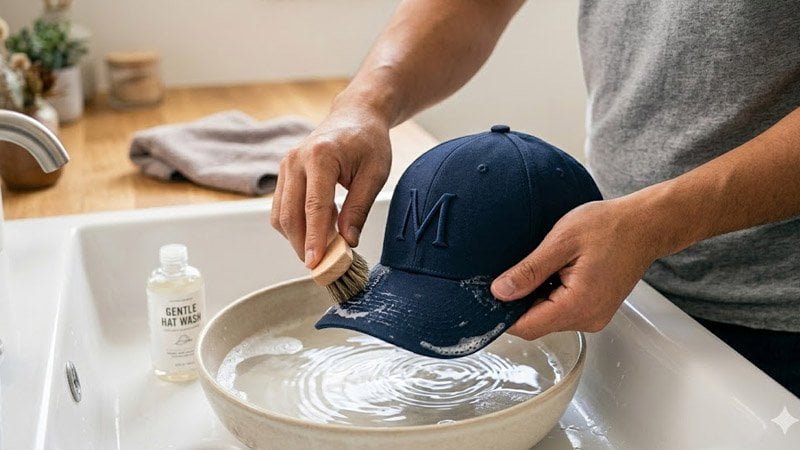
A baseball cap always looks better when it is kept clean and in good shape. Sweat, dust, and skin oils can build up over time, especially inside the sweatband.
Wash the cap gently when needed using mild soap and cool water. Avoid harsh detergents. After washing, reshape the cap by hand and allow it to air dry. High heat can damage the structure or shrink the material.
Proper storage also helps preserve appearance. Avoid crushing the cap under heavy items, and store it in a cool, dry place whenever possible.
Baseball caps are easy to wear, but some men still have concerns about daily use. Most of these issues can be managed easily with the right fit, fabric, and care.
Sweat and Odor
Sweat and odor are common concerns, especially during hot weather or physical activity. When sweat builds up inside the cap, it can lead to discomfort and unpleasant smells over time.
The best solution is to choose breathable materials, clean the cap regularly, and avoid wearing the same cap every day without letting it air out. Moisture-wicking fabrics can be especially helpful for sports and summer wear.
Do Baseball Caps Cause Hair Loss?
Some people worry that wearing a baseball cap causes hair loss. In most cases, the cap itself is not the direct cause. However, a cap that is too tight, poorly ventilated, or not cleaned regularly may create discomfort for the scalp.
A better approach is to choose a cap that fits properly, allows airflow, and stays clean. If hair loss is already a concern, scalp care, stress, genetics, and overall hair health are generally much more important factors than simply wearing a cap.
FAQ
Do baseball caps look good on all men?
Yes, in most cases they do. The key is choosing the right fit, crown shape, brim curve, and color. A well-fitted cap usually looks far better than one that is too tight, too shallow, or poorly matched to the outfit.
What is the best baseball cap material for summer?
Lightweight cotton, polyester blends, and mesh-back styles are often the best choices for hot weather because they feel lighter and offer better breathability.
Should men choose plain caps or logo caps?
That depends on personal style and intended use. Plain caps are usually easier to match for everyday wear, while logo caps can add more personality, identity, or brand presence.
Can a baseball cap work with smart casual outfits?
Yes, when styled carefully. A clean cap in a neutral color with minimal decoration can work well with smart casual pieces such as chinos, polos, lightweight jackets, and simple sneakers.
Conclusion
A baseball cap is one of the best accessories a man can own because it offers more than just style. It combines everyday practicality, comfort, sun protection, and personal expression in one simple item.
It can make a basic outfit feel more complete, help on rushed mornings, reduce glare on bright days, and add a relaxed confidence to casual dressing. Few accessories do so much while asking so little.
The key is choosing the right cap for your needs. A good baseball cap should fit well, suit your face shape, match your wardrobe, and feel comfortable enough to wear often. Whether for personal use, retail development, or custom branding, the right cap always performs better in both style and function.
How to Choose Between Low Profile, Mid Profile, and High Profile Hats
Choosing the right hat is not only about color, fabric, or decoration. One of the most important factors is profile—the height and shape of the crown, especially how the hat sits on the head and how prominent the front panels appear.
In simple terms, low-profile hats sit closer to the head, mid-profile hats offer a balanced crown height, and high-profile hats have a taller, more structured look. Each profile creates a different visual effect, fit, and branding result.
If you are choosing hats for personal style, retail collections, company uniforms, events, or custom branding, understanding the differences between these profiles can help you make a better decision. This guide explains what each profile means, how they compare, and how to choose the right one for different needs.
What Does Hat Profile Mean?

When people talk about hat profile, they are mainly referring to the height and structure of the crown, not simply the brim length.
This term is most commonly used for cap-style hats such as:
-
baseball caps
-
dad caps
-
snapbacks
-
trucker hats
-
promotional caps
A low-profile hat has a shallower crown and sits closer to the head.
A mid-profile hat has a moderate crown height for a more balanced fit.
A high-profile hat has a taller crown, often with a stronger front panel and more visual presence.
Although brim shape also affects overall appearance, profile is mainly about the crown silhouette.
Low-Profile Hats

Low-profile hats are designed with a shallower crown that follows the shape of the head more closely. They are usually associated with a relaxed, understated, and easy-to-wear look.
These hats are especially popular in casual fashion and minimalist branding because they feel natural and do not appear too structured or bulky.
Key Characteristics of Low-Profile Hats
Low-profile hats usually offer:
Many low-profile hats are also unstructured or lightly structured, which gives them a more relaxed character.
Advantages of Low-Profile Hats
Low-profile hats are a strong choice for buyers who want something simple, wearable, and modern.
They are often preferred because they:
-
feel comfortable for everyday use
-
work well with casual outfits
-
support subtle branding styles
-
look less bulky than taller-profile hats
For brands with a minimalist identity, low-profile hats often feel more refined and natural.
Limitations of Low-Profile Hats
Low-profile hats are not the best solution for every project.
They may be less suitable when:
-
the logo is large or highly detailed
-
3D embroidery is needed
-
the brand wants a stronger visual statement
-
the wearer prefers a roomier crown
Because the front panel is lower, there is usually less display area for bold branding.
Common Low-Profile Hat Styles
Common examples of low-profile hats include:
These styles are especially popular in boutique retail, coffee brands, creative merchandise, and casual lifestyle collections.

Mid-profile hats sit between low-profile and high-profile designs. They offer a moderate crown height that feels balanced, versatile, and commercially practical.
For many brands and buyers, mid-profile hats are the most flexible option because they do not look too shallow or too tall. They are easy to wear, easy to brand, and suitable for a wide range of end uses.
Key Characteristics of Mid-Profile Hats
Mid-profile hats usually feature:
They can be either structured or unstructured, depending on the style and target market.
Advantages of Mid-Profile Hats
Mid-profile hats are often considered the safest all-around choice because they combine comfort, branding flexibility, and wide market acceptance.
They work well because they:
-
suit many face shapes and style preferences
-
fit both casual and commercial uses
-
support most standard embroidery and patch applications
-
appeal to a broad customer base
If you need a hat style for uniforms, promotions, branded merchandise, or general retail sales, mid-profile hats are often a strong starting point.
Limitations of Mid-Profile Hats
Mid-profile hats are versatile, but their balance can also make them feel less distinctive in some cases.
They may be less ideal when:
-
a brand wants a very soft, relaxed look
-
a brand wants a tall, bold streetwear silhouette
-
the design concept depends on a more dramatic crown shape
In other words, mid-profile hats are excellent for broad usability, but they may not create the strongest style statement.
Common Mid-Profile Hat Styles
Typical mid-profile styles include:
-
standard baseball caps
-
many 6-panel custom caps
-
company uniform caps
-
promotional caps
-
many general retail caps
These are widely used because they offer a practical mix of wearability and branding performance.
High-Profile Hats
High-profile hats feature a taller crown and a more prominent front panel. They create a stronger silhouette and usually look more structured, bold, and visually noticeable.
These hats are commonly used in fashion-forward and logo-driven cap styles, especially where front-panel presentation matters.
Key Characteristics of High-Profile Hats
High-profile hats usually have:
They are often associated with structured caps and can create a more striking appearance on the shelf or when worn.
Advantages of High-Profile Hats
High-profile hats are often chosen for visual impact.
Their main advantages include:
-
better front-panel visibility for logos
-
strong performance for 3D embroidery and patches
-
a more fashion-forward silhouette
-
a bold look that stands out in retail or streetwear settings
If the branding is meant to be a focal point, high-profile hats often offer the best presentation.
Limitations of High-Profile Hats
High-profile hats are not as universally accepted as mid-profile styles.
They may be less suitable when:
-
the customer prefers subtle or classic styling
-
the target market wants a softer, closer fit
-
the project requires the broadest mass-market appeal
Some wearers simply feel that a tall crown is too prominent for their personal style.
Common High-Profile Hat Styles
Common examples include:
It is important to note that high-profile hats are not necessarily formal. In many cases, they are casual, sporty, or streetwear-oriented. The defining feature is the taller crown, not the dress level.
Low Profile vs Mid Profile vs High Profile Hats: Quick Comparison
Here is a side-by-side comparison of the three profiles:
| Feature |
Low Profile |
Mid Profile |
High Profile |
| Crown height |
Shallow |
Moderate |
Tall |
| Fit |
Close to head |
Balanced |
More prominent |
| Overall look |
Relaxed and understated |
Versatile and universal |
Bold and structured |
| Logo presentation |
Best for subtle logos |
Good for most logo types |
Best for large logos and 3D embroidery |
| Common construction |
Often soft or unstructured |
Structured or unstructured |
Usually structured |
| Best use |
Casual wear, soft branding, lifestyle products |
Uniforms, promotions, retail basics, all-purpose use |
Streetwear, trucker hats, statement branding |
How to Choose the Right Hat Profile
The best hat profile depends on how the hat will be worn, who it is for, and what visual effect you want to create.
Choose Low Profile Hats If…
Low-profile hats are usually the best choice if you want:
-
a close-fitting and casual silhouette
-
a softer, less structured appearance
-
understated branding
-
a hat for everyday wear or relaxed lifestyle products
They are especially suitable for minimalist brands, boutique merchandise, and soft washed-cotton styles.
Choose Mid Profile Hats If…
Mid-profile hats are a strong option if you want:
-
the most versatile and widely accepted shape
-
a balanced look for different face shapes
-
a cap that works for uniforms, promotions, or retail
-
flexible logo placement without an overly tall crown
If you are unsure which profile to start with, mid-profile is often the safest and most practical choice.
Choose High Profile Hats If…
High-profile hats are often the right fit if you want:
-
a stronger visual statement
-
a structured front panel
-
better presentation for bold embroidery or patches
-
a streetwear, trucker, or trend-driven style direction
They work especially well when the logo needs to stand out from a distance or when the cap itself is meant to be a key visual element.
Choosing by Face Shape and Personal Style

Hat profile can also affect how a cap looks on different wearers.
Face Shape
As a general guide:
-
Oval faces can usually wear all three profiles well
-
Round faces often pair well with mid- or high-profile styles that add more vertical shape
-
Square faces often suit balanced or slightly softer silhouettes
-
Heart-shaped faces usually look best with moderate proportions rather than extremely tall crowns
These are useful guidelines, but they are not strict rules. Comfort and personal style should still come first.
Personal Style
Style preference often matters just as much as fit.
-
Those who prefer a low-key, natural look often choose low-profile hats
-
Those who want a flexible, commercial, all-purpose style often choose mid-profile hats
-
Those who like statement fashion, stronger shape, or bold branding often choose high-profile hats
The right profile should support the identity of the wearer or brand, not just follow a trend.
Choosing by Application and End Use
For custom projects, the intended use often matters more than abstract style theory.
For casual lifestyle brands
Low-profile hats are often the best option because they feel soft, wearable, and authentic.
For company uniforms and event giveaways
Mid-profile hats are usually the most reliable choice because they fit a broader range of users and branding needs.
For embroidered logos and patch decoration
Mid-profile hats work well for many applications, while high-profile hats are often better for larger, bolder front-panel branding.
For retail collections
Mid-profile hats offer broad commercial appeal, while high-profile hats are better when the design direction is more trend-driven or fashion-forward.
For streetwear and trucker programs
High-profile hats are usually the stronger option because they support a taller crown and a more distinctive branded look.
Common Mistakes When Choosing Hat Profiles
Choosing the wrong profile often happens because buyers focus only on appearance and ignore fit, branding, or market needs.
Mistake 1: Thinking profile is mainly about brim length
Profile is mainly about the crown height and structure, especially in cap-style hats.
Mistake 2: Assuming low-profile hats are always more comfortable
Some people prefer low-profile hats, but others feel better in a more balanced or taller crown. Comfort is personal.
Mistake 3: Choosing only by trend
A profile that looks fashionable online may not be the best choice for your customer base or branding goals.
Mistake 4: Ignoring the logo size
A large embroidered logo or patch may not display well on a shallow low-profile front panel.
Mistake 5: Treating all hat categories the same
Profile is most useful when comparing cap-style hats. Other hat categories may depend more on brim shape, crown shape, or fashion style.
A Practical Tip for Custom Hat Development
When choosing a hat profile for a custom project, it is best to evaluate four things together:
A low-profile dad cap may work perfectly for a coffee brand or creative studio. A mid-profile cap may be better for promotional programs or staff uniforms. A high-profile trucker cap may be the strongest option for a youth brand, outdoor label, or streetwear collection.
In custom manufacturing, profile selection affects not only appearance, but also logo presentation, sample development, and final market positioning. With 15 years of OEM/ODM experience, GUANGZHOU EASTLUCKY Hat & Garment Co., Ltd. provides one-stop support from design sampling to mass production, helping global clients develop suitable hat styles with dependable quality and efficient supply chain service.
Final Thoughts

Low-profile, mid-profile, and high-profile hats each have their own strengths.
Low-profile hats are best for relaxed, close-fitting, understated styles.
Mid-profile hats are the most balanced and versatile option for broad commercial use.
High-profile hats are ideal for stronger structure, bold branding, and statement looks.
The right choice depends on your customer, your logo, your brand identity, and the way the hat will be used. By understanding these differences clearly, you can make better decisions and create products that look right, fit well, and perform better in the market.
FAQ
What is the difference between low-profile and high-profile hats?
The main difference is the crown height. Low-profile hats have a shallower crown and sit closer to the head, while high-profile hats have a taller, more structured crown and a bolder appearance.
Is a mid-profile hat the best choice for most people?
In many cases, yes. Mid-profile hats are often the most versatile option because they balance fit, comfort, and logo presentation.
Which hat profile is best for embroidery?
Mid-profile hats work well for most embroidery needs. High-profile hats are often better for large front logos, patches, and 3D embroidery.
Are trucker hats usually high profile?
Many trucker hats are high profile because they often use a taller and more structured front panel, though exact construction can vary.
Are low-profile hats better for casual wear?
Yes, low-profile hats are often preferred for casual and lifestyle use because they offer a softer and more relaxed look.
Snapback vs Fitted Hats: What’s the Difference and Which Is Better?
Snapback and fitted hats are two of the most popular cap styles on the market, but many buyers still confuse the difference between them. At a glance, they may look similar. In practice, however, they differ in sizing, fit, styling, inventory management, and customization value.
The main difference is simple: snapbacks are adjustable, while fitted hats come in exact sizes with no rear adjustment. In most general-use, promotional, and custom order scenarios, snapbacks are usually the more practical choice. Fitted hats, on the other hand, are often better for exact-fit wearers, premium retail collections, and customers who prefer a cleaner, more tailored look.
Whether you are buying for personal wear, comparing cap styles for your brand, or planning a custom hat project, understanding the real differences between snapback and fitted hats will help you make a better decision.
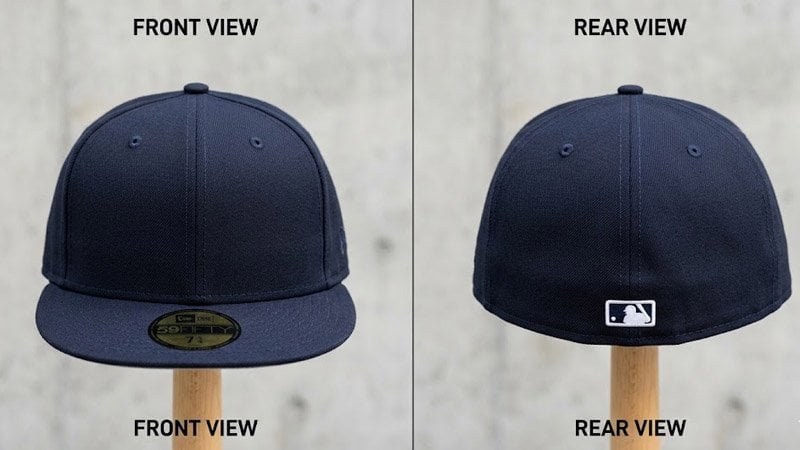
A snapback is a cap with an adjustable plastic snap closure at the back. This allows the wearer to change the fit easily, which is why snapbacks are commonly considered a one-size-fits-most option.
Snapback hats are usually known for:
-
Adjustable back closure
-
Structured crown
-
Flat brim or pre-curved brim options
-
Broad size flexibility
-
Strong use in streetwear, sports, promotions, and casual retail
Because of their adjustable design, snapbacks are easy to wear, easy to stock, and easy to distribute across mixed groups. They are especially practical for events, giveaways, team orders, and custom branding projects where size simplicity matters.
From a style perspective, snapbacks are often linked to streetwear and youth fashion. Many designs feature a structured front panel that works well for bold embroidery, patches, and logo-focused decoration.
A fitted hat is a closed-back cap made in specific head sizes. Unlike a snapback, it has no adjustable closure. Instead, the wearer chooses an exact size, such as 7, 7 1/8, 7 1/4, or similar measurements.
Fitted hats are usually known for:
Because fitted hats are made by size, they can offer a more precise and personalized fit. Many wearers prefer them for their smooth silhouette and secure feel on the head. They often look cleaner from the back because there is no visible closure.
At the same time, fitted hats are less forgiving than snapbacks. Buyers must know their correct size in advance, which makes them more specialized and slightly more complex in both retail and wholesale settings.
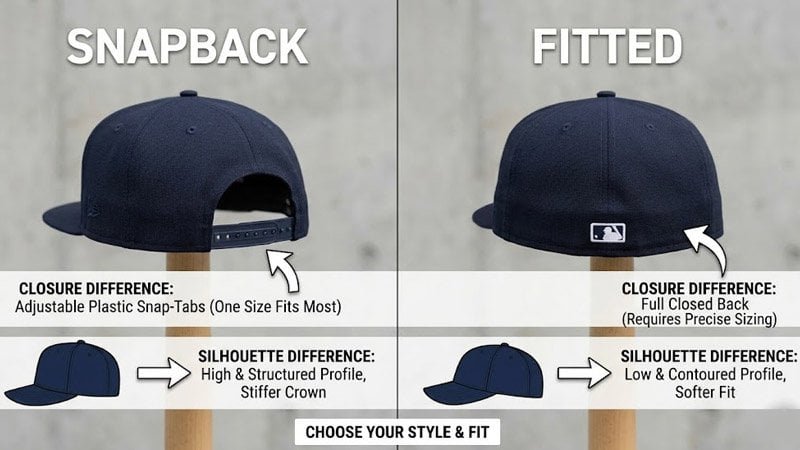
| Feature |
Snapback |
Fitted Hat |
| Back Closure |
Adjustable snap closure |
No closure, closed back |
| Sizing |
One size fits most |
Exact head size |
| Fit Flexibility |
High |
Low |
| Ease of Sharing or Gifting |
High |
Low |
| Inventory Complexity |
Simple |
More complex |
| Online Selling Risk |
Lower sizing risk |
Higher sizing risk |
| Style Positioning |
Casual, versatile, streetwear-friendly |
Cleaner, more exact-fit, more tailored |
| Best For |
Promotions, teams, casual wear, broad retail |
Premium retail, collectors, exact-fit users |
Fit and Comfort
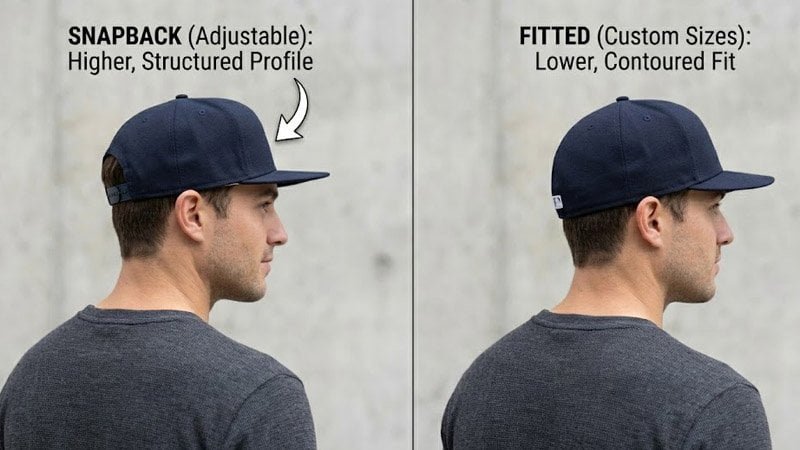
Fit is the biggest difference between snapback and fitted hats, and for many buyers, it is also the deciding factor.
Snapback Fit and Comfort
Snapbacks are more flexible because they can be adjusted. This makes them a strong choice for people who:
-
Do not know their exact head size
-
Prefer a looser or more relaxed fit
-
Change hairstyles often
-
Need hats for groups or mixed-size users
-
Want a safer option when ordering online
The adjustable closure gives the wearer more control, which is one reason snapbacks are widely used in promotional and everyday settings. For many buyers, comfort comes from convenience and flexibility, and snapbacks perform well on both.
That said, some wearers do not like the feel or look of a plastic snap closure. In more premium styling, the visible back closure may feel less clean than a fitted cap.
Fitted Hat Fit and Comfort
Fitted hats are designed for people who want an exact-size fit. When the size is correct, they often feel more secure, more balanced, and more refined on the head.
They are often preferred by people who:
-
Know their exact hat size
-
Want a cleaner back view
-
Prefer a close and stable fit
-
Care more about silhouette and exact wear experience
However, fitted hats leave very little room for sizing error. A cap that is too tight may become uncomfortable over time, while a cap that is too loose may not sit properly. Compared with snapbacks, fitted hats require more careful buying from the start.
Style and Aesthetic
Both snapbacks and fitted hats can be stylish, but they create different visual impressions.
Snapback Style
Snapbacks are usually associated with:
Many snapbacks have a higher-profile, structured front that makes embroidery stand out clearly. This is one reason they are often used for logo-heavy branding and promotional cap programs.
Their overall look is versatile and accessible. They tend to feel more relaxed and more adaptable across different users and styling preferences.
Fitted Hat Style
Fitted hats usually create a cleaner, more streamlined appearance. Since there is no rear closure, the back view looks more seamless. On the head, they often appear more tailored and more precise.
They are commonly associated with:
-
Authentic sports cap styling
-
Premium retail collections
-
Collector culture
-
Exact-fit wearers
-
Clean, silhouette-driven fashion
If your priority is a refined cap shape and a more customized wearing experience, fitted hats usually feel more elevated. If your priority is flexibility and broad styling appeal, snapbacks are often the better choice.
Durability and Longevity
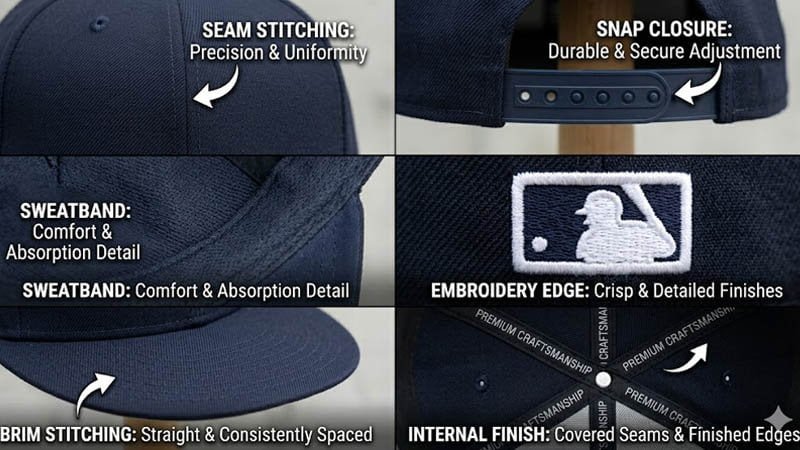
Both snapback and fitted hats can be durable if they are made with quality materials and proper construction, but the way they wear over time is slightly different.
Snapback Durability
Snapbacks are durable enough for most standard retail, event, and branding uses. The main point of wear is usually the snap closure. If the cap is adjusted very frequently or handled roughly, the plastic snap may weaken or eventually break.
Still, for most everyday and commercial use cases, snapbacks offer strong practicality and dependable wear.
Fitted Hat Durability
Fitted hats do not have adjustable hardware, which means there is one less moving part to wear out. This can help them maintain a more stable structure over time. A well-made fitted cap often keeps a clean shape when worn in the correct size.
However, because fitted hats rely on exact sizing, the wrong fit can affect how the cap sits and wears. The hat may not perform as well over time if it is regularly worn too tight or too loose.
Price and Cost Considerations
In many cases, snapbacks are more cost-efficient than fitted hats, especially for custom and bulk programs.
Why Snapbacks Are Often More Practical on Cost
Snapbacks are easier to manage because:
This makes them especially suitable for schools, events, promotions, employee wear, team programs, and general retail projects where buyers want to reduce complexity.
Why Fitted Hats Can Cost More
Fitted hats can become more expensive because:
-
Multiple size runs are needed
-
Inventory planning is more complex
-
Restocking requires better size forecasting
-
Wrong-size purchases can increase waste or returns
In fashion retail or niche collector markets, that added complexity may still be worth it. But in many commercial projects, snapbacks remain the lower-risk option.
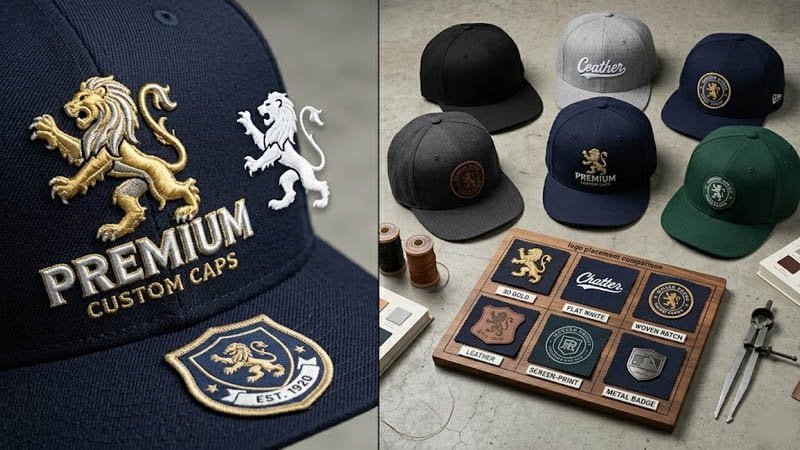
For custom hats, the choice between snapback and fitted becomes even more important.
In many branding and wholesale scenarios, snapbacks are easier to manage because they reduce size allocation problems and simplify distribution. If you are producing hats for an event, staff program, school campaign, sports promotion, or broad retail audience, snapbacks are usually the more efficient option.
Fitted hats can still be an excellent choice for premium collections or fashion-driven releases, but they require a more accurate size strategy. This makes them better suited for brands with clearer retail segmentation and customers who are willing to choose exact sizing.
For brands developing custom headwear collections, working with an experienced OEM/ODM manufacturer can make sampling, sizing decisions, decoration planning, and bulk production much more efficient. With 15 years of experience, GUANGZHOU EASTLUCKY Hat & Garment Co., Ltd. supports global clients with one-stop custom hat solutions from design development to mass production.
From a decoration point of view:
-
Snapbacks often work especially well for bold front embroidery, 3D embroidery, logo patches, and promotional branding.
-
Fitted hats can create a cleaner premium look, but they are usually better when the project has a clear size structure and stronger retail positioning.
Which One Is Better for Different Needs?
There is no single answer for everyone, because the better choice depends on the use case.
Best for Everyday Wear
For everyday convenience, snapbacks are usually better. Their adjustable fit makes them easier to wear across changing situations and more forgiving for casual use.
Best for Streetwear and Casual Fashion
Snapbacks are often more versatile for streetwear, especially when bold branding and structured front panels are part of the design concept.
Best for Premium Retail Collections
Fitted hats are often better for premium retail collections where exact fit, silhouette, and a cleaner appearance matter more than flexible sizing.
Best for Teams, Events, and Giveaways
Snapbacks are usually the better choice for group distribution. One adjustable size reduces inventory pressure and makes it easier to fit a wider range of wearers.
Best for Exact-Fit Wearers
Fitted hats are better for people who know their size and specifically want a more personalized fit.
Best for Online Sales
Snapbacks generally carry less sizing risk online. Fitted hats can still perform well, but they require a reliable size guide and more accurate customer selection.
Weather and Material Considerations
Comfort in different weather conditions depends not only on whether the hat is snapback or fitted, but also on fabric, sweatband construction, ventilation, and crown structure.
Snapbacks
Snapbacks can feel more adaptable in everyday settings, especially when made from cotton twill, polyester blends, or mesh-backed constructions. Their flexible fit can also make them easier for all-day wear.
Fitted Hats
Fitted hats may feel more enclosed because of their close fit and fixed structure. Some wearers prefer that secure feeling in cooler weather, while in hotter climates, fabric choice becomes more important.
In both styles, material matters just as much as construction. Cotton offers softness and breathability, polyester improves durability and easier care, and wool blends can create a more premium hand feel and stronger structure.
Common Mistakes Buyers Make
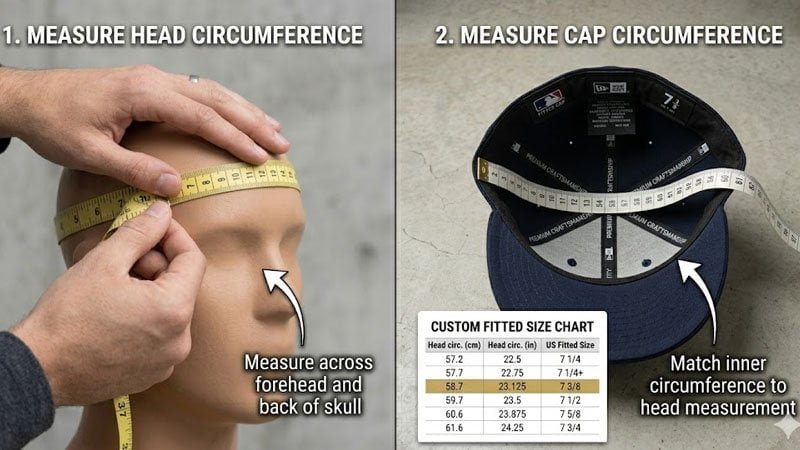
When comparing snapback and fitted hats, buyers often make a few avoidable mistakes.
Choosing Fitted Hats Without a Clear Size Plan
This is especially risky for custom or group orders. Without an accurate size breakdown, fitted hats can create stocking and distribution problems.
Using Fitted Hats for Broad Giveaway Programs
Fitted hats are less practical when the end users have mixed head sizes and no chance to pre-select sizing.
Assuming All Snapbacks Have the Same Shape
Not all snapbacks have the same crown height, brim style, or panel structure. Buyers should still compare profiles and decoration compatibility before choosing.
Ignoring Decoration Method
A cap that looks good in theory may not always work best for the chosen embroidery, patch, or print method. Hat structure should always be considered together with branding requirements.
Final Verdict: Which Is Better?
So, which is better: snapback or fitted hats?
For most general-purpose, promotional, and custom branding needs, snapbacks are usually the better choice. They are more flexible, easier to distribute, simpler to manage, and lower risk in both online sales and bulk orders.
For premium retail collections, collector-focused products, and wearers who care about exact fit, fitted hats are often better. They offer a cleaner silhouette, a more tailored wearing experience, and stronger appeal in exact-size cap markets.
In other words:
Choose a snapback if you want:
-
Adjustable fit
-
Easier sizing
-
Better flexibility for groups or gifting
-
Simpler inventory management
-
Strong performance in promotions and broad retail
Choose a fitted hat if you want:
-
Exact sizing
-
A cleaner and more tailored appearance
-
A more premium or collector-style feel
-
A more precise wearing experience
The best choice depends on your brand, your audience, and your sales or usage scenario. If you are sourcing custom hats, it is always worth comparing not only style, but also size strategy, decoration method, and production efficiency before making a final decision.
Women’s Hat Types: How to Choose the Best Style for Every Occasion
Hats are more than just finishing touches. The right hat can shape your overall look, add personality, and serve a real purpose at the same time. It can protect you from the sun, keep you warm in colder weather, and make even a simple outfit feel more polished and intentional.
For many women, the challenge is not whether to wear a hat, but which style to choose. Some hats work best for casual everyday outfits, while others are better for elegant events, summer holidays, outdoor activities, or winter layering. Face shape, season, material, and occasion all play a role.
In this guide, we’ll break down the most popular women’s hat types, explain what each style is best for, and help you choose the right hat for every occasion.
Why Hats Still Matter in Women’s Fashion
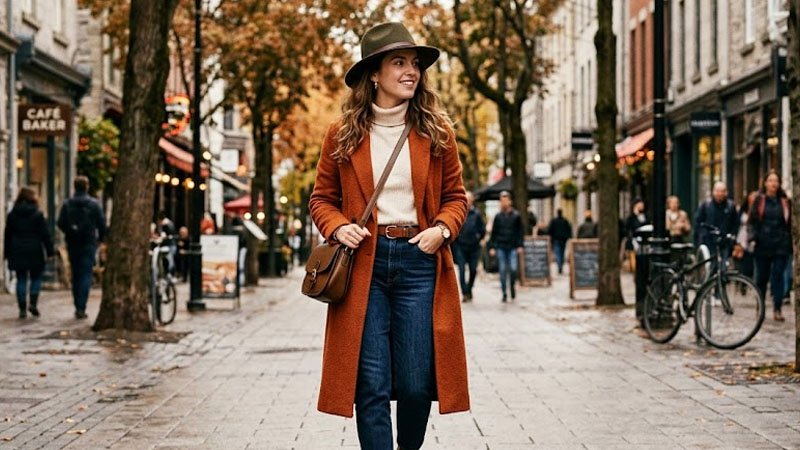
A good hat does more than complete an outfit. It adds structure, balance, and character. It can soften a look, sharpen it, or make it feel more relaxed. That is why hats remain such an important accessory in women’s fashion.
They are also practical. A wide-brim sun hat can help protect your face and neck from harsh sunlight. A knit beanie can keep you warm while still looking stylish. A baseball cap can make a casual outfit feel effortless while offering comfort for daily wear.
The best hats combine both beauty and function. They should look good, feel comfortable, and fit naturally into your wardrobe and lifestyle.
How to Choose the Right Hat
Before looking at individual hat styles, it helps to know what actually makes a hat the right choice. In most cases, the best hat depends on five things:
1. Occasion
Think about where you plan to wear it. A baseball cap may be perfect for daily errands, but not for a wedding or garden party. A boater hat may look elegant for a summer event, but too formal for casual sportswear.
2. Season
Lightweight materials like straw, cotton, and linen are better for warm weather. Wool, felt, and knit fabrics are more suitable for fall and winter.
3. Face Shape
Certain hat shapes are more flattering on certain faces. Structured hats often suit round faces, while softer silhouettes can work beautifully on square faces.
4. Style Preference
Some women prefer sporty and simple looks. Others prefer feminine, vintage, classic, or fashion-forward styles. A hat should feel like a natural extension of your personal style.
5. Comfort and Fit
No matter how beautiful a hat is, it will not work if it feels too tight, too loose, too heavy, or awkward to wear for long periods.
Quick Comparison of Popular Women’s Hat Types
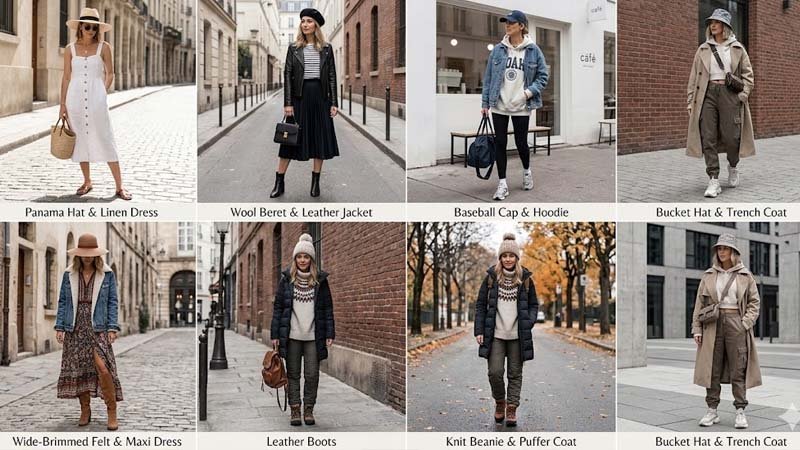
Before we look at each style in detail, here is a quick overview:
| Hat Type |
Best For |
Best Season |
Style Mood |
| Baseball Cap |
Everyday casual wear |
Spring / Summer |
Sporty, relaxed |
| Bucket Hat |
Travel, streetwear, holidays |
Spring / Summer |
Trendy, youthful |
| Trucker Hat |
Outdoor casual looks |
Spring / Summer |
Retro, sporty |
| Fedora |
Smart casual and polished outfits |
Fall / Winter |
Structured, stylish |
| Boater Hat |
Garden parties, summer events |
Spring / Summer |
Elegant, vintage |
| Beret |
Chic city dressing |
Fall / Winter |
Feminine, artistic |
| Sun Hat |
Beach and sun protection |
Summer |
Graceful, practical |
| Visor |
Sports and hot weather |
Summer |
Functional, active |
| Beanie |
Cold-weather casual looks |
Fall / Winter |
Cozy, easygoing |
| Newsboy Cap |
Autumn outfits and retro styling |
Fall / Winter |
Vintage, polished |
| Cowboy Hat |
Statement looks and themed events |
All seasons |
Bold, confident |
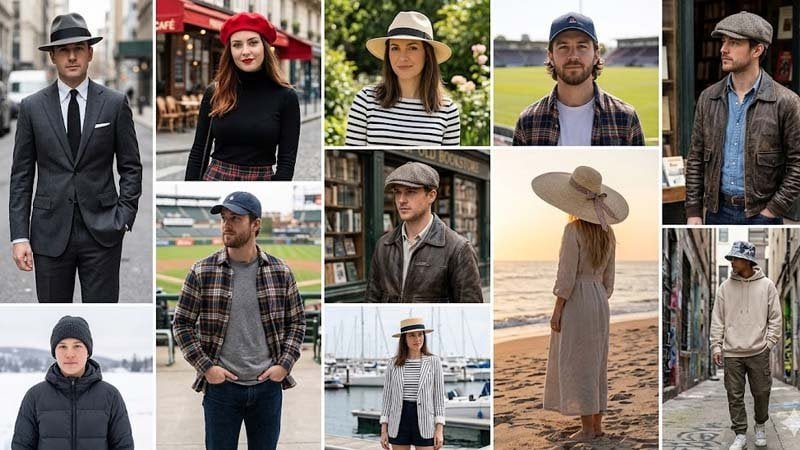
The baseball cap is one of the easiest hats to wear. It is simple, casual, and highly practical. For women who want comfort, convenience, and a sporty look, this is often the first choice.
A baseball cap usually has a curved brim and a fitted or adjustable back. It works well with jeans, leggings, sneakers, oversized shirts, and athleisure outfits.
Best for:
-
daily errands
-
travel
-
casual walks
-
sporty outfits
-
sunny days
Why it works:
It is comfortable, easy to match, and useful for everyday life. It is also one of the best options for women who want a hat that feels natural rather than styled too heavily.
The bucket hat has become one of the most popular casual hat styles in recent years. With its soft crown and downward-sloping brim, it offers a relaxed look while giving more shade than a baseball cap.
Bucket hats are especially popular for vacations, streetwear, music festivals, and laid-back spring or summer outfits.
Best for:
Why it works:
It feels youthful, modern, and easy to wear. It is also packable, which makes it useful for holidays and day trips.
Style note:
If your main goal is strong sun protection, a wider sun hat will usually offer better coverage than a bucket hat.
The trucker hat is similar to a baseball cap but usually includes a structured front and mesh back panels. This makes it more breathable and gives it a slightly retro, sporty appearance.
It is a good option for women who like casual outdoor styling with a bit more personality.
Best for:
-
casual streetwear
-
outdoor activities
-
summer outings
-
retro-inspired outfits
Why it works:
It is lightweight, breathable, and visually a little bolder than a basic cap.
Fedora
The fedora is one of the most timeless women’s hat styles. It usually features a structured crown and a medium or wide brim, giving it a refined and confident appearance.
Compared with softer hats, a fedora adds more definition to the face and often works especially well in polished, smart casual outfits.
Best for:
-
brunch dates
-
city dressing
-
smart casual outfits
-
travel looks
-
autumn styling
Why it works:
It can instantly make an outfit look more put-together. A fedora pairs well with trench coats, knit dresses, ankle boots, tailored trousers, and minimalist outerwear.
Style note:
For everyday wear, choose neutral shades such as black, camel, taupe, grey, or cream for easier matching.
The boater hat is known for its flat top and flat brim. It carries a refined, vintage-inspired charm and works especially well for spring and summer occasions.
This is a strong choice for women who want something elegant but still fresh and wearable.
Best for:
Why it works:
A boater hat feels graceful, neat, and feminine. It pairs beautifully with dresses, blouses, linen sets, and structured summer outfits.
Beret
The beret is a classic hat associated with French-inspired style. It is soft, elegant, and expressive without being overly dramatic.
Berets work well with coats, knitwear, tailored blazers, and understated outfits that need a touch of personality.
Best for:
Why it works:
It is simple but distinctive. A beret adds character and style without overwhelming the rest of the outfit.
Style note:
Wearing a beret slightly off-center often creates a more natural and flattering look than placing it flat on top of the head.
A sun hat is one of the most practical choices for warm weather. Usually designed with a wide brim, it offers better shade for the face and neck than most everyday fashion hats.
This makes it ideal for women who want both elegance and protection during sunny seasons.
Best for:
-
beach holidays
-
poolside outfits
-
outdoor lunches
-
summer travel
-
garden events
Why it works:
It combines style with genuine function. A good sun hat can improve comfort, reduce glare, and support sun protection while still looking polished.
Visor
The visor is designed for women who want sun protection around the face without full head coverage. Because the top remains open, it can feel cooler and more breathable in very hot weather.
It is especially useful for active women and outdoor sports.
Best for:
-
tennis
-
golf
-
walking
-
beach clubs
-
active summer days
Why it works:
It protects the eyes and upper face while allowing more airflow and preserving hairstyles better than many full hats.
Beanie
The beanie is one of the most essential hats for fall and winter. It is warm, comfortable, and easy to wear with everyday outerwear.
Depending on the knit and fit, a beanie can feel sporty, cozy, minimal, or trendy.
Best for:
Why it works:
It is practical, warm, and easy to integrate into a casual wardrobe. Fine knit beanies create a cleaner look, while chunky knit versions feel more relaxed and cozy.
The newsboy cap adds vintage character and a slightly dressed-up feel compared with a baseball cap. With its fuller crown and softer structure, it works especially well in autumn and winter wardrobes.
Best for:
Why it works:
It offers personality and sophistication while still being wearable in daily life.
The cowboy hat is a bold statement piece. It is not the most universal option for everyday wear, but it can be extremely striking when styled intentionally.
Best for:
-
concerts
-
western-themed events
-
festival outfits
-
fashion-forward styling
-
statement looks
Why it works:
It brings confidence and individuality. Even with a simple outfit, a cowboy hat creates a strong visual impression.
How to Choose the Best Hat for Every Occasion
Knowing the hat styles is useful, but choosing the right one becomes much easier when you think by occasion.
Best Hats for Everyday Casual Wear
For daily outfits, comfort and versatility matter most.
Best options:
-
baseball cap
-
bucket hat
-
beanie
-
trucker hat
These hats are easy to style with jeans, sneakers, T-shirts, leggings, hoodies, and light jackets. They work best when you want an effortless look without feeling overdressed.
Best Hats for Summer Holidays and Beach Days
For warm-weather trips and outdoor sun exposure, breathable materials and better coverage become more important.
Best options:
-
sun hat
-
bucket hat
-
visor
-
straw boater hat
These styles work especially well with swim cover-ups, sundresses, linen sets, sandals, and resortwear.
Best Hats for Elegant Outdoor Events
For weddings, brunches, garden parties, and more refined daytime occasions, structured and feminine hats often work best.
Best options:
-
boater hat
-
elegant wide-brim hat
-
refined fedora
-
decorative sun hat
These hats should complement the outfit rather than overpower it. Clean lines, quality materials, and coordinated color choice matter more in dressier settings.
Best Hats for Fall and Winter Outfits
Cold-weather outfits usually benefit from richer textures and more structured or cozy materials.
Best options:
-
beanie
-
beret
-
fedora
-
newsboy cap
These styles pair well with wool coats, boots, scarves, knitwear, and layered neutral outfits.
Best Hats for Active Outdoor Use
For walking, sports, golf, tennis, and practical sunny-day use, lighter and more secure styles are usually better.
Best options:
-
baseball cap
-
visor
-
trucker hat
-
lightweight bucket hat
In these situations, fit, airflow, and comfort are often more important than making a strong fashion statement.
Choosing a Hat by Face Shape
Face shape does not need to control every style decision, but it can help you find more flattering proportions.
Oval Face
Oval faces are generally the easiest to style because most hat types look balanced.
Best choices:
-
fedora
-
beret
-
boater hat
-
baseball cap
-
beanie
Round Face
Round faces often benefit from hats with more structure or vertical emphasis.
Best choices:
-
fedora
-
wide-brim hat
-
hats with sharper lines
Try to be more selective with very rounded, soft silhouettes if they make the face appear wider.
Square Face
Square faces usually suit hats that soften stronger jawlines.
Best choices:
Heart-Shaped Face
Heart-shaped faces often look good in medium to wide-brim styles that help balance the forehead and chin.
Best choices:
-
boater hat
-
soft fedora
-
beret
-
sun hat
Common Hat Materials and What They’re Best For
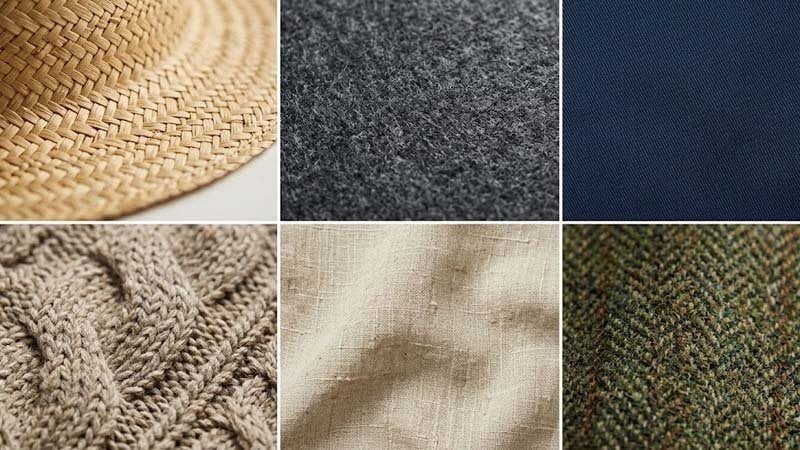
Material affects more than just appearance. It changes breathability, structure, warmth, and how a hat performs in real life.
Straw
Best for spring and summer. Straw hats are breathable, lightweight, and ideal for sun hats, boater hats, and resort styles.
Cotton
Cotton is soft, practical, and easy to wear. It is commonly used in baseball caps and bucket hats for everyday comfort.
Linen
Linen and linen blends are airy and light, making them useful for warm-weather hats with a relaxed but slightly elevated feel.
Wool Felt
Wool felt gives structure and warmth. It is one of the best materials for fedoras and dressier fall or winter hats.
Knit Acrylic or Wool Blends
These materials are common in beanies. They provide warmth and flexibility and are well suited to cold-weather casual wear.
From a product development and manufacturing perspective, details such as fabric choice, structure, finishing, and fit can significantly affect both style and wearability. GUANGZHOU EASTLUCKY Hat & Garment Co., Ltd. brings 15 years of experience in high-end custom hats and OEM/ODM production, supporting brands with one-stop solutions from design sampling to mass production.
A hat looks best when it feels connected to the rest of the outfit.
A few simple rules help:
-
pair casual hats with relaxed clothing
-
pair structured hats with cleaner, more polished silhouettes
-
choose colors that either match or intentionally contrast with your outfit
-
avoid over-accessorizing when the hat is already visually strong
-
pay attention to balance between hat size, hairstyle, and shoulder line
For example, a wide-brim hat paired with a flowing summer dress creates softness and elegance. A fedora with a trench coat creates structure. A baseball cap with activewear keeps the look effortless and practical.
Common Mistakes to Avoid
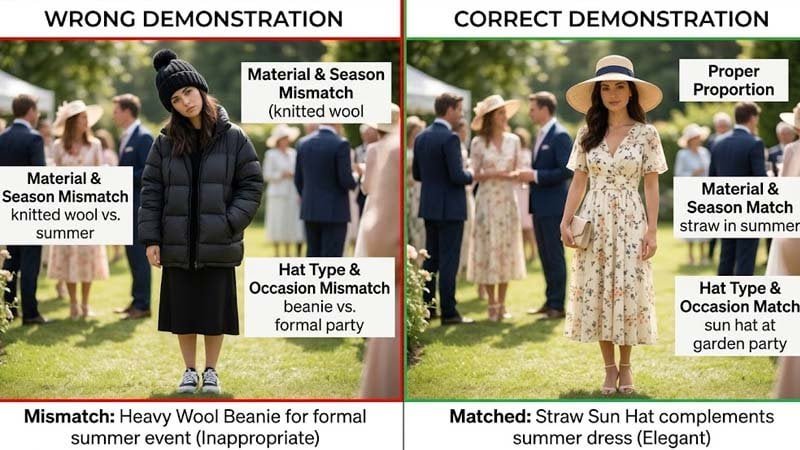
Many women choose hats based only on trend appeal, but that can lead to a hat that looks good online and feels wrong in real life.
Here are a few common mistakes:
-
choosing a hat that does not fit the occasion
-
ignoring face shape and overall proportion
-
selecting the wrong material for the season
-
buying a beautiful hat that is uncomfortable to wear
-
choosing trend over wardrobe compatibility
The best hat is usually not the most dramatic one. It is the one that fits your life, your clothes, and your comfort level.
Conclusion
Women’s hats come in many forms, from sporty baseball caps and relaxed bucket hats to polished fedoras, elegant boater hats, and cozy winter beanies. Each style offers something different, and the right choice depends on where you plan to wear it, how you want it to feel, and what kind of image you want to create.
When choosing the best hat for every occasion, start with function, then think about season, face shape, material, and outfit balance. That approach makes it much easier to find a hat that not only looks beautiful but also feels right.
A good hat should never feel like an afterthought. It should feel like a natural part of your personal style.
FAQs
What is the most versatile women’s hat?
A baseball cap is one of the most versatile casual choices, while a fedora is one of the most versatile polished options.
Which hat is best for summer?
A wide-brim sun hat is usually the best choice for strong sun protection, while bucket hats and visors are also practical for casual summer use.
Are bucket hats still in style?
Yes. Bucket hats remain popular because they are comfortable, youthful, easy to pack, and simple to style.
What hat style is best for formal outdoor events?
Boater hats, elegant wide-brim hats, and refined structured hats are often the best choices for weddings, garden parties, and other outdoor daytime events.
How do I know if a hat fits properly?
A hat should feel secure without creating pressure. It should not slide around too easily, but it should also not leave discomfort or deep marks after short wear.