How to Make a Polyester Hat Smaller Without Damaging It
A polyester hat can start to feel loose for many reasons. Daily wear, sweat, repeated washing, and storage pressure can all affect how a cap fits over time. Even when the hat still looks good, it may no longer feel snug and secure on your head.
The good news is that you can usually make a polyester hat smaller without damaging it, but the method matters. Polyester does not shrink as easily as natural fibers like cotton or wool, so the safest approach is controlled adjustment rather than aggressive heat.
In this guide, we will explain why polyester hats become loose, how polyester reacts to heat and moisture, which methods are safest, and how to choose the right technique based on your hat’s construction.
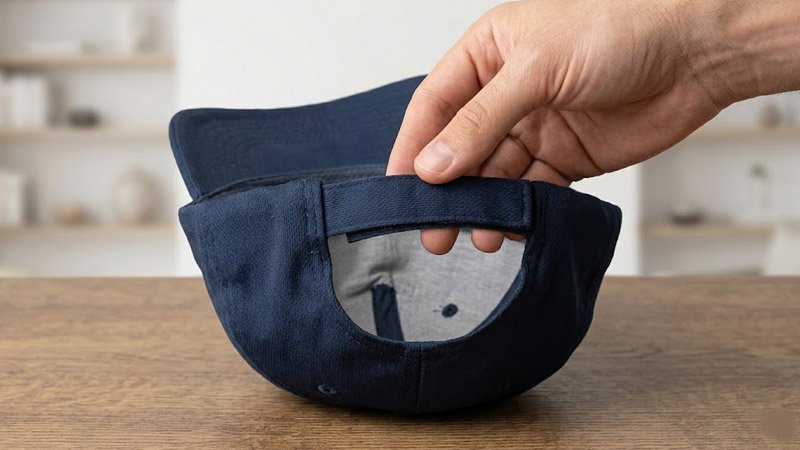
Polyester is known for durability, shape retention, and resistance to wrinkles, which is why it is widely used in sports caps, fashion hats, promotional headwear, and custom branded caps. However, that does not mean a polyester hat will keep the exact same fit forever.
A hat may feel looser over time because:
- the sweatband has relaxed after repeated wear
- the crown has softened from moisture and use
- the hat has lost some of its original shape
- washing or drying has slightly altered the structure
- the cap was always a little large to begin with
In many cases, the issue is not dramatic stretching. Instead, the hat simply loses the firm, close fit it had when new.
Can Polyester Actually Shrink?
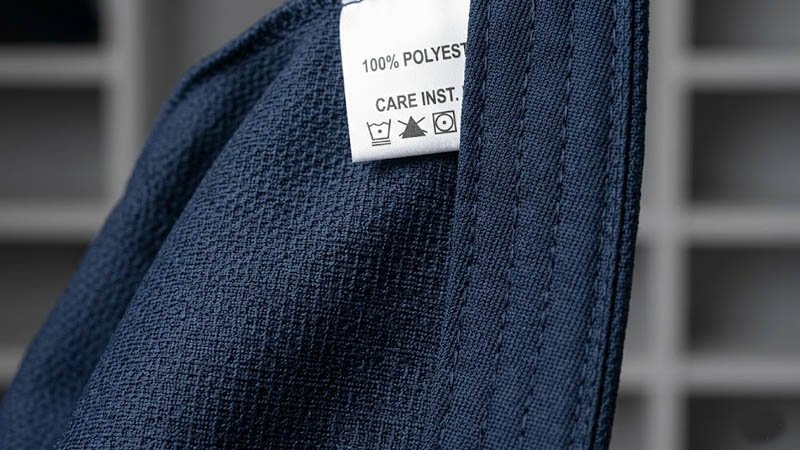
Yes, but only to a degree.
Polyester is a synthetic material, so it is much more resistant to shrinkage than natural fibers. That means you should not expect dramatic size reduction. In most cases, what you are really doing is helping the hat shrink slightly while also reshaping it so it fits better.
This is an important distinction. A polyester hat often becomes “smaller” not because it shrinks heavily, but because the fabric, sweatband, and crown settle into a tighter and better-shaped form.
That is why gentle methods usually work better than extreme ones.
Check Your Hat Before You Start
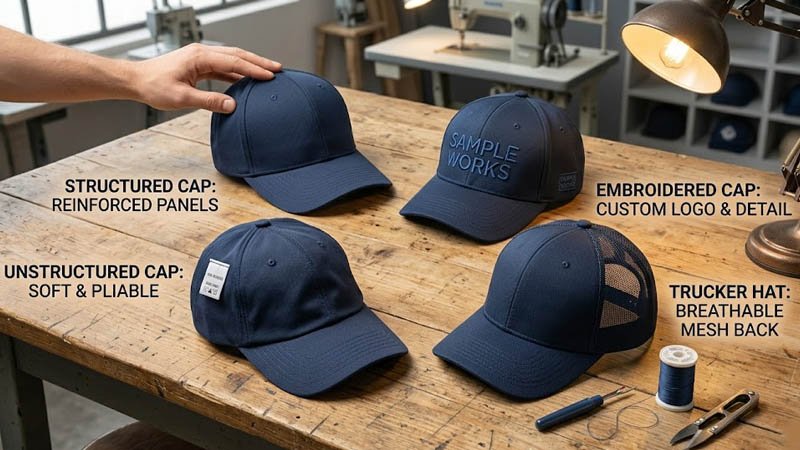
Before trying to make a polyester hat smaller, take a close look at how it is made.
A polyester hat is usually easier and safer to adjust if it has:
- a soft or lightly structured crown
- simple construction
- no glued-on patches
- no delicate decoration
- a flexible brim
You should use extra caution if the hat has:
- thick embroidery
- heat-transfer logos
- stiff front panels
- mesh backing
- specialty trims
- a firm structured crown
Not every polyester hat reacts the same way to heat or moisture. A basic sports cap, a trucker hat, and a structured promotional cap may all behave differently during the adjustment process.
How Much Smaller Can a Polyester Hat Get?
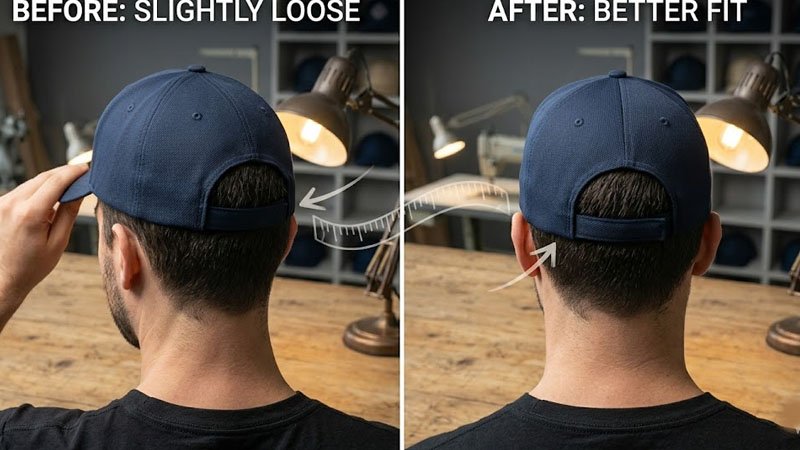
This depends on the hat’s fabric blend, construction, and current condition.
If the hat is only slightly loose, you can often improve the fit successfully. If the hat is much too large, however, polyester usually will not shrink enough to solve the problem completely.
In most cases, you should expect:
- slight shrinkage
- better shape retention
- a tighter sweatband feel
- improved overall fit rather than major size reduction
The most effective mindset is not “How can I drastically shrink this hat?” but rather “How can I reduce looseness safely and restore a better fit?”
The Safest Ways to Make a Polyester Hat Smaller
There is no single best method for every cap. The right option depends on how loose the hat is and how delicate its construction may be.
1. The Warm Shower Method
This is the gentlest method and a good starting point for hats that are only a little loose.
Best for:
- slight looseness
- everyday polyester caps
- lightly structured hats
- low-risk adjustment
How to do it:
- Put the hat on your head.
- Take a warm shower while wearing it, or expose it to warm steam.
- Let the hat become damp, not heavily soaked.
- Keep wearing it while it begins to dry.
- If needed, use a hairdryer on medium heat from a safe distance to finish drying.
Why it works:
Warm moisture softens the fibers slightly. As the hat dries on your head, it settles into a shape that follows your head more closely.
What to keep in mind:
This method is best for minor fit correction, not major shrinkage. It is safe, simple, and usually the best place to start.
2. Hot Hand-Wash Method
If the hat needs a little more adjustment, hand-washing in hot water gives you more control.
Best for:
- moderate looseness
- polyester hats without fragile decorations
- users who want a controlled method
How to do it:
- Fill a basin with hot water, but do not use boiling water.
- Add a small amount of mild detergent if needed.
- Soak the hat for 10 to 15 minutes.
- Remove it and rinse lightly with cooler water.
- Press out excess moisture gently.
- Wear the hat while drying, or place it on a rounded object similar to head size.
Why it works:
Hot water helps relax the fibers and allows slight shrinkage while the drying phase helps reset the shape.
What to keep in mind:
This method offers a better balance of control and effectiveness than machine washing. For many polyester hats, this is one of the best options.
3. Washer and Dryer Method
This is the strongest common at-home method, but it is also the riskiest.
Best for:
- simple polyester hats
- more noticeable looseness
- caps without delicate logos or stiff structure
How to do it:
- Put the hat inside a garment bag.
- Wash it using warm or hot water with mild detergent.
- Transfer it to the dryer on medium heat.
- Check the hat every 5 to 10 minutes.
- Remove it as soon as the fit improves.
- Reshape it immediately by hand while still warm.
Why it works:
The combination of heat, moisture, and tumbling can tighten the fabric and sweatband more than gentler methods.
What to keep in mind:
This method can damage the hat if left too long. Do not use high heat, and do not treat this as a “set it and forget it” process.
4. Hairdryer Spot Adjustment
This method is ideal when only one area of the hat feels loose.
Best for:
- minor spot adjustment
- sweatband areas
- crown edges
- final shaping after another method
How to do it:
- Lightly dampen the loose area.
- Use a hairdryer on medium heat.
- Keep the dryer moving continuously.
- Shape the area gently with your hands as it dries.
Why it works:
Targeted heat allows you to tighten one area without stressing the whole hat.
What to keep in mind:
This is a fine-tuning method, not a complete solution for an oversized cap.
Quick Guide: Which Method Should You Choose?
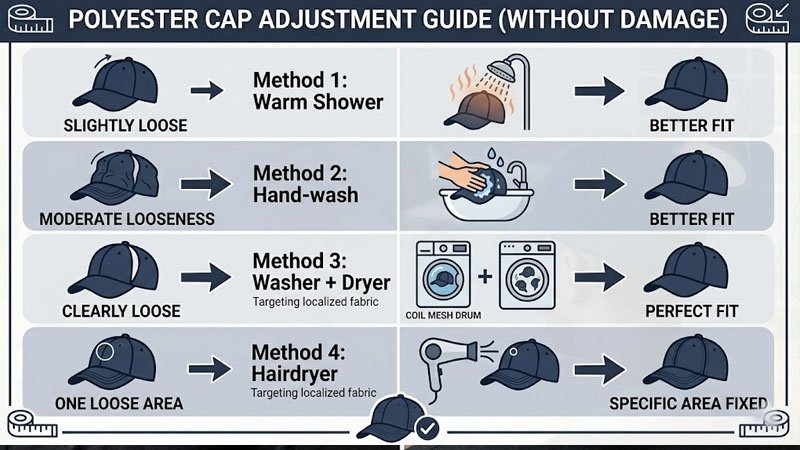
If your polyester hat is only slightly loose, start with the warm shower method.
If it needs moderate adjustment and you want better control, choose the hot hand-wash method.
If the hat is clearly too loose and has a simple structure, the washer and dryer method may help more, but it comes with greater risk.
If only one part of the hat feels loose, use the hairdryer spot-adjustment method.
The safest rule is always the same: start with the gentlest method first and only move to stronger methods if needed.
Common Mistakes to Avoid
Using Too Much Heat
Too much heat can warp the brim, distort the crown, affect the logo, or create shine marks on the fabric. Polyester should be treated with moderate heat, not extreme heat.
Using Boiling Water
Boiling water is too harsh for most polyester hats. It can damage structure and reduce the clean appearance of the cap.
Skipping Fit Checks
Do not wait until the entire process is finished before checking the fit. Small changes happen quickly, especially in the dryer.
Ignoring the Hat’s Construction
Structured caps, mesh-back hats, and hats with decorative applications should not be treated like simple plain polyester caps.
Expecting Large Shrinkage
Polyester can usually be adjusted a little, but not dramatically. A better fit is often the result of both slight shrinkage and reshaping.
When You Should Be More Careful
Some hats require extra caution, including:
- caps with embroidered logos
- hats with heat-transfer graphics
- trucker hats with mesh panels
- structured front-panel caps
- premium custom hats with reinforced shape
- hats with decorative patches or trims
If the hat is expensive, highly customized, or important for brand presentation, test the gentlest method first.
Why Construction Matters More Than Many People Realize
Many people assume that all polyester hats behave the same way, but that is not true. In reality, the way a hat responds depends not only on fabric but also on panel structure, sweatband quality, logo application, and finishing.
A soft unstructured cap may respond well to reshaping, while a heavily structured cap may keep its size but lose its visual form if treated too aggressively. Likewise, a hat with embroidery may tolerate gentle adjustment better than one with glued patches or heat-sensitive decoration.
For brands developing custom caps, long-term fit consistency often starts with the right material choice and production control. GUANGZHOU EASTLUCKY Hat & Garment Co., Ltd. is a high-end custom hat and OEM/ODM manufacturer based in Guangzhou, China, with 15 years of expertise in professional R&D, production, and distribution of various hats and embroidered accessories, providing one-stop solutions from design sampling to mass production for global clients.
Final Thoughts
If you want to make a polyester hat smaller without damaging it, the safest approach is gradual adjustment. Polyester does not shrink dramatically, but it can often be tightened slightly and reshaped effectively with the right method.
Start with the gentlest option, pay attention to the hat’s construction, and avoid excessive heat. In many cases, a careful process will give you a noticeably better fit while preserving the hat’s appearance and structure.
The goal is not to force dramatic shrinkage. The goal is to improve the fit without ruining the hat.
FAQs
Can you make a 100% polyester hat smaller?
Yes, but usually only slightly. A 100% polyester hat may respond to heat and moisture, but results are often moderate rather than dramatic.
Will a polyester hat shrink in the dryer?
It can shrink a little, especially when combined with washing, but dryers also create the highest risk of shape damage if the heat is too high or the drying time is too long.
Is steam safer than machine drying?
In many cases, yes. Steam or warm shower moisture is gentler and allows more control, especially for small fit adjustments.
Can I make a polyester hat smaller if it has embroidery?
Usually yes, but you should be more careful with heat and drying time. Delicate embroidery and decorative details should not be exposed to aggressive treatment.
What if the hat is much too big?
If the size difference is significant, shrinking may not solve the problem fully. Polyester hats are better for slight adjustment than major resizing.
How to Store Trucker Hats Without Fading, Dust, or Deformation
Trucker hats are a practical and stylish choice for everyday wear, brand promotions, team apparel, and retail collections. Their structured front panels, breathable mesh backs, and curved brims give them a distinctive look, but these same features also make proper storage especially important.
When trucker hats are stored carelessly, they can quickly lose their shape, collect dust, fade under sunlight, or develop odor and moisture damage. The good news is that a few simple storage habits can help keep them clean, structured, and ready to wear for much longer.
In this guide, we will explain how to store trucker hats properly, how to protect them from fading, dust, and deformation, and how to keep them in better condition over time.
Why Proper Storage Matters for Trucker Hats
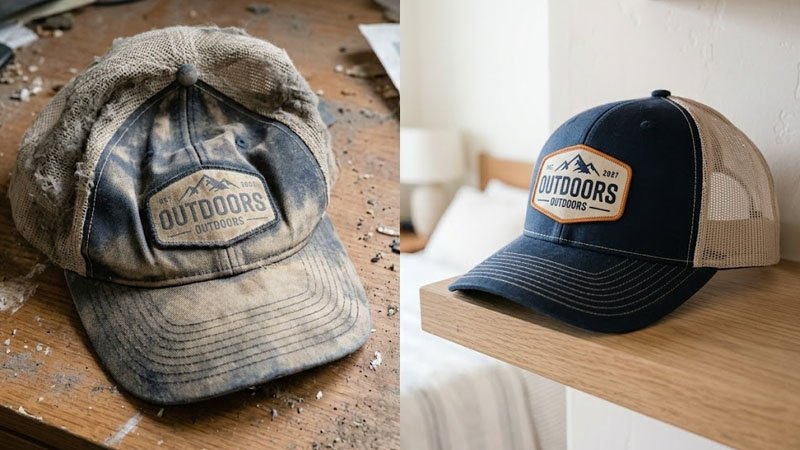
Trucker hats are different from soft, unstructured caps. Most styles are made with a structured front crown, mesh back panels, and an adjustable closure. Because of this construction, improper storage can affect both their appearance and their fit.
Common storage problems include:
- Crushed or creased front panels
- Dust buildup on the mesh and brim
- Color fading from direct sunlight
- Moisture-related odor or mildew
- Misshapen crowns caused by pressure or stacking
A trucker hat may still look usable after poor storage, but over time the damage becomes more noticeable. Proper storage helps preserve the shape, color, comfort, and overall presentation of the hat.
How to Keep Trucker Hats From Losing Their Shape
Shape retention is one of the most important parts of trucker hat care. A well-structured crown looks better, fits better, and gives the hat a cleaner overall appearance.
Use Soft Fillers Inside the Crown
A simple way to help a trucker hat keep its form is to place a soft filler inside the crown. Tissue paper, a clean cloth, or a small towel can provide light internal support.
This is especially helpful for structured trucker hats with reinforced or foam front panels. The filler helps prevent dents and creases while the hat is in storage.
Make sure not to overfill the crown. Too much pressure from inside can also distort the shape.
Store Hats Upright or Individually
Whenever possible, store trucker hats upright on a shelf, in separate compartments, or in individual storage boxes. This reduces pressure on the crown and helps the front panel stay smooth and structured.
If you own multiple hats, keeping them separated is better than compressing them together in a drawer or storage bin.
Avoid Heavy Stacking
Heavy stacking is one of the easiest ways to deform a trucker hat. Placing boxes, clothes, or other hats on top of the crown can flatten the structure and leave permanent marks.
For short-term storage, light stacking may be manageable if done carefully. For long-term storage, it is much better to keep each hat properly supported.
How to Protect Trucker Hats From Dust
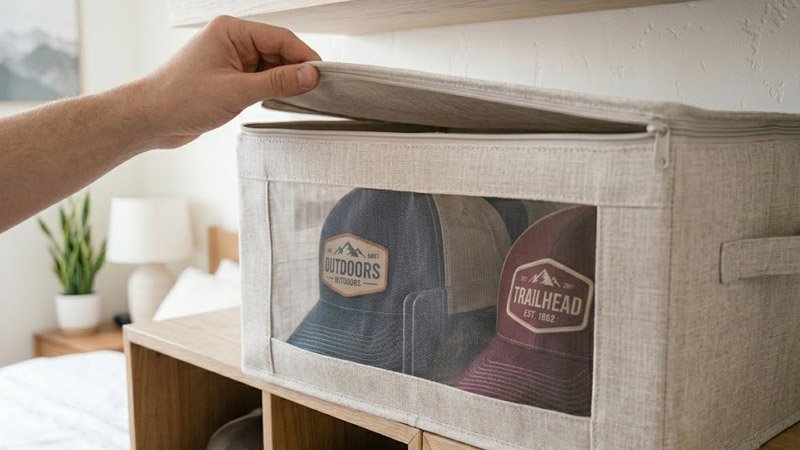
Dust is often overlooked, especially when hats are stored in open areas for convenience. Over time, dust can settle into the mesh, brim stitching, and sweatband area, making hats look dull and less fresh.
Use Covered or Breathable Storage
A closed cabinet, storage box, or breathable fabric bag works well for reducing dust exposure. These options keep the hat cleaner while still allowing airflow.
Avoid sealed plastic bags for long-term storage. While they may block dust, they can also trap moisture, which may lead to odor or mildew.
Clean the Storage Area Regularly
Even a good storage setup will not help much if the surrounding area is dusty. Shelves, closets, and display areas should be cleaned regularly so dust does not collect on the hats over time.
If you store hats in open display areas, occasional light dusting will help maintain their appearance.
How to Prevent Fading During Storage
Sunlight is one of the biggest causes of visible aging in hats. Dark colors, printed surfaces, and decorative details are especially vulnerable to fading when exposed to strong direct light for long periods.
Keep Hats Away From Direct Sunlight
Store trucker hats away from sunny windows, cars, balconies, or display areas with harsh UV exposure. Direct sunlight can gradually reduce color vibrancy and make the material look older or uneven.
Better storage choices include:
- Wardrobes
- Closed cabinets
- Opaque storage bins
- Shelves away from windows
- Covered display cases
Choose Stable Indoor Conditions
Heat can also contribute to material stress over time. A cool, dry indoor environment is usually the safest option for preserving both color and shape.
Avoid storing trucker hats in places such as:
- Hot cars
- Damp basements
- Humid laundry rooms
- Attics with fluctuating temperatures
- Areas close to heaters or vents
Stable storage conditions are much better for long-term hat care.
Best Storage Options for Trucker Hats
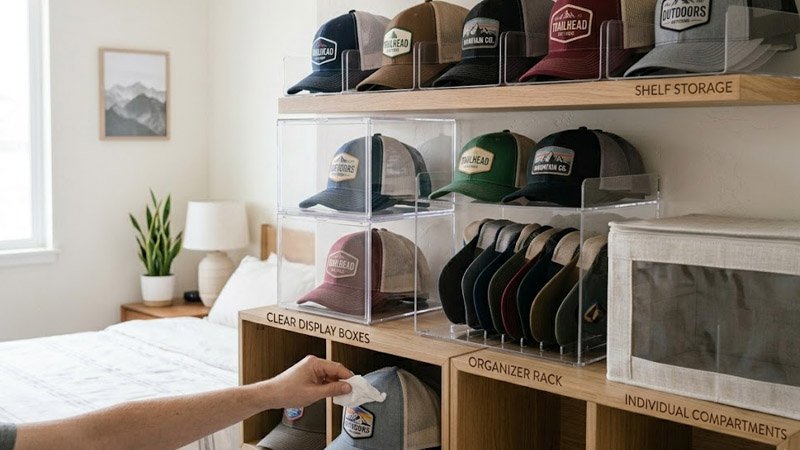
The best storage method depends on how many hats you own and how often you use them.
For Daily Use
If you wear your trucker hats often, easy-access storage is usually best. A clean shelf, hat rack, or open organizer can work well as long as the hats are not crowded and are kept away from sunlight and dust-heavy areas.
For Collections
If you have a growing hat collection, individual compartments, clear display boxes, or well-spaced shelving are better choices. These storage methods help protect each hat while keeping the collection organized and presentable.
For Long-Term Storage
For long-term storage, use light crown support, breathable protection, and a dry, shaded location. This is the best way to reduce the risk of fading, dust buildup, and deformation.
Common Mistakes to Avoid When Storing Trucker Hats
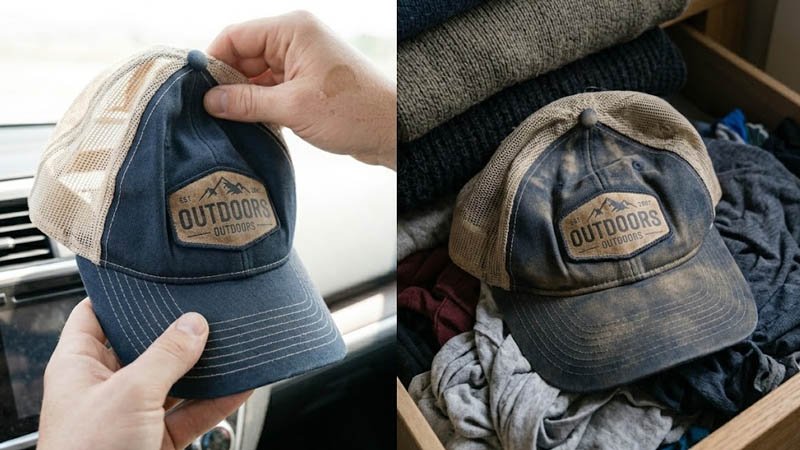
Even good-quality hats can lose their appearance if they are stored the wrong way. Some of the most common mistakes include:
- Stacking heavy items on top of hats
- Leaving hats in direct sunlight
- Storing hats in sealed plastic bags
- Putting hats away before they are fully dry
- Throwing hats into drawers without support
- Hanging hats in a way that strains the closure or crown
Avoiding these mistakes can make a noticeable difference in how long your hats stay clean and structured.
Before storing a trucker hat for an extended period, it is a good idea to clean it lightly and make sure it is fully dry.
Spot Clean Gently
For most trucker hats, spot cleaning is the safest method. Use mild soap, lukewarm water, and a soft cloth or sponge. Gently clean the dirty area without soaking the entire hat.
Avoid harsh detergents or aggressive scrubbing, especially on printed, dyed, or embroidered details.
Air Dry Only
After cleaning, let the hat air dry naturally in a well-ventilated place. Do not use a dryer, and avoid strong direct sunlight during drying.
You can place tissue paper or a soft towel inside the crown while it dries to help maintain the shape.
If you own several trucker hats, organization becomes just as important as storage.
A practical way to organize them is by:
- Daily wear
- Brand or logo
- Color
- Season
- Event use
- Collection value
Labeling storage boxes can also make it easier to find the right hat without disturbing the rest of the collection.
With 15 years of experience in custom hat development, OEM/ODM production, and supply for global clients, GUANGZHOU EASTLUCKY Hat & Garment Co., Ltd. understands that a trucker hat’s appearance depends not only on how it is made, but also on how it is stored, packed, and handled after production. Good storage habits are one of the simplest ways to protect hat quality and extend product life.
Conclusion
Proper storage plays a major role in keeping trucker hats looking their best. By protecting them from direct sunlight, dust, moisture, and unnecessary pressure, you can help prevent fading, dust buildup, and deformation.
Whether you own a single favorite hat or a full collection, storing trucker hats correctly helps preserve their shape, color, and overall appearance. A small amount of care during storage can make a big difference in how long your hats stay clean, fresh, and ready to wear.
Boonie Hat vs Bucket Hat: Similar Look, Very Different Purpose
At first glance, boonie hats and bucket hats can look quite similar. Both have a round crown and a downward brim, and both are popular choices for sun protection and casual wear. However, they are designed for very different purposes.
The biggest difference is simple: a boonie hat is built for outdoor function and wider sun coverage, while a bucket hat is designed for casual comfort, packability, and fashion versatility. If you need better performance for hiking, fishing, or long hours in the sun, a boonie hat is usually the better choice. If you want something softer, lighter, and easier to style for everyday wear, a bucket hat is often the better fit.
In this guide, we will compare boonie hats and bucket hats in terms of design, materials, functionality, style, and custom use, so you can decide which one is right for your needs.
Boonie Hat vs Bucket Hat: Quick Comparison

Here is a quick side-by-side overview before we go into detail:
| Feature |
Boonie Hat |
Bucket Hat |
| Main Purpose |
Outdoor protection and utility |
Casual wear and fashion |
| Brim |
Wider and more structured |
Shorter and softer |
| Chin Strap |
Usually included |
Usually not included |
| Sun Protection |
Better coverage |
Moderate coverage |
| Structure |
More stable and functional |
Softer and more relaxed |
| Materials |
Ripstop, nylon, poly-cotton, performance fabrics |
Cotton, denim, canvas, corduroy, soft nylon |
| Durability |
Better for rugged use |
Better for light daily use |
| Packability |
Moderate |
Usually easier to fold and pack |
| Style |
Outdoor, tactical, functional |
Casual, trendy, lifestyle |
| Best For |
Hiking, fishing, camping, fieldwork |
Travel, beach, streetwear, festivals |
| Branding Use |
Outdoor and utility-focused projects |
Fashion, promotional, and retail projects |

A boonie hat, sometimes called a bush hat, was originally developed for military and outdoor environments. It was designed to provide better protection from sunlight, heat, and light rain while remaining practical in active conditions.
Over time, the boonie hat became popular far beyond military use. Today, it is widely used by hikers, anglers, campers, hunters, outdoor workers, and adventure travelers because of its strong functional design.
A boonie hat usually includes several performance-oriented details:
- A wider brim for better sun coverage
- A more structured shape that holds better during movement
- A chin strap to help keep the hat secure in windy conditions
- Ventilation eyelets or mesh panels for breathability
- Utility loops on some styles for camouflage or small attachments
These features make the boonie hat especially useful for demanding outdoor use where comfort and protection matter at the same time.
Common Materials
Boonie hats are usually made from more durable materials, such as:
- Ripstop cotton
- Poly-cotton blends
- Nylon
- Quick-dry outdoor fabrics
These fabrics are chosen because they are better suited to repeated outdoor use, stronger sunlight, and tougher environments.
Best Uses
A boonie hat is especially suitable for:
- Hiking
- Fishing
- Camping
- Boating
- Safari travel
- Outdoor work
- Utility and field uniforms
If your priority is performance, sun protection, and stability, a boonie hat is often the stronger option.

A bucket hat has a softer and more fashion-oriented history. It was first used by farmers and fishermen as a practical hat for light weather protection, but it later became a major casualwear and streetwear accessory.
Today, the bucket hat is one of the most versatile hat styles in fashion. It is commonly worn for travel, beachwear, music festivals, resort outfits, and everyday city wear. Compared with the boonie hat, it is less technical and more style-driven.
Key Features of a Bucket Hat
A bucket hat typically has:
- A soft crown
- A shorter, downward-sloping brim
- A relaxed and less structured silhouette
- A lightweight design that is easy to fold and pack
Its strength lies in comfort, styling flexibility, and easy everyday use.
Common Materials
Bucket hats are often made from softer and more fashion-friendly materials, including:
- Cotton twill
- Washed cotton
- Denim
- Canvas
- Corduroy
- Fleece
- Lightweight nylon
Because of these fabric options, bucket hats can be developed in many colors, textures, prints, and seasonal looks.
Best Uses
A bucket hat is a good choice for:
- Daily casual wear
- Streetwear
- Beach trips
- Vacation and travel
- Music festivals
- Resort collections
- Promotional fashion items
If your focus is comfort, easy styling, and lifestyle appeal, a bucket hat is often the better choice.

Although these two hat styles may look similar from a distance, their real-world use is very different.
1. Brim Size and Sun Coverage
The brim is one of the most noticeable differences.
A boonie hat usually has a wider brim, which provides more coverage for the face, ears, and neck. This makes it much more effective for long periods outdoors under strong sunlight.
A bucket hat has a shorter brim that can still offer light shade, but the overall sun coverage is more limited. It works well for casual situations, but usually not as well for prolonged outdoor exposure.
2. Structure and Stability
Boonie hats tend to be more structured and stable. They are often designed to stay in place during movement, and the chin strap adds extra security in windy weather or active conditions.
Bucket hats are softer and more flexible. This improves comfort and portability, but they are not usually as secure as boonie hats in strong wind or active outdoor use.
3. Functionality
A boonie hat is designed with utility in mind. Ventilation eyelets, adjustable chin cords, and gear loops are practical features that support real outdoor performance.
A bucket hat is simpler in design. Its main advantages are comfort, softness, and fashion adaptability rather than technical function.
4. Materials and Durability
Because boonie hats are made for harsher use, they are commonly produced in stronger performance fabrics that handle outdoor wear better.
Bucket hats are usually made from softer materials that prioritize comfort and appearance. They can still be durable, but most are not specifically intended for rugged outdoor environments.
5. Style and Fashion Appeal
Bucket hats usually have the advantage in fashion versatility. They pair easily with casual clothing, summer outfits, travel wear, and trend-based streetwear collections.
Boonie hats have a more rugged, tactical, or outdoor look. They are highly effective for utility-focused wear, but they are less commonly chosen for urban styling unless the design has been adapted for lifestyle markets.
When Should You Choose a Boonie Hat?

A boonie hat is a better choice when:
- You expect strong sun exposure
- You need better coverage for your face and neck
- You are going hiking, camping, fishing, or boating
- You want a hat that stays on more securely in the wind
- You value function more than trend styling
For outdoor brands, workwear programs, and utility product lines, a boonie hat also communicates performance more clearly.
When Should You Choose a Bucket Hat?
A bucket hat is a better choice when:
- You want a hat for daily casual wear
- You care more about style and outfit matching
- You need something soft, lightweight, and easy to pack
- You are designing for travel, beachwear, or lifestyle collections
- You want broader fashion appeal across different age groups
For fashion brands, retailers, event merchandise, and promotional campaigns, bucket hats often offer more styling flexibility.
Boonie Hat vs Bucket Hat for Different Situations

To make the decision easier, here is how the two styles compare in actual use.
For Hiking and Camping
A boonie hat is usually the better option because it offers stronger sun coverage, better airflow, and a more secure fit during movement.
For Fishing and Boating
A boonie hat is often the better choice because of its wider brim and chin strap, especially in sunny or windy conditions.
For Travel
A bucket hat is often more convenient because it is softer, lighter, and easier to fold into a bag or suitcase.
For the Beach
A bucket hat works well for light leisure use, while a boonie hat may be better for longer hours in direct sun.
For Streetwear and Fashion
A bucket hat is usually the stronger choice because it fits more naturally into casual and trend-driven outfits.
For Workwear or Outdoor Uniforms
A boonie hat is generally more suitable because it looks functional and provides more practical protection.
Pros
- Excellent sun protection
- Better for active outdoor use
- More secure in wind
- Durable materials
- Useful performance features such as ventilation and chin straps
Cons
- Bulkier than bucket hats
- Less flexible for fashion styling
- Not always as easy to fold and carry
Pros
- Lightweight and comfortable
- Easy to fold and pack
- Stylish and versatile
- Available in many fabrics and colors
- Great for everyday wear
Cons
- Less sun coverage
- Less secure in windy weather
- Usually not as rugged for demanding outdoor use
- Fewer functional features
Which Hat Is Better for Custom Branding?

Both hat styles can work well in custom production, but they support different branding goals.
Boonie hats are often a better fit for outdoor brands, fishing collections, workwear projects, tactical styles, and utility-focused products. Their shape and construction naturally communicate function, protection, and durability.
Bucket hats are often better for fashion labels, resort collections, music merchandise, travel products, and promotional campaigns. They offer more flexibility in fabric texture, print design, seasonal colors, and lifestyle positioning.
With 15 years of experience in custom hat development and OEM/ODM manufacturing, GUANGZHOU EASTLUCKY Hat & Garment Co., Ltd. helps global clients turn design ideas into scalable, high-quality hat production, from sampling to mass production.
For brands, retailers, and promotional buyers, the right choice depends not only on appearance, but also on target market, logo method, fabric preference, price level, and intended use.
Common Mistakes When Choosing Between a Boonie Hat and a Bucket Hat
Many buyers choose only by appearance, but that can easily lead to the wrong choice.
Mistake 1: Assuming They Are Basically the Same
They may share a similar overall silhouette, but they are designed for very different purposes.
Mistake 2: Ignoring the Brim Difference
Brim size has a direct effect on sun coverage. A wider brim can make a significant difference during long outdoor exposure.
Mistake 3: Choosing a Bucket Hat for Heavy Outdoor Use
A bucket hat may look good and feel comfortable, but it may not perform well enough for hiking, fishing, or intense sunlight.
Mistake 4: Overlooking Portability
If you need a hat that fits easily into a travel bag or daily carry, a soft bucket hat may be much more practical.
Mistake 5: Not Matching the Hat Style to Brand Positioning
For custom projects, the best hat is the one that fits the brand image, user needs, and sales scenario. Outdoor brands and fashion brands often need very different solutions.
FAQ
Is a boonie hat the same as a bucket hat?
No. They may look similar at first glance, but a boonie hat is usually designed for outdoor function and wider sun protection, while a bucket hat is softer, more casual, and more fashion-oriented.
Which hat offers better sun protection?
A boonie hat usually provides better sun protection because it has a wider brim and better coverage for the face, ears, and neck.
Is a bucket hat good for hiking?
A bucket hat can work for light hiking or short outdoor use, but a boonie hat is generally better for stronger sun, wind, and longer hours outdoors.
Can a boonie hat be stylish?
Yes. While boonie hats are mainly known for function, some modern designs can be adapted for lifestyle and fashion collections. However, bucket hats are still generally more versatile for trend-focused styling.
Which hat is better for custom logo branding?
It depends on the project. Boonie hats are often better for outdoor and utility branding, while bucket hats are more flexible for fashion, travel, promotional, and retail markets.
Final Thoughts
Boonie hats and bucket hats may share a similar shape, but they serve very different needs.
Choose a boonie hat if you want stronger sun protection, better outdoor performance, and a more functional design. It is usually the better choice for hiking, fishing, camping, fieldwork, and utility-focused projects.
Choose a bucket hat if you want a softer, lighter, and more stylish hat for daily wear, travel, beach use, or casual collections. It is usually the better choice for fashion-driven or lifestyle-oriented use.
In many cases, the best answer is not one or the other. Brands and consumers often choose both: a boonie hat for performance use and a bucket hat for casual or fashion use. Understanding the difference helps you choose the right product for the right market, occasion, and customer need.
How to Wear a Hat With Long Hair (Without Flat, Frizzy Hat Hair)
Long hair and hats can look effortlessly stylish together—but only when the pairing is done right. The most common problems are familiar: flattened roots, frizz, static, awkward ponytail placement, and hats that just don’t sit comfortably over thicker hair.
The good news? You do not need to choose between protecting your hair and looking polished. With the right combination of hat type, hairstyle, fit, and a few simple prep techniques, long hair and hats can work beautifully in every season.
In this guide, you’ll learn:
-
The best hairstyles for different hat styles
-
How to choose hats based on face shape and hair volume
-
How to prevent and fix hat hair
-
Easy hat-and-outfit combinations for different occasions
-
Common mistakes to avoid
Whether you are styling a baseball cap for everyday wear or a wide-brim hat for travel photos, this guide will help you create a look that feels comfortable, flattering, and practical.
Quick Answer: What’s the Best Way to Wear a Hat With Long Hair?
If you want a simple rule to start with, use this:
Structured hats (like baseball caps and fedoras) usually look best with low hairstyles such as a low ponytail, low bun, or braid.
Soft hats (like beanies) often look better with natural texture, loose waves, or a relaxed low bun.
To avoid hat hair:
-
Keep the hat snug, not tight
-
Add light volume at the roots before wearing the hat
-
Choose a hairstyle that doesn’t create pressure points under the crown
-
Adjust the hat position instead of pushing it down too low
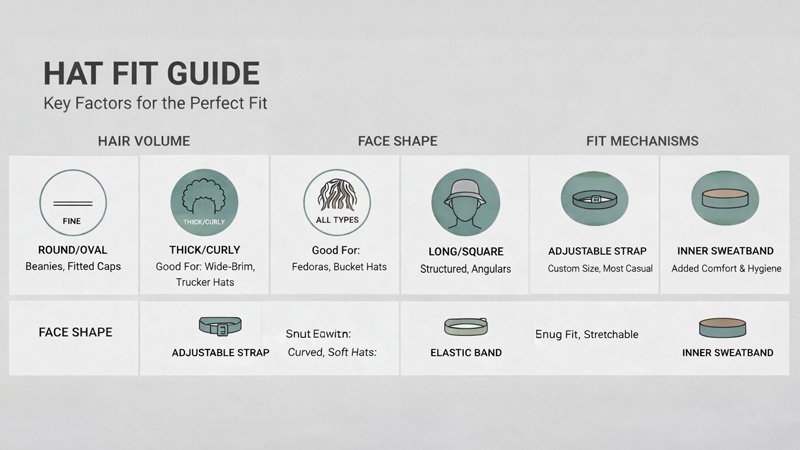
A hat that looks great on display may feel completely different when worn over long, thick, or styled hair. Before choosing a style, consider these four factors:
1) Hair Volume and Thickness
Long hair adds bulk—especially if tied up.
-
Fine or flat hair: Choose hats with a slightly structured crown to avoid a lifeless, pressed-down look.
-
Thick or heavy hair: Look for hats with enough crown depth and comfortable fit so the hat doesn’t sit too high.
-
Curly hair: Soft or adjustable hats are often easier to wear without disrupting curl shape.
2) Face Shape
Face shape affects how balanced a hat looks.
-
Round face: Medium to wide brims, angled placement, and higher crowns can help elongate the face.
-
Oval face: Most hat styles work well—great for experimentation.
-
Long face: Lower crowns and hats worn slightly higher (not pulled down too far) help balance facial length.
-
Square face: Softer lines, curved brims, and loose hair around the face can soften strong angles.
-
Heart-shaped face: Medium brims and styles with balanced crown proportions usually work well.
3) Occasion and Function
A hat for a beach trip is not the same as a hat for commuting or a winter outfit.
-
Everyday / streetwear: Baseball caps, dad caps, beanies
-
Travel / vacation: Wide-brim hats, packable sun hats
-
Smart casual / fashion styling: Fedora, beret
-
Cold weather: Knits and lined winter caps
-
Outdoor activity: Lightweight caps with breathable sweatbands
4) Fit (Most Important for Long Hair)
Fit is often the hidden reason a hat “doesn’t work.”
A hat that is too tight can cause:
A good fit should feel secure but comfortable, with no strong pressure on the crown.
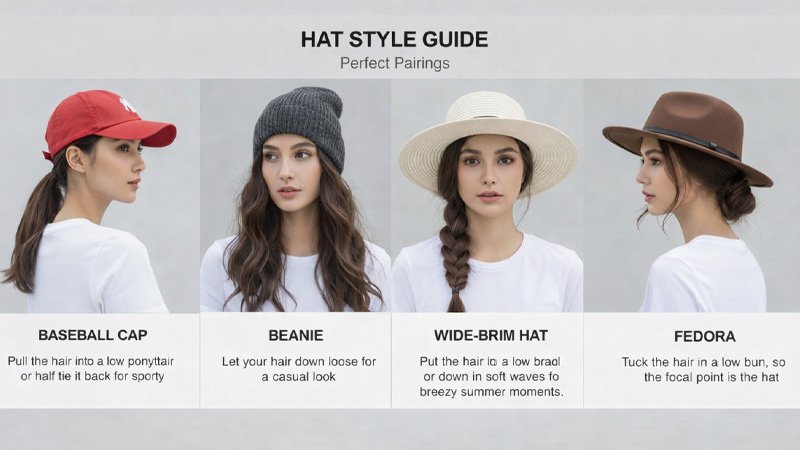
This is where most people get the best results: match the hairstyle to the hat structure.
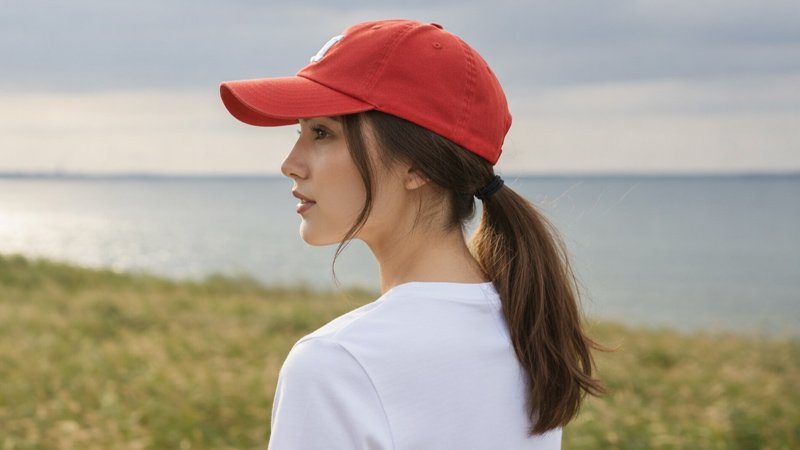
Baseball caps are one of the easiest hats to wear with long hair, but the hairstyle placement matters a lot.
Low Ponytail (Most Versatile)
A low ponytail is the easiest and most flattering choice.
Why it works:
It avoids pressure under the cap and keeps the back of the head smooth.
Best for:
Daily wear, commuting, sports casual looks
Tips:
-
Tie the ponytail below the cap opening
-
Leave a few face-framing strands for softness
-
Keep the cap slightly relaxed, not over-tightened
Low Braid
A simple braid keeps long hair neat and reduces tangling.
Why it works:
Great for windy days, active days, and travel.
Best for:
Outdoor walks, errands, casual outfits
Half-Up, Half-Down
This style works well when you want a more styled look while still wearing a cap.
Why it works:
Adds shape and volume without forcing all hair under the hat.
Best for:
Streetwear looks, social outings, casual content shoots
Avoid With Baseball Caps
-
High buns (usually too bulky under the crown)
-
High ponytails (awkward with most cap constructions unless the cap is designed with a ponytail opening)
-
Heavy root product that gets flattened quickly
2) Beanie + Long Hair
Beanies are comfortable and stylish, but they can create static, flatten the crown, and make the face look larger if styled incorrectly.
Best Hairstyles for a Beanie
Loose Hair With Soft Waves
This creates balance and keeps the look relaxed.
Why it works:
The soft volume below the hat offsets the compact shape of the beanie.
Best for:
Fall/winter outfits, cozy casual styling
Low Messy Bun
A relaxed low bun works especially well with oversized beanies.
Why it works:
It keeps hair off your neck while maintaining a soft silhouette.
Best for:
Layered winter outfits, sweaters, coats
Two Loose Braids
A playful, practical option that works in cold weather and windy conditions.
Why it works:
Helps control long hair and reduces friction tangles under scarves/coats.
Beanie Styling Tips for Long Hair
-
Don’t pull the beanie too low over the forehead if it shortens your face shape
-
Keep some hair visible around the cheeks/jawline for balance
-
Use anti-static spray or a light leave-in conditioner in dry weather
Wide-brim hats can look elegant and photogenic, but they need balanced styling so the look doesn’t feel overly heavy.
Best Hairstyles for Wide-Brim Hats
Loose Waves / Natural Hair Down
This is a classic combination.
Why it works:
The softness of the hair complements the dramatic shape of the brim.
Best for:
Travel, vacations, brunch, spring/summer styling
Side Braid
A side braid adds shape and keeps hair under control in wind.
Why it works:
Adds visual interest and works well in photos.
Best for:
Outdoor events, beach or garden settings
Low Chignon / Low Bun
This creates a refined look for dressier outfits.
Why it works:
Keeps attention on the hat shape and neckline.
Best for:
Events, weddings, smart casual looks
Wide-Brim Hat Mistakes to Avoid
-
Too much volume on top of the head (can make the hat sit awkwardly)
-
Very tight hairstyles that make the look severe
-
Ignoring wind (a loose hairstyle may look good indoors but become unmanageable outside)
4) Fedora + Long Hair
Fedoras add structure and polish, making them ideal for elevated casual outfits.
Best Hairstyles for a Fedora
Sleek Low Ponytail
A clean, minimal choice that pairs well with tailored outfits.
Straight Hair Down (Center or Side Part)
Keeps the look sophisticated and balanced.
Low Bun With Face-Framing Pieces
A great option for a polished but softer finish.
Fedora Styling Tip
Because a fedora already has strong lines, pair it with a hairstyle that is either:
This prevents the hat and hair from competing visually.
If you usually choose your hairstyle first, use this section to match the hat afterward.
1) Ponytail
Best hats: Baseball caps, sporty caps, some sun hats
Best placement: Low ponytail (most comfortable and flattering)
Avoid: High ponytail under standard caps unless the hat is made for it
2) Braids
Best hats: Beanies, baseball caps, wide-brim hats
Why braids work so well: They reduce tangling, hold shape, and look intentional
3) Buns
Best hats: Beanies, some wide-brim hats (with low bun), winter hats
Best placement: Low bun / low chignon
Avoid: High buns under structured hats
4) Hair Down
Best hats: Beanies, fedoras, wide-brim hats
Tips: Add soft texture to prevent the hair from looking too flat after removing the hat
5) Half-Up Hairstyles
Best hats: Baseball caps, casual hats, some fedoras
Why it works: Gives shape and keeps some volume without crowding the crown
How to Wear a Hat With Long Hair Based on Face Shape
Face shape matters—but hat position and hairstyle often matter just as much. If a hat “looks wrong,” try changing the angle and hair around the face before giving up on the style.
Round Face
Goal: Add length and visual balance
Try:
-
Medium or wider brims
-
Slightly higher crown styles
-
Side part or face-framing strands
-
Hair down or low ponytail with some volume
Avoid: Pulling the hat too low over the forehead
Long Face
Goal: Avoid making the face look longer
Try:
Avoid: Extra height on top (high buns + high crown hats)
Square Face
Goal: Soften angles
Try:
Heart-Shaped Face
Goal: Balance a wider forehead and narrower chin
Try:
Oval Face
Goal: Maintain balance (most styles work)
Try: Experiment with hat types, brim widths, and hairstyle placement
How to Prevent Hat Hair (Flat Roots, Frizz, and Static)
This is one of the biggest reasons people avoid hats. A few small changes can make a huge difference.
Before You Put on the Hat
1) Start With Dry Hair
Wearing a hat on damp hair often leads to flattening and shape marks.
2) Add Light Root Volume
Use a lightweight volumizing spray, dry shampoo, or a quick lift at the roots.
Tip: Avoid heavy styling creams near the crown if you plan to wear a hat.
3) Set Your Parting First
If your part changes after the hat goes on, your hair can look messy when you remove it. Set your part before wearing the hat.
4) Use a Smooth Barrier (Optional)
A silk or satin scarf/headband under certain hats can reduce friction—especially useful for curly hair or winter static.
While Wearing the Hat
1) Don’t Overtighten
A hat should feel secure, not compressive.
2) Position It Intentionally
Instead of forcing the hat low, try slightly adjusting the angle:
3) Match the Hairstyle to the Hat
Pressure points cause dents and awkward shape. Low styles usually reduce this problem.
After Taking Off the Hat (Quick Fix)
If your hair looks flat after removing the hat:
-
Flip your head slightly and shake out the roots with your fingers
-
Use dry shampoo or texturizing spray at the crown
-
Change your part temporarily for instant lift
-
Smooth flyaways with a tiny amount of serum
-
Use a quick low ponytail or braid if you’re on the go
Styling by Occasion: Hat and Outfit Combinations for Long Hair
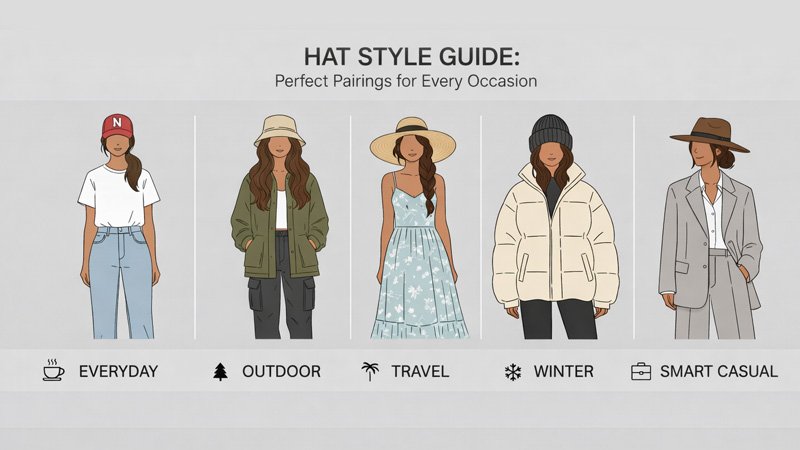
A stylish hat look is not only about the hat—it’s the full combination of hair, outfit, and occasion.
1) Everyday Casual (Easy and Fast)
Hat: Baseball cap / dad cap
Hair: Low ponytail or braid
Outfit: T-shirt, sweatshirt, jeans, sneakers
This is the easiest combination for daily wear and works well when you need a neat look with minimal effort.
2) Travel / Vacation (Comfort + Photos)
Hat: Wide-brim sun hat
Hair: Loose waves or side braid
Outfit: Flowy dress, linen set, sunglasses
Choose a hairstyle that still looks good in wind and after a few hours of wear.
3) Sporty / Outdoor Day
Hat: Breathable cap
Hair: Braids or low ponytail
Outfit: Activewear or lightweight layers
Braids are especially useful here because they stay secure and reduce tangling.
4) Fall/Winter Cozy Look
Hat: Beanie
Hair: Soft waves, low bun, or loose braid
Outfit: Knit sweater, coat, scarf
Keep some hair visible around the face to prevent the beanie from looking too heavy.
5) Smart Casual / Elevated Look
Hat: Fedora
Hair: Sleek low ponytail or low bun
Outfit: Blazer, trousers, boots, structured coat
This combination works well for polished outfits without feeling overdone.
Common Mistakes to Avoid When Wearing Hats With Long Hair
Even a good hat and hairstyle can look off if one detail is wrong. Here are the most common mistakes:
1) Pulling the Hat Too Low
This can flatten your crown, shorten your face visually, and make the entire look feel heavy.
2) Choosing the Wrong Hairstyle Height
High buns and high ponytails often fight against structured hats.
3) Ignoring Hair Texture
Fine hair, thick hair, and curly hair behave differently under hats. Style and prep accordingly.
4) Wearing an Overly Tight Hat
This causes discomfort and makes hat hair worse.
5) Forgetting the Occasion
A stylish hat is also a functional choice. Consider weather, movement, and how long you’ll wear it.
Pro Tip: Why Hat Fit and Construction Matter More Than Most People Think
Many styling problems are actually fit and construction problems, not “hair problems.”
For example:
-
A cap with insufficient crown depth may sit too high over thicker long hair
-
A rigid sweatband may create pressure lines
-
Poorly balanced crown proportions can affect how flattering the hat looks on different face shapes
This is why brands increasingly pay attention not only to style, but also to wearability, comfort, and target-user fit.
At GUANGZHOU EASTLUCKY Hat & Garment Co., Ltd., we understand that a great hat needs to do more than look good in photos. As a high-end custom hat and OEM/ODM manufacturer based in Guangzhou, China, with 15 years of expertise in professional R&D, production, and distribution of hats and embroidered accessories, we help global clients develop products that balance design, comfort, and consistent production quality. Guided by our philosophy, “Quality as Root, Innovation as Soul,” we provide one-stop solutions from sampling to mass production for efficient, high-quality supply chain support.
For brands targeting women’s casualwear, outdoor use, sports styling, or seasonal fashion, details like crown depth, sweatband comfort, fabric selection, and overall fit can directly affect the end-user experience—especially for customers with long or thick hair.
Final Thoughts
Wearing a hat with long hair is all about balance: balancing hat structure with hairstyle placement, comfort with style, and practicality with your personal look.
If you remember only three things, start here:
-
Match the hat type to the hairstyle height
-
Prioritize fit to reduce flat roots and discomfort
-
Use small prep steps to prevent hat hair and frizz
Once you get the combination right, hats become one of the easiest ways to elevate your look while staying comfortable in every season.
FAQ: How to Wear a Hat With Long Hair
How do I wear a hat without flattening my long hair?
Use a lightweight volumizing product before wearing the hat, avoid overtightening, and choose a low hairstyle like a low ponytail or braid. After removing the hat, shake the roots and use dry shampoo for quick lift.
Is it better to wear long hair up or down with a hat?
It depends on the hat type. Structured hats (like baseball caps and fedoras) usually work better with low ponytails or low buns. Soft hats (like beanies) often look great with hair down and soft texture.
What is the best hat for long thick hair?
Look for hats with enough crown depth and a comfortable fit. Adjustable caps, relaxed beanies, and well-balanced wide-brim hats are often easier to wear with thick hair than shallow, rigid styles.
Can I wear a baseball cap with a high ponytail if I have long hair?
Only if the cap is specifically designed with a ponytail opening or if the fit allows it comfortably. For standard baseball caps, a low ponytail usually looks and feels better.
How do I prevent static hair when wearing a beanie?
Use a light leave-in conditioner or anti-static spray, avoid overly dry hair, and consider a smoother inner layer (such as satin/silk) to reduce friction.
Which hairstyle is best for windy weather with a hat?
Braids (single or double) are one of the best options because they stay secure, reduce tangles, and still look intentional after hours of wear.
Need Custom Hat Solutions for Your Brand?
If you’re developing a hat collection for fashion, sports, outdoor, or promotional use, product comfort and fit are just as important as style. EASTLUCKY provides OEM/ODM support from design sampling to mass production, helping brands create hats that are both visually strong and comfortable to wear.
Contact us to discuss your next custom hat project.
Eco-Friendly Hat Materials and Trends for Brands: A Practical Guide to Sustainable Caps, Beanies, Buckets & More
Sustainable headwear is no longer a “nice-to-have.” For brands, distributors, and promotional buyers, hats must now deliver style, comfort, durability, and credible sustainability claims—often with audit-ready documentation and clear chemical-safety expectations.
But here’s the reality: a hat isn’t truly eco-friendly just because the crown fabric is organic or recycled. Real sustainability is built across the full product system—materials, chemicals, manufacturing footprint, durability, and traceability—and it must be communicated in a way buyers can verify.
This practical guide breaks eco-friendly hat manufacturing into tools you can use immediately: material trade-offs, PFAS-free finishing options, a hat BOM (bill of materials) map, trend signals, and a buyer-ready RFQ checklist—covering mainstream and niche styles from caps to beanies, buckets, berets, visors, straw hats, and bump caps.
About the Manufacturer
GUANGZHOU EASTLUCKY Hat & Garment Co., Ltd. is a high-end custom hat and OEM/ODM manufacturer based in Guangzhou, China, with 15 years of expertise in professional R&D, production, and distribution of various hats and embroidered accessories. Guided by the philosophy “Quality as Root, Innovation as Soul,” we provide global clients with one-stop solutions from design sampling to mass production—helping brands build efficient, high-quality supply chains.
Full-category hat customization includes:
-
Casual & Sports: Baseball Cap, Snapback Cap, Trucker Cap, Golf Cap, Visor Cap
-
Fashion & Trend: Bucket Hat, Dad Hat, 5 Panel Cap, Beanie, Beret
-
Functional & Protective: Bump Cap, Straw Hat, and more
We support comprehensive customization of materials, craftsmanship, and styles.
1) What “Eco-Friendly” Means for Hats (Beyond the Fabric)
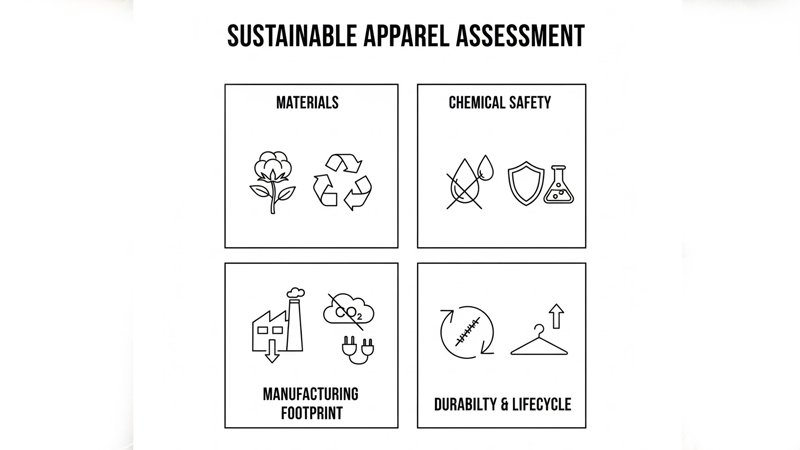
A genuinely sustainable hat should perform across four dimensions:
1) Materials (what it’s made of)
-
Organic or recycled fibres are a strong start—but claims should be by part (crown, visor, mesh, sweatband, closure, etc.)
-
Lower-impact fibres and responsible sourcing reduce upstream footprint
2) Chemical safety (skin-contact + environmental impact)
-
Performance finishes must be clearly defined
-
Increasingly, buyers request PFAS-free water repellency where DWR is needed
3) Manufacturing footprint (how it’s made)
-
Dyeing, cutting yield, waste handling, and packaging can meaningfully change impact
-
Smarter sampling reduces development waste
4) Durability + lifecycle (how long it lasts)
-
Sustainable headwear should be built to last—strong seams, stable brims, durable branding
-
Repairable components (where feasible) extend product life and reduce replacements
Buyer takeaway: Sustainability should be verifiable—with clear BOM disclosure, compliance statements, and traceability.
2) Eco-Friendly Hat Materials: Pros, Trade-Offs, Best Use
Material choice determines both performance and sustainability. Below are the most practical options used today—and when to use them.
Organic Cotton
Why brands choose it: soft hand feel, breathable, familiar to consumers, strong sustainability messaging.
Best for: Dad Hats, Baseball Caps, Bucket Hats, 5 Panel Caps, lifestyle programs, merch.
Trade-offs: can cost more; dyeing and finishing still matter—organic fibre doesn’t guarantee low-impact processing.
Recycled Polyester (rPET)
Why brands choose it: durable, quick-dry, excellent for performance, widely scalable.
Best for: Golf Caps, Visors, Performance Baseball Caps, Trucker Crown fabrics, outdoor activations.
Trade-offs: not biodegradable; hand-feel varies; when “sustainability” is a key claim, documentation and traceability matter.
Hemp Blends
Why brands choose it: naturally durable, rustic texture, outdoor/workwear aesthetics, good moisture behavior.
Best for: Bucket Hats, structured lifestyle caps, eco-heritage branding.
Trade-offs: texture isn’t always suitable for sleek fashion lines; some blends can be more challenging for consistent color matching.
Lyocell / TENCEL™ (Often Used Strategically)
Why brands choose it: smooth, breathable, premium touch.
Best for: linings, sweatbands, premium capsules, comfort-first designs.
Trade-offs: higher cost; best applied where it adds maximum perceived value (skin-contact zones).
Recycled Mesh (Trucker Hats)
Why brands choose it: reduces virgin plastic content while keeping iconic trucker structure.
Best for: Trucker Caps for promotions and summer programs.
Trade-offs: mesh stiffness and hand feel vary—approve swatches early; color matching to crown fabric requires sampling discipline.
3) The Hat Sustainability BOM Map: Where Most Sustainability Gets Won (or Lost)
Hats are multi-component products. A “green” main fabric can be undermined by hidden parts: brim inserts, buckram, sweatbands, adhesives, embroidery backing, and hardware.
Use this checklist as a BOM map when developing eco-friendly styles:
Key Parts to Specify (and Why)
-
Crown/visor fabric: defines the main sustainability story and hand feel
-
Mesh (trucker): affects comfort, structure, and color matching
-
Brim insert/stiffener: drives shape retention and performance; sustainability is often overlooked here
-
Buckram/structure: controls silhouette for structured caps (snapbacks, some 5 panels)
-
Sweatband: skin-contact comfort + potential chemical complexity if performance finishes are added
-
Thread + embroidery backing: impacts wash durability, comfort, and material mix
-
Closures/hardware: coatings and corrosion resistance can matter by market
-
Labels + packaging: visible sustainability signals (FSC cartons, reduced plastics)
Best practice: request “composition by part” (not just an overall fabric claim). This is what serious buyers and brand teams increasingly expect.
4) Eco-Friendly Finishes: Low-Impact Color and PFAS-Free Performance
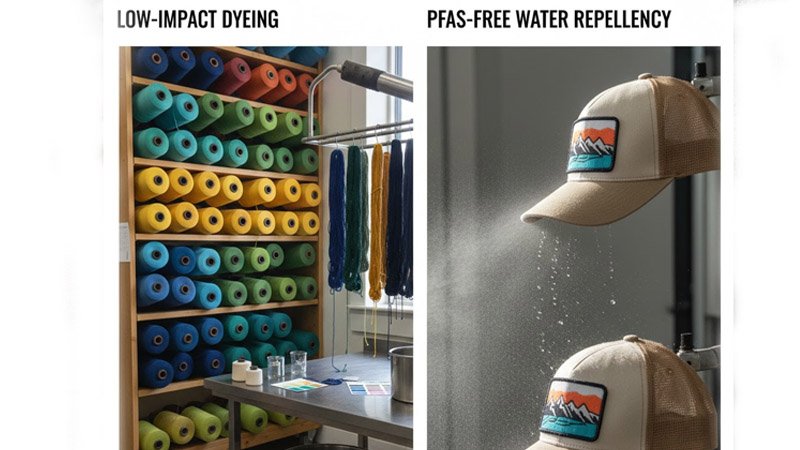
Low-Impact Color (When Programs Are Stable)
For repeat programs with stable color palettes, solution/dope dyeing can reduce resource intensity compared with conventional dyeing routes and can improve shade consistency across production lots.
Trade-offs: color flexibility can be lower; some programs require better planning (and sometimes higher MOQs).
PFAS-Free Water Repellency (When You Need DWR)
Outdoor and performance hats often request water repellency—but many buyers now specify PFAS-free DWR for environmental reasons.
PFAS-free finishing—how to make it procurement-ready
-
Specify “PFAS-free DWR” explicitly (avoid vague “eco DWR”)
-
Define performance expectations: light drizzle vs prolonged rain exposure
-
Validate via sampling and align acceptance criteria before bulk
Reality check: PFAS-free options can vary in hand feel and durability. Align priorities early—water beading vs softness vs cost—then validate with samples.
5) Trends Shaping Sustainable Headwear (What Brands Are Doing Now)
Trend 1: “BOM Transparency” Becomes Standard
More buyers want material disclosure by part, not marketing claims. Expect increasing requests for BOM-by-part composition, supplier declarations, and lot-level traceability.
Trend 2: PFAS-Free Becomes the Default Ask in Performance
Brands are raising chemical-safety expectations, especially for outdoor and sports programs. PFAS-free DWR requests are becoming more common in RFQs.
Trend 3: Comfort-First Sustainability
Consumers don’t reward sustainability if comfort is compromised. Premium feel—better sweatbands, softer hand-feel, skin-contact materials—often decides reorders.
Trend 4: Better Durability = Better Sustainability
Durability is sustainability. Strong seams, stable brims, and wash-durable branding reduce replacements and returns.
Trend 5: Packaging and Logistics Optimization
FSC cartons, reduced polybags, right-sized packaging, and consolidated shipping are becoming baseline requirements for many programs.
6) Style-by-Style Recommendations (Materials That Make Sense)
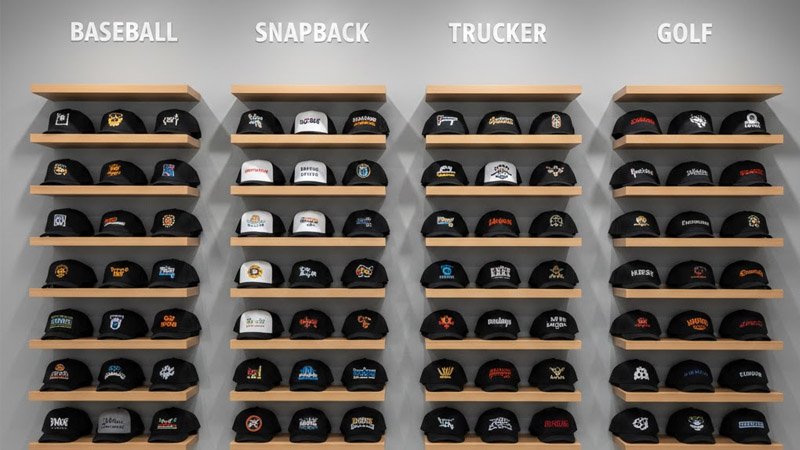
Below are practical starting points for each of your mainstream and niche hat categories.
Casual & Sports
Baseball Cap / Snapback / Golf Cap / Visor
-
Lifestyle: organic cotton + recycled thread + minimal packaging
-
Performance: rPET + breathable construction; add PFAS-free DWR only if needed
-
Visors: sweatband choice and comfort specs matter most
Trucker Cap
Fashion & Trend
Bucket Hat / Dad Hat / 5 Panel / Beanie / Beret
-
Bucket & Dad: organic cotton or hemp blends depending on target aesthetic
-
5 panel: choose stable fabrics for clean geometry and shape retention
-
Beanie: prioritize comfort + pilling control (material selection and yarn quality matter)
-
Beret: premium hand feel and structure matter—spec materials carefully for shape
Functional & Protective
Bump Cap / Straw Hat
-
Bump caps: prioritize structure, performance, and compliance first; then optimize sustainability in materials and packaging
-
Straw hats: focus on consistent craftsmanship, fibre sourcing, and protective packaging to reduce damage in transit
7) Buyer-Ready RFQ Checklist (Copy-Paste Template)
Use this RFQ structure to get accurate quotes and avoid vague “sustainable” claims.
A) Product Definition
-
Style: Baseball / Snapback / Trucker / Golf / Visor / Bucket / Dad / 5 Panel / Beanie / Beret / Bump Cap / Straw
-
End use: promo / lifestyle / performance / outdoor / protective
-
Target market(s): US/EU/UK etc.
-
Target order qty + delivery window
B) BOM by Part (Required)
For each part: material + % composition + any proof requirements
C) Color & Dye Route
-
Color references (Pantone or physical sample)
-
Preferred route: conventional dye / solution-dope dyed (if applicable)
-
Any durability targets (rubbing/sweat/wash) if your program requires them
D) Finishes
E) Packaging
-
FSC cartons required? Yes/No
-
Polybag policy (reduced/none)
-
Label/barcode requirements
8) Three Sustainable “Builds” You Can Copy
Build 1: Lifestyle Merch (Best for Dad Hat / Baseball / Bucket)
-
Organic cotton main fabric
-
Recycled embroidery thread
-
FSC packaging option
-
Best for: brand drops, events, schools, corporate merch
Build 2: Performance Active (Best for Golf Cap / Visor / Sports Caps)
-
rPET main fabric
-
Lightweight trims and breathable construction
-
PFAS-free DWR only if needed for weather exposure
-
Best for: outdoor events, sports activations, performance retail
Build 3: Trucker Program (Best for Trucker Caps)
-
Recycled mesh + rPET or organic cotton crown
-
Comfort-focused backing choice for embroidery
-
Early swatch approval to lock hand feel + color match
-
Best for: promotions, summer programs, lifestyle brands
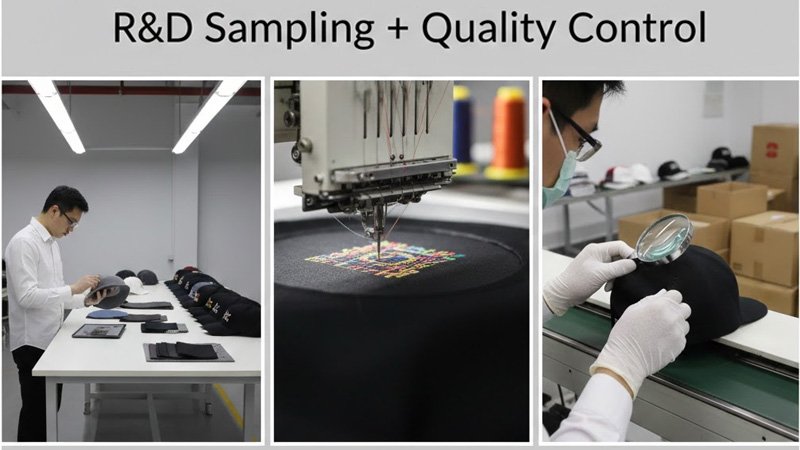
At GUANGZHOU EASTLUCKY Hat & Garment Co., Ltd., we help brands develop eco-friendly headwear that is practical to produce and credible to claim—through structured sampling, quality-first manufacturing, and clear material/finish specifications.
Next steps (choose one):
-
Request material swatches (organic cotton / rPET / hemp blends / recycled mesh)
-
Request a BOM sustainability review (send your tech pack)
-
Request a PFAS-free performance sample plan (tell us end use + target market)