Embroidery vs. Screen Printing for Custom Caps: A Complete Guide for Bulk Buyers
When ordering custom caps in bulk, choosing the right logo decoration method is just as important as choosing the cap style, fabric or color. The logo is the first thing people notice, and it directly affects how professional, durable and valuable your custom cap looks.
Two of the most common logo decoration methods are embroidery and screen printing. Both can be used for branding, but they are not suitable for the same designs, materials or business purposes.
For most custom caps, embroidery is the more popular and recommended choice because it creates a raised, textured and long-lasting logo effect on structured hat panels. Screen printing is better for large, colorful and flat designs, especially on T-shirts, tote bags and some promotional fabric products.
In this complete guide, we will explain the differences between embroidery and screen printing, compare their advantages, and help bulk buyers choose the best logo method for custom caps.
Quick Answer: Which Method Is Better for Custom Caps?
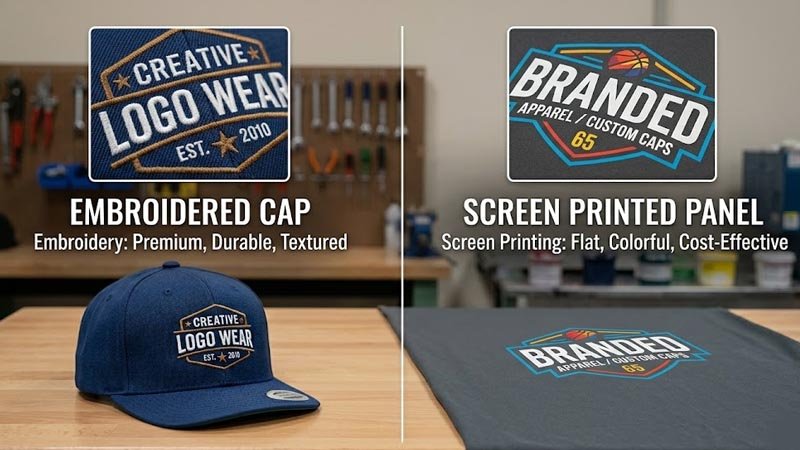
For most custom caps, embroidery is usually better than screen printing.
Embroidery works well on baseball caps, snapback hats, golf caps, trucker hats and uniform caps because it creates a premium and durable logo. It is especially suitable for company logos, team emblems, brand names and small to medium-sized artwork.
Screen printing is more suitable for flat fabric surfaces, large graphics and colorful promotional designs. It can be used on some cap panels, but it is usually less suitable for curved, textured or highly structured cap surfaces.
For custom caps, buyers often choose:
Flat embroidery for clean corporate logos;
3D puff embroidery for bold streetwear logos;
Woven patches for detailed logos and small text;
Embroidered patches for a textured and premium look;
Screen printing for simple flat designs or promotional projects.
What Is Embroidery?
Embroidery is a decoration method that uses colored threads to stitch a logo or design directly onto fabric. The result is a raised, textured and durable logo effect.
Before production, the logo artwork is converted into a digital embroidery file. This process is called digitizing. The embroidery machine then follows this file and stitches the design onto the cap panel.
Embroidery is one of the most popular logo methods for custom caps because it looks professional, feels premium and lasts for a long time.
Why Embroidery Is Popular for Custom Caps
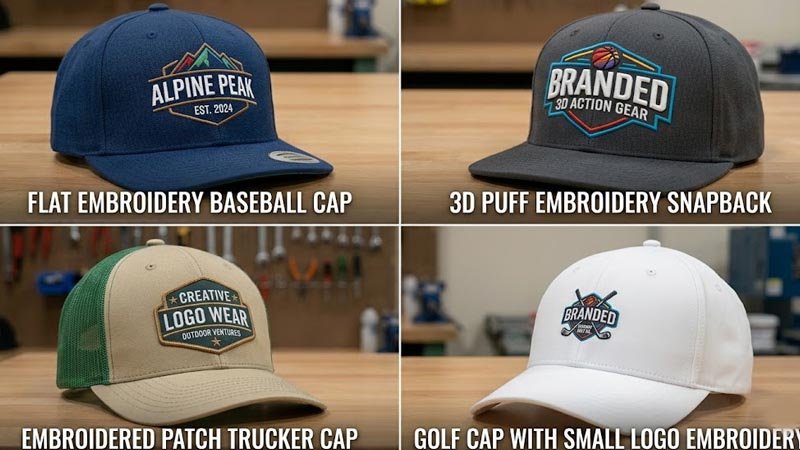
Custom caps are different from T-shirts or tote bags. A cap usually has a curved crown, structured front panels, seams, stitching lines and different fabric thicknesses. These details make logo decoration more challenging.
Embroidery works well on caps because the thread becomes part of the fabric surface. It can hold its shape on structured panels and create a strong visual effect.
Embroidery is commonly used for:
Baseball caps;
Snapback caps;
Golf caps;
Trucker caps;
Dad hats;
5-panel caps;
Bucket hats;
Workwear caps;
Team caps;
Corporate uniform caps.
Advantages of Embroidery
1. Premium and Professional Appearance
Embroidery gives custom caps a high-end look. The raised thread texture makes the logo stand out and creates a more valuable brand impression.
This is why many companies, golf clubs, sports teams, fashion brands and corporate buyers choose embroidered caps for their branding projects.
2. Excellent Durability
Embroidered logos are stitched directly into the fabric, so they do not peel or crack. Compared with many printed designs, embroidery can better withstand regular use, handling and washing.
For caps that will be worn frequently, embroidery is a reliable long-term choice.
3. Strong Brand Recognition
Embroidery is ideal for logos, letters, emblems and simple icons. A clean embroidered logo can make a cap look more professional and easier to recognize.
For brands that care about image and quality, embroidery is often the first choice.
4. Suitable for Many Cap Styles
Embroidery can be applied to many cap types, including structured caps, unstructured caps, cotton caps, twill caps, denim caps and polyester caps.
Different embroidery techniques can also create different styles, from clean corporate branding to bold streetwear designs.
Limitations of Embroidery
Although embroidery is very suitable for custom caps, it is not perfect for every design.
Embroidery may not be ideal for:
Very small text;
Thin lines;
Complex gradients;
Photo-like artwork;
Large filled areas;
Extremely detailed patterns.
The cost of embroidery is usually affected by stitch count. A larger or more complex logo requires more stitches, which increases production time and cost.
For detailed artwork, a woven patch or printed label may sometimes be a better option.
Common Embroidery Options for Custom Caps
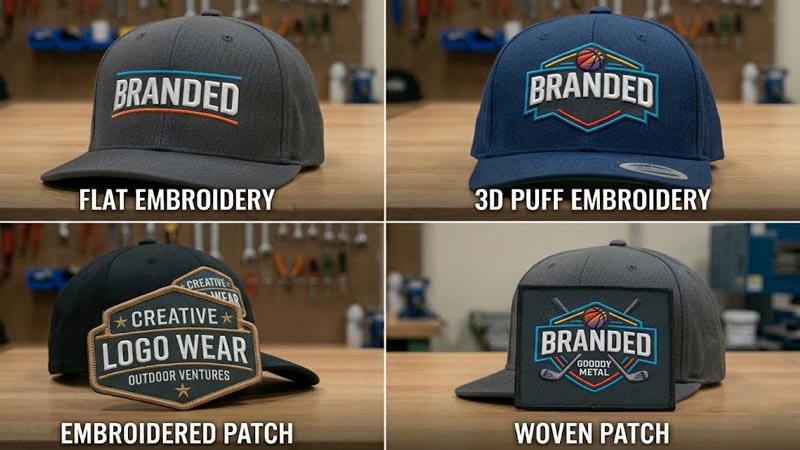
Flat Embroidery
Flat embroidery is the most common embroidery method. The logo is stitched flat onto the cap surface. It is suitable for company logos, text, simple icons and professional branding.
Best for:
Corporate caps;
School caps;
Event caps;
Golf caps;
Uniform caps.
3D Puff Embroidery
3D puff embroidery uses foam under the stitches to create a raised three-dimensional effect. It is popular for snapback caps, streetwear caps and bold logo designs.
Best for:
Large letters;
Bold logos;
Sports caps;
Fashion caps;
Streetwear brands.
However, 3D puff embroidery is not suitable for very thin lines or small detailed text.
Embroidered Patch
An embroidered patch is made separately and then sewn or heat-applied onto the cap. It creates a strong textured look and is suitable for vintage, outdoor or fashion-style caps.
Best for:
Outdoor brands;
Lifestyle brands;
Retail caps;
Promotional collections.
Woven Patch
A woven patch is made with finer threads than embroidery, so it can show smaller details and clearer text. It is a good choice when the logo is too detailed for direct embroidery.
Best for:
Small text;
Detailed logos;
Label-style branding;
Retail-ready caps.
What Is Screen Printing?
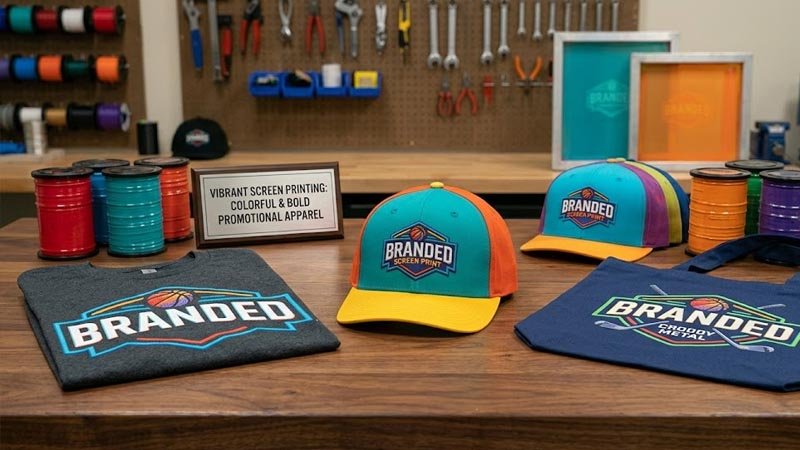
Screen printing is a decoration method that uses ink and a mesh screen to transfer the design onto fabric. Each color usually needs a separate screen.
The final effect is smooth, flat and colorful. Screen printing is very popular for T-shirts, hoodies, tote bags and promotional apparel.
For caps, screen printing can be used in some cases, but it depends on the cap material, panel structure and logo design.
Advantages of Screen Printing
1. Good for Large Graphic Designs
Screen printing works well for large graphics, bold text and simple flat artwork. If the design covers a wide area and does not need a raised texture, screen printing can be a practical choice.
2. Bright and Vibrant Colors
Screen printing can create strong and eye-catching colors. It is suitable for promotional designs that need high visual impact.
3. Cost-Effective for Large Quantities
For large orders with the same design, screen printing can be cost-effective because the setup cost is spread across the whole order.
This makes it popular for event merchandise, promotional apparel and large-volume campaigns.
4. Smooth Surface Feel
Unlike embroidery, screen printing does not add thread texture. The design stays flat on the fabric, which is suitable for some casual or lightweight products.
Limitations of Screen Printing on Caps
Screen printing is not always the best choice for caps because caps are not completely flat. Structured cap panels, curved surfaces, seams and textured fabrics can make printing more difficult.
Screen printing may not be ideal for:
Mesh trucker caps;
Highly curved front panels;
Thick or textured fabrics;
Small detailed logos on curved surfaces;
Premium brand caps that need a raised logo effect.
Printed logos may also fade or crack over time if the ink quality, curing process or washing care is not good.
Embroidery vs. Screen Printing: Key Differences
| Factor | Embroidery | Screen Printing |
|---|---|---|
| Logo Effect | Raised, textured, premium | Flat, smooth, colorful |
| Best For | Custom caps, uniforms, polos, jackets | T-shirts, tote bags, flat fabric products |
| Durability | Very high | Medium to high |
| Design Style | Simple logos, text, emblems | Large graphics, colorful designs |
| Color Performance | Good for solid colors | Good for vibrant and multicolor designs |
| Detail Level | Limited for tiny details | Better for fine graphics on flat surfaces |
| Cost Factor | Stitch count, logo size, complexity | Number of colors, screens, print area |
| Best Order Type | Premium branding and long-term use | Bulk promotional printing |
| Cap Compatibility | Very strong | Limited by surface and material |
Which Method Is Better for Different Cap Styles?
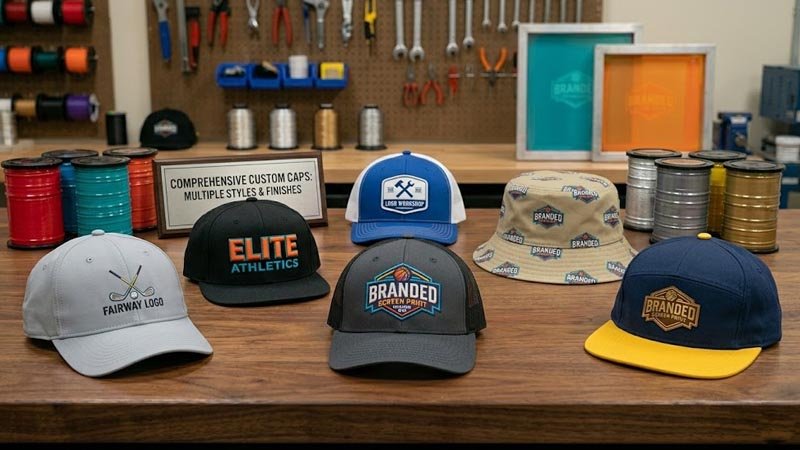
Baseball Caps
Baseball caps are one of the best products for embroidery. Flat embroidery is ideal for clean logos, while 3D puff embroidery works well for bold front designs.
Recommended methods:
Flat embroidery;
3D puff embroidery;
Embroidered patch;
Woven patch.
Snapback Caps
Snapback caps are often used for streetwear, sports and fashion brands. Their structured front panels are perfect for bold embroidery.
Recommended methods:
3D puff embroidery;
Flat embroidery;
Woven patch;
Rubber patch.
Trucker Caps
Trucker caps usually have a foam, cotton or twill front panel with mesh back panels. Embroidery or patches are usually applied to the front panel.
Recommended methods:
Flat embroidery;
Embroidered patch;
Woven patch;
Leather patch.
Screen printing is usually not recommended on the mesh back.
Golf Caps
Golf caps often require a clean, premium and professional logo. Flat embroidery is usually the best option.
Recommended methods:
Flat embroidery;
Small side embroidery;
Woven label;
Subtle back logo embroidery.
Bucket Hats
Bucket hats can use embroidery for small front logos or side logos. For casual fashion designs, printing may also be used depending on the fabric.
Recommended methods:
Flat embroidery;
Woven patch;
All-over printing;
Small screen printing.
5-Panel Caps
5-panel caps often have a flatter front panel, which allows more decoration flexibility.
Recommended methods:
Flat embroidery;
Woven patch;
Screen printing;
Heat transfer logo.
Best Logo Placement for Custom Caps
Logo placement also affects the final look and production method.
Front Panel
The front panel is the most common position for main branding. It is best for embroidery, 3D puff embroidery and patches.
Side Panel
Side embroidery is suitable for small logos, flags, slogans or secondary branding.
Back Panel
The back panel can be used for a website, short slogan, brand name or small embroidered logo.
Brim
The brim can be decorated with small embroidery, woven labels or printed details, depending on the design.
Inner Tape and Sweatband
For private label and retail brands, inner tape and sweatband customization can help create a complete branded product.
How to Choose Based on Your Logo Design
Choose embroidery if your logo has:
Simple lines;
Solid colors;
Clear text;
Small to medium size;
Professional brand style;
Long-term use requirements.
Choose screen printing if your logo has:
Large flat graphics;
Many colors;
Gradients;
Fine artwork;
Promotional style;
A large printing area.
Choose woven patch if your logo has:
Small text;
Detailed patterns;
Thin lines;
Label-style design;
Retail branding needs.
Choose 3D puff embroidery if your logo has:
Bold letters;
Thick lines;
Simple shapes;
Streetwear style;
Strong visual impact.
Cost Comparison for Bulk Buyers
For bulk buyers, cost is always an important factor. However, the cheapest method is not always the best choice. The right method should match the product value, brand image and usage purpose.
What Affects Embroidery Cost?
Embroidery cost is mainly affected by:
Stitch count;
Logo size;
Embroidery area;
Thread colors;
Flat or 3D puff embroidery;
Cap structure;
Order quantity.
A larger filled logo usually costs more because it needs more stitches and more machine time. Even if the logo uses only one color, a large design may still cost more than a small multi-color design.
What Affects Screen Printing Cost?
Screen printing cost is mainly affected by:
Number of colors;
Number of screens;
Printing size;
Ink type;
Fabric type;
Setup cost;
Order quantity.
For screen printing, each color normally requires a separate screen. This means a multi-color design may have a higher setup cost.
Which Is More Cost-Effective?
For premium custom caps, embroidery is usually worth the investment because it improves the product’s perceived value.
For large-volume promotional apparel or simple flat designs, screen printing may be more cost-effective.
For detailed logos on caps, woven patches may offer a good balance between cost, detail and appearance.
Recommended Logo Method by Buyer Type
| Buyer Type | Recommended Method |
|---|---|
| Corporate Uniform Buyers | Flat embroidery |
| Sports Teams | Flat embroidery or 3D puff embroidery |
| Streetwear Brands | 3D puff embroidery or woven patch |
| Golf Clubs | Flat embroidery |
| Outdoor Brands | Embroidered patch or leather patch |
| Event Companies | Simple embroidery or screen printing |
| Retail Fashion Brands | Woven patch, embroidered patch or 3D embroidery |
| Schools and Clubs | Flat embroidery |
| Promotional Gift Buyers | Embroidery for caps, screen printing for apparel |
Common Mistakes to Avoid Before Production
1. Using Embroidery for Very Small Text
Small text may not be clear when embroidered. If the letters are too tiny, a woven patch may be better.
2. Choosing 3D Puff Embroidery for Thin Lines
3D puff embroidery needs bold shapes. Thin lines and small details may not work well.
3. Ignoring the Cap Surface
Caps have curved panels and seams. A design that looks good on a flat screen may not work perfectly on a cap.
4. Making the Logo Too Large
A very large embroidered logo can make the front panel stiff or cause slight puckering. Proper logo sizing is important.
5. Not Checking a Sample
For bulk orders, it is always better to check a sample before mass production. This helps confirm logo size, color, placement and final effect.
Factory Recommendation
From a factory perspective, the best logo method should be selected after checking the logo artwork, cap structure, fabric type, order quantity and target market.
As a Guangzhou-based high-end custom hat and OEM/ODM manufacturer with 15 years of experience, GUANGZHOU EASTLUCKY Hat & Garment Co., Ltd. supports global brands from design sampling to mass production. With professional R&D, production and distribution capabilities, EASTLUCKY helps buyers choose suitable decoration methods such as flat embroidery, 3D puff embroidery, woven patches, embroidered patches, screen printing and other custom solutions.
For bulk buyers, working with an experienced custom cap factory can reduce production risks, improve logo quality and ensure more consistent results from sample to mass production.
Final Recommendation: Embroidery or Screen Printing?
If you are ordering custom caps, embroidery is usually the better choice for most projects. It is durable, professional and suitable for structured cap panels.
Choose embroidery if you want:
A premium logo effect;
Long-lasting branding;
Custom caps for uniforms;
Corporate or team caps;
A professional product image.
Choose screen printing if you want:
Large flat graphics;
Colorful promotional designs;
Cost-effective bulk printing;
Designs on flatter fabric products;
Casual event merchandise.
For many custom cap projects, buyers may also consider woven patches, embroidered patches or 3D puff embroidery depending on the logo and brand style.
The best choice is not always one single method. It depends on your design, cap style, fabric, budget and target market.
Conclusion
Embroidery and screen printing are both useful decoration methods, but they serve different purposes.
For custom caps, embroidery is usually the preferred option because it offers a raised, durable and premium logo effect. It works especially well on baseball caps, snapback caps, golf caps, trucker caps and uniform caps.
Screen printing is better for large, colorful and flat designs, especially on T-shirts, tote bags and some promotional fabric products. It can be used on certain cap styles, but it is more limited by fabric surface and cap structure.
For bulk buyers, the best solution is to review the logo artwork, cap material, order quantity and branding purpose before production. A professional custom cap manufacturer can help recommend the most suitable method and make sure the final product matches your brand image.
FAQs About Embroidery vs. Screen Printing for Custom Caps
Is embroidery better than screen printing for caps?
Yes, embroidery is usually better for custom caps because it is more durable and works well on structured hat panels. It also gives the cap a more premium and professional look.
Can screen printing be used on caps?
Yes, screen printing can be used on some caps, especially when the fabric surface is flat and smooth. However, it is not always suitable for curved, textured or mesh areas.
What is the best logo method for snapback caps?
For snapback caps, 3D puff embroidery and flat embroidery are very popular. Woven patches are also a good option for detailed logos.
What is the best logo method for trucker caps?
For trucker caps, embroidery or patches are usually applied to the front panel. The mesh back is generally not suitable for embroidery or screen printing.
Is 3D puff embroidery good for all logos?
No. 3D puff embroidery works best for bold letters and simple shapes. It is not suitable for thin lines, small text or highly detailed artwork.
Which method is more durable?
Embroidery is generally more durable because the logo is stitched into the fabric. Screen printing can also last well, but it may fade or crack over time depending on ink quality and care.
Which method is more cost-effective for bulk orders?
Screen printing can be more cost-effective for large-volume flat printing projects. However, for custom caps, embroidery often provides better value because it improves the product’s quality and brand image.
What file format is needed for embroidery?
Usually, buyers can provide AI, PDF, EPS, PNG or JPG artwork. The factory will convert the logo into an embroidery file before production.
Can small text be embroidered on caps?
Small text can be embroidered if the size is large enough. If the text is too small, a woven patch may provide better clarity.
Should I make a sample before bulk production?
Yes. For bulk custom cap orders, making a sample is strongly recommended. It helps confirm logo size, thread color, placement, cap fit and overall quality before mass production.