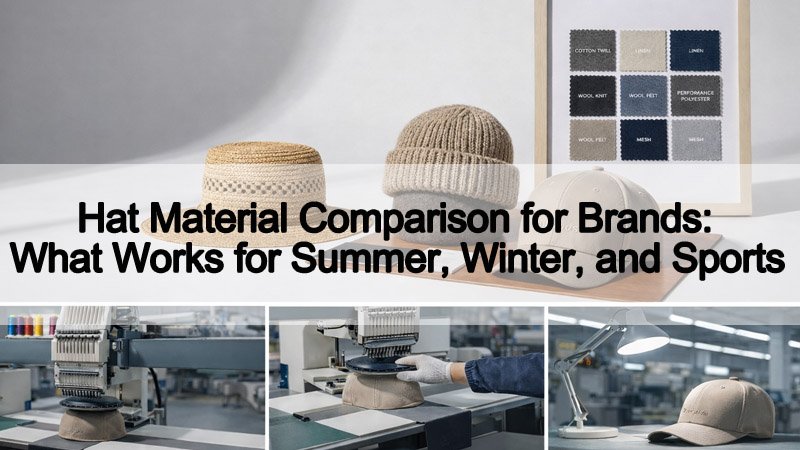
Choosing the right hat material isn’t just a design decision—it directly impacts comfort, performance, unit cost, production risk, and returns. For brands, the “best” fabric depends on season, end-use, target retail price, and the silhouette you need the hat to hold.
This guide gives you a fast material selector, a brand-focused comparison table, and the production notes that matter when you move from sampling to bulk.
Quick selector: pick by season and use case
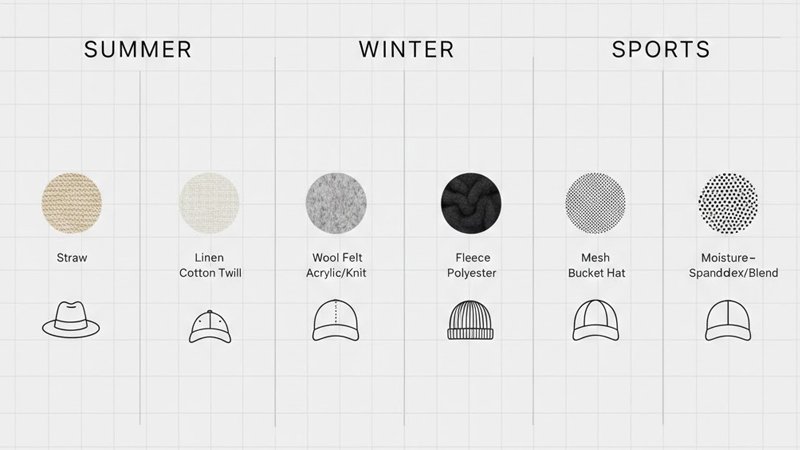
Summer (hot weather / outdoor / events)
-
Best: cotton, linen, straw, lightweight cotton twill
-
Avoid (unless ventilated): heavy denim, thick wool, full leather
Winter (warmth / structure / premium feel)
-
Best: wool, wool felt, fleece, heavier cotton twill with lining
-
For premium structure: wool felt / fur felt (where applicable)
Sports & active (sweat / quick-dry / performance)
-
Best: polyester, nylon, mesh, polyester blends (often with moisture-wicking finishes)
-
Avoid: non-breathable faux leather, heavy felt, velvet
Workwear / daily heavy use (durability first)
-
Best: cotton twill, canvas, denim, polyester blends
-
Bonus: stain/water-resistant finishes when needed
Hat material comparison table for brands
| Material | Breathability | Warmth | Durability | Shape retention | Water resistance | Cost tier* | Best for |
|---|---|---|---|---|---|---|---|
| Cotton (plain/brushed) | High | Low | Medium | Medium | Low | $$ | casual caps, soft fits |
| Cotton twill / canvas | Medium–High | Low | High | High | Low | $$ | structured caps, workwear |
| Linen | Very high | Low | Medium | Medium | Low | $$–$$$ | summer fedoras, sun hats |
| Straw (paper/raffia/toquilla) | Very high | Low | Medium (varies) | Medium | Low | $$–$$$$ | summer, resort, events |
| Wool knit | Medium | High | Medium | Low–Medium | Medium | $$–$$$ | beanies, winter casual |
| Wool felt | Low–Medium | High | High | Very high | Medium | $$$–$$$$ | fedoras, dress hats |
| Polyester | Medium | Low | High | High | Medium | $–$$ | sports, value lines |
| Nylon | Low–Medium | Low | High | Medium | High | $–$$ | rain/outdoor performance |
| Mesh (panels) | Very high | Low | Medium | Low | Low | $ | trucker, sports ventilation |
| Denim | Medium | Low | Very high | High | Low | $$ | rugged styles, streetwear |
| Velvet | Low | Medium | Low–Medium | Medium | Low | $$$ | fashion, occasion hats |
| Leather | Low | Medium | Very high | High | Medium | $$$$ | premium fashion, cowboy |
| Faux leather/suede | Low | Medium | Medium | High | Medium | $$–$$$ | fashion looks, budget |
| Fleece | Medium | High | Medium | Low | Low | $–$$ | winter, value warmth |
*Cost tier is relative and varies by weight, finish, sourcing, trims, and minimums.
What we’ve learned from real OEM/ODM production
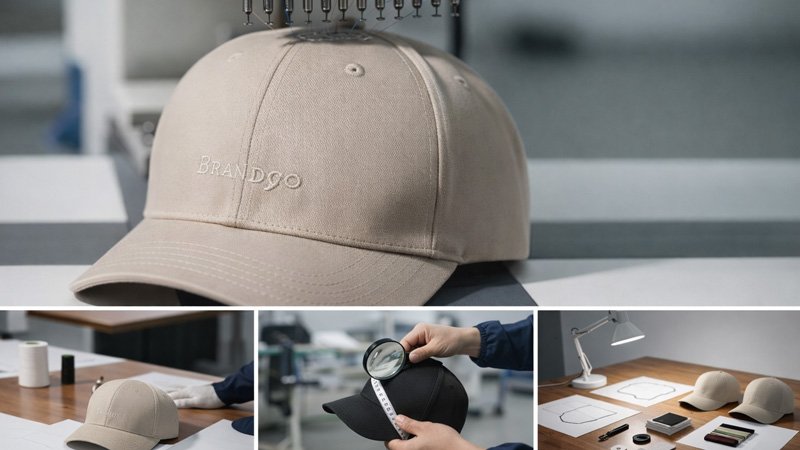
In bulk production, the “best material” is often the one that balances performance + brand positioning + manufacturability. Material choice affects:
-
Sampling speed (some fabrics need extra testing/finishing)
-
Defect risk (shrinkage, crushing, dye migration, seam puckering)
-
Consistency across lots (hand-feel, color, stiffness, shape memory)
-
Packaging & shipping (crushing, brim deformation, moisture sensitivity)
About us (mid-article intro, as requested):
GUANGZHOU EASTLUCKY Hat & Garment Co., Ltd. is a high-end custom hat and OEM/ODM manufacturer based in Guangzhou with 15 years of experience in professional R&D, production, and distribution of hats and embroidered accessories. Guided by the philosophy “Quality as Root, Innovation as Soul,” we support global brands with one-stop solutions—from design sampling to mass production—built to keep quality stable at scale.
Deep dive: brand-ready guidance by material
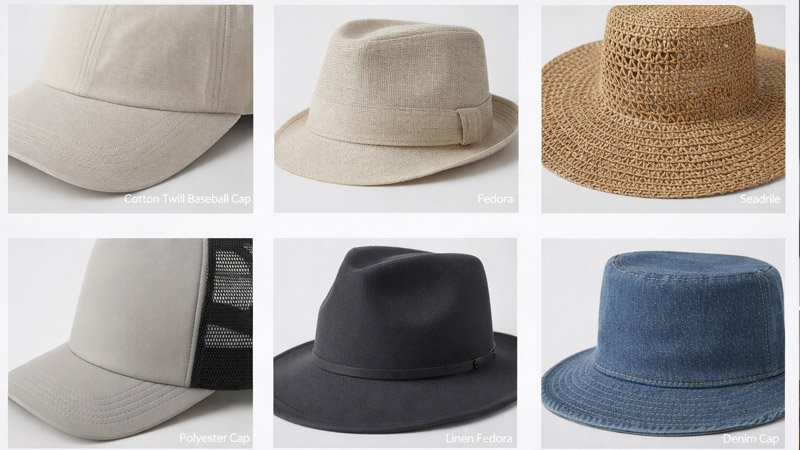
Below is a practical breakdown with Best for / Pros / Watch-outs / Care so you can select confidently.
1) Cotton (plain/brushed)
Best for: casual baseball caps, soft crowns, everyday wear
Pros: comfortable, breathable, easy to print/embroider, wide color options
Watch-outs: can wrinkle; can shrink if not pre-washed; may lose structure over time
Care: gentle wash, avoid high-heat drying; consider pre-washed cotton for stability
2) Cotton twill / canvas
Best for: structured caps, uniforms, workwear, premium embroidery
Pros: strong, holds shape well, great for embroidery definition
Watch-outs: heavier weights can feel warm; colorfastness should be verified per dye lot
Care: spot clean or gentle wash; air dry to keep structure
3) Linen
Best for: summer fedoras, sun hats, lightweight fashion hats
Pros: very breathable; premium summer look; comfortable in heat
Watch-outs: wrinkles easily; may need lining to improve comfort/shape
Care: spot clean; steam lightly; consider linen blends for reduced wrinkling
4) Straw (paper straw / raffia / toquilla, etc.)
Best for: resort collections, outdoor events, sun protection styles
Pros: lightweight, airy, strong “summer signal” visually
Watch-outs: durability varies dramatically by straw type and weave; crushing during shipping is a common issue
Care: keep dry; store with support; avoid heavy pressure
Brand tip: specify straw type + weave density in tech pack to avoid quality drift
5) Wool knit (beanie yarns)
Best for: beanies, winter casual, lifestyle merch
Pros: warm; moisture management; wide texture options
Watch-outs: itch sensitivity; pilling; shrink risk if washed incorrectly
Care: cold gentle wash or hand wash; lay flat dry
6) Wool felt (structured felt)
Best for: fedoras, dress hats, premium winter lines
Pros: excellent shape retention; premium appearance; good warmth
Watch-outs: can be heavy; sensitive to harsh cleaning; molding consistency matters
Care: brush/spot clean; store on hat stand; avoid soaking
7) Polyester (including performance blends)
Best for: sports caps, value lines, quick-dry programs
Pros: durable, wrinkle-resistant, quick-dry, scalable in bulk
Watch-outs: can feel less breathable; sustainability perception depends on story (virgin vs recycled)
Care: easy care; avoid high heat if there are bonded finishes
8) Nylon
Best for: rain-ready hats, outdoor performance, packable styles
Pros: water resistance, strength, quick-dry
Watch-outs: lower breathability; static; “hand-feel” varies widely by weave
Care: wipe clean; gentle wash; air dry
Brand tip: for rain lines, pair nylon with breathable paneling or vent details
9) Mesh (as panels, usually paired with twill/poly fronts)
Best for: trucker hats, high-ventilation sports caps
Pros: airflow; lightweight; strong sports association
Watch-outs: can snag; cheaper meshes deform easily
Care: spot clean; reshape and air dry
10) Denim
Best for: rugged streetwear, durable casual
Pros: very durable; holds structure; strong lifestyle aesthetic
Watch-outs: heavier and warmer; color rub-off risk (esp. dark indigo)
Care: wash sparingly; cold wash; avoid transferring dye to light garments
11) Velvet
Best for: fashion capsules, occasion wear, vintage looks
Pros: rich texture; premium visual
Watch-outs: crushing/matting; water marks; more returns if customers treat it like cotton
Care: brush gently; avoid rain; store carefully
12) Leather / Faux leather / Faux suede
Best for: premium fashion, cowboy-inspired, statement pieces
Pros: strong structure; long wear; premium positioning (real leather)
Watch-outs: breathability is low; faux materials can crack/peel by quality tier; higher heat retention
Care: wipe clean; condition real leather; avoid folding/creases
13) Fleece
Best for: winter warmth at accessible price points
Pros: warm, soft, cost-effective
Watch-outs: pilling; can look less premium without good trims/design
Care: gentle wash; avoid high heat
Specs that actually matter (the “quality levers” brands should define)
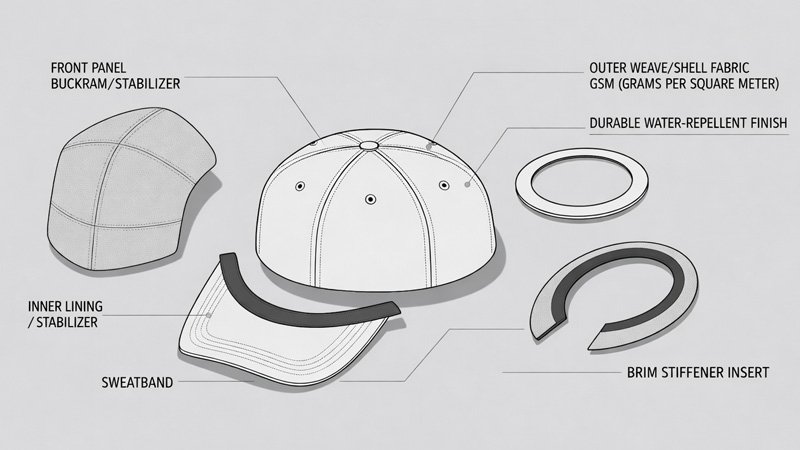
If you want consistent results across sampling and bulk, don’t specify only “cotton” or “polyester.” Specify the levers below:
-
Weave & structure
-
Twill vs plain weave affects durability, stiffness, embroidery clarity
-
Weight / GSM
-
Heavier isn’t always better—GSM affects season comfort and crown drape
-
Finish
-
Pre-wash, enzyme wash, brushed finish, water-repellent finish (DWR), anti-UV/UPF claims
-
Lining & sweatband
-
A great sweatband can upgrade perceived quality even on value materials
-
Brim & buckram choices
-
Brim stiffness and crown support determine whether a hat looks premium after shipping and repeated wear
Sustainability without vague claims (what brands can actually say)
If your customers care about sustainability, make it specific and verifiable:
-
Organic cotton (best for “natural fiber” story)
-
Recycled polyester (strong for performance + circularity messaging)
-
Responsibly sourced wool (pair with clear supplier standards)
-
Lower-impact dyeing & packaging (reduces carbon and improves compliance in many markets)
Brand tip: choose 1–2 sustainability claims you can support consistently (materials + documentation), instead of listing everything.
Manufacturing notes: where projects usually fail (and how to avoid it)
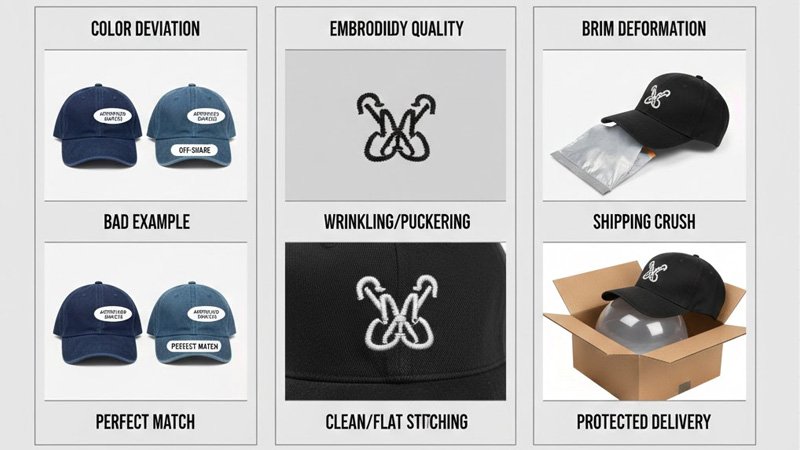
1) Shrinkage & fit drift
-
Cotton and wool programs need pre-treatment decisions (pre-wash, preshrink, blocking)
2) Color consistency
-
Dark denim and saturated colors can vary by lot. Control via lab dips + approved shade standards
3) Shape retention after shipping
-
Felt, straw, and structured caps require packaging strategy (crown support, brim protection, carton test)
4) Embroidery performance
-
Soft fabrics can “sink” stitches; structured twill/canvas often delivers cleaner logo edges
-
Define stitch density and backing early in sampling
5) Heat & sweat comfort
-
Faux leather and heavy fabrics can trap heat—add venting, mesh panels, or moisture-wicking bands
A simple decision framework for brands
Before you lock a material, answer these 6 questions:
-
Season: summer / winter / all-season?
-
Use case: lifestyle / sport / workwear / fashion?
-
Target retail & margin: what cost tier is realistic?
-
Required silhouette: soft dad cap vs structured crown vs brimmed felt?
-
Brand positioning: natural / premium / performance / sustainable?
-
Compliance needs: labeling, safety, restricted substances, market-specific requirements?
Ready to choose materials for your next hat program?
If you want faster sampling and fewer production surprises, send these details and we can recommend 2–3 optimal material routes:
-
Hat style + target season/use case
-
Logo file and decoration method preference (embroidery/print/patch)
-
Target retail price & expected order quantity
-
Preferred hand-feel (soft vs structured) and fit requirements
-
Any sustainability goals (e.g., organic or recycled)