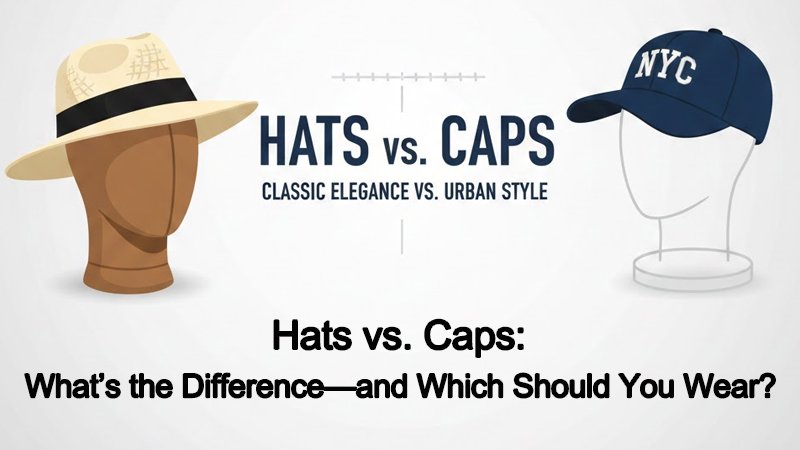
Hats and caps aren’t interchangeable. One changes your silhouette and formality, the other signals sport and everyday ease. If you’ve ever wondered why a fedora feels “dressed up” while a baseball cap feels “off-duty,” the answer is in structure, brim/bill design, materials, and fit.
In this guide, you’ll get:
-
a clear hat vs. cap definition
-
a quick comparison table
-
occasion-by-occasion recommendations
-
face-shape and climate tips
-
common mistakes to avoid
-
a buyer-friendly section for brands developing headwear
Hat vs. Cap: The Fast Definition
-
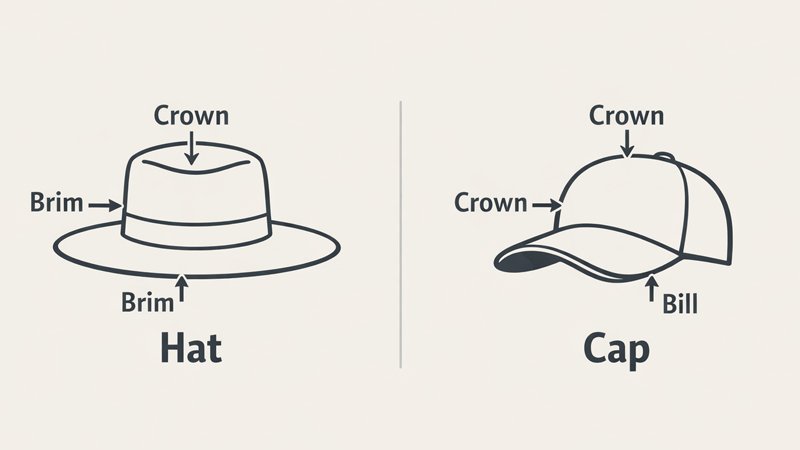
A hat typically has a brim that extends beyond the crown (often around the full circumference or partly around), offering broader shading and a more “styled” shape.
-
A cap usually has a front bill/visor, with a lower crown and a casual, sporty silhouette.
Quick rule:
If it has a front visor → usually a cap.
If it has a brim (often wider and more all-around) → usually a hat.
Hat vs. Cap Comparison (At a Glance)
| Feature | Hat | Cap |
|---|---|---|
| Key shape | Crown + brim | Crown + bill/visor |
| Coverage | Often wider shading | Mostly forward shading |
| Vibe | Classic, styled, sometimes formal | Casual, sporty, streetwear |
| Fit | Often sized (S/M/L or measured) | Often adjustable |
| Common materials | Wool/felt, straw, leather, blends | Cotton twill, polyester, nylon, mesh, performance fabrics |
| Branding focus | Bands, trims, subtle logos | Front embroidery/patch, side embroidery, woven labels |
| Best for | Sun protection + statement silhouette | Daily wear + comfort + easy sizing |
The Real Design Differences (That Change How You Look)
1) Crown height & structure
-
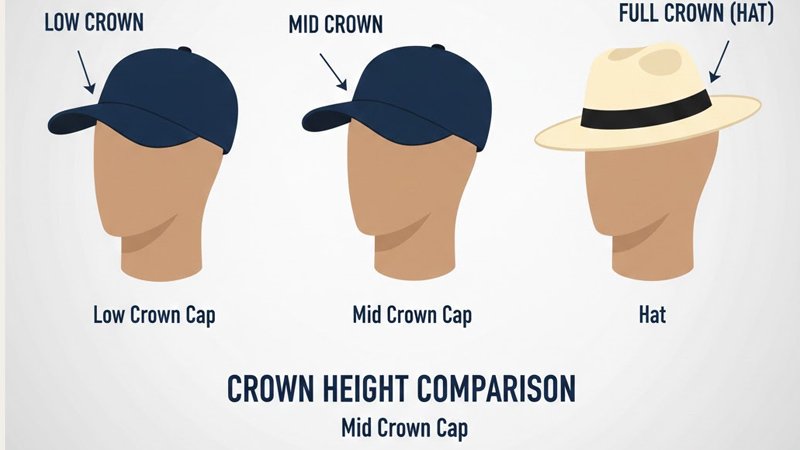
Hats often use taller or more sculpted crowns, which can feel refined and intentional.
-
Caps typically use lower crowns built from panels (5-panel/6-panel), ranging from structured to unstructured.
Why it matters: Crown height affects face balance. Taller crowns can add presence; lower crowns feel relaxed.
2) Brim vs. bill: function + attitude
-
Hat brims can be wide/narrow, flat/curved, upturned/downturned—each changes the mood.
-
Cap bills are usually curved or flat, designed for forward shading and an athletic profile.
Why it matters: Brim shape is a style statement. Bill shape is a practicality statement (and a streetwear signal).
3) Adjustability and repeat wear
-
Caps are often made for one-size wearability (snapback, strapback, buckle, Velcro).
-
Hats often look best in true sizing, which creates a cleaner fit but needs accurate size control.
Materials: Why Hats Often Feel “Premium” and Caps Feel “Everyday”
Hats frequently use materials that hold shape and communicate craft:
-
felt/wool blends, straw, leather, structured specialty weaves
Caps are often designed for comfort, breathability, and easy care:
-
cotton twill, polyester, nylon, mesh, performance fabrics
Brand note: A “premium” cap is usually defined by fabric hand-feel + crown shape + embroidery clarity, not just the logo.
A Short History: Why They Signal Different Things
Hats are closely tied to tradition and styling—from ceremonial and cultural use to classic fashion eras. Caps developed more from utility and identity, tied to military/workwear and later sports, then streetwear.
That’s why hats often read as timeless/elevated, and caps read as casual/modern.
Anatomy 101: What to Look For When Quality Matters
Hat anatomy (what separates great from average)
-
Crown: stability and shape consistency
-
Brim: symmetry, curvature, edge finishing
-
Band/trim: neat joining, clean detailing
-
Sweatband & inner finish: comfort, durability, premium feel
Cap anatomy (where “cheap caps” usually fail)
-
Panel shaping: balanced crown profile
-
Front structure: structured vs unstructured (silhouette control)
-
Bill stiffness & stitch lines: consistent curve/flatness
-
Closure hardware: durable, smooth adjustments
-
Embroidery/patch: clean edges, correct density, aligned placement
Styles: Most Common Hats vs. Caps
Popular hat styles
-
Fedora / Trilby: smart-casual, classic styling
-
Panama / straw hats: warm weather, travel
-
Bucket hats: casual, trendy, practical sun coverage
-
Cowboy hats: heritage statement + outdoor function
Popular cap styles
-
Baseball caps: universal daily wear
-
Snapbacks: streetwear identity + flexible sizing
-
Trucker caps: breathable, outdoor casual
-
Beanies: cold weather + minimalist style (often categorized as a cap by usage)
Which Should You Wear? Practical Scenarios (Fast Answers)
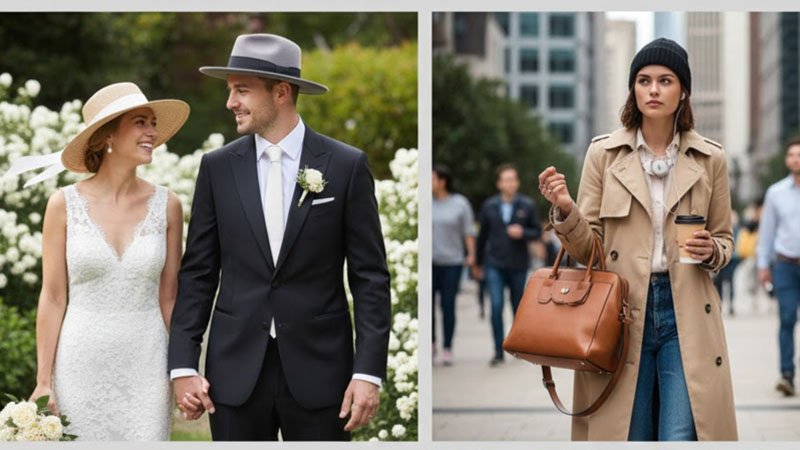
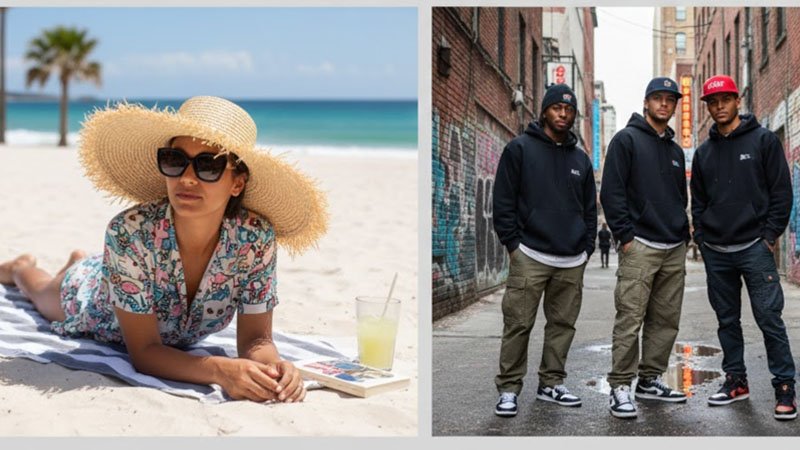
Use this as a decision shortcut:
Choose a hat when you want:
-
More sun protection (wider brim coverage)
-
A styled silhouette (travel, events, photos)
-
A more elevated outfit finish
Best scenarios:
-
Wedding guest / garden party → straw hat, fedora (depending on dress code)
-
Vacation / beach day → panama, bucket hat
-
Outdoor markets / festivals → bucket or wide-brim styles
-
“I want to look put-together” days → fedora/trilby with clean outfit lines
Choose a cap when you want:
-
Everyday comfort
-
Easy fit (adjustable sizing)
-
Sporty or streetwear styling
-
A headwear option you can repeat often
Best scenarios:
-
Commute / errands → baseball cap
-
Gym / active day → performance cap
-
Streetwear outfit → snapback, 5-panel
-
Outdoor work / casual events → trucker cap (breathable)
Face Shape & Fit Tips (Simple and Realistic)
-
Round face: wider brims can balance; caps with slightly taller crowns can help
-
Oval face: most styles work—match the outfit and proportion
-
Square face: curved bills and softer crowns balance angles
-
Long face: avoid very tall crowns; choose medium brims and moderate crown height
If you’re unsure: try mid-profile caps and medium-brim hats first—they’re the most universally flattering.
5 Common Mistakes People Make (And How to Avoid Them)
-
Choosing only by trend, not crown shape
A great style can look wrong if the crown height doesn’t suit your face. -
Ignoring season + breathability
Wool blends in hot climates or non-breathable caps in summer = discomfort and low repeat wear. -
Over-branding with the wrong technique
Some logos look best with embroidery; others need woven labels or patches to stay sharp. -
Picking a brim/bill length that breaks proportions
Too long can overwhelm the face; too short can look unbalanced. -
For brands: approving samples without fit/shape checkpoints
A “good-looking sample photo” isn’t the same as consistent mass production. Confirm shape, logo clarity, and sizing standards early.
For Brands & Buyers: A Mini Checklist That Improves Final Results
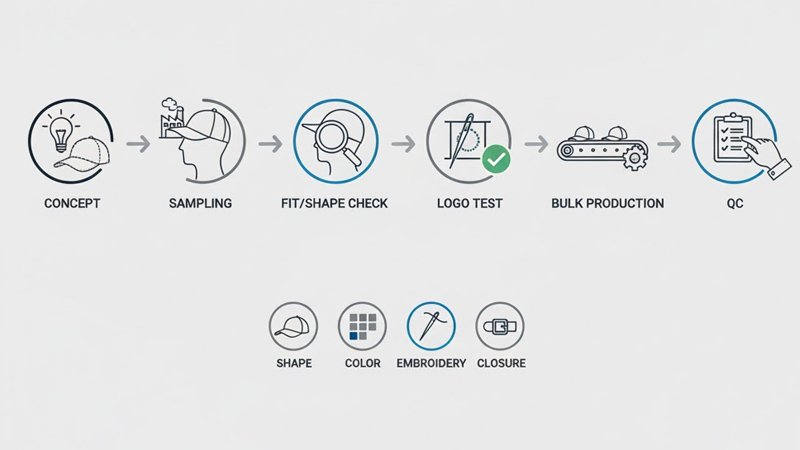
If you’re developing headwear (retail, events, uniforms, promotions), lock these early:
-
Target price vs. construction choice: structured crown? premium sweatband? higher-density embroidery?
-
Branding method: embroidery vs patch vs woven label (or a mix)
-
Crown profile: low/mid/high + structured/unstructured (this defines the identity)
-
Material & season: cotton twill vs performance fabric vs straw/wool
-
Sampling checkpoints: logo sharpness, panel symmetry, bill curvature, fit consistency
These decisions reduce revisions and keep production stable.
Built for Brands: Premium Custom Headwear, From Sample to Scale
GUANGZHOU EASTLUCKY Hat & Garment Co., Ltd. is a high-end custom hat and OEM/ODM manufacturer based in Guangzhou, China, with 15 years of expertise across R&D, production, and distribution of hats and embroidered accessories. Guided by “Quality as Root, Innovation as Soul,” we support global clients with one-stop solutions—from design sampling to mass production—designed to help brands move faster while protecting product consistency.
If you’re building a headwear line, the biggest value we add is turning a concept into a repeatable production standard—shape control, logo clarity, material matching, and stable output from first sample to final shipment.
FAQ: Hats vs. Caps
1) Is a beanie a hat or a cap?
In everyday use, beanies are often grouped with caps because they’re casual and worn like a cap, but definitions vary by region and category systems.
2) What’s the difference between a brim and a bill?
A brim typically extends beyond the crown (often wider coverage). A bill is usually a front visor designed primarily for forward shading.
3) Which is better for sun protection?
Usually hats, especially wider brims, because they shade more angles than a cap bill.
4) What cap style fits the most people?
A mid-profile, 6-panel cap with an adjustable closure is one of the most universally wearable shapes.
5) Structured vs. unstructured cap—what’s the difference?
Structured caps keep their front shape (more defined silhouette). Unstructured caps feel softer and more relaxed.
6) Embroidery or patch—which looks more premium?
Both can look premium when executed well. Embroidery feels classic; patches can create bold texture and sharper edges for certain logos.
7) What’s the best material for summer?
Breathable cotton, mesh panels, lightweight performance fabrics, or straw (for hats), depending on style.
8) What should brands confirm before mass production?
Crown profile consistency, logo clarity, stitch quality, bill shape, sizing standards, and color accuracy.
Image Placement Suggestions (Optional, Highly Recommended)
-
Hero image: Hat vs cap side-by-side
-
Close-up: brim vs bill
-
Crown profiles: low/mid/high comparison
-
Materials: cotton twill vs mesh vs straw vs wool
-
Branding methods: embroidery vs patch vs woven label
-
Closures: snapback vs strapback vs buckle
(Add short captions like “Structured vs unstructured crowns change the entire silhouette.”)
Meta (Copy-Paste for Your Blog Backend)
Meta Title:
Hats vs. Caps: What’s the Difference—and Which Should You Wear?
Meta Description:
Learn the real differences between hats and caps—design, brim vs bill, materials, occasions, and face-shape tips—plus a practical guide to choosing the right headwear for your style.
Suggested Keywords:
hats vs caps, difference between hat and cap, brim vs bill, structured vs unstructured cap, crown height, best hat for sun protection, baseball cap vs hat
Final Takeaway
Hats and caps do different jobs—and send different signals. Hats bring shape, coverage, and elevated style. Caps bring comfort, adjustability, and everyday versatility. Choose based on your occasion, climate, and the look you want to communicate.
If you’re developing headwear for a brand, the fastest path to a great final product is getting shape + material + branding technique right at the sampling stage.