Choosing a hat isn’t only about style—it’s about visual balance. The right brim and crown can lengthen a round face, soften a strong jawline, or add width to a longer face. The wrong hat can exaggerate the exact thing you’re trying to fix.
This guide gives you a clear, practical system based on three “levers” that change your look:
-
Brim = controls width
-
Crown = controls height
-
Proportions = controls harmony (how the hat scales to your face and head)
Quick Answer: The Fastest Way to Pick the Right Hat
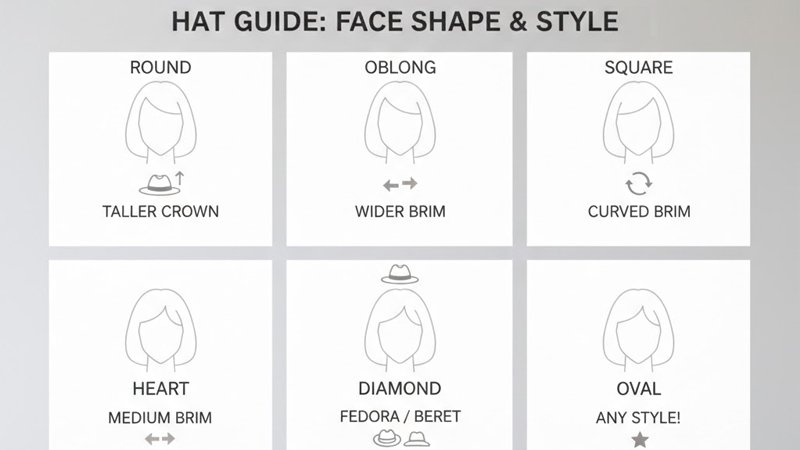
If you want the shortcut, start here:
-
Round face: medium brim + taller, structured crown (add height and angles)
-
Oblong face: wide brim + low/medium crown (add width, reduce length)
-
Square face: curved brim + soft/rounded crown (soften angles)
-
Heart face: medium/wider brim + low/medium crown (balance a narrower chin)
-
Diamond face: medium brim + soft crown (balance cheekbone width)
-
Oval face: most styles work—just avoid extremes (very tall + very wide together)
Face Shape × Brim/Crown Cheat Sheet
Use this table when shopping or designing a collection:
| Face Shape | Best Brim | Best Crown | Avoid |
|---|---|---|---|
| Oval | most widths | most heights | very tall + very wide together |
| Round | medium / slightly angled | medium–tall, structured | round crowns, tiny round brims |
| Square | curved / soft edges | rounded or soft | boxy, sharp, angular crowns |
| Heart | medium to wider | low–medium | very tall crowns, top-heavy volume |
| Oblong | wide | low–medium | tall crowns (adds length) |
| Diamond | medium (not extreme) | soft/rounded | very narrow or overly wide brims |
Step 1: Find Your Face Shape (Fast + Accurate)
You don’t need perfect math—but a quick measurement helps.
Measure 4 key areas
Use a soft tape measure, keep it level, and look straight ahead:
-
Forehead width – widest point
-
Cheekbone width – widest point across upper cheeks
-
Jawline – chin tip to jaw angle under the ear, then ×2
-
Face length – center hairline to chin tip
Quick logic to identify your shape
Use these easy cues (no calculator needed):
-
Face length noticeably longer than width → likely Oblong
-
Cheekbones widest; forehead and jaw narrower → likely Diamond
-
Forehead widest; chin/jaw narrower → likely Heart
-
Strong jaw + broad forehead; similar width/length → likely Square
-
Similar width and length; softer jawline → likely Round
-
Balanced proportions; slightly narrower jaw → likely Oval
In-between shapes are common. If you match two, choose recommendations that solve your main goal: add height, add width, or soften angles.
The 3 Hat Levers That Change Your Look
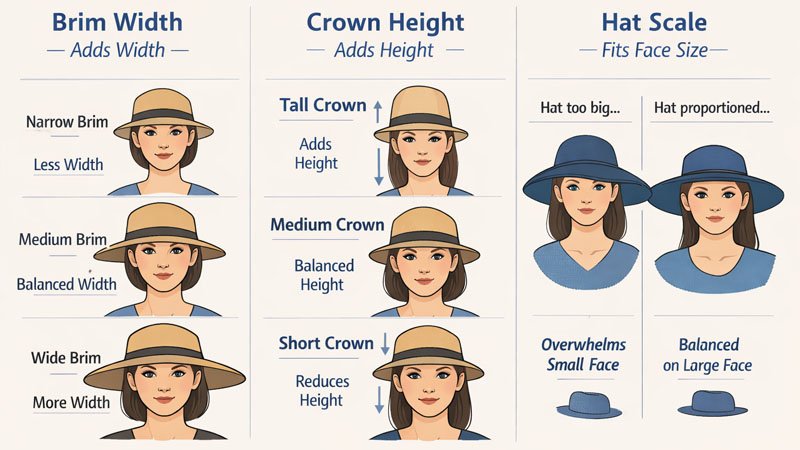
Before we match hats to face shapes, learn what actually changes proportions.
1) Brim controls width
-
Wide brim adds width (great for long/oblong faces)
-
Short brim keeps things compact (great for petite features)
-
Curved brim softens angles (great for square faces)
-
Flat/angled brim adds structure (great for round faces)
2) Crown controls height
-
Taller crown adds height (helps round faces look longer)
-
Low crown reduces height (helps oblong faces look shorter)
-
Structured crown sharpens and defines
-
Soft/slouch crown relaxes and softens
3) Proportions control harmony
Even a flattering style can look “off” if the scale is wrong.
Quick scale check:
-
If the hat overpowers your face, reduce brim width or crown height.
-
If the hat looks too small, increase brim width or choose a fuller crown.
Best Hats for Each Face Shape (With Brim + Crown Rules)
Oval Face (balanced, slightly narrower jaw)
Goal: Maintain balance.
Try: fedoras, buckets, beanies, baseball caps, cloches, wide brims
Avoid: extremely tall crowns and extremely wide brims together (can overwhelm)
Why it works: Oval faces are naturally balanced—most silhouettes look good.
Round Face (similar width/length, soft jaw)
Goal: Add height and angles.
Try: structured fedora/trilby, caps with shape, beanies with slight slouch
Brim: medium, slightly angled or with edges
Crown: medium–tall, structured
Avoid: round crowns or very small round brims (they repeat “roundness”)
Why it works: Height + structure creates a longer, sharper silhouette.
Square Face (strong jaw, broad forehead)
Goal: Soften angles.
Try: cloches, softer buckets, rounded crowns, relaxed beanies, floppy brims
Brim: curved or softly shaped
Crown: soft/rounded
Avoid: rigid, boxy, sharply angled crowns
Why it works: Curves contrast sharp facial lines and visually smooth the jaw.
Heart Face (wider forehead, narrow chin)
Goal: Balance top and bottom.
Try: medium brim fedoras, baseball caps, balanced profiles
Brim: medium to wider
Crown: low–medium
Avoid: very tall crowns or heavy volume on top
Why it works: The brim adds “weight” visually and balances a narrower chin.
Oblong Face (longer than wide)
Goal: Add width, reduce length.
Try: wide brim hats, buckets, cloches, low-crown fedoras
Brim: wide
Crown: low–medium
Avoid: tall crowns (they make the face look longer)
Why it works: Width is the counterweight to length.
Diamond Face (wide cheekbones, narrow forehead/jaw)
Goal: Balance cheekbones.
Try: berets, medium brim fedoras, softer crowns
Brim: medium (avoid extremes)
Crown: soft/rounded or lightly structured
Avoid: very narrow brims (emphasize cheekbones) or overly wide brims (can overwhelm)
Why it works: Moderate proportions make cheekbones look intentional, not dominant.
Hat Style Glossary (So You Know What to Try)
-
Fedora: pinched crown + medium brim; versatile, structured
-
Trilby: shorter brim + sharper angle; more compact silhouette
-
Cloche: close-fitting, rounded shape; softens facial lines
-
Bucket hat: downward sloping brim; casual, adds width
-
Beret: brimless, soft; balances cheekbones and adds softness
-
Baseball cap: curved brim; casual, great for heart/oval faces
-
Beanie: knit cap; slouch adds softness, structure depends on knit
Try-On Checklist: 60 Seconds to Know If It Works

-
Light + angles: check front, side, and 45° angle (brims cast shadows).
-
Fit: snug but not tight—no temple pressure, no slipping when you move.
-
Photo test: take 2–3 selfies with different hats (photos show proportion better than mirrors).
-
Ask what it’s doing:
-
Adding height when you need length?
-
Adding width when you look long?
-
Softening if you look angular?
-
Is the brim sitting at a flattering level?
-
Occasion & Season: Choose a Hat You’ll Actually Wear
A flattering hat is only “perfect” if it fits your lifestyle.
Occasion cheat sheet
-
Outdoor / sun: wide brim + breathable material + UV focus
-
Streetwear: baseball cap / bucket hat / beanie
-
Business casual: structured fedora in neutral tones
-
Uniform / event: consistent color + logo embroidery + durable build
Material tips (style + function)
-
Felt/Wool: structure + warmth (fall/winter)
-
Cotton: breathable + easy care (spring/summer)
-
Straw: lightweight + sun-ready (summer)
Common Mistakes (With Easy Fixes)
“This bucket hat makes my face look wider.”
→ Choose a slightly taller crown or a more structured fabric, and keep the brim medium.
“This fedora looks too big on me.”
→ Keep the style but reduce brim width or pick a lower crown. (Same vibe, better scale.)
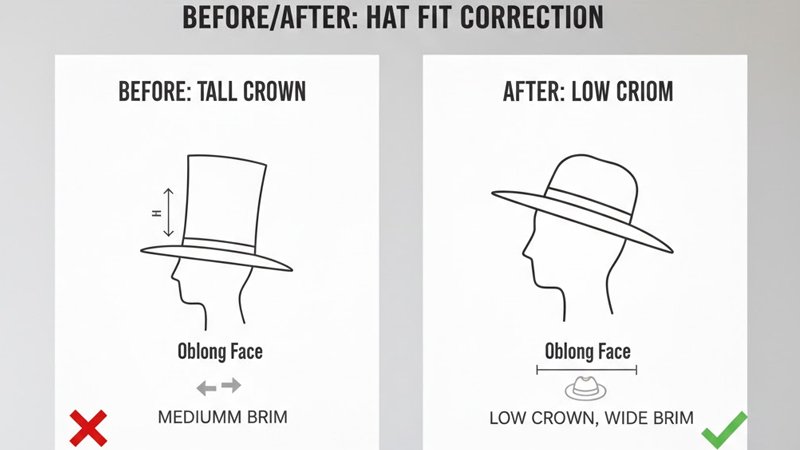
“This hat makes my face look longer.”
→ Increase brim width and reduce crown height. Wide brim + low crown is the fix.
“It looks good, but feels uncomfortable.”
→ Correct size matters, but so do sweatband design, inner tape, and construction. Comfort is part of a premium hat.
FAQs
What hat is best for a round face?
Structured hats with a bit of height—like a fedora or a shaped cap—help elongate the face.
What hat should I avoid if my face is oblong?
Avoid tall crowns. Choose wide brims and lower crowns to add width and reduce length.
How should a hat fit?
Snug, not tight. No pressure on the temples and it shouldn’t slide when you tilt your head.
Is brim width really that important?
Yes—brim is the fastest way to adjust perceived width and balance face length.
What’s the difference between a fedora and a trilby?
A trilby usually has a shorter brim and a more compact feel; a fedora is more classic with a medium brim.
Can I wear any hat if I have an oval face?
Almost—oval faces suit many styles. Just avoid extreme combinations (very tall crown + very wide brim) unless you want a bold fashion statement.
Final Thoughts: Balance Wins Every Time
Remember the simple rule:
Brim controls width. Crown controls height. Proportions control harmony.
Once you understand these three levers, choosing a flattering hat becomes easy—and you’ll stop wasting money on styles that don’t serve your face.
For Brands: Need OEM/ODM Support for Hat Development?
If you’re developing a hat line and want the right brim/crown proportions, consistent fit, and premium finishing, GUANGZHOU EASTLUCKY Hat & Garment Co., Ltd. provides one-stop OEM/ODM solutions—from sampling to mass production—guided by our philosophy: “Quality as Root, Innovation as Soul.”
Fast way to get an accurate recommendation:
Send your target market, preferred hat styles, material direction, and logo method (embroidery/patch/print). We can suggest appropriate crown height, brim width, construction, and finishing options for your brand positioning.