What Are the Main Parts of a Baseball Cap? A Complete Guide for Custom Hat Buyers
Choosing a baseball cap for custom production is not only about selecting a color and adding a logo. Every part of a baseball cap — from the crown and brim to the closure, sweatband, eyelets, and stitching — affects the final look, comfort, durability, and branding result.
For brands, distributors, sports teams, promotional product buyers, and OEM/ODM customers, understanding the main parts of a baseball cap can help you make better decisions before placing a bulk order. The right cap structure can improve logo presentation, wearing comfort, production stability, and overall brand value.
In this guide, we will explain the main components of a baseball cap and show how each part affects custom hat design and manufacturing.
Quick Answer: What Are the Main Parts of a Baseball Cap?
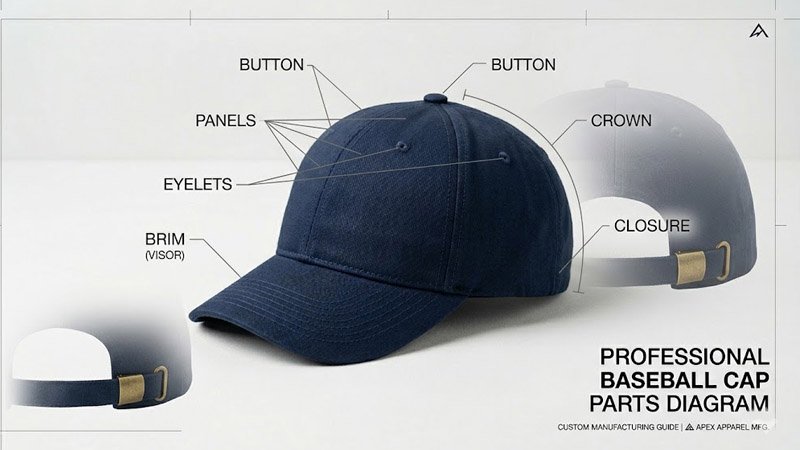
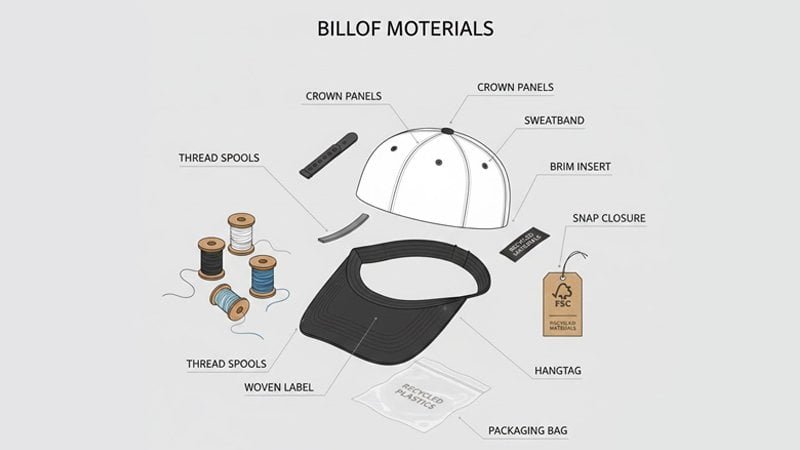
The main parts of a baseball cap include the crown, panels, brim or visor, closure, eyelets, sweatband, top button, seams, stitching, and logo decoration areas.
For custom baseball caps, these parts are not just design details. They directly affect the cap’s shape, fit, comfort, ventilation, durability, logo placement, and final production quality.
Why Baseball Cap Parts Matter for Custom Buyers
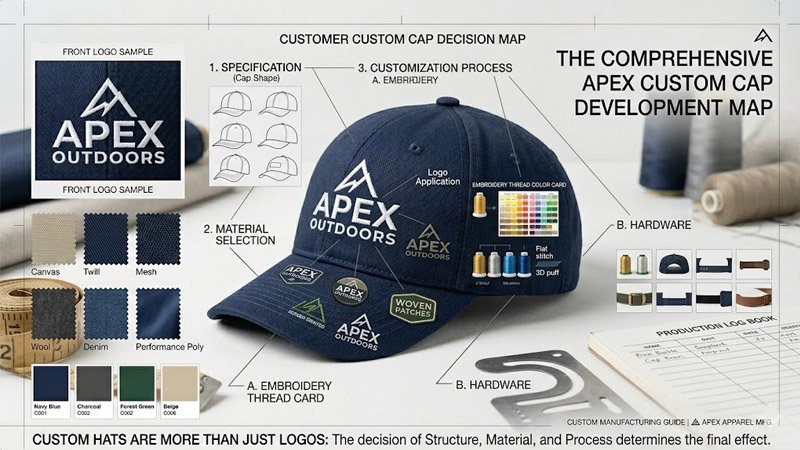
When buyers customize baseball caps, they often focus first on the logo and color. However, the structure of the cap is just as important.
A structured crown can make embroidery look cleaner. A curved brim can create a classic sports look. A snapback closure can fit more head sizes. A moisture-wicking sweatband can improve comfort for outdoor or sports use.
For bulk orders, choosing the wrong cap parts may lead to problems such as poor logo presentation, uncomfortable fit, weak structure, or a product that does not match the target market.
That is why understanding each part of a baseball cap is important before custom production begins.
1. Crown: The Main Body of the Baseball Cap
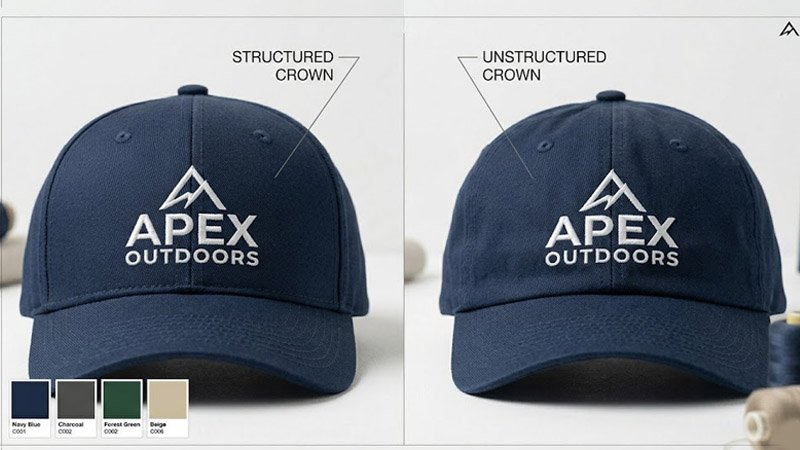
The crown is the main body of the baseball cap. It covers the top of the head and gives the cap its overall shape.
The crown affects:
- Cap structure
- Wearing comfort
- Logo placement
- Front embroidery quality
- Overall style
For custom caps, the crown is usually the most important area because it is where the main logo is placed.
A firm and well-shaped crown gives the cap a clean, professional appearance. A softer crown creates a relaxed and casual style.
2. Panels: 5-Panel and 6-Panel Construction
The crown is made from several fabric panels sewn together. Most baseball caps use either a 5-panel or 6-panel structure.
5-Panel Baseball Cap
A 5-panel cap usually has one large front panel without a center seam. This makes it suitable for large front logos, patches, and printed artwork.
A 5-panel cap is often used for:
- Camp caps
- Streetwear caps
- Outdoor caps
- Fashion headwear
- Large logo designs
Because the front panel is smooth and uninterrupted, it gives more space for clean branding.
6-Panel Baseball Cap
A 6-panel cap has six fabric sections, usually with a center seam on the front. This is the most classic baseball cap construction.
A 6-panel cap is commonly used for:
- Traditional baseball caps
- Dad hats
- Sports caps
- Corporate caps
- Uniform caps
If you want a classic baseball cap shape, a 6-panel structure is usually the safest choice.
3. Structured vs. Unstructured Crown
Another important choice is whether the cap should be structured or unstructured.
Structured Crown
A structured crown has inner support, especially in the front panels. It keeps the cap shape firm and upright.
Best for:
- Flat embroidery
- 3D embroidery
- Snapback caps
- Sports caps
- Corporate logo caps
- Premium promotional caps
Factory Tip: For large front embroidery or 3D embroidery, a structured front panel usually provides better support and helps the logo stay clean during stitching.
Unstructured Crown
An unstructured crown is softer and more relaxed. It does not have strong inner support, so it fits closer to the head.
Best for:
- Dad hats
- Casual cotton caps
- Lifestyle brands
- Small embroidered logos
- Minimalist designs
Unstructured caps are comfortable and fashionable, but they may not be the best choice for heavy or raised embroidery.
4. Crown Profile: High, Mid, and Low
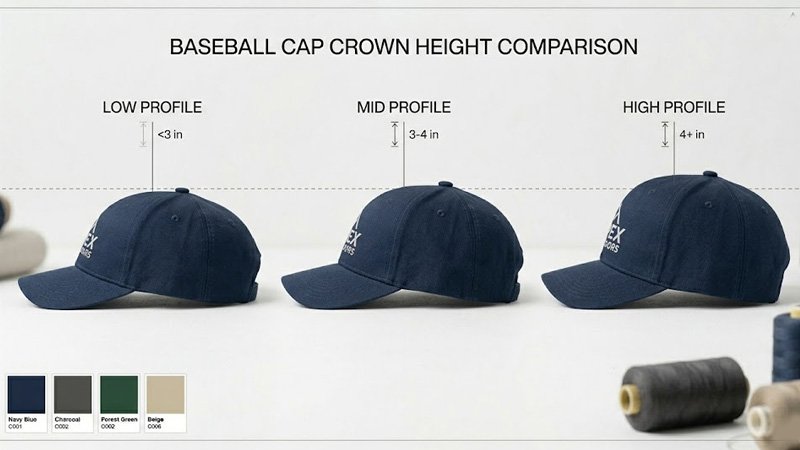
The crown profile refers to the height of the cap when worn. It affects both fit and style.
High-Profile Caps
High-profile caps have a taller crown and a bolder look.
Best for:
- Snapbacks
- Trucker caps
- 3D embroidery
- Streetwear brands
- Large front logos
Mid-Profile Caps
Mid-profile caps offer a balanced shape that suits most users.
Best for:
- Corporate caps
- Retail brands
- Sports teams
- Promotional caps
- General custom orders
Low-Profile Caps
Low-profile caps sit closer to the head and create a softer, more casual appearance.
Best for:
- Dad hats
- Casual fashion caps
- Small logo embroidery
- Lifestyle merchandise
- Minimalist brand designs
For custom buyers, the crown profile should match the target market and logo style.
5. Brim or Visor: Function and Style
The brim, also called the visor, extends from the front of the cap. It protects the face from sunlight and strongly affects the style of the cap.
The brim can be flat, curved, or pre-curved. It can also be customized with contrast colors, sandwich layers, stickers, labels, or printed designs.
6. Common Brim Types
Flat Brim
A flat brim creates a modern, bold, and streetwear-inspired look.
Best for:
- Snapbacks
- Hip-hop caps
- Fashion brands
- Sports merchandise
- 3D embroidered logos
Curved Brim
A curved brim gives a classic baseball cap appearance. It is practical, comfortable, and suitable for daily wear.
Best for:
- Sports caps
- Corporate caps
- Outdoor caps
- Promotional giveaways
- Uniform caps
Pre-Curved Brim
A pre-curved brim is already shaped during production. It gives a natural, ready-to-wear look.
Best for:
- Dad hats
- Casual caps
- Lifestyle brands
- Outdoor events
Sandwich Brim
A sandwich brim has a contrast color layer between the upper and lower brim fabrics. It is a simple way to add brand color without making the cap look too complicated.
Best for:
- Team caps
- Corporate color matching
- Promotional caps
- Brand accent designs
Factory Tip: For bulk orders, buyers should confirm the brim shape and stiffness during sampling, because different markets may prefer different brim curves.
7. Closure: The Back Adjustment System
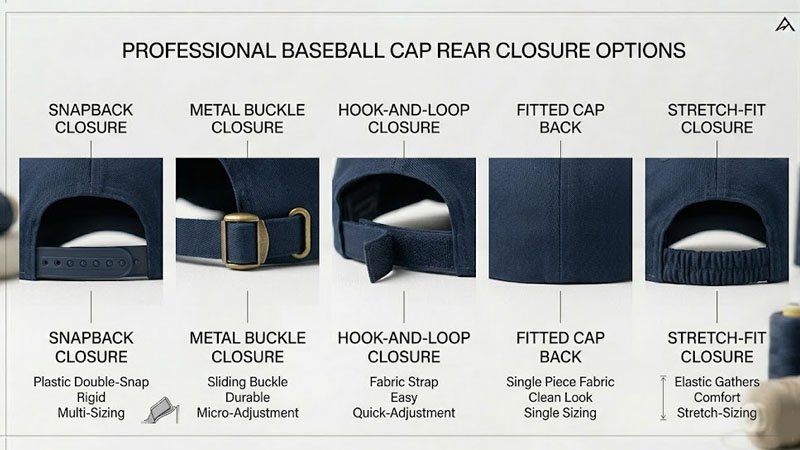
The closure is located at the back of the cap. It helps adjust the size and ensures a comfortable fit.
The closure type affects:
- Wearing comfort
- Size flexibility
- Cap style
- Target market
- Production cost
8. Common Baseball Cap Closure Types
Snapback Closure
A snapback closure uses a plastic adjustable strap with holes. It is popular, durable, and easy to adjust.
Best for:
- Snapbacks
- Streetwear caps
- Sports caps
- Promotional caps
- Youth markets
Metal Buckle Closure
A metal buckle closure gives the cap a clean and premium look. It is commonly used for cotton dad hats and casual caps.
Best for:
- Dad hats
- Fashion caps
- Corporate gifts
- Premium promotional caps
Hook-and-Loop Closure
Hook-and-loop closure is easy to adjust and convenient for daily use.
Best for:
- Workwear caps
- Kids’ caps
- School caps
- Outdoor caps
- Event caps
Fitted Cap
A fitted cap has no adjustable strap. It is made according to specific head sizes.
Best for:
- Sports teams
- Retail cap collections
- Premium headwear
- Professional baseball caps
Stretch-Fit Closure
A stretch-fit cap uses elastic material to fit different head sizes comfortably.
Best for:
- Sports caps
- Performance caps
- Activewear brands
- Comfortable daily wear
Factory Tip: For promotional giveaways or event caps, adjustable closures such as snapback, hook-and-loop, or metal buckle are usually safer because they fit more head sizes.
9. Eyelets: Small Holes for Ventilation
Eyelets are the small holes on the crown of the cap. They allow air to flow through the cap and help keep the wearer cooler.
Common eyelet options include:
- Sewn eyelets
- Metal eyelets
- Matching color eyelets
- Contrast color eyelets
- Ventilation holes for performance caps
For cotton baseball caps, sewn eyelets are the most common. For outdoor caps or fashion caps, metal eyelets can add a stronger design detail.
Eyelets are especially important for summer caps, sports caps, outdoor caps, and promotional caps used in warm climates.
10. Sweatband: The Hidden Comfort Detail
The sweatband is located inside the cap, around the lower edge of the crown. It touches the forehead and helps absorb sweat.
Although it is not visible from the outside, the sweatband has a big impact on wearing comfort.
Common sweatband materials include:
- Cotton sweatband
- Polyester sweatband
- Terry cloth sweatband
- Moisture-wicking sweatband
- Elastic sweatband
For casual caps, cotton sweatbands are soft and comfortable. For sports and outdoor caps, moisture-wicking sweatbands are better because they help keep the wearer dry.
Factory Tip: Do not ignore the sweatband when developing custom caps for sports, outdoor events, or long-time wear. A poor sweatband can make the cap uncomfortable even if the outside design looks good.
11. Top Button: A Small Detail That Completes the Cap
The top button is located where the crown panels meet. It helps secure the panel structure and completes the appearance of the cap.
Common button options include:
- Matching fabric button
- Contrast color button
- Custom color button
- No-button design
A matching button gives a clean and classic look. A contrast button can add a small design highlight.
For some performance caps, a no-button design may be preferred because it feels more comfortable when worn under helmets or headgear.
12. Seams and Stitching: Details That Show Quality
Seams and stitching are important indicators of baseball cap quality. Clean stitching makes the cap look more professional and improves durability.
Custom buyers should check:
- Straight stitching
- Clean panel seams
- Even brim stitching
- Reinforced stress points
- No loose threads
- Consistent stitch density
- Neat embroidery edges
Poor stitching can make a cap look cheap, even if the fabric and logo are good. For brand buyers, these details directly affect the final product image.
13. Logo Placement Options on Baseball Caps
Logo placement is one of the most important decisions in custom baseball cap production. Different positions create different branding effects.
Front Logo
The front panel is the most common and visible logo position.
Suitable for:
- Flat embroidery
- 3D embroidery
- Woven patches
- Leather patches
- Rubber patches
- Heat transfer logos
For the best result, the logo size should match the crown height and front panel structure.
Side Logo
Side logos are usually smaller and more subtle.
Suitable for:
- Small icons
- Flag embroidery
- Event names
- Brand slogans
- Team details
Back Logo
The back area can be used for small embroidery, woven labels, or brand names near the closure.
This is a good option when the front design needs to stay simple.
Brim Logo
The brim can be customized with embroidery, stickers, labels, or under-brim printing.
This works well for streetwear caps, sports caps, and fashion headwear.
14. Best Logo Methods for Custom Baseball Caps
Different logo methods create different visual effects. The right method depends on the logo design, fabric, cap structure, order quantity, and target market.
Flat Embroidery
Flat embroidery is one of the most popular logo methods for baseball caps. It gives a clean, durable, and professional look.
Best for:
- Company logos
- Text logos
- Uniform caps
- Corporate caps
- Promotional caps
3D Embroidery
3D embroidery creates a raised logo effect. It gives the cap a stronger and more premium appearance.
Best for:
- Bold letters
- Sports logos
- Snapbacks
- Streetwear caps
- High-profile crowns
Appliqué Embroidery
Appliqué embroidery uses fabric pieces stitched onto the cap. It is suitable for larger designs and fashion-style branding.
Best for:
- Large logos
- Retro designs
- Streetwear caps
- Premium custom caps
Woven Patch
A woven patch is suitable for detailed logos and small text. It creates a neat and high-quality look.
Best for:
- Outdoor brands
- Fashion caps
- Retail headwear
- Detailed artwork
Leather Patch
Leather patches create a premium, outdoor, and vintage feeling.
Best for:
- Outdoor caps
- Workwear caps
- Lifestyle brands
- Premium merchandise
Heat Transfer Printing
Heat transfer printing is suitable for colorful designs, gradients, and detailed artwork.
Best for:
- Multi-color logos
- Small quantity orders
- Smooth artwork
- Fashion designs
15. Why Embroidery Is Popular for Baseball Caps
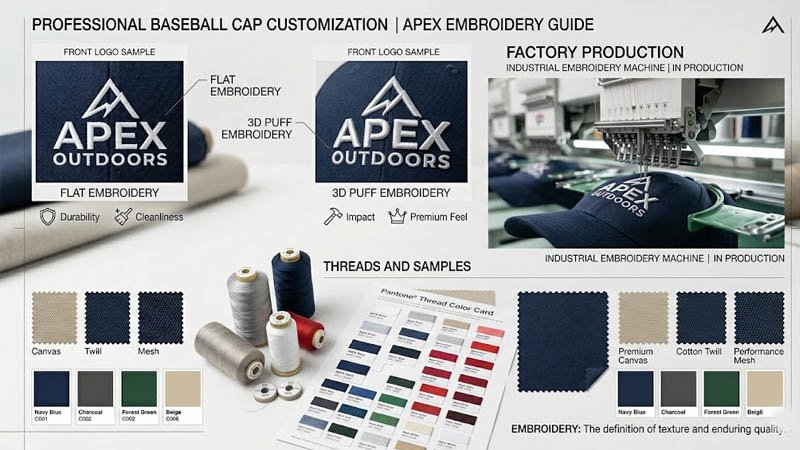
Embroidery remains one of the most popular choices for custom baseball caps because it is durable, professional, and suitable for many types of logos.
Compared with simple printing, embroidery adds texture and a more premium feeling. It is especially suitable for corporate logos, team logos, brand names, and promotional caps that need long-lasting quality.
For baseball caps, embroidery works best on stable fabric and structured front panels. If the logo has bold text or simple shapes, flat embroidery or 3D embroidery can create a strong branding effect.
For very detailed artwork, a woven patch or heat transfer logo may be more suitable than direct embroidery.
16. Material Options for Custom Baseball Caps
The fabric affects the cap’s texture, comfort, durability, and price. Different materials are suitable for different markets and usage scenarios.
| Material | Best For | Advantages |
|---|---|---|
| Cotton | Dad hats, casual caps, corporate caps | Soft, breathable, natural feel |
| Polyester | Sports caps, promotional caps | Durable, lightweight, colorfast |
| Nylon | Outdoor caps, performance caps | Lightweight, practical, outdoor style |
| Wool Blend | Premium caps, winter caps | Structured, warm, classic look |
| Mesh | Trucker caps, summer caps | Breathable and cost-effective |
For most custom baseball caps, cotton and polyester are the most common choices. Cotton gives a natural and comfortable feeling, while polyester offers better durability and color stability for large promotional orders.
17. Baseball Cap Parts Overview
| Cap Part | Main Function | Custom Options |
|---|---|---|
| Crown | Defines cap shape and fit | 5-panel, 6-panel, structured, unstructured |
| Panels | Build the cap structure | Front panel, side panels, back panels |
| Brim / Visor | Sun protection and style | Flat, curved, pre-curved, sandwich brim |
| Closure | Adjusts cap size | Snapback, buckle, hook-and-loop, fitted, stretch-fit |
| Eyelets | Improve ventilation | Sewn eyelets, metal eyelets, contrast color |
| Sweatband | Absorbs sweat and improves comfort | Cotton, polyester, moisture-wicking |
| Top Button | Secures panels and completes the look | Matching color, contrast color, no-button |
| Stitching | Supports durability and quality | Brim stitching, panel stitching, reinforced seams |
| Logo Area | Displays brand identity | Front, side, back, brim, closure label |
18. How Different Buyers Should Choose Baseball Cap Parts
Different buyers have different needs. The right baseball cap structure should match the project purpose.
| Buyer Type | Recommended Cap Style | Best Logo Method | Key Focus |
|---|---|---|---|
| Corporate Buyers | Mid-profile cotton cap | Flat embroidery | Professional and clean |
| Sports Teams | Structured performance cap | 3D embroidery or heat transfer | Durable and comfortable |
| Fashion Brands | 5-panel cap or snapback | Patch or 3D embroidery | Strong visual identity |
| Event Companies | Adjustable promotional cap | Flat embroidery or printing | Cost-effective and flexible |
| Outdoor Brands | Trucker cap or nylon cap | Woven patch or leather patch | Breathability and durability |
| Retail Brands | Premium structured cap | Embroidery or appliqué | Quality and brand value |
This table can help buyers choose suitable cap parts before confirming the sample.
19. Common Mistakes to Avoid in Custom Cap Production
Choosing the Wrong Crown for the Logo
A soft unstructured crown may not support heavy 3D embroidery well. If the logo is large or raised, a structured front panel is usually better.
Making the Logo Too Detailed
Small embroidery areas cannot show very fine details clearly. For detailed logos, woven patches or heat transfer printing may be better.
Ignoring the Sweatband
The sweatband affects comfort. For sports or outdoor caps, a better sweatband material can improve the wearing experience.
Choosing Fabric Only by Price
Low-cost fabric may reduce the final product quality. Buyers should consider the target market, usage, brand positioning, and budget together.
Not Confirming the Brim Shape
Different markets prefer different brim shapes. Some prefer flat brims, while others prefer curved or pre-curved brims. Always confirm the brim shape during sampling.
Skipping the Pre-Production Sample
For custom caps, a sample helps confirm the cap shape, material, color, logo size, embroidery effect, and overall quality before bulk production.
20. Why Work with an Experienced Custom Hat Manufacturer
For custom baseball cap projects, a reliable manufacturer can help buyers avoid many production problems and improve final product quality.
GUANGZHOU EASTLUCKY Hat & Garment Co., Ltd. is a high-end custom hat and OEM/ODM manufacturer based in Guangzhou, China, with 15 years of expertise in professional R&D, production, and distribution of various hats and embroidered accessories. Guided by the philosophy “Quality as Root, Innovation as Soul,” we provide global clients with one-stop solutions from design sampling to mass production, enabling efficient and high-quality supply chain services for brands.
An experienced factory can support:
- Cap style recommendation
- Material selection
- Logo method suggestions
- Artwork checking
- Sample development
- Color matching
- Bulk production
- Quality inspection
- Export packaging
This is especially important for brands, distributors, event companies, sports teams, and promotional product buyers who need stable quality and reliable delivery.
Conclusion
The main parts of a baseball cap include the crown, panels, brim, closure, eyelets, sweatband, top button, seams, stitching, and logo decoration areas. Each part affects the cap’s structure, comfort, style, durability, and branding result.
For custom buyers, a baseball cap is more than a simple accessory. The right crown can improve logo embroidery. The right brim can create the correct style. The right closure can fit more users. The right sweatband can improve comfort. The right logo method can make your brand look more professional.
Before placing a bulk order, buyers should confirm the cap structure, material, crown profile, brim shape, closure type, logo method, sample quality, and packing requirements.
Whether you need embroidered baseball caps, snapbacks, dad hats, trucker caps, sports caps, or promotional caps, understanding the main parts of a baseball cap will help you create a better custom product for your brand.
FAQs
What are the main parts of a baseball cap?
The main parts of a baseball cap include the crown, panels, brim or visor, closure, eyelets, sweatband, top button, seams, stitching, and logo decoration areas.
What is the crown of a baseball cap?
The crown is the main body of the cap that covers the top of the head. It affects the cap shape, fit, structure, and front logo presentation.
What is the brim of a baseball cap?
The brim, also called the visor, extends from the front of the cap. It helps protect the face from sunlight and affects the cap’s style.
What is the best crown type for embroidery?
A structured crown is usually better for embroidery because it keeps the front panel stable and helps the logo look cleaner.
What is the difference between a 5-panel and 6-panel cap?
A 5-panel cap usually has one large front panel without a center seam, making it suitable for large logos or patches. A 6-panel cap has a classic baseball cap structure with a center seam and a traditional look.
Which closure is best for promotional baseball caps?
Adjustable closures such as snapback, hook-and-loop, or metal buckle are usually better for promotional caps because they fit more head sizes.
Is embroidery better than printing for baseball caps?
Embroidery is more durable and gives a professional textured look. Printing is better for colorful, detailed, or gradient artwork.
Can I customize both the front and side of a baseball cap?
Yes. Most custom baseball caps can support front embroidery, side logo embroidery, back logo placement, brim decoration, and custom labels.
What material is best for custom baseball caps?
Cotton is soft and breathable, making it suitable for casual caps. Polyester is durable and colorfast, making it good for sports caps and promotional caps. Mesh is often used for trucker caps and summer caps.
What should I confirm before bulk cap production?
You should confirm the cap style, material, color, crown profile, brim shape, closure type, logo size, logo method, sample quality, packing details, and delivery time.