How Much Does a Baseball Cap Weigh? Custom Hat Weight Guide for Bulk Buyers
A standard baseball cap usually weighs between 50 and 120 grams. Lightweight promotional caps may weigh around 50–70 grams, while structured cotton caps, snapbacks, or premium embroidered caps can weigh 80–120 grams.
For everyday wearers, cap weight may seem like a small detail. But for brands, distributors, event organizers, and bulk buyers, it can affect comfort, product quality, packing quantity, carton weight, and international shipping cost.
When planning a custom baseball cap order, understanding cap weight helps you choose the right fabric, crown structure, brim, closure, logo method, and packing solution. This guide explains what affects baseball cap weight and how to choose the right option for different custom projects.
Most baseball caps weigh between 50 and 120 grams per piece. The final weight depends on the fabric, structure, brim material, logo decoration, closure type, and packaging.
Here is a general reference:
| Cap Type |
Typical Weight |
Common Use |
| Lightweight Promotional Cap |
50–70g |
Events, giveaways, summer promotions |
| Cotton Baseball Cap |
60–90g |
Daily wear, brand merchandise |
| Structured Baseball Cap |
80–110g |
Corporate uniforms, retail caps |
| Heavy Cotton Baseball Cap |
90–120g |
Premium brand collections |
| Polyester Sports Cap |
55–85g |
Outdoor use, sports teams |
| Trucker Cap |
70–100g |
Outdoor events, casual promotions |
| Snapback Hat |
85–120g |
Streetwear, fashion branding |
| 5 Panel Cap |
50–85g |
Lightweight fashion and outdoor use |
These numbers are only general references. A finished custom cap may be lighter or heavier depending on the materials and customization details.
What Parts Affect the Weight of a Baseball Cap?
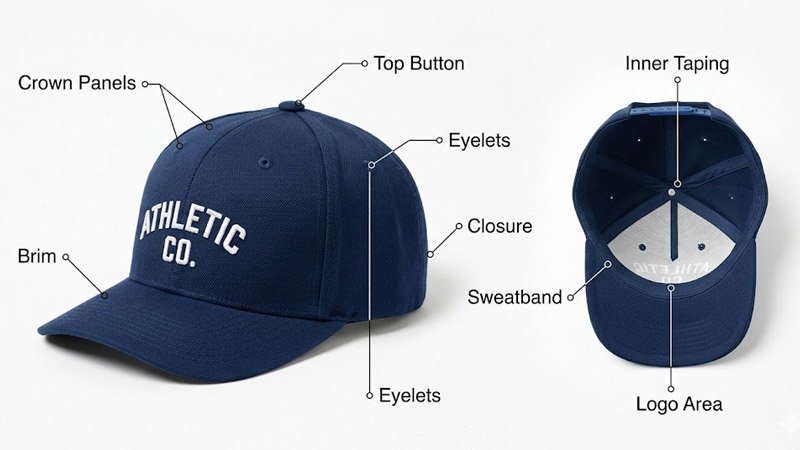
A baseball cap is made from several parts. Each part adds weight and also affects comfort, shape, and durability.
The main components include:
- Fabric panels
- Crown structure
- Front buckram or inner support
- Brim insert
- Sweatband
- Inner taping
- Eyelets
- Top button
- Closure
- Logo decoration
- Labels and packaging
For custom cap production, the weight is not decided by fabric alone. A cap with the same outer material may still have a different weight if it uses a structured front panel, thicker brim, metal buckle, or heavy embroidery.
How Fabric Choice Changes Cap Weight
Material is one of the most important factors that affect baseball cap weight. Different fabrics have different thickness, texture, breathability, and durability.
Cotton Baseball Caps
Cotton baseball caps usually weigh around 60–90 grams.
Cotton is soft, breathable, and comfortable for daily use. It is one of the most popular materials for custom baseball caps because it works well for embroidery, patches, labels, and brand merchandise.
Lightweight cotton caps are suitable for summer promotions and casual wear. Heavier cotton twill caps are better for retail brands, corporate uniforms, and premium custom projects.
Polyester Baseball Caps
Polyester caps usually weigh around 55–85 grams.
Polyester is lightweight, durable, and quick-drying. It is commonly used for sports caps, outdoor caps, team caps, and promotional caps. If buyers need a cap for active use or warm weather, polyester is a practical option.
Cotton-Polyester Blended Caps
Blended fabric caps usually weigh around 70–100 grams.
A cotton-polyester blend can balance comfort, durability, and cost. It is suitable for bulk custom orders because it provides stable quality and can support different logo methods.
Canvas or Heavy Cotton Caps
Canvas or heavy cotton caps usually weigh around 90–120 grams.
These caps feel stronger and more premium. They are often used for fashion brands, outdoor brands, workwear uniforms, and retail collections. The heavier fabric helps the cap keep its shape and creates a higher-value hand feel.
Mesh Trucker Caps
Trucker caps usually weigh around 70–100 grams.
Because the back panels are made of mesh, trucker caps are breathable and may be lighter than fully structured cotton caps. They are popular for outdoor events, lifestyle brands, summer promotions, and casual merchandise.
Structured vs. Unstructured Caps
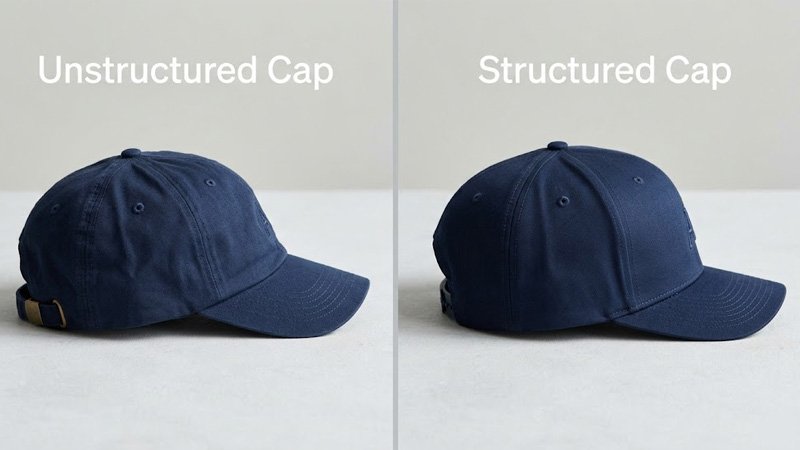
Cap structure can make a big difference in weight.
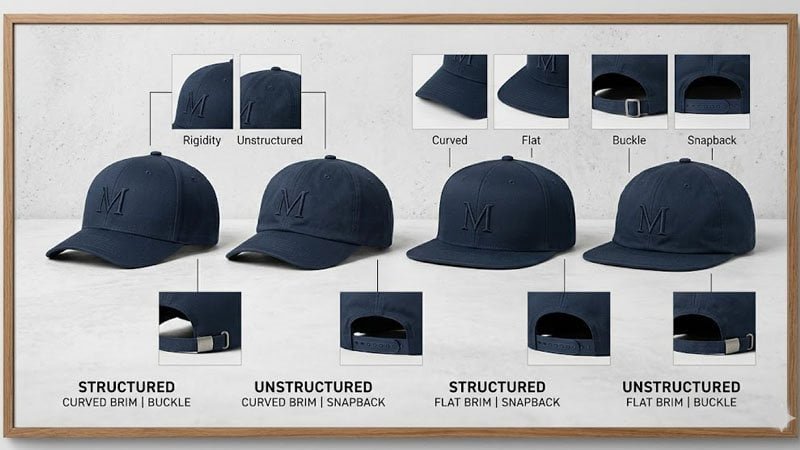
A structured baseball cap has a reinforced front panel, usually with buckram or inner support. It holds its shape better and gives the cap a cleaner, more professional appearance. However, the extra support also adds weight.
An unstructured baseball cap has a softer crown with less reinforcement. It is usually lighter, more relaxed, and comfortable for casual wear.
| Structure Type |
Typical Weight |
Features |
| Unstructured Cap |
50–80g |
Soft, relaxed, lightweight |
| Semi-Structured Cap |
70–95g |
Balanced shape and comfort |
| Structured Cap |
80–120g |
Stronger shape, premium look |
For promotional giveaways or outdoor activities, an unstructured cap can be a good choice. For corporate uniforms, retail brands, and premium merchandise, a structured cap may be more suitable.
Brim, Crown and Closure Weight
The brim, crown height, and closure also affect the final weight of a baseball cap.
A thicker or stiffer brim can add around 10–30 grams, depending on the material and construction. Flat brims, curved brims, sandwich brims, and reinforced brims may all have different weight levels.
The crown height also matters. A high-profile cap uses more material than a low-profile cap, so it is usually slightly heavier.
| Crown Style |
Weight Impact |
Common Use |
| Low Profile |
Lighter |
Casual wear, sports caps |
| Mid Profile |
Medium |
Most custom baseball caps |
| High Profile |
Heavier |
Snapbacks, fashion caps |
Closures also add small weight differences:
| Closure Type |
Weight Impact |
Features |
| Velcro Closure |
Light |
Cost-effective, easy adjustment |
| Plastic Snapback |
Medium |
Popular for streetwear and casual caps |
| Metal Buckle |
Medium to heavier |
More premium appearance |
| Elastic Fitted Band |
Medium |
Comfortable fit, no rear opening |
For large custom orders, even small weight differences can affect total net weight and shipping planning.
Does Custom Logo Decoration Add Weight?
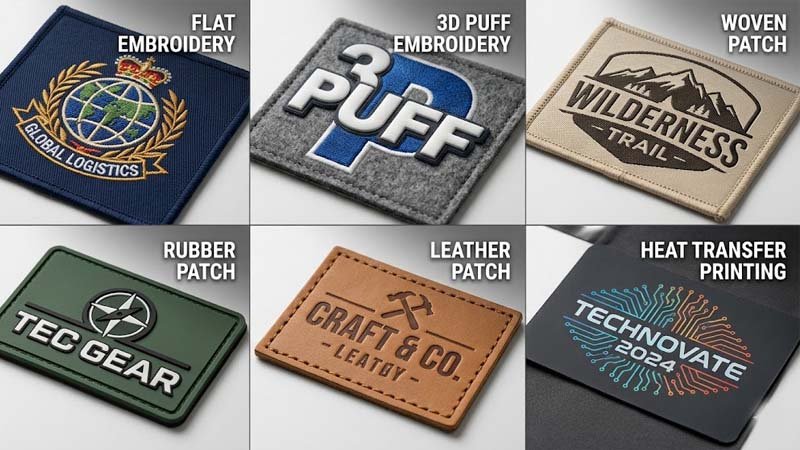
Yes. Custom logo decoration can increase the weight of a baseball cap, especially when the logo is large, thick, or made with additional materials.
| Logo Method |
Weight Impact |
Best For |
| Flat Embroidery |
Low to medium |
Brand logos, text, corporate caps |
| 3D Puff Embroidery |
Medium |
Bold logos, fashion caps |
| Woven Patch |
Medium |
Detailed artwork, brand labels |
| Rubber Patch |
Medium to high |
Outdoor, sports, streetwear caps |
| Leather Patch |
Medium |
Premium branding |
| Heat Transfer Printing |
Low |
Lightweight caps, colorful designs |
| Appliqué Embroidery |
Medium to high |
Fashion and retail caps |
A small flat embroidered logo may only add a few grams. A large 3D puff embroidery, rubber patch, or leather patch can add more weight.
For one cap, the difference may not feel significant. But for 1,000 pieces, a 10g increase per cap becomes 10kg of extra net weight before adding packaging and cartons.
Net Weight, Gross Weight and Volumetric Weight
For bulk buyers, it is important to understand the difference between net weight, gross weight, and volumetric weight.
Net Weight
Net weight refers to the weight of the product itself, without cartons or outer packaging.
For example, if one cap weighs 80g, then:
80g × 1,000pcs = 80,000g = 80kg net weight
Gross Weight
Gross weight includes the product, individual packaging, inner packing, carton, labels, and other packing materials.
For example, 1,000 caps with a net weight of 80kg may have a gross weight of around 95–110kg, depending on the packing method.
Volumetric Weight
Volumetric weight is calculated based on carton size. For caps, this is especially important because structured caps often need more space to protect their shape.
A lightweight cap may not be heavy, but if the carton size is large, the shipping company may calculate freight by volume instead of actual weight.
For structured caps, snapbacks, or premium retail caps, volumetric weight may sometimes affect shipping cost more than actual product weight.
Example: How Cap Weight Affects a 1,000-Piece Order
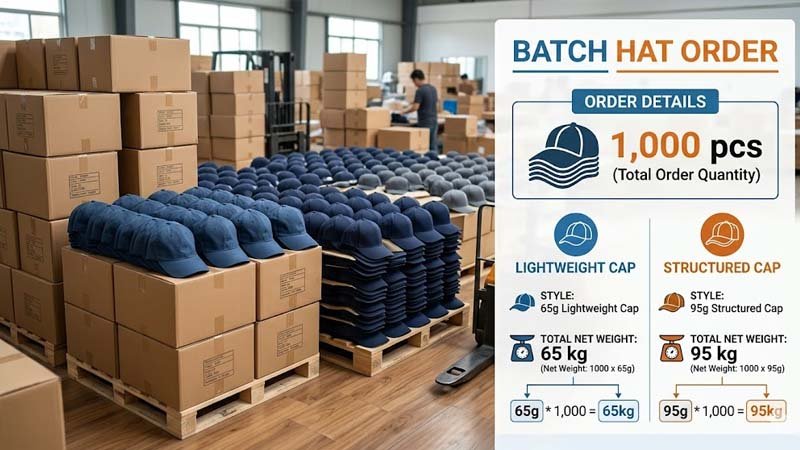
Here is a simple example.
If one lightweight promotional cap weighs 65g, then:
65g × 1,000pcs = 65kg net weight
If one structured embroidered cap weighs 95g, then:
95g × 1,000pcs = 95kg net weight
The difference is:
95kg – 65kg = 30kg
That means a heavier cap design may add around 30kg of extra net weight for a 1,000-piece order. After adding cartons and packing materials, the final gross weight may increase even more.
This is why cap weight should be considered before confirming fabric, structure, logo method, and packing requirements.
Estimated Shipping Weight for Bulk Baseball Cap Orders
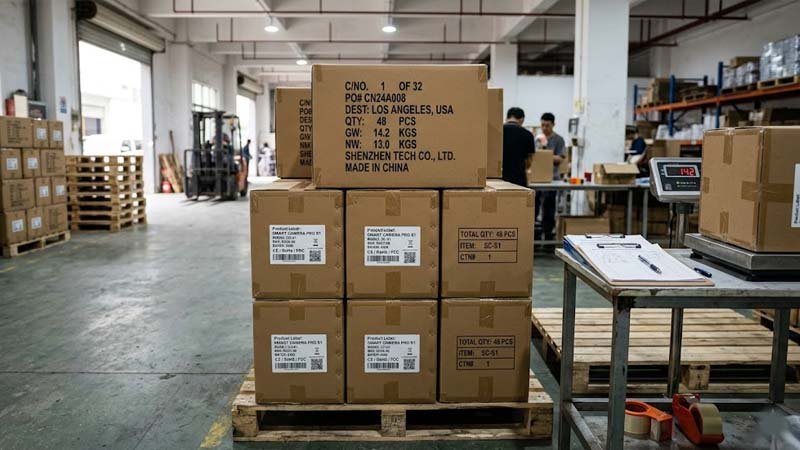
The final shipping weight depends on cap style, packing method, carton size, and logo process. However, the table below can be used as a general reference.
| Quantity |
Estimated Net Weight |
Estimated Gross Weight |
| 100 pcs |
6–10 kg |
8–13 kg |
| 500 pcs |
30–50 kg |
38–60 kg |
| 1,000 pcs |
60–100 kg |
75–120 kg |
| 5,000 pcs |
300–500 kg |
380–600 kg |
These are estimated ranges only. Before shipment, buyers should always confirm the exact carton quantity, carton size, gross weight, and volume with the manufacturer.
How to Choose the Right Cap Weight for Your Project
The best baseball cap weight depends on the purpose of the order. A heavier cap is not always better, and a lighter cap is not always lower quality.
Here is a practical guide for different projects:
| Project Type |
Suggested Cap Weight |
Recommended Customization |
| Event Giveaway |
50–75g |
Printing or simple embroidery |
| Summer Promotion |
50–80g |
Lightweight cotton or polyester |
| Sports Team |
55–85g |
Polyester with breathable panels |
| Corporate Uniform |
70–100g |
Structured cap with flat embroidery |
| Retail Brand |
85–120g |
3D embroidery, woven patch, or leather patch |
| Outdoor Brand |
80–120g |
Heavy cotton, mesh, or rubber patch |
| Premium Gift |
80–120g |
Structured design with custom packaging |
For large promotional orders, a lightweight cap can reduce cost and improve comfort. For retail and premium projects, a medium or heavier cap can improve structure, brand value, and perceived quality.
Both lightweight and heavy baseball caps have advantages. The right choice depends on your market and usage.
Lightweight Caps
Lightweight caps are usually better for:
- Outdoor events
- Summer promotions
- Sports teams
- School activities
- Large giveaways
- Budget-friendly campaigns
They are comfortable, breathable, easy to pack, and suitable for long-time wear.
Heavy Caps
Heavier caps are usually better for:
- Fashion brands
- Retail collections
- Corporate uniforms
- Premium gifts
- Outdoor workwear
- Streetwear designs
They usually have a stronger shape, thicker fabric, and better hand feel. They are also suitable for more premium logo methods such as 3D embroidery, woven patches, rubber patches, or leather labels.
The best option is not the lightest or the heaviest cap. The best option is the cap that matches your brand positioning, target users, and budget.
Factory Tips Before Requesting a Quote
Before requesting a custom baseball cap quotation, buyers should prepare the basic specifications. This helps the manufacturer calculate a more accurate price, weight, production time, and shipping cost.
Useful details include:
- Cap style
- Fabric material
- Fabric color
- Structured or unstructured crown
- Brim type
- Logo artwork
- Logo method
- Closure type
- Quantity
- Packaging requirements
- Delivery destination
As a Guangzhou-based OEM/ODM hat manufacturer with 15 years of experience, GUANGZHOU EASTLUCKY Hat & Garment Co., Ltd. provides one-stop custom hat solutions from design sampling to mass production. Our team helps global brands choose suitable fabrics, embroidery methods, structures, closures, and packing solutions based on product positioning, budget, and delivery requirements.
For bulk orders, it is also useful to ask the supplier:
- What is the approximate weight per cap?
- What is the estimated net weight and gross weight?
- How many pieces are packed per carton?
- What is the carton size?
- Will the logo method affect the final weight?
- Is the cap suitable for air shipping or sea shipping?
- Can a pre-production sample be provided before mass production?
These questions can help avoid misunderstandings and make the order process smoother.
How much does a baseball cap weigh in grams?
A standard baseball cap usually weighs between 50 and 120 grams, depending on the material, structure, brim, closure, logo method, and packing style.
How much does a cotton baseball cap weigh?
A cotton baseball cap usually weighs around 60–90 grams. Lightweight cotton caps are closer to 60g, while structured or heavy cotton caps may weigh 90g or more.
How much does a structured baseball cap weigh?
A structured baseball cap usually weighs around 80–120 grams. The reinforced front panel, stronger brim, and heavier fabric can increase the final weight.
Does embroidery make a baseball cap heavier?
Yes. Embroidery can add extra weight to a cap. Small flat embroidery may only add a few grams, while large 3D puff embroidery or dense stitching can add more.
Does a patch make a cap heavier?
Yes. Woven patches, rubber patches, leather patches, and appliqué embroidery can increase cap weight. The final weight depends on the patch material, size, and thickness.
How much does 1,000 baseball caps weigh?
If each cap weighs 60–100g, then 1,000 caps may have a net weight of around 60–100kg. After adding packaging and cartons, the gross weight may be around 75–120kg.
Are heavier baseball caps better quality?
Not always. Heavier caps may feel more structured and premium, but lightweight caps can also be high quality. The best choice depends on the purpose, target users, and budget.
Does cap weight affect shipping cost?
Yes. Cap weight can affect shipping cost, especially for bulk orders. However, carton size and volumetric weight are also important, especially for structured caps and snapbacks.
Final Thoughts
A baseball cap usually weighs between 50 and 120 grams, but the final weight depends on the fabric, structure, brim, closure, logo decoration, and packing method.
For bulk buyers, cap weight is more than a small product detail. It can affect comfort, product quality, carton quantity, gross weight, volumetric weight, and international shipping cost.
If you need lightweight promotional caps, materials such as polyester, lightweight cotton, or unstructured designs may be more suitable. If you need premium retail caps, corporate uniforms, or fashion brand merchandise, medium to heavy cotton caps with embroidery or patch decoration may create a better brand impression.
Before placing a custom baseball cap order, confirm the cap weight, packing method, carton size, and shipping details with your manufacturer. Choosing the right cap weight from the beginning can help you balance comfort, quality, branding effect, and total order cost.
Baseball Caps for Short Hair: How to Choose the Right Fit, Crown, and Brim
Baseball caps are one of the easiest accessories to wear, but when you have short hair, the right cap shape matters more than you may think. A cap that fits well can frame the face, highlight your haircut, and create a clean, confident look. A cap that is too deep, too tight, or poorly shaped can flatten the hair and make the overall style look unbalanced.
Short hair works especially well with baseball caps because it keeps the face open and allows the cap design to stand out. Whether you have a pixie cut, bob haircut, curly short hair, layered short hair, or a buzz cut, choosing the right fit, crown, and brim can make a big difference.
This guide explains how to choose and wear baseball caps for short hair, including cap structure, face shape advice, styling tips, and custom cap options for brands.
Why Short Hair Works Well with Baseball Caps
Short hair gives baseball caps a clean and modern look. Unlike long hair, which often needs to be tied, tucked, or adjusted under a cap, short hair is easier to manage and naturally keeps the neckline and face visible.
A baseball cap can also add structure to short hairstyles. For very short hair, such as a pixie cut or buzz cut, the cap adds shape around the head. For bob cuts or layered short hair, it creates a relaxed and casual balance.
Because short hair exposes more of the face, the cap becomes an important part of the overall style. This means details such as crown depth, brim shape, logo position, fabric, and closure type all matter.
The Right Fit: Comfortable, Secure, and Not Too Tight
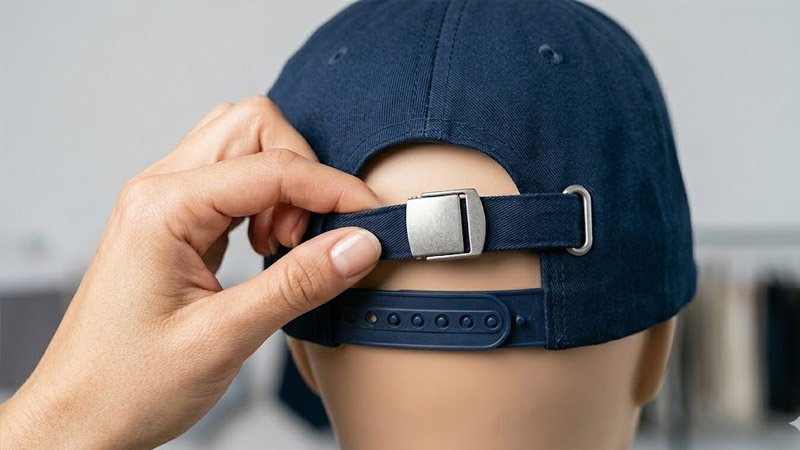
Fit is the first thing to consider when choosing a baseball cap for short hair. A cap should feel secure on the head without pressing too hard.
If the cap is too tight, it can flatten the hair, leave pressure marks, and make the style look stiff. If the cap is too loose, it may move around and look untidy. The best fit is snug but comfortable.
For short hair, adjustable closures are usually the best choice. Metal buckles, snapbacks, Velcro straps, and plastic closures allow the wearer to adjust the cap according to head size and hairstyle.
What to check for fit:
- The cap should sit comfortably above the ears.
- The front panel should not press too hard against the forehead.
- The cap should stay in place when moving.
- The hair should not be completely hidden.
- The closure should allow flexible adjustment.
For brands and retailers, adjustable baseball caps are a practical option because they fit a wider range of customers.
Crown Depth: Why It Matters for Short Hair
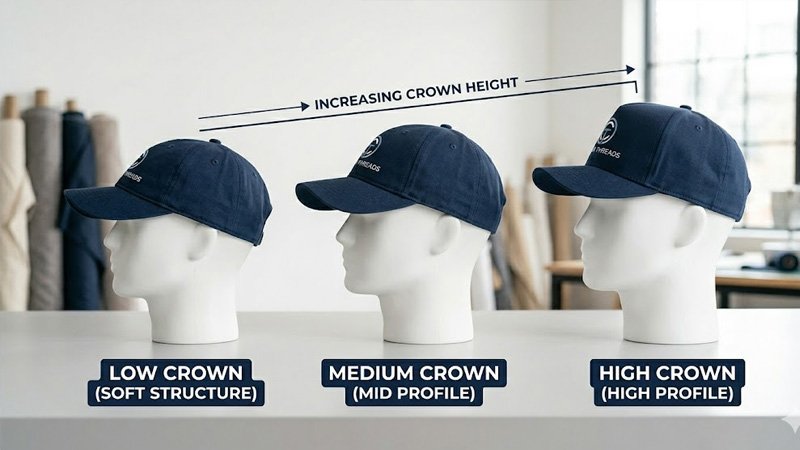
Crown depth refers to the height and depth of the cap body. This is one of the most important details for short hair.
A crown that is too deep may cover too much of the forehead and hide the hair completely. This can make short hair disappear under the cap. A crown that is too shallow may not feel secure and can sit awkwardly on the head.
For most short hairstyles, a medium-depth crown is the safest and most flattering choice. It provides enough coverage while still allowing some hair to show around the front, sides, or ears.
Low Crown Caps
Low crown caps sit closer to the head and create a clean, low-profile look. They are a good choice for pixie cuts, small faces, and casual everyday outfits.
Medium Crown Caps
Medium crown caps offer the best balance for most people. They work well with bob cuts, layered short hair, curly short hair, and general everyday wear.
High Crown Caps
High crown caps create a stronger and more structured look. They can work well for streetwear, snapbacks, and buzz cuts, but they may feel too bold for some short hairstyles.
Brim Shape: Curved Brim or Flat Brim?
The brim changes the whole look of a baseball cap. For short hair, the brim can help balance the face and create a softer or stronger style.
Curved Brim Baseball Caps
Curved brim caps are classic, easy to wear, and flattering for most face shapes. They create a softer look and work well with pixie cuts, bob cuts, layered short hair, and casual outfits.
A curved brim also helps frame the face naturally, which is useful when short hair exposes more facial features.
Flat Brim Caps
Flat brim caps have a bolder, more streetwear-inspired look. They work especially well with buzz cuts, pixie cuts, and fashion-forward outfits.
However, flat brims can look stronger and more angular, so they may not suit every face shape. For a softer everyday look, curved brims are usually easier to style.
Slightly Curved Brim Caps
A slightly curved brim offers a good middle ground. It feels modern but not too bold. This style works well for brands that want a versatile cap suitable for different customers.
Best Baseball Cap Styles for Different Short Hairstyles
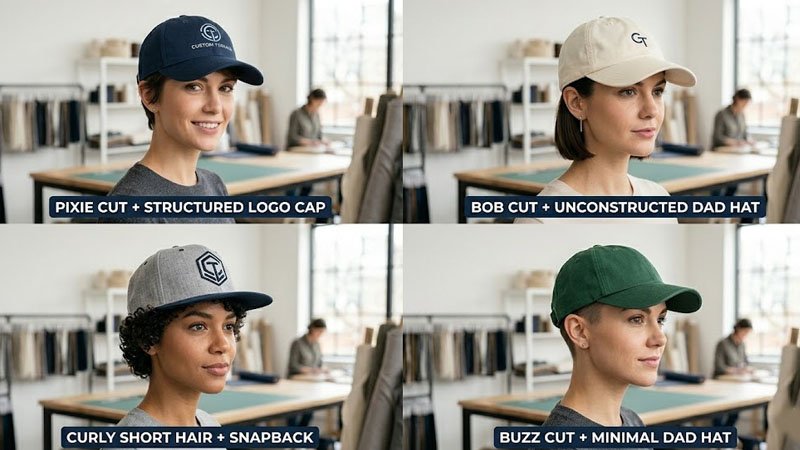
Different short hairstyles need different cap shapes. The goal is to choose a cap that supports the haircut instead of covering it completely.
| Short Hairstyle |
Best Cap Style |
Why It Works |
| Pixie Cut |
Low-profile cap or 5-panel cap |
Keeps the face open and highlights texture |
| Bob Cut |
Curved brim baseball cap |
Balances softness and structure |
| Curly Short Hair |
Adjustable mesh cap or trucker cap |
Gives curls more space and airflow |
| Layered Short Hair |
Unstructured dad cap |
Matches natural movement and texture |
| Buzz Cut |
Structured 6-panel cap or snapback |
Adds shape and a stronger style |
Pixie cuts look great with low-profile baseball caps, 5-panel caps, and soft cotton dad caps. These styles do not overpower the face and allow the haircut to remain visible.
For a natural look, leave a few small pieces of hair around the forehead or ears. This softens the overall style and prevents the cap from looking too heavy.
Recommended cap features:
- Low or medium crown
- Curved brim
- Soft cotton fabric
- Simple front embroidery
- Adjustable back closure
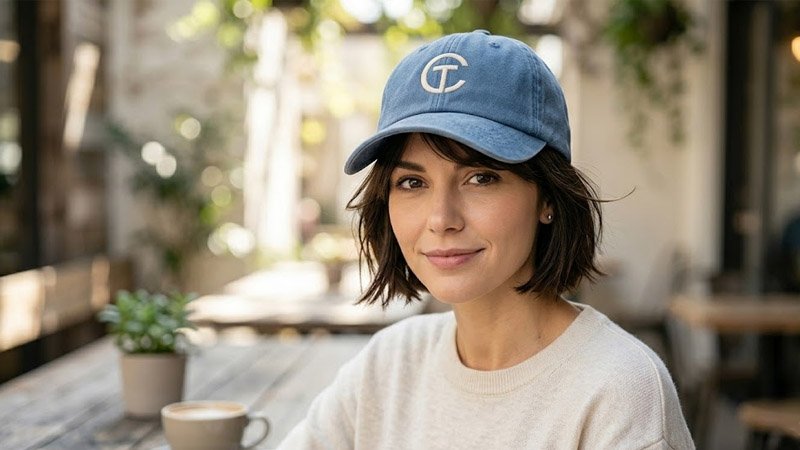
Bob haircuts work well with classic 6-panel baseball caps and curved brim caps. The round shape of a bob pairs nicely with the structure of a cap.
To avoid a flat look, keep a little volume at the crown and let some front pieces fall naturally outside the cap. This creates a relaxed and stylish effect.
Recommended cap features:
- Medium crown
- Curved brim
- Structured or semi-structured front panel
- Cotton or cotton-blend fabric
- Embroidered logo design
Curly short hair needs more space and breathability. A cap that is too tight can flatten curls and make them lose shape.
Adjustable caps, mesh back caps, and trucker caps are good choices because they provide better airflow and more room for natural volume.
Recommended cap features:
- Adjustable closure
- Medium crown
- Breathable mesh or cotton fabric
- Slightly relaxed fit
- Curved or slightly curved brim
Baseball Caps for Buzz Cuts and Very Short Hair
For buzz cuts or very short hair, the baseball cap becomes a major part of the overall look. A structured cap can add shape and definition.
Snapbacks and structured 6-panel caps work well for bold streetwear styles. Curved brim caps create a cleaner, more classic everyday look.
Recommended cap features:
- Structured crown
- Medium or high crown
- Flat brim or curved brim
- Strong front logo placement
- Durable fabric
How to Choose a Cap Based on Face Shape
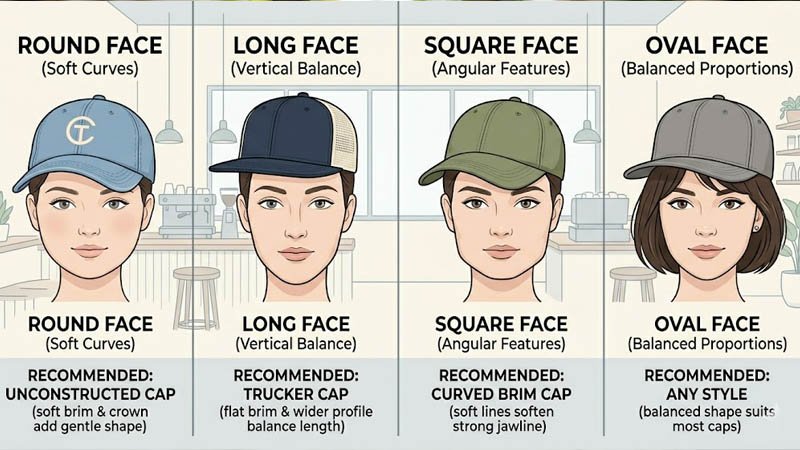
Short hair makes the face shape more visible, so the cap should help balance the face.
Round Face
Choose a baseball cap with a slightly structured crown to add height. A curved brim can help make the face look longer and more balanced.
Avoid caps that sit too low or look too flat.
Long Face
Choose a low-profile or medium crown cap. Avoid very high crowns because they may make the face look longer.
A curved brim can soften the overall appearance.
Square Face
Choose a curved brim cap or soft unstructured cap. These styles help soften strong jawlines and create a more relaxed look.
Avoid overly boxy caps if you want a softer style.
Oval Face
Oval faces can wear most baseball cap styles. Curved brim caps, snapbacks, 5-panel caps, dad caps, and trucker caps can all work well.
Small Face
Choose a low-profile cap with a neat brim. Avoid oversized crowns or very wide brims because they may overwhelm the face.
Fabric Choice: Comfort and Shape Matter
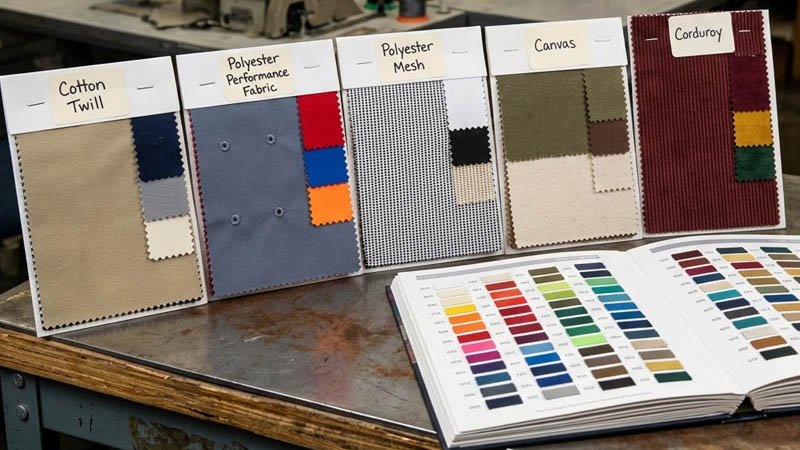
The fabric of a baseball cap affects comfort, structure, and appearance.
Cotton
Cotton is soft, breathable, and comfortable for everyday wear. It works well for dad caps, casual baseball caps, and embroidered caps.
Polyester
Polyester is lightweight, durable, and suitable for sports or outdoor caps. It can also hold color well for promotional caps.
Mesh
Mesh is breathable and ideal for summer, outdoor activities, and trucker caps. It is a good choice for curly short hair because it allows better airflow.
Canvas
Canvas is stronger and more structured. It works well for caps that need a firm shape or a more durable feel.
Corduroy
Corduroy adds texture and a vintage look. It is suitable for fashion brands and seasonal collections.
When the wearer has short hair, the cap design becomes more visible. This makes logo placement important.
Front embroidery is the most classic and professional choice. It gives the cap a clean branded look and works well for uniforms, retail caps, and promotional products.
Side embroidery can add subtle detail without making the front too crowded. Back embroidery near the closure is also a good option for brand names, slogans, or small icons.
For fashion brands, woven patches, leather patches, and printed designs can create a more distinctive style.
Common logo options include:
- Flat embroidery
- 3D embroidery
- Woven patch
- Leather patch
- Printed logo
- Side embroidery
- Back embroidery
Styling Tips: How to Wear a Baseball Cap with Short Hair
Choosing the right cap is important, but styling also matters.
Keep Some Hair Visible
Do not hide all your hair under the cap. Leaving a little hair visible around the forehead, ears, or sides helps frame the face and keeps the look natural.
Add Volume at the Front
Before wearing the cap, use your fingers to lift the roots slightly. A light volumizing spray or dry shampoo can help short hair stay fresh.
Try a Side Sweep
A side-swept style adds softness and shape. It works especially well for pixie cuts, bobs, and layered short hair.
Do Not Use Heavy Hair Products
Heavy wax, gel, or oil can make short hair look greasy under a cap. Use light styling products that add texture without stiffness.
Adjust the Cap Position
Wearing the cap slightly higher on the forehead can show more hair and make the face look more open. Wearing it lower creates a sportier look.
Common Mistakes to Avoid
Choosing a Cap That Is Too Tight
A tight cap can flatten short hair and make it difficult to maintain natural texture. Always choose a comfortable adjustable fit.
Choosing a Crown That Is Too Deep
A deep crown may cover too much of the head and hide the haircut. Medium crown caps are usually more flattering for short hair.
Hiding All the Hair
Short hair looks better when some texture or shape remains visible. Avoid pushing all the hair completely under the cap.
Ignoring Brim Shape
The brim affects face balance. Curved brims are softer and easier to wear, while flat brims create a stronger fashion look.
Choosing Heavy Fabric for Hot Weather
Heavy fabrics can feel uncomfortable and may flatten the hair. For summer or outdoor use, breathable cotton, mesh, or lightweight polyester is a better choice.
For Brands: How to Develop Baseball Caps for Different Hairstyles
For brands, a baseball cap should not only look good on product photos. It should also fit different customers, hairstyles, face shapes, and daily-use situations.
A short-hair-friendly cap is often easier to sell because it works for a wider group of users. It can be used for fashion retail, corporate uniforms, sports teams, promotional events, schools, travel brands, and lifestyle collections.
When developing custom baseball caps, brands should consider:
- Medium crown depth for wider acceptance
- Adjustable closure for flexible sizing
- Curved or slightly curved brim for everyday wear
- Breathable fabric for comfort
- Clean embroidery for a premium brand image
- Sample testing before bulk production
- Logo placement that remains visible when worn
GUANGZHOU EASTLUCKY Hat & Garment Co., Ltd. is a high-end custom hat and OEM/ODM manufacturer based in Guangzhou, China, with 15 years of expertise in professional R&D, production, and distribution of various hats and embroidered accessories. Guided by the philosophy “Quality as Root, Innovation as Soul,” the company provides global clients with one-stop solutions from design sampling to mass production, helping brands build efficient and high-quality custom cap supply chains.
For B2B buyers, the best custom cap is practical, comfortable, brand-focused, and suitable for different users. A well-designed baseball cap can become more than an accessory. It can become a wearable brand message.
Custom Baseball Cap Options for Brands
When creating custom baseball caps, brands can choose different materials, structures, and decoration methods based on their market.
Cap Structure
Structured caps keep their shape and are good for clear front logo display. Unstructured caps feel softer and more casual. Semi-structured caps offer a balance between shape and comfort.
Brim Style
Curved brims are classic and suitable for daily wear. Flat brims are more suitable for streetwear and youth fashion. Slightly curved brims are versatile and modern.
Closure Type
Common closure types include metal buckles, snapbacks, Velcro straps, plastic buckles, and fitted designs. Adjustable closures are usually the most flexible for promotional and retail caps.
Logo Method
Embroidery is one of the most popular choices because it looks clean, durable, and premium. Flat embroidery is ideal for simple logos, while 3D embroidery creates a raised effect. Patches and printing can also be used for different styles.
Color Selection
Neutral colors such as black, navy, beige, white, and grey are easy to match. Bright colors can work well for events, sports teams, and promotional campaigns. Brands can also use Pantone color matching for consistent brand identity.
Final Buying Checklist
Before choosing or customizing a baseball cap for short hair, check these details:
- Is the cap adjustable?
- Is the crown too deep or too shallow?
- Does the brim shape suit the target style?
- Is the fabric comfortable for the season?
- Does the cap allow some hair to remain visible?
- Is the logo placement clean and balanced?
- Does the cap work for different face shapes?
- Is the design suitable for both retail and promotional use?
FAQs
What type of baseball cap is best for short hair?
A medium-depth adjustable baseball cap is usually the best choice. It gives enough coverage without hiding the hair completely.
Are low-profile caps good for short hair?
Yes. Low-profile caps work especially well for pixie cuts, small faces, and casual everyday looks.
Is a curved brim or flat brim better for short hair?
A curved brim is easier to wear and suits most face shapes. A flat brim creates a bolder streetwear look and works well with buzz cuts or fashion-forward styles.
How do I avoid flat hair under a baseball cap?
Avoid wearing the cap too tight. Use light volumizing spray or dry shampoo, and leave some hair visible around the front or sides.
Can curly short hair wear baseball caps?
Yes. Curly short hair works best with adjustable caps, mesh caps, or slightly relaxed fits that allow curls to keep their shape.
What crown depth is best for short hair?
Medium crown depth is the safest choice for most short hairstyles. It provides balance, comfort, and enough room without hiding the hair completely.
Conclusion
Baseball caps can look excellent with short hair when the fit, crown, and brim are chosen carefully. The right cap should frame the face, support the hairstyle, and feel comfortable for daily wear.
For pixie cuts, low-profile caps and soft cotton caps work well. For bob cuts, curved brim baseball caps create balance. For curly short hair, breathable adjustable caps are a better choice. For buzz cuts, structured caps and snapbacks can add shape and style.
For brands, short-hair-friendly baseball caps are practical because they suit a wide range of customers. By choosing the right crown depth, brim shape, fabric, closure, and logo method, brands can create custom baseball caps that are stylish, comfortable, and easy to wear.
A good baseball cap is not only about design. It is about fit, function, comfort, and brand value.