Women’s Hat Types: How to Choose the Best Style for Every Occasion
Hats are more than just finishing touches. The right hat can shape your overall look, add personality, and serve a real purpose at the same time. It can protect you from the sun, keep you warm in colder weather, and make even a simple outfit feel more polished and intentional.
For many women, the challenge is not whether to wear a hat, but which style to choose. Some hats work best for casual everyday outfits, while others are better for elegant events, summer holidays, outdoor activities, or winter layering. Face shape, season, material, and occasion all play a role.
In this guide, we’ll break down the most popular women’s hat types, explain what each style is best for, and help you choose the right hat for every occasion.
Why Hats Still Matter in Women’s Fashion
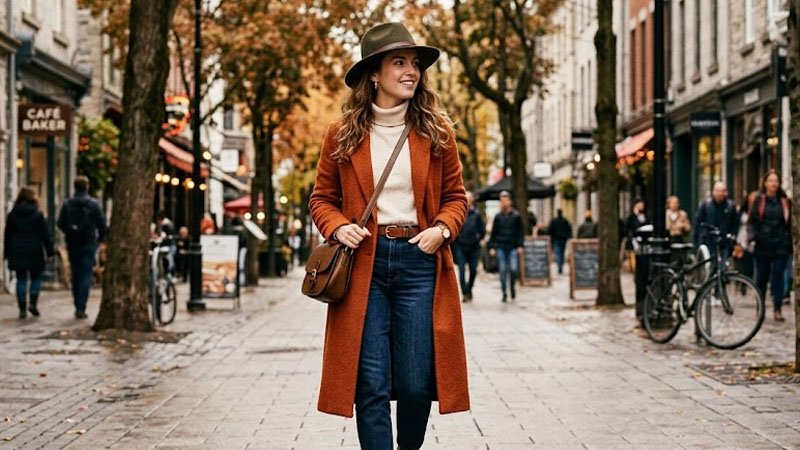
A good hat does more than complete an outfit. It adds structure, balance, and character. It can soften a look, sharpen it, or make it feel more relaxed. That is why hats remain such an important accessory in women’s fashion.
They are also practical. A wide-brim sun hat can help protect your face and neck from harsh sunlight. A knit beanie can keep you warm while still looking stylish. A baseball cap can make a casual outfit feel effortless while offering comfort for daily wear.
The best hats combine both beauty and function. They should look good, feel comfortable, and fit naturally into your wardrobe and lifestyle.
How to Choose the Right Hat
Before looking at individual hat styles, it helps to know what actually makes a hat the right choice. In most cases, the best hat depends on five things:
1. Occasion
Think about where you plan to wear it. A baseball cap may be perfect for daily errands, but not for a wedding or garden party. A boater hat may look elegant for a summer event, but too formal for casual sportswear.
2. Season
Lightweight materials like straw, cotton, and linen are better for warm weather. Wool, felt, and knit fabrics are more suitable for fall and winter.
3. Face Shape
Certain hat shapes are more flattering on certain faces. Structured hats often suit round faces, while softer silhouettes can work beautifully on square faces.
4. Style Preference
Some women prefer sporty and simple looks. Others prefer feminine, vintage, classic, or fashion-forward styles. A hat should feel like a natural extension of your personal style.
5. Comfort and Fit
No matter how beautiful a hat is, it will not work if it feels too tight, too loose, too heavy, or awkward to wear for long periods.
Quick Comparison of Popular Women’s Hat Types
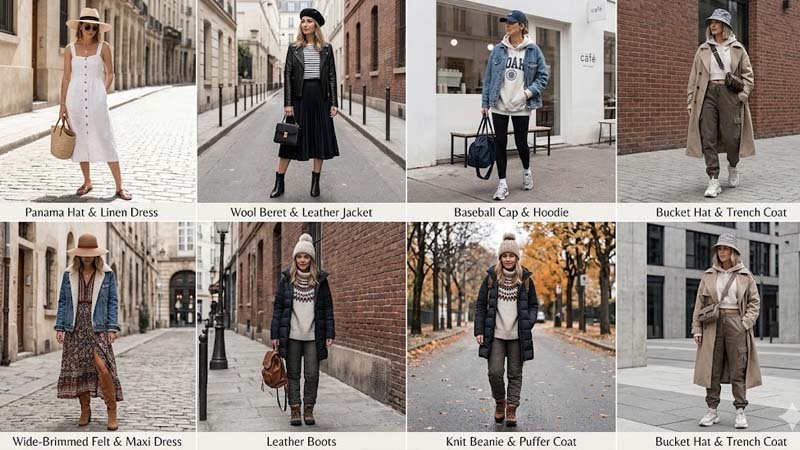
Before we look at each style in detail, here is a quick overview:
| Hat Type |
Best For |
Best Season |
Style Mood |
| Baseball Cap |
Everyday casual wear |
Spring / Summer |
Sporty, relaxed |
| Bucket Hat |
Travel, streetwear, holidays |
Spring / Summer |
Trendy, youthful |
| Trucker Hat |
Outdoor casual looks |
Spring / Summer |
Retro, sporty |
| Fedora |
Smart casual and polished outfits |
Fall / Winter |
Structured, stylish |
| Boater Hat |
Garden parties, summer events |
Spring / Summer |
Elegant, vintage |
| Beret |
Chic city dressing |
Fall / Winter |
Feminine, artistic |
| Sun Hat |
Beach and sun protection |
Summer |
Graceful, practical |
| Visor |
Sports and hot weather |
Summer |
Functional, active |
| Beanie |
Cold-weather casual looks |
Fall / Winter |
Cozy, easygoing |
| Newsboy Cap |
Autumn outfits and retro styling |
Fall / Winter |
Vintage, polished |
| Cowboy Hat |
Statement looks and themed events |
All seasons |
Bold, confident |
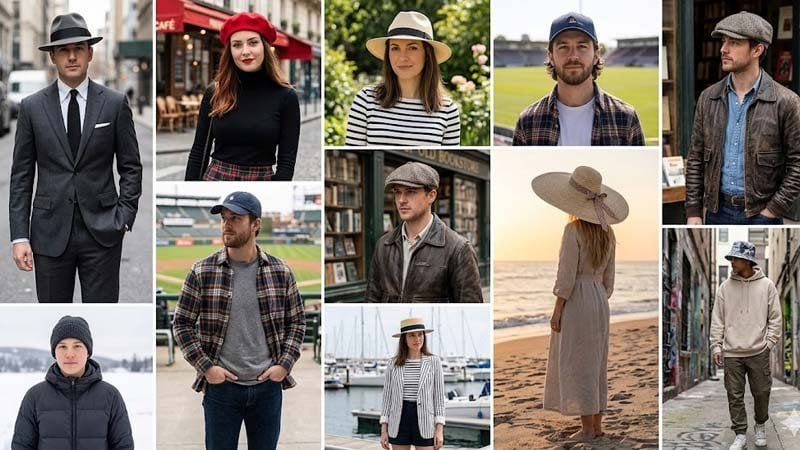
The baseball cap is one of the easiest hats to wear. It is simple, casual, and highly practical. For women who want comfort, convenience, and a sporty look, this is often the first choice.
A baseball cap usually has a curved brim and a fitted or adjustable back. It works well with jeans, leggings, sneakers, oversized shirts, and athleisure outfits.
Best for:
-
daily errands
-
travel
-
casual walks
-
sporty outfits
-
sunny days
Why it works:
It is comfortable, easy to match, and useful for everyday life. It is also one of the best options for women who want a hat that feels natural rather than styled too heavily.
The bucket hat has become one of the most popular casual hat styles in recent years. With its soft crown and downward-sloping brim, it offers a relaxed look while giving more shade than a baseball cap.
Bucket hats are especially popular for vacations, streetwear, music festivals, and laid-back spring or summer outfits.
Best for:
Why it works:
It feels youthful, modern, and easy to wear. It is also packable, which makes it useful for holidays and day trips.
Style note:
If your main goal is strong sun protection, a wider sun hat will usually offer better coverage than a bucket hat.
The trucker hat is similar to a baseball cap but usually includes a structured front and mesh back panels. This makes it more breathable and gives it a slightly retro, sporty appearance.
It is a good option for women who like casual outdoor styling with a bit more personality.
Best for:
-
casual streetwear
-
outdoor activities
-
summer outings
-
retro-inspired outfits
Why it works:
It is lightweight, breathable, and visually a little bolder than a basic cap.
Fedora
The fedora is one of the most timeless women’s hat styles. It usually features a structured crown and a medium or wide brim, giving it a refined and confident appearance.
Compared with softer hats, a fedora adds more definition to the face and often works especially well in polished, smart casual outfits.
Best for:
-
brunch dates
-
city dressing
-
smart casual outfits
-
travel looks
-
autumn styling
Why it works:
It can instantly make an outfit look more put-together. A fedora pairs well with trench coats, knit dresses, ankle boots, tailored trousers, and minimalist outerwear.
Style note:
For everyday wear, choose neutral shades such as black, camel, taupe, grey, or cream for easier matching.
The boater hat is known for its flat top and flat brim. It carries a refined, vintage-inspired charm and works especially well for spring and summer occasions.
This is a strong choice for women who want something elegant but still fresh and wearable.
Best for:
Why it works:
A boater hat feels graceful, neat, and feminine. It pairs beautifully with dresses, blouses, linen sets, and structured summer outfits.
Beret
The beret is a classic hat associated with French-inspired style. It is soft, elegant, and expressive without being overly dramatic.
Berets work well with coats, knitwear, tailored blazers, and understated outfits that need a touch of personality.
Best for:
Why it works:
It is simple but distinctive. A beret adds character and style without overwhelming the rest of the outfit.
Style note:
Wearing a beret slightly off-center often creates a more natural and flattering look than placing it flat on top of the head.
A sun hat is one of the most practical choices for warm weather. Usually designed with a wide brim, it offers better shade for the face and neck than most everyday fashion hats.
This makes it ideal for women who want both elegance and protection during sunny seasons.
Best for:
-
beach holidays
-
poolside outfits
-
outdoor lunches
-
summer travel
-
garden events
Why it works:
It combines style with genuine function. A good sun hat can improve comfort, reduce glare, and support sun protection while still looking polished.
Visor
The visor is designed for women who want sun protection around the face without full head coverage. Because the top remains open, it can feel cooler and more breathable in very hot weather.
It is especially useful for active women and outdoor sports.
Best for:
-
tennis
-
golf
-
walking
-
beach clubs
-
active summer days
Why it works:
It protects the eyes and upper face while allowing more airflow and preserving hairstyles better than many full hats.
Beanie
The beanie is one of the most essential hats for fall and winter. It is warm, comfortable, and easy to wear with everyday outerwear.
Depending on the knit and fit, a beanie can feel sporty, cozy, minimal, or trendy.
Best for:
Why it works:
It is practical, warm, and easy to integrate into a casual wardrobe. Fine knit beanies create a cleaner look, while chunky knit versions feel more relaxed and cozy.
The newsboy cap adds vintage character and a slightly dressed-up feel compared with a baseball cap. With its fuller crown and softer structure, it works especially well in autumn and winter wardrobes.
Best for:
Why it works:
It offers personality and sophistication while still being wearable in daily life.
The cowboy hat is a bold statement piece. It is not the most universal option for everyday wear, but it can be extremely striking when styled intentionally.
Best for:
-
concerts
-
western-themed events
-
festival outfits
-
fashion-forward styling
-
statement looks
Why it works:
It brings confidence and individuality. Even with a simple outfit, a cowboy hat creates a strong visual impression.
How to Choose the Best Hat for Every Occasion
Knowing the hat styles is useful, but choosing the right one becomes much easier when you think by occasion.
Best Hats for Everyday Casual Wear
For daily outfits, comfort and versatility matter most.
Best options:
-
baseball cap
-
bucket hat
-
beanie
-
trucker hat
These hats are easy to style with jeans, sneakers, T-shirts, leggings, hoodies, and light jackets. They work best when you want an effortless look without feeling overdressed.
Best Hats for Summer Holidays and Beach Days
For warm-weather trips and outdoor sun exposure, breathable materials and better coverage become more important.
Best options:
-
sun hat
-
bucket hat
-
visor
-
straw boater hat
These styles work especially well with swim cover-ups, sundresses, linen sets, sandals, and resortwear.
Best Hats for Elegant Outdoor Events
For weddings, brunches, garden parties, and more refined daytime occasions, structured and feminine hats often work best.
Best options:
-
boater hat
-
elegant wide-brim hat
-
refined fedora
-
decorative sun hat
These hats should complement the outfit rather than overpower it. Clean lines, quality materials, and coordinated color choice matter more in dressier settings.
Best Hats for Fall and Winter Outfits
Cold-weather outfits usually benefit from richer textures and more structured or cozy materials.
Best options:
-
beanie
-
beret
-
fedora
-
newsboy cap
These styles pair well with wool coats, boots, scarves, knitwear, and layered neutral outfits.
Best Hats for Active Outdoor Use
For walking, sports, golf, tennis, and practical sunny-day use, lighter and more secure styles are usually better.
Best options:
-
baseball cap
-
visor
-
trucker hat
-
lightweight bucket hat
In these situations, fit, airflow, and comfort are often more important than making a strong fashion statement.
Choosing a Hat by Face Shape
Face shape does not need to control every style decision, but it can help you find more flattering proportions.
Oval Face
Oval faces are generally the easiest to style because most hat types look balanced.
Best choices:
-
fedora
-
beret
-
boater hat
-
baseball cap
-
beanie
Round Face
Round faces often benefit from hats with more structure or vertical emphasis.
Best choices:
-
fedora
-
wide-brim hat
-
hats with sharper lines
Try to be more selective with very rounded, soft silhouettes if they make the face appear wider.
Square Face
Square faces usually suit hats that soften stronger jawlines.
Best choices:
Heart-Shaped Face
Heart-shaped faces often look good in medium to wide-brim styles that help balance the forehead and chin.
Best choices:
-
boater hat
-
soft fedora
-
beret
-
sun hat
Common Hat Materials and What They’re Best For
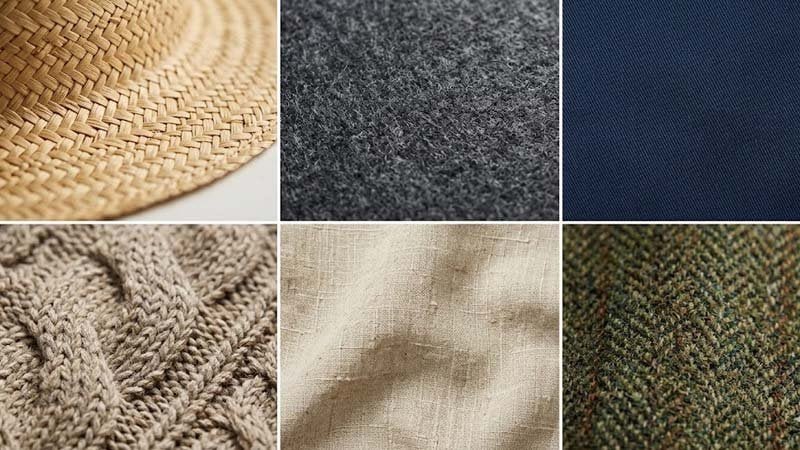
Material affects more than just appearance. It changes breathability, structure, warmth, and how a hat performs in real life.
Straw
Best for spring and summer. Straw hats are breathable, lightweight, and ideal for sun hats, boater hats, and resort styles.
Cotton
Cotton is soft, practical, and easy to wear. It is commonly used in baseball caps and bucket hats for everyday comfort.
Linen
Linen and linen blends are airy and light, making them useful for warm-weather hats with a relaxed but slightly elevated feel.
Wool Felt
Wool felt gives structure and warmth. It is one of the best materials for fedoras and dressier fall or winter hats.
Knit Acrylic or Wool Blends
These materials are common in beanies. They provide warmth and flexibility and are well suited to cold-weather casual wear.
From a product development and manufacturing perspective, details such as fabric choice, structure, finishing, and fit can significantly affect both style and wearability. GUANGZHOU EASTLUCKY Hat & Garment Co., Ltd. brings 15 years of experience in high-end custom hats and OEM/ODM production, supporting brands with one-stop solutions from design sampling to mass production.
A hat looks best when it feels connected to the rest of the outfit.
A few simple rules help:
-
pair casual hats with relaxed clothing
-
pair structured hats with cleaner, more polished silhouettes
-
choose colors that either match or intentionally contrast with your outfit
-
avoid over-accessorizing when the hat is already visually strong
-
pay attention to balance between hat size, hairstyle, and shoulder line
For example, a wide-brim hat paired with a flowing summer dress creates softness and elegance. A fedora with a trench coat creates structure. A baseball cap with activewear keeps the look effortless and practical.
Common Mistakes to Avoid
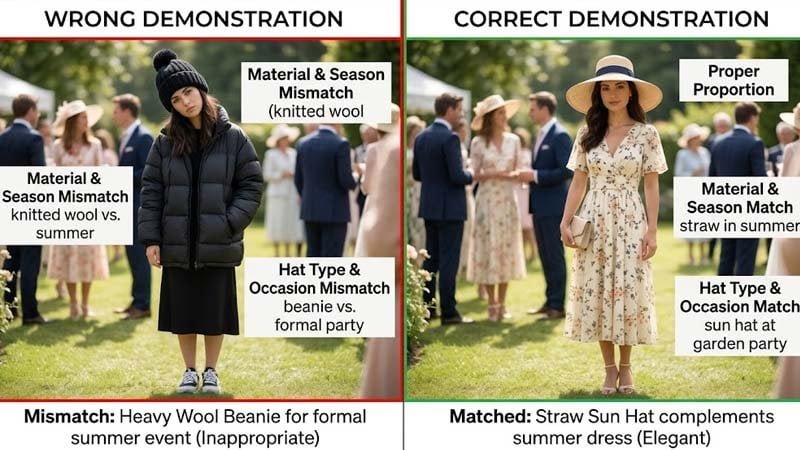
Many women choose hats based only on trend appeal, but that can lead to a hat that looks good online and feels wrong in real life.
Here are a few common mistakes:
-
choosing a hat that does not fit the occasion
-
ignoring face shape and overall proportion
-
selecting the wrong material for the season
-
buying a beautiful hat that is uncomfortable to wear
-
choosing trend over wardrobe compatibility
The best hat is usually not the most dramatic one. It is the one that fits your life, your clothes, and your comfort level.
Conclusion
Women’s hats come in many forms, from sporty baseball caps and relaxed bucket hats to polished fedoras, elegant boater hats, and cozy winter beanies. Each style offers something different, and the right choice depends on where you plan to wear it, how you want it to feel, and what kind of image you want to create.
When choosing the best hat for every occasion, start with function, then think about season, face shape, material, and outfit balance. That approach makes it much easier to find a hat that not only looks beautiful but also feels right.
A good hat should never feel like an afterthought. It should feel like a natural part of your personal style.
FAQs
What is the most versatile women’s hat?
A baseball cap is one of the most versatile casual choices, while a fedora is one of the most versatile polished options.
Which hat is best for summer?
A wide-brim sun hat is usually the best choice for strong sun protection, while bucket hats and visors are also practical for casual summer use.
Are bucket hats still in style?
Yes. Bucket hats remain popular because they are comfortable, youthful, easy to pack, and simple to style.
What hat style is best for formal outdoor events?
Boater hats, elegant wide-brim hats, and refined structured hats are often the best choices for weddings, garden parties, and other outdoor daytime events.
How do I know if a hat fits properly?
A hat should feel secure without creating pressure. It should not slide around too easily, but it should also not leave discomfort or deep marks after short wear.
How to Choose the Best Summer Hat for Men in 2026 (Style, Fit & Sun Protection)
Choosing a summer hat is not only about style. The right hat should also help you stay comfortable in hot weather, provide practical sun protection, and fit your face shape and daily routine.
In this guide, we’ll show you how to choose the best summer hat for men in 2026 based on three key factors: style, fit, and sun protection. We’ll also compare the most popular summer hat styles, explain what materials work best in hot weather, and share practical tips to help you choose a hat you will actually wear.
Whether you need a hat for daily commuting, vacations, outdoor activities, or smart-casual summer dressing, this guide will help you make the right decision.
Quick Answer: How Do You Choose the Best Summer Hat?
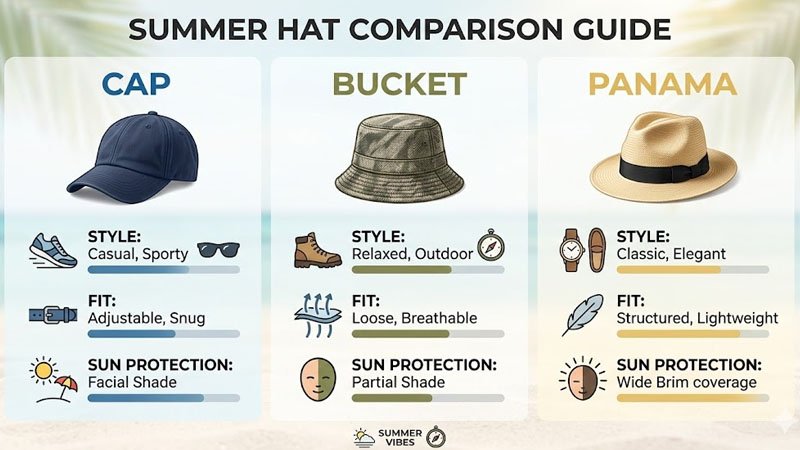
Start with these three questions:
-
Where will you wear it most?
(Everyday city wear, beach, travel, outdoor activity, events)
-
Do you need more sun protection or more styling flexibility?
(Wide-brim hats usually offer better coverage; caps are easier for everyday wear)
-
Does it fit your head size, face shape, and outfit style?
(A great hat that fits poorly will not be worn)
If you answer those first, choosing the right hat becomes much easier.
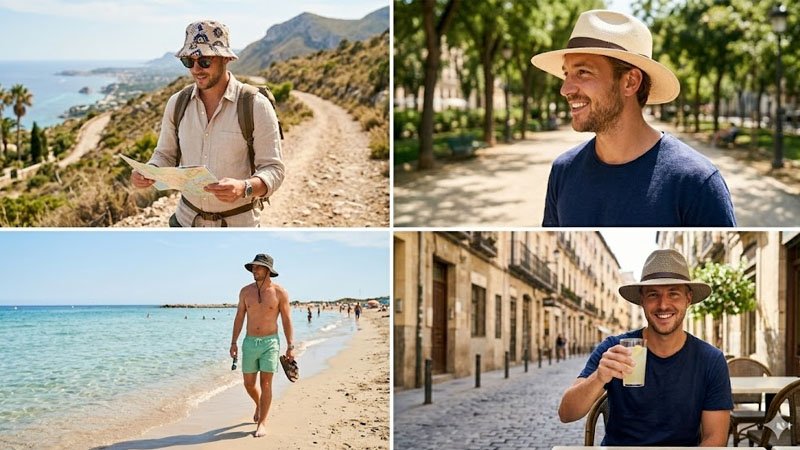
A summer hat should do more than complete an outfit. It should also help with comfort and protection during hot, sunny days.
1) Sun Protection
Summer hats help reduce direct sun exposure on the scalp, forehead, face, and ears. Depending on the brim width and shape, some hats also help protect parts of the neck.
This matters especially if you:
-
Spend long hours outdoors
-
Travel in hot climates
-
Go to beaches, parks, festivals, or sporting events
-
Walk or commute during peak sun hours
2) Heat Comfort
Direct sunlight on your head can quickly increase heat discomfort. A breathable summer hat can help by:
3) Style and Confidence
The right hat can make a summer outfit look more complete and intentional. Different styles communicate different moods:
-
Baseball cap = casual, sporty, easy
-
Bucket hat = relaxed, modern, outdoorsy
-
Panama hat = polished, vacation-ready
-
Fedora = smart-casual, classic
Step 1: Choose the Right Summer Hat Style for Your Lifestyle
Before comparing materials or fit, choose the hat category that best matches your lifestyle and usage.
1) Baseball Cap (Best for Everyday Wear)
The baseball cap is one of the most practical and versatile summer hats for men. It is easy to wear, easy to style, and works well for daily casual use.
Best for
-
Daily commuting
-
Walking, errands, travel days
-
Casual weekends
-
Sports and leisure activities
Pros
-
Easy to match with most outfits
-
Lightweight and comfortable (depending on material)
-
Good packability
-
Widely available in different fits
Cons
Style notes
A baseball cap works well with:
If you want one cap for maximum versatility, choose a neutral color like black, navy, olive, beige, or grey.
2) Bucket Hat (Best Balance of Casual Style and Coverage)
The bucket hat is a strong all-round summer option because it combines relaxed style with better coverage than a standard cap.
Best for
Pros
-
Better side coverage than a cap
-
Comfortable and often packable
-
Available in cotton, nylon, quick-dry and functional materials
-
Suitable for both fashion and outdoor use
Cons
Style notes
A bucket hat pairs well with:
-
T-shirt + shorts
-
Overshirt + relaxed trousers
-
Patterned summer shirts + chinos
-
Outdoor casual outfits with sandals or sneakers
3) Panama Hat (Best for Elevated Summer Style)
The Panama hat is a classic warm-weather choice for men who want a more polished, elegant look without sacrificing breathability.
Best for
Pros
-
Lightweight and breathable
-
Stylish and refined
-
Offers better face shade than many caps
-
Great for smart-casual and holiday outfits
Cons
Style notes
A Panama hat works especially well with:
4) Lightweight Fedora (Best for Smart-Casual Looks)
A summer fedora can be a stylish choice for men who prefer a classic, structured look. For hot weather, the key is choosing a lightweight, breathable version, not a heavy felt hat.
Best for
-
Summer dinners
-
Garden parties
-
City outings
-
Smart-casual dressing
Pros
Cons
Style notes
A summer fedora pairs well with:
5) Wide-Brim Straw Hat (Best for Strong Sun Exposure)
For beach trips, vacations, and strong sun conditions, wide-brim straw hats are often one of the best choices for comfort and coverage.
Best for
Pros
-
Excellent warm-weather appearance
-
Strong sun coverage (depending on brim)
-
Good ventilation in many woven designs
Cons
-
Some designs are more style-focused than practical
-
Can be harder to pack and store
-
Durability varies by material and construction
Style notes
Keep the rest of the outfit simple when wearing a larger-brim hat:
Step 2: Choose Based on Sun Protection (Not Just Appearance)
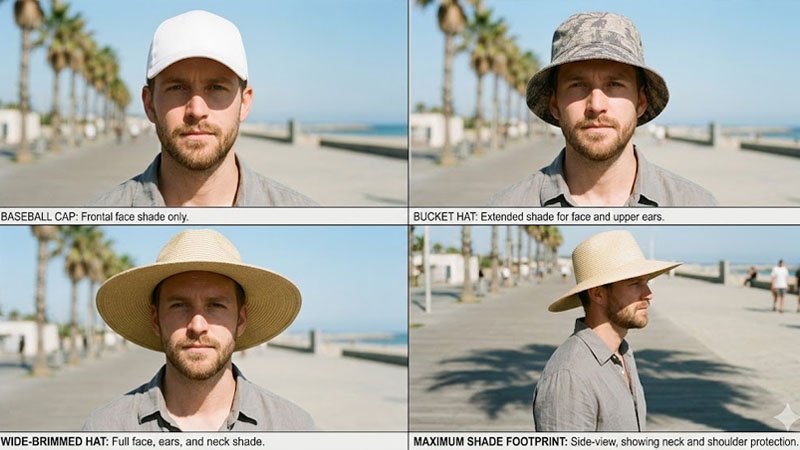
Many men choose hats based on shape and style first—but for summer, sun protection should be part of the decision.
What affects sun protection in a hat?
1) Brim Width
In general, a wider brim provides more shade for the face and can help protect ears and neck depending on the design.
-
Baseball caps: good for face shade, less coverage on sides/neck
-
Bucket hats: better all-around facial/ear coverage
-
Panama/fedora: depends on brim width
-
Wide-brim hats: strongest coverage for outdoor use
2) Coverage Shape
Two hats may have the same brim width but very different protection depending on shape, stiffness, and how the brim sits around the head.
3) Material Density / Construction
Very loose decorative weaves may feel breathable but may provide less effective coverage than denser constructions.
4) Intended Use
Your usage matters:
Practical tip: A hat helps reduce sun exposure, but it should not replace sunscreen, sunglasses, and other sun protection habits.
Step 3: Choose the Right Material for Hot Weather
Material makes a big difference in summer comfort. The same hat style can feel very different depending on the fabric, weave, and lining.
Best summer hat materials for men
Straw / Woven Materials
Great for:
Why choose it:
What to check:
Cotton
Great for:
-
Baseball caps
-
Bucket hats
-
Casual everyday wear
Why choose it:
What to check:
Linen / Linen Blends
Great for:
Why choose it:
-
Excellent warm-weather character
-
Breathable and lightweight look
-
More refined aesthetic than many basic fabrics
What to check:
Nylon / Performance Fabrics
Great for:
Why choose it:
What to check:
Features That Improve Summer Hat Comfort (Often Overlooked)
Many buyers focus only on shape and color, but these features strongly affect comfort:
-
Moisture-absorbing sweatband
-
Ventilation eyelets or mesh panels
-
Lightweight lining (or no heavy lining)
-
Soft inner seams
-
Adjustable fit system
-
Packable construction (if you travel often)
These details can make the difference between a hat you wear once and a hat you wear all season.
Step 4: Get the Right Fit (Head Size, Crown Depth & Comfort)
Fit is one of the most important factors in choosing a summer hat, and one of the most common reasons people stop wearing a hat they bought.
Why fit matters
-
Too tight: uncomfortable pressure, heat buildup, headaches
-
Too loose: unstable in wind, poor coverage position, awkward look
How to choose the right fit
-
Measure your head circumference before ordering
-
Check the brand size chart
-
If possible, choose hats with adjustable features
-
Consider crown depth (important for caps and bucket hats)
-
Think about your use case (travel, active use, long wear time)
A hat should feel secure—not tight.
Step 5: Use Face Shape and Proportion as a Guide (Not a Rule)
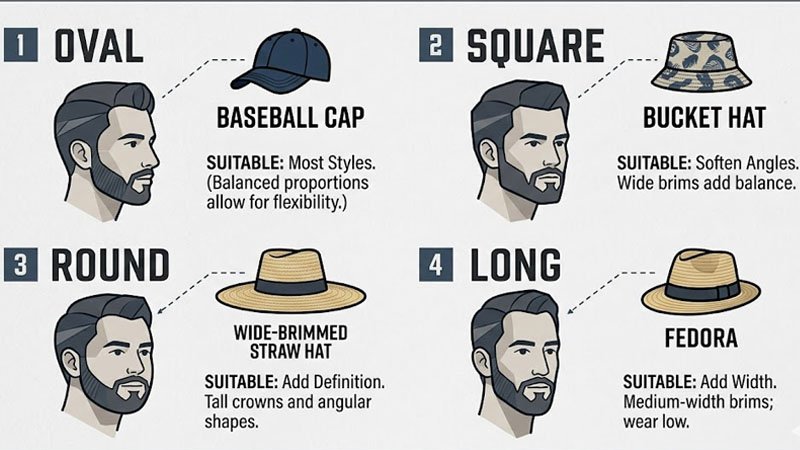
Face shape advice can be helpful, but it should be treated as guidance, not a hard rule. Fit, proportions, and personal style matter just as much.
General face shape suggestions
Round Face
Try styles with a bit more structure and definition:
-
Medium-brim fedora
-
Panama hat
-
Structured caps
This can help create a more balanced silhouette.
Oval Face
Most styles work well:
-
Cap
-
Bucket hat
-
Panama
-
Fedora
-
Straw hat
Focus on proportion and personal style preference.
Square Face
Softer, rounded shapes often balance stronger angles:
Long / Oblong Face
Medium-to-wider brims often help balance facial length. Avoid very tall crowns if they exaggerate length.
Don’t forget body proportion
How to Match Your Summer Hat to Your Outfit (Without Overthinking It)
A hat works best when it matches the mood of your outfit.
Easy style matching guide
Casual / Sporty
Choose:
-
Baseball cap
-
Functional cap
-
Casual bucket hat
Works well with:
-
T-shirts
-
Shorts
-
Sneakers
-
Polo shirts
Relaxed / Outdoor / Travel
Choose:
-
Bucket hat
-
Packable brimmed hat
-
Performance cap
Works well with:
Smart-Casual / City Summer
Choose:
-
Lightweight fedora
-
Panama hat
Works well with:
Resort / Vacation
Choose:
Works well with:
Common Mistakes to Avoid When Choosing a Summer Hat
1) Choosing a hat only because it looks good online
A great-looking hat may be too hot, too stiff, or not suitable for your actual lifestyle.
2) Ignoring sun coverage needs
If you spend hours outdoors, a standard cap may not provide enough protection compared with a bucket hat or wider-brim style.
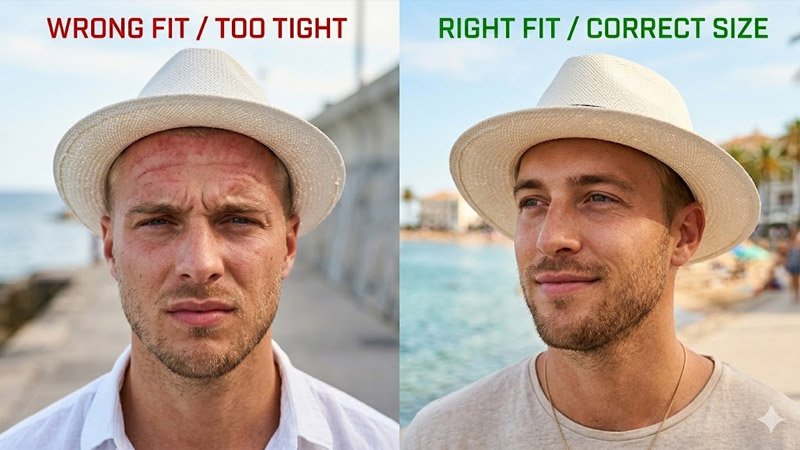
3) Buying the wrong size
Poor fit affects comfort, appearance, and function.
4) Choosing heavy materials for hot weather
Summer hats should feel light and breathable. Always check material and construction.
5) Not considering storage or travel use
If you travel often, choose packable or shape-stable options based on how you plan to carry the hat.
Quick Comparison: Which Summer Hat Should You Choose?
Baseball Cap
-
Best for: Daily wear, commuting, travel
-
Sun coverage: Moderate (mainly face)
-
Style level: Casual
-
Packability: Good
-
Ease of care: Easy
Bucket Hat
-
Best for: Outdoor use, travel, casual fashion
-
Sun coverage: Good
-
Style level: Casual / modern
-
Packability: Excellent
-
Ease of care: Easy to moderate
Panama Hat
-
Best for: Vacation, summer events, smart casual
-
Sun coverage: Good (depends on brim)
-
Style level: Elevated
-
Packability: Varies
-
Ease of care: Moderate / careful
Lightweight Fedora
-
Best for: Smart-casual styling
-
Sun coverage: Moderate to good
-
Style level: Classic / refined
-
Packability: Limited in many styles
-
Ease of care: Moderate
Wide-Brim Straw Hat
-
Best for: Beach, resort, strong sun exposure
-
Sun coverage: Very good
-
Style level: Statement summer look
-
Packability: Often limited
-
Ease of care: Moderate / careful
For Brands & Buyers: Custom Summer Hat Development Support
If you are a brand, importer, retailer, or sourcing team planning a seasonal hat collection, choosing the right summer hat is not only a styling decision—it is also a product development and supply chain decision.
GUANGZHOU EASTLUCKY Hat & Garment Co., Ltd. is a high-end custom hat and OEM/ODM manufacturer based in Guangzhou, China, with 15 years of expertise in professional R&D, production, and distribution of various hats and embroidered accessories.
Guided by the philosophy “Quality as Root, Innovation as Soul,” we provide global clients with one-stop solutions from design sampling to mass production, enabling efficient and high-quality supply chain services for brands.
What we can support
-
OEM/ODM hat development
-
Design sampling and prototyping
-
Material and construction suggestions
-
Production planning for seasonal collections
-
Embroidered accessories and coordinated programs
For summer hat programs, early alignment on target price, material, fit, construction details, and use scenario can significantly improve development speed and production consistency.
FAQ: How to Choose the Best Summer Hat for Men
What is the best summer hat for men for everyday use?
For most men, a baseball cap is the easiest everyday choice because it is versatile, comfortable, and simple to style. If you want better coverage, a bucket hat is often a better all-round option.
Which summer hat offers the best sun protection?
In general, hats with wider brims (such as bucket hats with good brim width or wide-brim straw hats) offer better coverage than standard caps, especially for the sides of the face and ears.
Is a Panama hat practical or just stylish?
A Panama hat can be both practical and stylish for warm weather. It is often lightweight and breathable, but it may require more careful storage than a cap or bucket hat.
How do I know if a hat fits correctly?
A hat should feel secure and comfortable without causing pressure. It should not leave tight marks quickly or shift too easily when you move.
What is the best material for a summer hat?
It depends on your use case:
-
Casual daily wear: Cotton
-
Outdoor / active use: Nylon or performance fabrics
-
Resort / dressier summer style: Straw or woven materials, linen blends
Can I wear a fedora casually in summer?
Yes—if the material is lightweight and the outfit is styled appropriately. A summer fedora works best with smart-casual pieces like linen shirts, chinos, and loafers, rather than sporty clothing.
Final Thoughts
The best summer hat for men in 2026 is the one that fits your lifestyle, climate, comfort needs, and personal style—not simply the one that looks best in a photo.
When choosing a summer hat, focus on:
-
Style (where and how you will wear it)
-
Fit (comfort, head size, crown depth, stability)
-
Sun protection (brim width, coverage, intended use)
-
Material (breathability, weight, care needs)
If you get those four things right, you’ll end up with a hat you actually enjoy wearing all summer.
And if you are a brand developing custom summer hats, working with an experienced OEM/ODM manufacturer can help turn design ideas into production-ready products with better consistency, efficiency, and quality.
Don’t Let Sun or Sweat Ruin Your Match: Choose the Right Tennis Hat or Visor
Tennis is a game of focus, movement, and split-second decisions. But on a hot day, two simple things can quietly hurt your performance: sun glare and sweat.
If the sun keeps getting in your eyes or sweat drips down your face during rallies, your concentration drops, your timing suffers, and your match becomes harder than it needs to be. That’s why choosing the right tennis headwear is not just about style — it’s about comfort, visibility, and performance.
So, should you wear a tennis hat or a tennis visor?
In this guide, we’ll break down the differences, explain what features matter most, and help you choose the best option for your game.
Why Tennis Headwear Matters More Than You Think
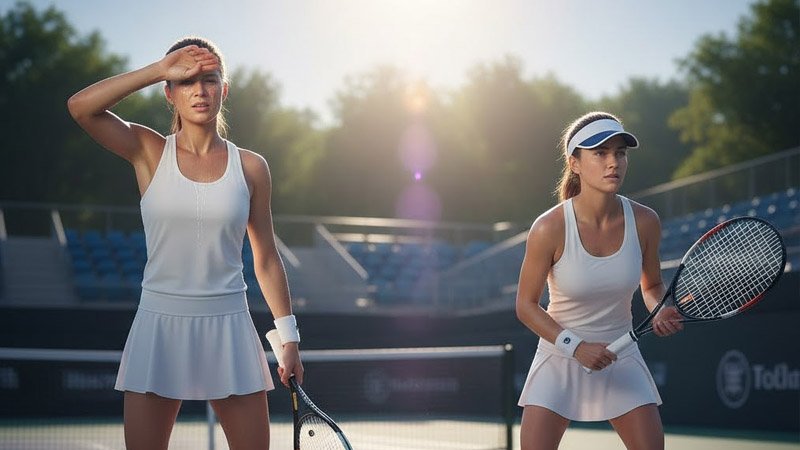
Many players treat hats and visors as optional accessories. In reality, the right headwear can make a noticeable difference during practice and matches.
1) Sun Protection and UV Exposure
Outdoor tennis often means long periods under direct sunlight. A well-designed hat or visor helps reduce facial sun exposure and glare, making it easier to track the ball and stay comfortable.
2) Sweat Management
Sweat in your eyes can be distracting and uncomfortable. Headwear with moisture-wicking materials and built-in sweatbands helps absorb and manage sweat during high-intensity play.
3) Better Focus and On-Court Comfort
When your headwear fits properly and stays in place, you spend less time adjusting it and more time focusing on your game.
4) Style and Confidence
Of course, appearance still matters. Whether you prefer a classic cap or a modern performance visor, the right look can complement your outfit and boost confidence on court.
Tennis Hat vs. Visor: Which One Is Right for You?
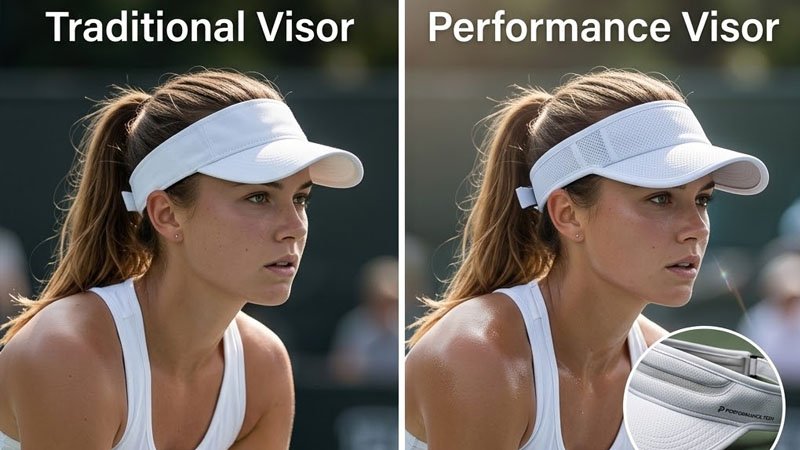
This is the most common question for players — and the answer depends on your playing conditions and personal preferences.
Quick Comparison: Tennis Hat vs. Tennis Visor
Choose a Tennis Hat if you want:
-
Better coverage for the top of your head
-
More all-around sun protection during long outdoor sessions
-
A secure, familiar fit
-
Extra coverage in strong sun conditions
Choose a Tennis Visor if you want:
-
Better airflow and ventilation
-
An open-top feel in hot weather
-
Less bulk on your head
-
More comfort for certain hairstyles (such as ponytails)
The Practical Difference
A tennis hat usually offers more UV coverage, while a visor usually offers more breathability. Neither is automatically “better” — the best choice depends on how you play, where you play, and what bothers you more: heat or sun exposure.
Types of Tennis Hats (and When They Work Best)
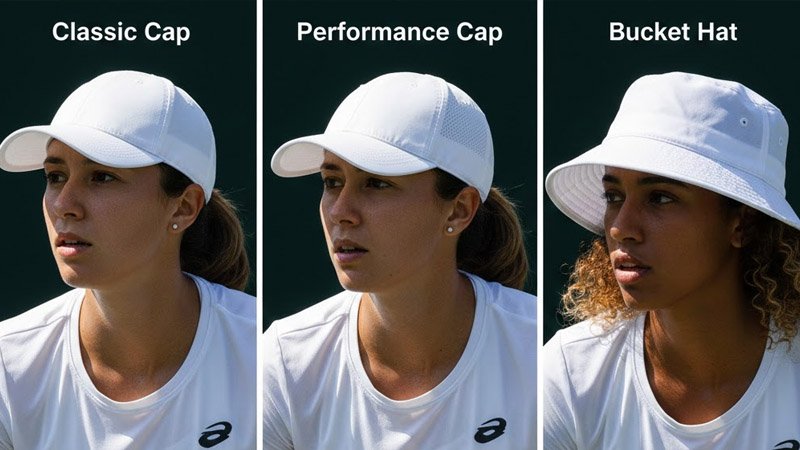
Not all hats perform the same way on court. Here are the most common styles and their strengths.
1) Classic Tennis Caps (Baseball-Style Caps)
These are the most popular option for many players.
Pros
Cons
Best for: Players who want a balanced option for training and matches.
2) Lightweight Performance Caps
These are designed specifically for sports, often with moisture-wicking fabrics, mesh panels, and lighter construction.
Pros
Cons
Best for: Frequent players, competitive players, and hot-weather training.
3) Bucket Hats (Less Common, but Useful in Some Situations)
Bucket hats provide more coverage, including better protection around the face and parts of the neck.
Pros
Cons
Best for: Training sessions, coaching, or non-competitive outdoor use in strong sun.
Types of Tennis Visors (and Who They Suit)
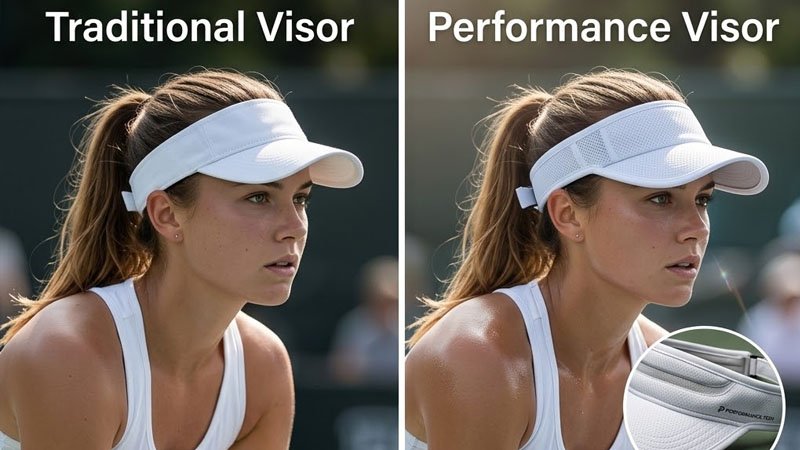
Visors are a favorite among players who prioritize ventilation and an open-top fit.
1) Traditional Tennis Visors
These usually feature a curved brim and an adjustable back strap.
Pros
-
Lightweight and breathable
-
Comfortable in hot weather
-
Easy to wear for many head shapes
Cons
Best for: Players who overheat easily and prefer an open feel.
2) Performance Visors
Modern performance visors often include moisture-wicking linings, ergonomic construction, and more stable fits.
Pros
Cons
Best for: Players who sweat heavily and want lightweight performance gear.
How to Choose the Right Tennis Hat or Visor (What Actually Matters)
A lot of buying guides list features, but the real question is: what should you look for before you buy? Here are the most important criteria.
1) Fit Comes First
Even the best material won’t help if the fit is wrong.
Look for headwear that:
-
Feels secure but not tight
-
Stays stable during serves and lateral movement
-
Doesn’t create pressure points on the forehead
-
Has easy adjustability (Velcro, buckle, elastic, or strap system)
Tip: Test fit while moving, not just while standing still.
2) Sweat Control (Especially in Matches)
If sweat is your biggest problem, prioritize:
This matters for both hats and visors. A stylish design without sweat management can become uncomfortable fast.
3) Breathability and Ventilation
For hot weather, airflow is critical.
Look for:
Good ventilation helps reduce overheating and improves comfort over long sessions.
4) UV Protection and Coverage
If you play outdoors frequently, sun protection should be a top priority.
-
A hat generally provides more coverage than a visor
-
A visor shades the face but leaves the top of the head exposed
-
Fabrics with UPF ratings (such as UPF 30+ or UPF 50+) can offer better UV protection
If you train in strong sun for long periods, this can be a deciding factor.
5) Weight and Balance
Heavy headwear can become distracting, especially in long matches.
Choose options that feel:
The goal is to forget you’re wearing it.
6) Brim Shape and Visibility
The brim should block glare without interfering with vision or ball tracking.
Look for a brim that:
7) Durability and Easy Care
Tennis headwear gets used often and washed often. Check for:
A product that looks good but loses shape after a few washes is not a good long-term choice.
What to Choose Based on Playing Conditions
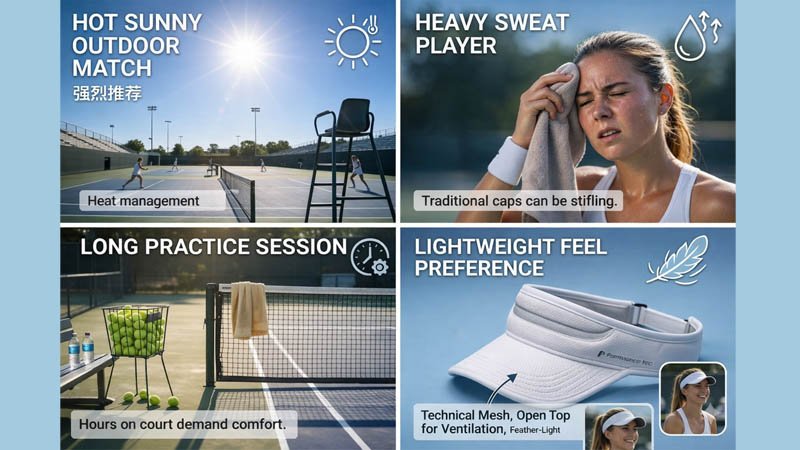
To make the decision easier, here are some quick recommendations by scenario.
For Hot, Sunny Outdoor Matches
Best choice: Lightweight performance hat
Why: Better sun coverage + glare control + sweat management
If you prefer a visor, choose one with a strong sweatband and consider added sun protection for the scalp.
For Players Who Sweat Heavily
Best choice: Performance visor or performance cap with moisture-wicking sweatband
Why: Sweat control and airflow matter most
Pay attention to inner band material and quick-dry performance.
For Long Practice Sessions
Best choice: Lightweight cap or stable visor (depending on your heat tolerance)
Why: Comfort, stability, and reduced distraction become more important over time
For Players Who Prefer a Lighter Feel
Best choice: Tennis visor
Why: Open-top design increases ventilation and reduces heat build-up
For Casual Players or Beginners
Best choice: A comfortable, adjustable cap or visor with basic moisture management
Why: Fit and comfort matter more than advanced features at the start
Avoid these common buying mistakes:
1) Choosing Style Before Fit
A great-looking hat that shifts during play will quickly become annoying.
2) Ignoring Sweat Management
A basic cap may look fine but fail during intense play if it lacks a proper sweatband.
3) Assuming All Visors Offer Enough Sun Protection
Visors help with facial shade, but they do not protect the top of the head like a hat does.
4) Using Heavy or Non-Breathable Materials in Hot Weather
Heat and moisture build-up can reduce comfort and focus.
5) Not Checking Care Instructions
Some headwear loses shape or performance after improper washing.
Care Tips: Keep Your Tennis Hat or Visor Performing Longer
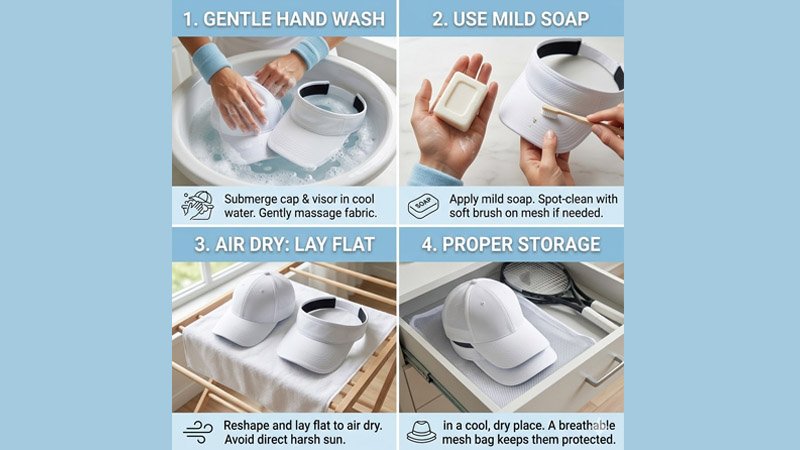
Proper care helps maintain comfort, fit, and appearance.
Cleaning
-
Follow the manufacturer’s instructions
-
Use mild soap when needed
-
Avoid harsh chemicals
-
Hand washing is often safer for shape retention
Drying
Storage
Replacement
Replace your headwear when you notice:
How Brands Can Deliver Better Tennis Headwear (What Makes a Quality Supplier)
For sports brands, clubs, events, and retailers, choosing the right headwear supplier is just as important as choosing the right product style.
High-quality tennis hats and visors require more than a good design idea. They depend on:
-
Material selection
-
Fit consistency
-
Moisture-management performance
-
Durable stitching and construction
-
Reliable sampling and mass production capability
As a high-end custom hat and OEM/ODM manufacturer based in Guangzhou, China, GUANGZHOU EASTLUCKY Hat & Garment Co., Ltd. brings 15 years of expertise in R&D, production, and distribution of hats and embroidered accessories. Guided by the philosophy “Quality as Root, Innovation as Soul,” we provide one-stop solutions from design sampling to mass production, helping global brands build efficient and high-quality supply chains.
For businesses developing tennis headwear lines, this means better control over product quality, customization, and production consistency — all of which directly affect end-user experience.
Final Thoughts: Choose for Performance, Not Just Appearance
A tennis hat or visor may seem like a small detail, but it can make a real difference in comfort and focus — especially in heat, sun, and long matches.
If you want:
-
More sun coverage → choose a tennis hat
-
More airflow and lighter feel → choose a tennis visor
-
Better match performance overall → prioritize fit, sweat control, ventilation, and comfort first
The best tennis headwear is the one that helps you stay focused on the next point — not the sun in your eyes or sweat on your face.
Is a visor better than a hat for tennis?
It depends on your needs. Visors are usually better for airflow and a lighter feel, while hats generally provide better sun coverage.
Do tennis visors protect from UV?
They help shade the face and reduce glare, but they do not cover the top of the head. For stronger all-around sun protection, a hat is often the better choice.
What should I look for in a tennis hat or visor?
Focus on fit, sweat management, breathability, comfort, and sun protection. For outdoor play, UPF-rated materials can also be helpful.
How tight should a tennis hat or visor fit?
It should feel secure during movement but not create pressure or discomfort. If it shifts while serving or running, it may be too loose.
How often should I wash my tennis headwear?
That depends on frequency of play and sweat level. If you play often or sweat heavily, regular cleaning helps maintain hygiene and performance.
How to Wear a Hat With Long Hair (Without Flat, Frizzy Hat Hair)
Long hair and hats can look effortlessly stylish together—but only when the pairing is done right. The most common problems are familiar: flattened roots, frizz, static, awkward ponytail placement, and hats that just don’t sit comfortably over thicker hair.
The good news? You do not need to choose between protecting your hair and looking polished. With the right combination of hat type, hairstyle, fit, and a few simple prep techniques, long hair and hats can work beautifully in every season.
In this guide, you’ll learn:
-
The best hairstyles for different hat styles
-
How to choose hats based on face shape and hair volume
-
How to prevent and fix hat hair
-
Easy hat-and-outfit combinations for different occasions
-
Common mistakes to avoid
Whether you are styling a baseball cap for everyday wear or a wide-brim hat for travel photos, this guide will help you create a look that feels comfortable, flattering, and practical.
Quick Answer: What’s the Best Way to Wear a Hat With Long Hair?
If you want a simple rule to start with, use this:
Structured hats (like baseball caps and fedoras) usually look best with low hairstyles such as a low ponytail, low bun, or braid.
Soft hats (like beanies) often look better with natural texture, loose waves, or a relaxed low bun.
To avoid hat hair:
-
Keep the hat snug, not tight
-
Add light volume at the roots before wearing the hat
-
Choose a hairstyle that doesn’t create pressure points under the crown
-
Adjust the hat position instead of pushing it down too low
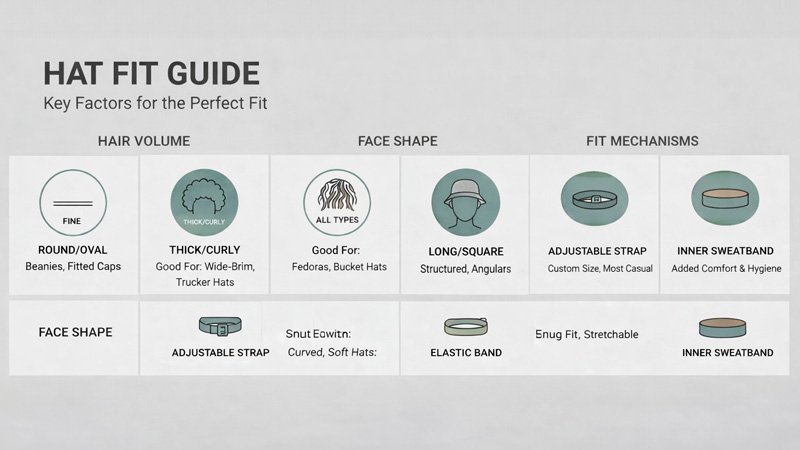
A hat that looks great on display may feel completely different when worn over long, thick, or styled hair. Before choosing a style, consider these four factors:
1) Hair Volume and Thickness
Long hair adds bulk—especially if tied up.
-
Fine or flat hair: Choose hats with a slightly structured crown to avoid a lifeless, pressed-down look.
-
Thick or heavy hair: Look for hats with enough crown depth and comfortable fit so the hat doesn’t sit too high.
-
Curly hair: Soft or adjustable hats are often easier to wear without disrupting curl shape.
2) Face Shape
Face shape affects how balanced a hat looks.
-
Round face: Medium to wide brims, angled placement, and higher crowns can help elongate the face.
-
Oval face: Most hat styles work well—great for experimentation.
-
Long face: Lower crowns and hats worn slightly higher (not pulled down too far) help balance facial length.
-
Square face: Softer lines, curved brims, and loose hair around the face can soften strong angles.
-
Heart-shaped face: Medium brims and styles with balanced crown proportions usually work well.
3) Occasion and Function
A hat for a beach trip is not the same as a hat for commuting or a winter outfit.
-
Everyday / streetwear: Baseball caps, dad caps, beanies
-
Travel / vacation: Wide-brim hats, packable sun hats
-
Smart casual / fashion styling: Fedora, beret
-
Cold weather: Knits and lined winter caps
-
Outdoor activity: Lightweight caps with breathable sweatbands
4) Fit (Most Important for Long Hair)
Fit is often the hidden reason a hat “doesn’t work.”
A hat that is too tight can cause:
A good fit should feel secure but comfortable, with no strong pressure on the crown.
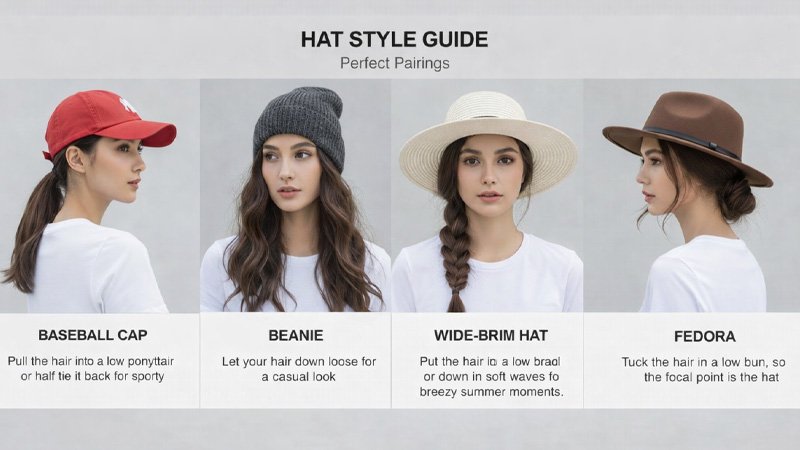
This is where most people get the best results: match the hairstyle to the hat structure.
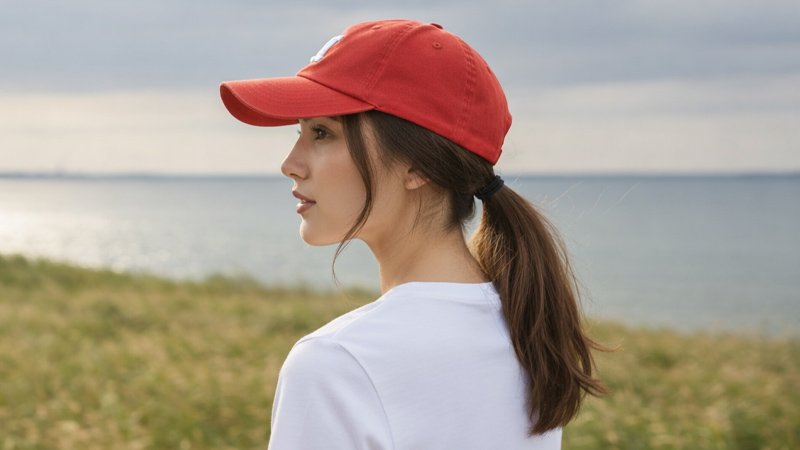
Baseball caps are one of the easiest hats to wear with long hair, but the hairstyle placement matters a lot.
Low Ponytail (Most Versatile)
A low ponytail is the easiest and most flattering choice.
Why it works:
It avoids pressure under the cap and keeps the back of the head smooth.
Best for:
Daily wear, commuting, sports casual looks
Tips:
-
Tie the ponytail below the cap opening
-
Leave a few face-framing strands for softness
-
Keep the cap slightly relaxed, not over-tightened
Low Braid
A simple braid keeps long hair neat and reduces tangling.
Why it works:
Great for windy days, active days, and travel.
Best for:
Outdoor walks, errands, casual outfits
Half-Up, Half-Down
This style works well when you want a more styled look while still wearing a cap.
Why it works:
Adds shape and volume without forcing all hair under the hat.
Best for:
Streetwear looks, social outings, casual content shoots
Avoid With Baseball Caps
-
High buns (usually too bulky under the crown)
-
High ponytails (awkward with most cap constructions unless the cap is designed with a ponytail opening)
-
Heavy root product that gets flattened quickly
2) Beanie + Long Hair
Beanies are comfortable and stylish, but they can create static, flatten the crown, and make the face look larger if styled incorrectly.
Best Hairstyles for a Beanie
Loose Hair With Soft Waves
This creates balance and keeps the look relaxed.
Why it works:
The soft volume below the hat offsets the compact shape of the beanie.
Best for:
Fall/winter outfits, cozy casual styling
Low Messy Bun
A relaxed low bun works especially well with oversized beanies.
Why it works:
It keeps hair off your neck while maintaining a soft silhouette.
Best for:
Layered winter outfits, sweaters, coats
Two Loose Braids
A playful, practical option that works in cold weather and windy conditions.
Why it works:
Helps control long hair and reduces friction tangles under scarves/coats.
Beanie Styling Tips for Long Hair
-
Don’t pull the beanie too low over the forehead if it shortens your face shape
-
Keep some hair visible around the cheeks/jawline for balance
-
Use anti-static spray or a light leave-in conditioner in dry weather
Wide-brim hats can look elegant and photogenic, but they need balanced styling so the look doesn’t feel overly heavy.
Best Hairstyles for Wide-Brim Hats
Loose Waves / Natural Hair Down
This is a classic combination.
Why it works:
The softness of the hair complements the dramatic shape of the brim.
Best for:
Travel, vacations, brunch, spring/summer styling
Side Braid
A side braid adds shape and keeps hair under control in wind.
Why it works:
Adds visual interest and works well in photos.
Best for:
Outdoor events, beach or garden settings
Low Chignon / Low Bun
This creates a refined look for dressier outfits.
Why it works:
Keeps attention on the hat shape and neckline.
Best for:
Events, weddings, smart casual looks
Wide-Brim Hat Mistakes to Avoid
-
Too much volume on top of the head (can make the hat sit awkwardly)
-
Very tight hairstyles that make the look severe
-
Ignoring wind (a loose hairstyle may look good indoors but become unmanageable outside)
4) Fedora + Long Hair
Fedoras add structure and polish, making them ideal for elevated casual outfits.
Best Hairstyles for a Fedora
Sleek Low Ponytail
A clean, minimal choice that pairs well with tailored outfits.
Straight Hair Down (Center or Side Part)
Keeps the look sophisticated and balanced.
Low Bun With Face-Framing Pieces
A great option for a polished but softer finish.
Fedora Styling Tip
Because a fedora already has strong lines, pair it with a hairstyle that is either:
This prevents the hat and hair from competing visually.
If you usually choose your hairstyle first, use this section to match the hat afterward.
1) Ponytail
Best hats: Baseball caps, sporty caps, some sun hats
Best placement: Low ponytail (most comfortable and flattering)
Avoid: High ponytail under standard caps unless the hat is made for it
2) Braids
Best hats: Beanies, baseball caps, wide-brim hats
Why braids work so well: They reduce tangling, hold shape, and look intentional
3) Buns
Best hats: Beanies, some wide-brim hats (with low bun), winter hats
Best placement: Low bun / low chignon
Avoid: High buns under structured hats
4) Hair Down
Best hats: Beanies, fedoras, wide-brim hats
Tips: Add soft texture to prevent the hair from looking too flat after removing the hat
5) Half-Up Hairstyles
Best hats: Baseball caps, casual hats, some fedoras
Why it works: Gives shape and keeps some volume without crowding the crown
How to Wear a Hat With Long Hair Based on Face Shape
Face shape matters—but hat position and hairstyle often matter just as much. If a hat “looks wrong,” try changing the angle and hair around the face before giving up on the style.
Round Face
Goal: Add length and visual balance
Try:
-
Medium or wider brims
-
Slightly higher crown styles
-
Side part or face-framing strands
-
Hair down or low ponytail with some volume
Avoid: Pulling the hat too low over the forehead
Long Face
Goal: Avoid making the face look longer
Try:
Avoid: Extra height on top (high buns + high crown hats)
Square Face
Goal: Soften angles
Try:
Heart-Shaped Face
Goal: Balance a wider forehead and narrower chin
Try:
Oval Face
Goal: Maintain balance (most styles work)
Try: Experiment with hat types, brim widths, and hairstyle placement
How to Prevent Hat Hair (Flat Roots, Frizz, and Static)
This is one of the biggest reasons people avoid hats. A few small changes can make a huge difference.
Before You Put on the Hat
1) Start With Dry Hair
Wearing a hat on damp hair often leads to flattening and shape marks.
2) Add Light Root Volume
Use a lightweight volumizing spray, dry shampoo, or a quick lift at the roots.
Tip: Avoid heavy styling creams near the crown if you plan to wear a hat.
3) Set Your Parting First
If your part changes after the hat goes on, your hair can look messy when you remove it. Set your part before wearing the hat.
4) Use a Smooth Barrier (Optional)
A silk or satin scarf/headband under certain hats can reduce friction—especially useful for curly hair or winter static.
While Wearing the Hat
1) Don’t Overtighten
A hat should feel secure, not compressive.
2) Position It Intentionally
Instead of forcing the hat low, try slightly adjusting the angle:
3) Match the Hairstyle to the Hat
Pressure points cause dents and awkward shape. Low styles usually reduce this problem.
After Taking Off the Hat (Quick Fix)
If your hair looks flat after removing the hat:
-
Flip your head slightly and shake out the roots with your fingers
-
Use dry shampoo or texturizing spray at the crown
-
Change your part temporarily for instant lift
-
Smooth flyaways with a tiny amount of serum
-
Use a quick low ponytail or braid if you’re on the go
Styling by Occasion: Hat and Outfit Combinations for Long Hair
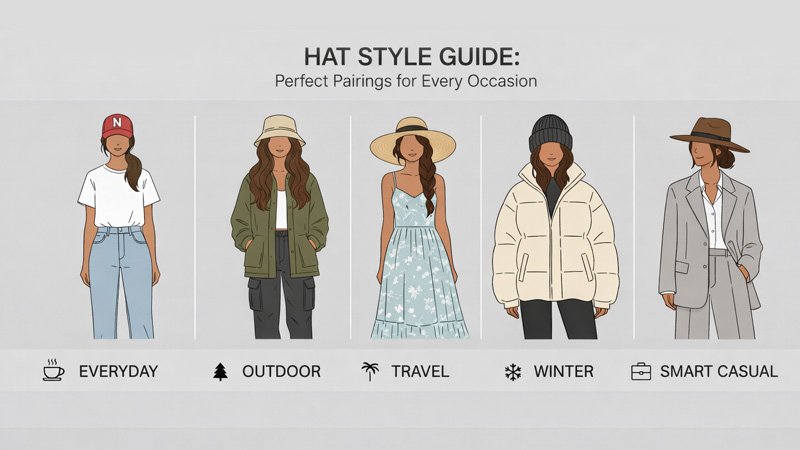
A stylish hat look is not only about the hat—it’s the full combination of hair, outfit, and occasion.
1) Everyday Casual (Easy and Fast)
Hat: Baseball cap / dad cap
Hair: Low ponytail or braid
Outfit: T-shirt, sweatshirt, jeans, sneakers
This is the easiest combination for daily wear and works well when you need a neat look with minimal effort.
2) Travel / Vacation (Comfort + Photos)
Hat: Wide-brim sun hat
Hair: Loose waves or side braid
Outfit: Flowy dress, linen set, sunglasses
Choose a hairstyle that still looks good in wind and after a few hours of wear.
3) Sporty / Outdoor Day
Hat: Breathable cap
Hair: Braids or low ponytail
Outfit: Activewear or lightweight layers
Braids are especially useful here because they stay secure and reduce tangling.
4) Fall/Winter Cozy Look
Hat: Beanie
Hair: Soft waves, low bun, or loose braid
Outfit: Knit sweater, coat, scarf
Keep some hair visible around the face to prevent the beanie from looking too heavy.
5) Smart Casual / Elevated Look
Hat: Fedora
Hair: Sleek low ponytail or low bun
Outfit: Blazer, trousers, boots, structured coat
This combination works well for polished outfits without feeling overdone.
Common Mistakes to Avoid When Wearing Hats With Long Hair
Even a good hat and hairstyle can look off if one detail is wrong. Here are the most common mistakes:
1) Pulling the Hat Too Low
This can flatten your crown, shorten your face visually, and make the entire look feel heavy.
2) Choosing the Wrong Hairstyle Height
High buns and high ponytails often fight against structured hats.
3) Ignoring Hair Texture
Fine hair, thick hair, and curly hair behave differently under hats. Style and prep accordingly.
4) Wearing an Overly Tight Hat
This causes discomfort and makes hat hair worse.
5) Forgetting the Occasion
A stylish hat is also a functional choice. Consider weather, movement, and how long you’ll wear it.
Pro Tip: Why Hat Fit and Construction Matter More Than Most People Think
Many styling problems are actually fit and construction problems, not “hair problems.”
For example:
-
A cap with insufficient crown depth may sit too high over thicker long hair
-
A rigid sweatband may create pressure lines
-
Poorly balanced crown proportions can affect how flattering the hat looks on different face shapes
This is why brands increasingly pay attention not only to style, but also to wearability, comfort, and target-user fit.
At GUANGZHOU EASTLUCKY Hat & Garment Co., Ltd., we understand that a great hat needs to do more than look good in photos. As a high-end custom hat and OEM/ODM manufacturer based in Guangzhou, China, with 15 years of expertise in professional R&D, production, and distribution of hats and embroidered accessories, we help global clients develop products that balance design, comfort, and consistent production quality. Guided by our philosophy, “Quality as Root, Innovation as Soul,” we provide one-stop solutions from sampling to mass production for efficient, high-quality supply chain support.
For brands targeting women’s casualwear, outdoor use, sports styling, or seasonal fashion, details like crown depth, sweatband comfort, fabric selection, and overall fit can directly affect the end-user experience—especially for customers with long or thick hair.
Final Thoughts
Wearing a hat with long hair is all about balance: balancing hat structure with hairstyle placement, comfort with style, and practicality with your personal look.
If you remember only three things, start here:
-
Match the hat type to the hairstyle height
-
Prioritize fit to reduce flat roots and discomfort
-
Use small prep steps to prevent hat hair and frizz
Once you get the combination right, hats become one of the easiest ways to elevate your look while staying comfortable in every season.
FAQ: How to Wear a Hat With Long Hair
How do I wear a hat without flattening my long hair?
Use a lightweight volumizing product before wearing the hat, avoid overtightening, and choose a low hairstyle like a low ponytail or braid. After removing the hat, shake the roots and use dry shampoo for quick lift.
Is it better to wear long hair up or down with a hat?
It depends on the hat type. Structured hats (like baseball caps and fedoras) usually work better with low ponytails or low buns. Soft hats (like beanies) often look great with hair down and soft texture.
What is the best hat for long thick hair?
Look for hats with enough crown depth and a comfortable fit. Adjustable caps, relaxed beanies, and well-balanced wide-brim hats are often easier to wear with thick hair than shallow, rigid styles.
Can I wear a baseball cap with a high ponytail if I have long hair?
Only if the cap is specifically designed with a ponytail opening or if the fit allows it comfortably. For standard baseball caps, a low ponytail usually looks and feels better.
How do I prevent static hair when wearing a beanie?
Use a light leave-in conditioner or anti-static spray, avoid overly dry hair, and consider a smoother inner layer (such as satin/silk) to reduce friction.
Which hairstyle is best for windy weather with a hat?
Braids (single or double) are one of the best options because they stay secure, reduce tangles, and still look intentional after hours of wear.
Need Custom Hat Solutions for Your Brand?
If you’re developing a hat collection for fashion, sports, outdoor, or promotional use, product comfort and fit are just as important as style. EASTLUCKY provides OEM/ODM support from design sampling to mass production, helping brands create hats that are both visually strong and comfortable to wear.
Contact us to discuss your next custom hat project.
Eco-Friendly Hat Materials and Trends for Brands: A Practical Guide to Sustainable Caps, Beanies, Buckets & More
Sustainable headwear is no longer a “nice-to-have.” For brands, distributors, and promotional buyers, hats must now deliver style, comfort, durability, and credible sustainability claims—often with audit-ready documentation and clear chemical-safety expectations.
But here’s the reality: a hat isn’t truly eco-friendly just because the crown fabric is organic or recycled. Real sustainability is built across the full product system—materials, chemicals, manufacturing footprint, durability, and traceability—and it must be communicated in a way buyers can verify.
This practical guide breaks eco-friendly hat manufacturing into tools you can use immediately: material trade-offs, PFAS-free finishing options, a hat BOM (bill of materials) map, trend signals, and a buyer-ready RFQ checklist—covering mainstream and niche styles from caps to beanies, buckets, berets, visors, straw hats, and bump caps.
About the Manufacturer
GUANGZHOU EASTLUCKY Hat & Garment Co., Ltd. is a high-end custom hat and OEM/ODM manufacturer based in Guangzhou, China, with 15 years of expertise in professional R&D, production, and distribution of various hats and embroidered accessories. Guided by the philosophy “Quality as Root, Innovation as Soul,” we provide global clients with one-stop solutions from design sampling to mass production—helping brands build efficient, high-quality supply chains.
Full-category hat customization includes:
-
Casual & Sports: Baseball Cap, Snapback Cap, Trucker Cap, Golf Cap, Visor Cap
-
Fashion & Trend: Bucket Hat, Dad Hat, 5 Panel Cap, Beanie, Beret
-
Functional & Protective: Bump Cap, Straw Hat, and more
We support comprehensive customization of materials, craftsmanship, and styles.
1) What “Eco-Friendly” Means for Hats (Beyond the Fabric)
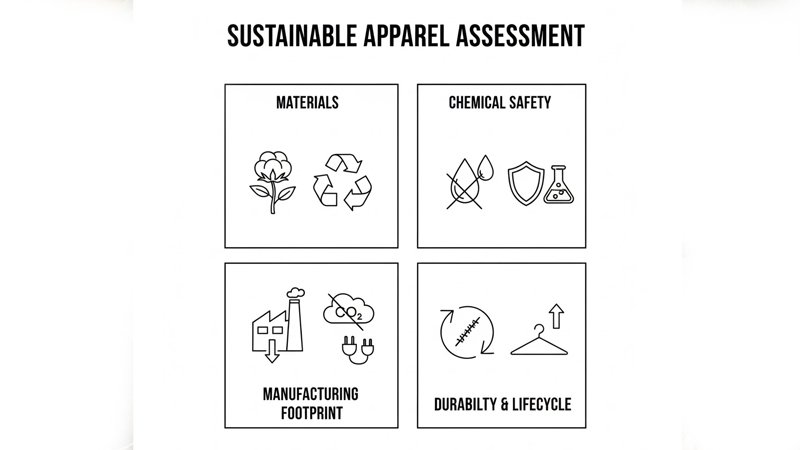
A genuinely sustainable hat should perform across four dimensions:
1) Materials (what it’s made of)
-
Organic or recycled fibres are a strong start—but claims should be by part (crown, visor, mesh, sweatband, closure, etc.)
-
Lower-impact fibres and responsible sourcing reduce upstream footprint
2) Chemical safety (skin-contact + environmental impact)
-
Performance finishes must be clearly defined
-
Increasingly, buyers request PFAS-free water repellency where DWR is needed
3) Manufacturing footprint (how it’s made)
-
Dyeing, cutting yield, waste handling, and packaging can meaningfully change impact
-
Smarter sampling reduces development waste
4) Durability + lifecycle (how long it lasts)
-
Sustainable headwear should be built to last—strong seams, stable brims, durable branding
-
Repairable components (where feasible) extend product life and reduce replacements
Buyer takeaway: Sustainability should be verifiable—with clear BOM disclosure, compliance statements, and traceability.
2) Eco-Friendly Hat Materials: Pros, Trade-Offs, Best Use
Material choice determines both performance and sustainability. Below are the most practical options used today—and when to use them.
Organic Cotton
Why brands choose it: soft hand feel, breathable, familiar to consumers, strong sustainability messaging.
Best for: Dad Hats, Baseball Caps, Bucket Hats, 5 Panel Caps, lifestyle programs, merch.
Trade-offs: can cost more; dyeing and finishing still matter—organic fibre doesn’t guarantee low-impact processing.
Recycled Polyester (rPET)
Why brands choose it: durable, quick-dry, excellent for performance, widely scalable.
Best for: Golf Caps, Visors, Performance Baseball Caps, Trucker Crown fabrics, outdoor activations.
Trade-offs: not biodegradable; hand-feel varies; when “sustainability” is a key claim, documentation and traceability matter.
Hemp Blends
Why brands choose it: naturally durable, rustic texture, outdoor/workwear aesthetics, good moisture behavior.
Best for: Bucket Hats, structured lifestyle caps, eco-heritage branding.
Trade-offs: texture isn’t always suitable for sleek fashion lines; some blends can be more challenging for consistent color matching.
Lyocell / TENCEL™ (Often Used Strategically)
Why brands choose it: smooth, breathable, premium touch.
Best for: linings, sweatbands, premium capsules, comfort-first designs.
Trade-offs: higher cost; best applied where it adds maximum perceived value (skin-contact zones).
Recycled Mesh (Trucker Hats)
Why brands choose it: reduces virgin plastic content while keeping iconic trucker structure.
Best for: Trucker Caps for promotions and summer programs.
Trade-offs: mesh stiffness and hand feel vary—approve swatches early; color matching to crown fabric requires sampling discipline.
3) The Hat Sustainability BOM Map: Where Most Sustainability Gets Won (or Lost)
Hats are multi-component products. A “green” main fabric can be undermined by hidden parts: brim inserts, buckram, sweatbands, adhesives, embroidery backing, and hardware.
Use this checklist as a BOM map when developing eco-friendly styles:
Key Parts to Specify (and Why)
-
Crown/visor fabric: defines the main sustainability story and hand feel
-
Mesh (trucker): affects comfort, structure, and color matching
-
Brim insert/stiffener: drives shape retention and performance; sustainability is often overlooked here
-
Buckram/structure: controls silhouette for structured caps (snapbacks, some 5 panels)
-
Sweatband: skin-contact comfort + potential chemical complexity if performance finishes are added
-
Thread + embroidery backing: impacts wash durability, comfort, and material mix
-
Closures/hardware: coatings and corrosion resistance can matter by market
-
Labels + packaging: visible sustainability signals (FSC cartons, reduced plastics)
Best practice: request “composition by part” (not just an overall fabric claim). This is what serious buyers and brand teams increasingly expect.
4) Eco-Friendly Finishes: Low-Impact Color and PFAS-Free Performance
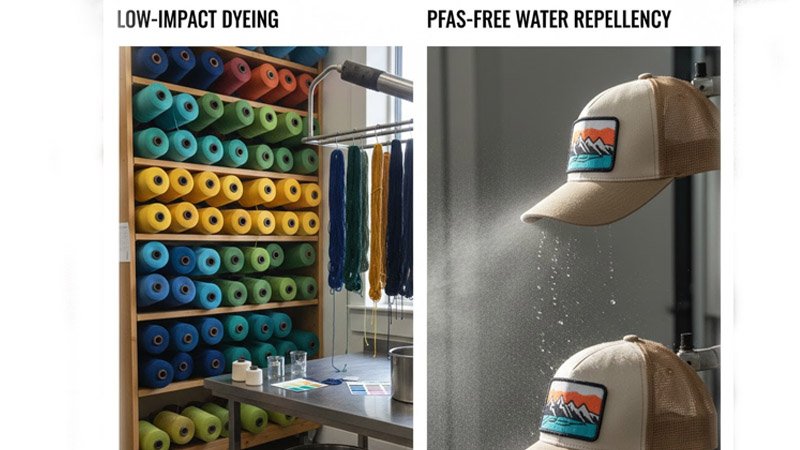
Low-Impact Color (When Programs Are Stable)
For repeat programs with stable color palettes, solution/dope dyeing can reduce resource intensity compared with conventional dyeing routes and can improve shade consistency across production lots.
Trade-offs: color flexibility can be lower; some programs require better planning (and sometimes higher MOQs).
PFAS-Free Water Repellency (When You Need DWR)
Outdoor and performance hats often request water repellency—but many buyers now specify PFAS-free DWR for environmental reasons.
PFAS-free finishing—how to make it procurement-ready
-
Specify “PFAS-free DWR” explicitly (avoid vague “eco DWR”)
-
Define performance expectations: light drizzle vs prolonged rain exposure
-
Validate via sampling and align acceptance criteria before bulk
Reality check: PFAS-free options can vary in hand feel and durability. Align priorities early—water beading vs softness vs cost—then validate with samples.
5) Trends Shaping Sustainable Headwear (What Brands Are Doing Now)
Trend 1: “BOM Transparency” Becomes Standard
More buyers want material disclosure by part, not marketing claims. Expect increasing requests for BOM-by-part composition, supplier declarations, and lot-level traceability.
Trend 2: PFAS-Free Becomes the Default Ask in Performance
Brands are raising chemical-safety expectations, especially for outdoor and sports programs. PFAS-free DWR requests are becoming more common in RFQs.
Trend 3: Comfort-First Sustainability
Consumers don’t reward sustainability if comfort is compromised. Premium feel—better sweatbands, softer hand-feel, skin-contact materials—often decides reorders.
Trend 4: Better Durability = Better Sustainability
Durability is sustainability. Strong seams, stable brims, and wash-durable branding reduce replacements and returns.
Trend 5: Packaging and Logistics Optimization
FSC cartons, reduced polybags, right-sized packaging, and consolidated shipping are becoming baseline requirements for many programs.
6) Style-by-Style Recommendations (Materials That Make Sense)
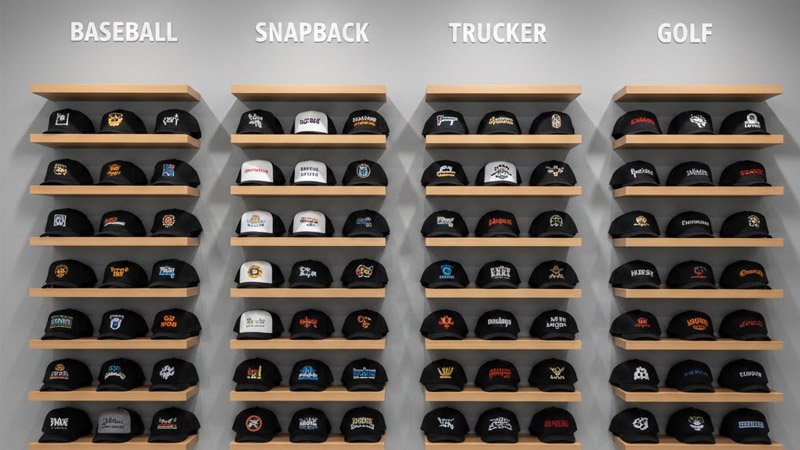
Below are practical starting points for each of your mainstream and niche hat categories.
Casual & Sports
Baseball Cap / Snapback / Golf Cap / Visor
-
Lifestyle: organic cotton + recycled thread + minimal packaging
-
Performance: rPET + breathable construction; add PFAS-free DWR only if needed
-
Visors: sweatband choice and comfort specs matter most
Trucker Cap
Fashion & Trend
Bucket Hat / Dad Hat / 5 Panel / Beanie / Beret
-
Bucket & Dad: organic cotton or hemp blends depending on target aesthetic
-
5 panel: choose stable fabrics for clean geometry and shape retention
-
Beanie: prioritize comfort + pilling control (material selection and yarn quality matter)
-
Beret: premium hand feel and structure matter—spec materials carefully for shape
Functional & Protective
Bump Cap / Straw Hat
-
Bump caps: prioritize structure, performance, and compliance first; then optimize sustainability in materials and packaging
-
Straw hats: focus on consistent craftsmanship, fibre sourcing, and protective packaging to reduce damage in transit
7) Buyer-Ready RFQ Checklist (Copy-Paste Template)
Use this RFQ structure to get accurate quotes and avoid vague “sustainable” claims.
A) Product Definition
-
Style: Baseball / Snapback / Trucker / Golf / Visor / Bucket / Dad / 5 Panel / Beanie / Beret / Bump Cap / Straw
-
End use: promo / lifestyle / performance / outdoor / protective
-
Target market(s): US/EU/UK etc.
-
Target order qty + delivery window
B) BOM by Part (Required)
For each part: material + % composition + any proof requirements
C) Color & Dye Route
-
Color references (Pantone or physical sample)
-
Preferred route: conventional dye / solution-dope dyed (if applicable)
-
Any durability targets (rubbing/sweat/wash) if your program requires them
D) Finishes
E) Packaging
-
FSC cartons required? Yes/No
-
Polybag policy (reduced/none)
-
Label/barcode requirements
8) Three Sustainable “Builds” You Can Copy
Build 1: Lifestyle Merch (Best for Dad Hat / Baseball / Bucket)
-
Organic cotton main fabric
-
Recycled embroidery thread
-
FSC packaging option
-
Best for: brand drops, events, schools, corporate merch
Build 2: Performance Active (Best for Golf Cap / Visor / Sports Caps)
-
rPET main fabric
-
Lightweight trims and breathable construction
-
PFAS-free DWR only if needed for weather exposure
-
Best for: outdoor events, sports activations, performance retail
Build 3: Trucker Program (Best for Trucker Caps)
-
Recycled mesh + rPET or organic cotton crown
-
Comfort-focused backing choice for embroidery
-
Early swatch approval to lock hand feel + color match
-
Best for: promotions, summer programs, lifestyle brands
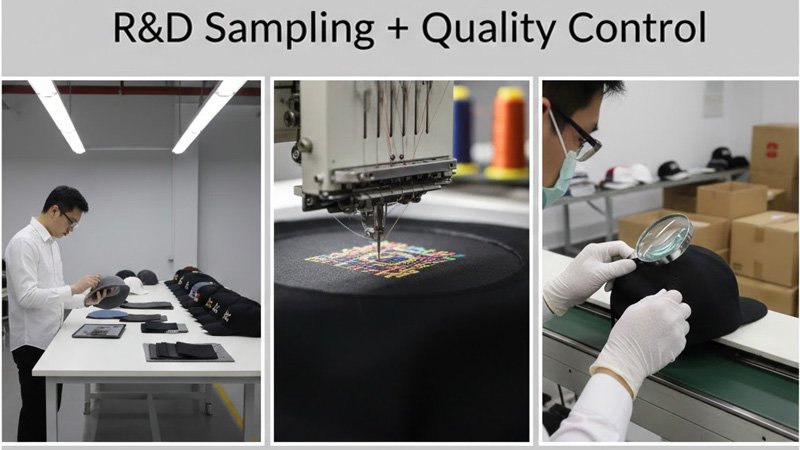
At GUANGZHOU EASTLUCKY Hat & Garment Co., Ltd., we help brands develop eco-friendly headwear that is practical to produce and credible to claim—through structured sampling, quality-first manufacturing, and clear material/finish specifications.
Next steps (choose one):
-
Request material swatches (organic cotton / rPET / hemp blends / recycled mesh)
-
Request a BOM sustainability review (send your tech pack)
-
Request a PFAS-free performance sample plan (tell us end use + target market)
Do Trucker Hats Protect You from the Sun? A Guide to UV Protection, Hat Styles, and Smart Upgrades
Trucker hats are often a go-to choice for hot weather, offering a breathable design and a stylish look. But when it comes to sun protection, how effective are they? Do trucker hats really shield you from UV rays, or is the protection just partial? This guide answers that question and helps you choose the right hat for maximum sun safety. Whether you want to keep the classic trucker look or upgrade to a more protective style, you’ll get all the information you need.
Featured Snippet Intro:
Do trucker hats protect you from the sun? While trucker hats provide partial sun protection by shading the forehead and eyes, they leave ears, neck, and cheeks exposed. For better coverage, especially during prolonged outdoor exposure or high UV conditions, consider upgrading to a wide-brim hat or adding a neck flap. Use sunscreen and sunglasses to fill in the gaps for complete sun safety.
1) The Short Answer: What a Trucker Hat Protects
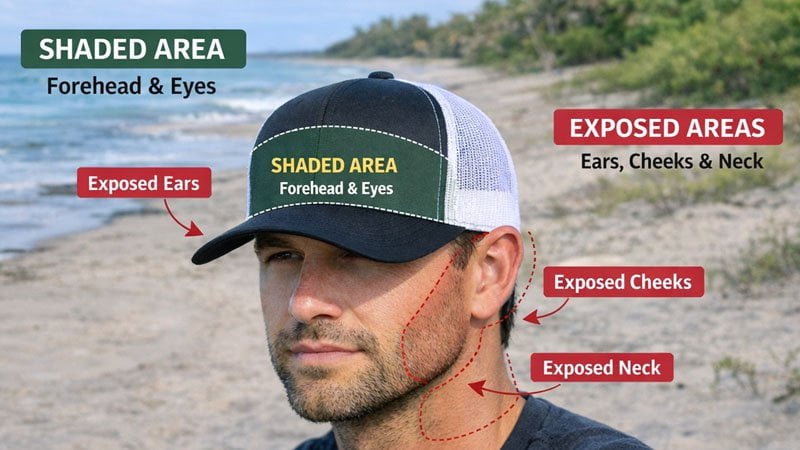
A trucker hat does provide partial sun protection, but it does not cover all of your skin. Here’s how it works:
-
Shields: The brim blocks UV rays from your forehead and eyes, reducing the intensity of direct sunlight.
-
Exposes: The ears, neck, and cheeks are often left exposed, which increases the risk of sunburn in those areas, especially with prolonged sun exposure. The mesh panels at the back also allow UV rays to pass through more easily than solid fabrics.
So while a trucker hat can be effective for short outdoor breaks, it’s not enough if you’re out in the sun for extended periods.
2) Use This 10-Second Test: When Is a Trucker Hat “Enough”?
To determine if a trucker hat offers sufficient protection, assess these three key factors:
A) UV Conditions (Intensity)
-
Low UV: Early morning, late afternoon, cloudy days, or winter sun
-
High UV: Midday, clear skies, or summer heat
B) Exposure Time
-
< 30 minutes: The brim + sunscreen is usually sufficient
-
30–120 minutes: Protection gaps start to add up, and you’ll need to cover more areas
-
2+ hours: A wider-brimmed hat or neck-flap design is recommended for full protection
C) Reflective Surfaces
When near water, sand, snow, or light-colored concrete, UV rays bounce off and hit your skin from the side or below. In these environments, a standard trucker hat alone will not be enough.
Practical Rule:
-
Short time + low UV + non-reflective setting → a trucker hat may be sufficient with sunscreen and sunglasses
-
Long exposure OR high UV OR reflective setting → opt for a wide-brim hat or neck-flap cap + sunscreen
3) Shade Isn’t Enough: Understanding UPF and Fabric Choice
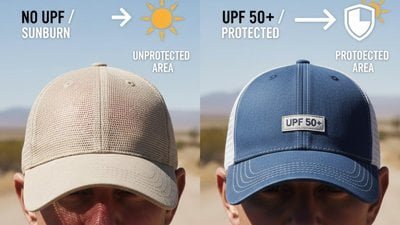
While a trucker hat may provide shade, shade alone doesn’t guarantee protection. Here’s why:
A) Shade (Brim Geometry)
The brim blocks direct UV rays from above but doesn’t shield the sides of your face or neck. Depending on the brim length and angle, a trucker hat may leave important areas exposed.
B) UPF (Ultraviolet Protection Factor)
UPF is a measure of how well a fabric blocks UV radiation.
-
UPF 50: Only 2% of UV passes through, providing excellent protection.
-
No UPF Label: Means the fabric may not block UV effectively, making it less reliable for long outdoor exposure.
Important: Even when a hat provides shade, fabrics with low UPF (like mesh) might still allow UV through, which means you’re not fully protected.
4) Where a Trucker Hat Falls Short (And How to Fix It)
Trucker hats are great for casual wear, but they’re not designed for maximum sun protection. These are the common weak points:
-
Ears: Often unprotected by the small brim
-
Neck: The back of the neck is highly exposed to UV
-
Cheeks & Sides of Face: Only the forehead is shaded, while your cheeks and jawline are left vulnerable
-
Mesh Panels: Allow UV rays to pass through, reducing the overall protection
In high UV conditions or for longer durations, these weak spots could lead to sunburn.
5) A Simple Brim Size Guide: What You Need to Know
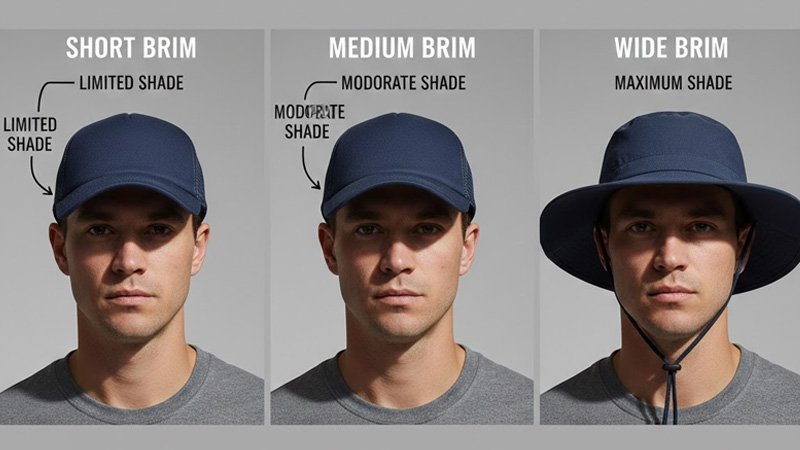
The brim of your hat plays a critical role in UV coverage. Here’s how it impacts protection:
Standard Cap Brim (Common for Trucker Hats)
-
Best for forehead and eyes
-
Limited shade for cheeks and jawline
-
No protection for ears and neck
Wide-Brim Hats
-
Offers full coverage for face, ears, and neck
-
Best for high UV exposure or longer periods outdoors
Neck-Flap (Legionnaire) Caps
-
Provides ear and neck protection while still offering cap-like comfort
-
Ideal for sports, work, or long outdoor hours
Tip: If you want better protection, brim size matters—consider switching to a wider brim for more comprehensive coverage.
6) Smart Materials and Fabric Choice: What to Look for
Not all fabrics block UV equally. Here’s a breakdown of what works:
Best Materials for UV Protection
-
Dense polyester or nylon fabrics offer the best UV blocking performance
-
Tightly woven cotton works better than loose weave fabrics
-
UPF-rated textiles guarantee a strong level of protection
What to Avoid
Color Consideration: Darker colors absorb more UV, but fabric density is the primary factor in UV protection. If comfort and glare reduction are important, choose a darker underbrim.
7) How to Upgrade a Trucker Hat for Better Sun Protection
If you love the trucker hat look but want more sun protection, consider these two upgrade paths:
Route A: Keep the Classic Look (Minimal Change)
Ideal for lifestyle brands or everyday wear.
-
Denser or UPF-rated front panel: Helps block UV where it matters most.
-
Longer brim (2.75–3 inches): Adds more shade without changing the classic style.
-
Darker underbrim: Helps reduce glare, improving eye comfort.
-
Layered habits: Sunscreen for ears, neck, and cheeks + UV-blocking sunglasses.
Route B: Maximize Sun Protection (For High UV Environments)
Ideal for outdoor workers, athletes, and long exposure.
-
Replace mesh with UV-blocking ventilation: Tightly woven micro-perforated fabrics can keep you cool while blocking more UV.
-
Add a neck flap (clip-on or integrated): Protects vulnerable areas like the ears and neck.
-
Full UPF-rated construction: Ensure all panels are designed to block UV, not just the front.
-
Sweat-wicking and cooling features: Keep you comfortable and ensure the hat stays on during long activities.
8) Trucker Hat Sun Protection Checklist
Use this checklist to evaluate your trucker hat’s effectiveness in sun protection:
| Feature |
Effect on Protection |
| Brim Length |
A longer brim (2.75–3 inches) offers better shade for the face. |
| Fabric (UPF-rated) |
Dense fabrics like polyester or nylon block more UV than thin or open-weave fabrics. |
| Mesh Panels |
Mesh allows UV rays to pass through—choose solid fabrics for better coverage. |
| Darker Underbrim |
Helps reduce glare and protects eyes from reflected UV. |
| Neck Flap (Clip-on or Integrated) |
Provides added coverage for ears and neck, which are often exposed in standard caps. |
| Sunscreen |
Apply to exposed areas (ears, neck, cheeks, etc.) for added protection. |
| Sunglasses |
Protects eyes from UV rays, especially in reflective environments. |
Tip: If you’re spending more than 30 minutes outdoors, combine your trucker hat with sunscreen and sunglasses for optimal protection.
9) FAQs
Can I make a trucker hat more protective without changing its look?
Yes. Upgrade the front panel to a denser or UPF-rated fabric, use a slightly longer brim, and add a darker underbrim. Then apply sunscreen for ears, neck, and cheeks and use sunglasses.
Are trucker hats safe for kids under strong sun?
For long sun exposure, wide-brim or neck-flap designs are safer because kids’ skin is more sensitive, especially on the ears and neck. If using a trucker hat, make sure to apply sunscreen and consider a neck flap.
Can reflective UV cause damage even if I sit in the shade?
Yes. UV can reflect off surfaces like water, sand, and snow, hitting your skin from below or from the sides. Shade blocks direct UV but doesn’t shield from reflected rays.
How often should I reapply sunscreen if I’m wearing a hat?
A hat reduces exposure to the face, but ears, neck, and other exposed areas still need sunscreen. Reapply sunscreen based on the product’s instructions and more frequently if you’re sweating or near water.
10) Create Smarter Trucker Hats with Sun Protection (OEM/ODM Support)
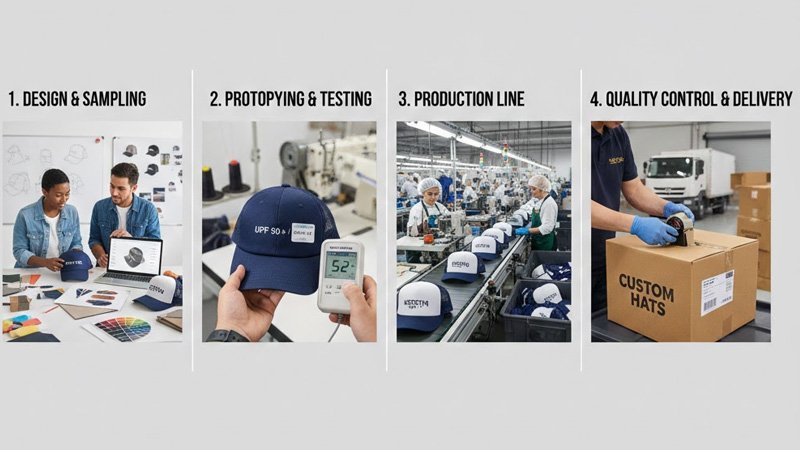
If you’re designing hats for retail or outdoor work, ensure your trucker hats combine style with sun safety. Whether it’s a custom wide-brim, neck-flap, or UPF fabric, GUANGZHOU EASTLUCKY Hat & Garment Co., Ltd. provides expert solutions for quality and performance.
With over 15 years in custom hat manufacturing and expertise in OEM/ODM services, we offer tailored designs, fast sampling, and high-quality production that meets sun protection standards. Contact us today to start creating custom trucker hats that balance breathability, comfort, and UV safety.
This version should be more optimized for Google search, easy to read, and practical for consumers seeking quick, actionable information about trucker hats and sun protection. If you need further adjustments or additional content, feel free to ask!
Why Custom Baseball Caps Are More Than Just a Hat: A Symbol of Style and Identity
When it comes to fashion, some accessories elevate an outfit, while others tell a deeper story. Custom baseball caps, especially those crafted with attention to detail, transcend the realm of ordinary headwear, becoming symbols of personal identity, cultural expression, and everyday style.
At GUANGZHOU EASTLUCKY Hat & Garment Co., Ltd., we understand that a baseball cap is more than just an accessory—it’s a statement. As a high-end custom hat and OEM/ODM manufacturer based in Guangzhou, China, with over 15 years of expertise, we are committed to delivering exceptional craftsmanship and innovative designs. From concept to mass production, we provide global clients with one-stop solutions, ensuring top-notch quality and seamless supply chain services for brands worldwide.
A Heritage of Craftsmanship and Innovation
Our journey in the hat manufacturing industry has been guided by the philosophy: “Quality as Root, Innovation as Soul.” With this foundation, we create baseball caps that not only boast timeless style but also incorporate the latest trends in design and materials. Every cap we produce is the result of extensive research and development, aimed at ensuring both durability and comfort, alongside a unique aesthetic appeal.
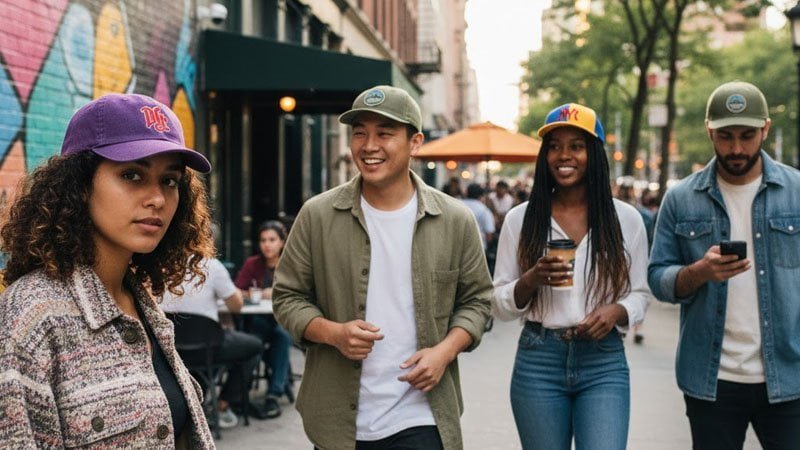
A custom baseball cap is more than just a functional item—it’s an expression of personal style and passion. Whether you’re showcasing your love for a favorite sports team or elevating your casual streetwear look, these caps carry with them a sense of authenticity and connection to something greater. For brands, they provide an opportunity to create a unique connection with their audience through personalized, high-quality designs.
Crafting Caps with Precision and Style
At EASTLUCKY, we specialize in manufacturing a wide variety of baseball caps, from classic to contemporary styles, all made with meticulous attention to detail. Our custom hats are crafted using premium materials such as garment-washed cotton twill, breathable mesh, and durable embroidery, ensuring that each piece offers both style and comfort.
We offer multiple styles to suit different preferences:
-
Relaxed Fit Caps: For those who enjoy a low-profile, soft, and comfortable cap perfect for daily wear.
-
Structured Caps: Offering a slightly more formal look, with a structured crown and adjustable straps.
-
Snapback Caps: Providing a bold, high-profile fit for those who love making a statement with their headwear.
Each style is carefully designed to accommodate different head shapes and personal tastes, so no matter your preference, there’s a custom baseball cap that feels just right.
Quality Craftsmanship Meets Timeless Design
What truly sets custom baseball caps apart is the craftsmanship behind them. At EASTLUCKY, we believe in combining quality with creativity. Our hats feature raised embroidery, reinforced stitching, and clean, understated labels, signaling the attention to detail that goes into every piece we produce. Whether it’s a vintage-inspired cap or a modern design, our goal is to create products that withstand the test of time.
A Global Connection Through Custom Caps
In today’s globalized world, custom baseball caps have become more than just a fashion statement—they are a symbol of community and culture. From sports fans proudly supporting their teams to fashion enthusiasts incorporating headwear into their street style, these caps bridge gaps between diverse groups of people. Through collaborations with major sports leagues, lifestyle brands, and cultural icons, custom caps allow fans and consumers to express who they are and what they stand for.
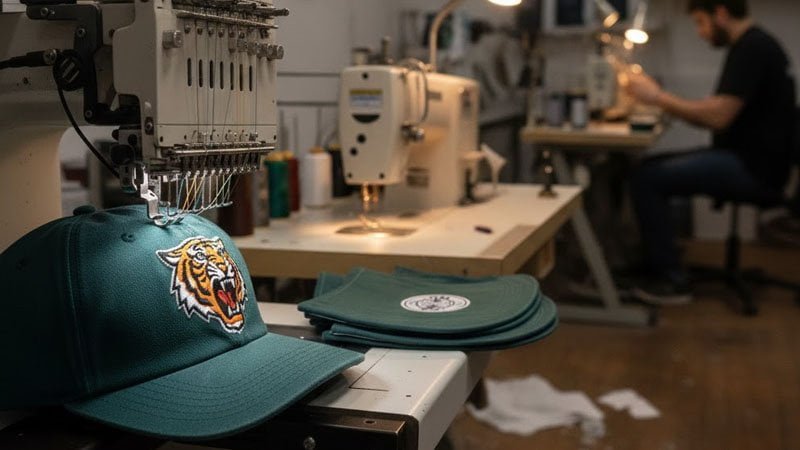
GUANGZHOU EASTLUCKY Hat & Garment Co., Ltd. stands out as a trusted partner in the custom hat industry, offering:
-
High-End Customization: We work closely with clients to create unique designs that align with their brand identity.
-
Efficient Supply Chain: Our years of expertise in production and distribution ensure timely delivery without compromising quality.
-
Flexible Solutions: Whether you’re looking for small-batch sampling or large-scale production, we offer flexible minimum order quantities (MOQs) to meet your needs.
With a commitment to excellence in both design and production, EASTLUCKY is the go-to choice for brands looking to create custom baseball caps that represent style, quality, and authenticity.

Ready to elevate your brand with custom baseball caps? At EASTLUCKY, we provide a seamless process, from design sampling to mass production, ensuring that every cap reflects your unique vision. Get in touch with us today to discuss how we can bring your custom headwear ideas to life.