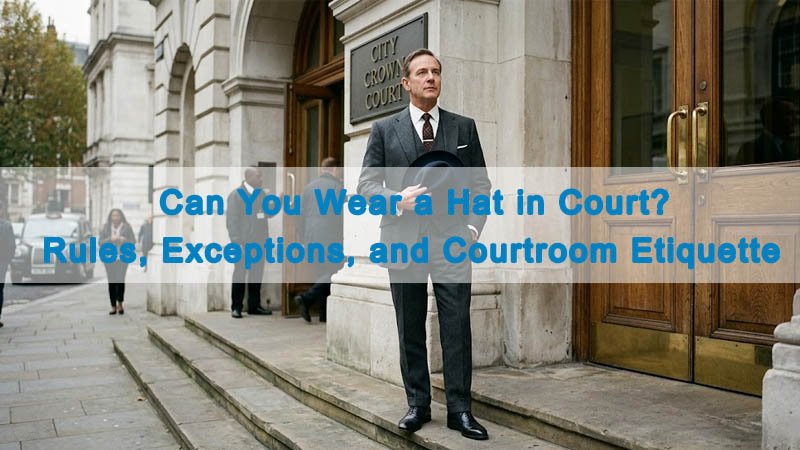
If you are going to court, one of the most important things to remember is that your appearance matters. Courtrooms are formal environments, and even small details—such as wearing a hat—can affect how you are perceived.
So, can you wear a hat in court?
In most courtrooms, wearing a hat is not recommended, and you may be asked to remove it. However, religious, cultural, and some medical head coverings are often treated differently. The exact answer depends on the court, the judge, and the reason you are wearing it.
Here is what you should know before stepping into a courtroom.
Why What You Wear to Court Matters
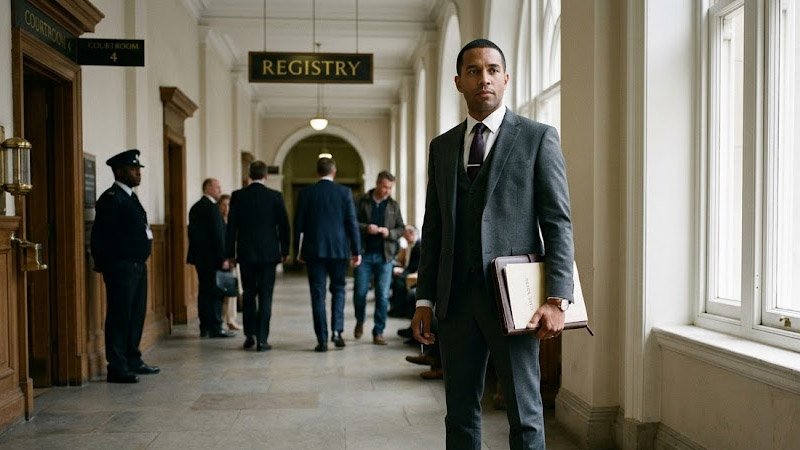
Court is not like going to a store, a restaurant, or even a normal office. It is a place where rules, procedures, and respect for the legal process matter. Because of that, the way you dress plays an important role in first impressions.
You do not need expensive clothing to look appropriate in court. In most situations, clean, modest, and professional-looking attire is enough. The goal is to show that you understand the seriousness of the occasion.
A hat may seem like a small detail, but in court, small details often matter. If your clothing looks too casual or distracting, it may give the impression that you are not taking the situation seriously.
The Short Answer: Hats Are Usually Discouraged
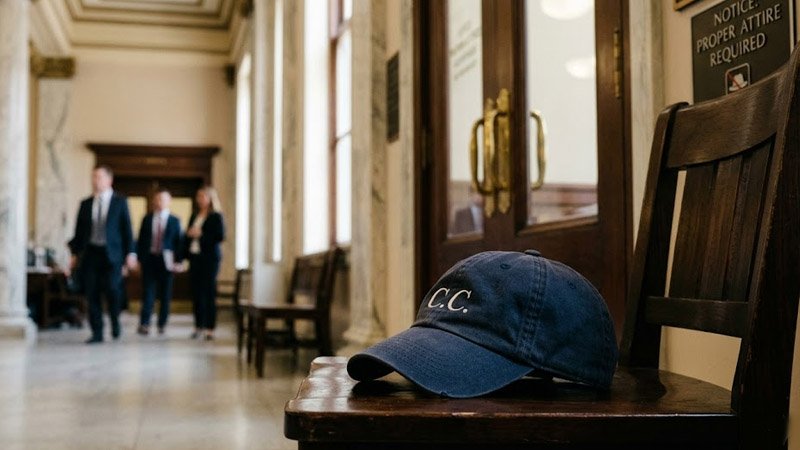
In general, casual hats are usually discouraged in court. This includes items such as:
- baseball caps
- beanies
- fashion hats
- streetwear caps
- any headwear worn mainly for style rather than necessity
Even when there is no clearly posted rule saying “no hats,” court staff or security officers may still ask you to remove one. This is common because courtroom expectations are based not only on written rules, but also on formality and decorum.
If the hat is optional, the safest choice is to leave it off.
Why Hats Are Often Not Allowed in Court
There are several reasons hats are commonly discouraged in courtrooms.
1. Courtrooms Are Formal Spaces
The most common reason is simple: courts are formal institutions. Judges, lawyers, jurors, and court staff are expected to maintain a professional environment. Wearing a casual hat can appear too relaxed for that setting.
In many cultures, removing a hat indoors—especially in official or serious spaces—is considered a basic sign of respect. Courtrooms often follow that same expectation.
2. Security Procedures Matter
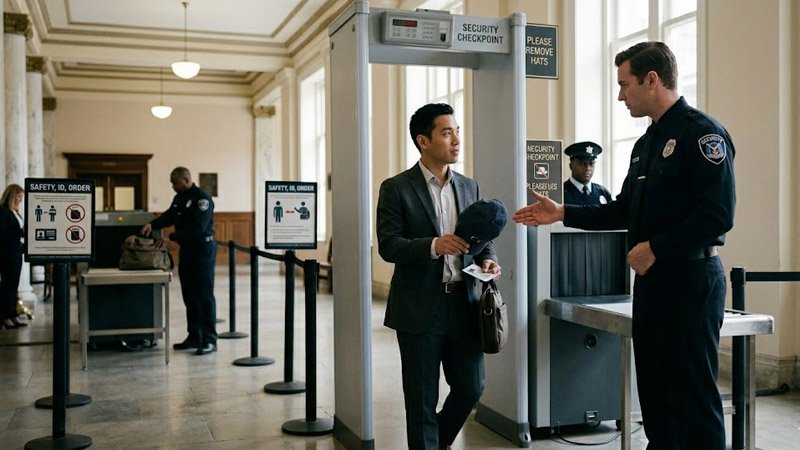
Courthouses usually have security screening at the entrance. During that process, officers may ask visitors to remove hats so they can confirm identity and ensure nothing is concealed.
This is important because courthouse security rules and courtroom etiquette often overlap. You may be allowed to wear a hat while arriving at the building, but once you go through screening or enter the courtroom itself, you may be told to take it off.
3. Clear Identification Is Important
In a courtroom, everyone needs to be clearly seen and identified. Hats with low brims, oversized shapes, or anything that partially covers the face can make that harder. Court staff want to avoid confusion, unnecessary distraction, or anything that could interfere with orderly proceedings.
The issue is often not the hat itself, but whether it fits the seriousness and visibility requirements of the setting.
Does the Rule Change from Court to Court?
Yes, it can.
Not every courtroom handles attire in exactly the same way. Some judges are more strict than others. Some local courts may have posted dress standards, while others rely more on courtroom staff to manage appearance and behavior.
That is why people sometimes hear different answers to the same question. One person may say they wore a hat without issue, while another may say they were immediately told to remove it.
Still, the safest general rule remains the same: do not assume a casual hat will be acceptable in court.
Different Roles, Different Expectations
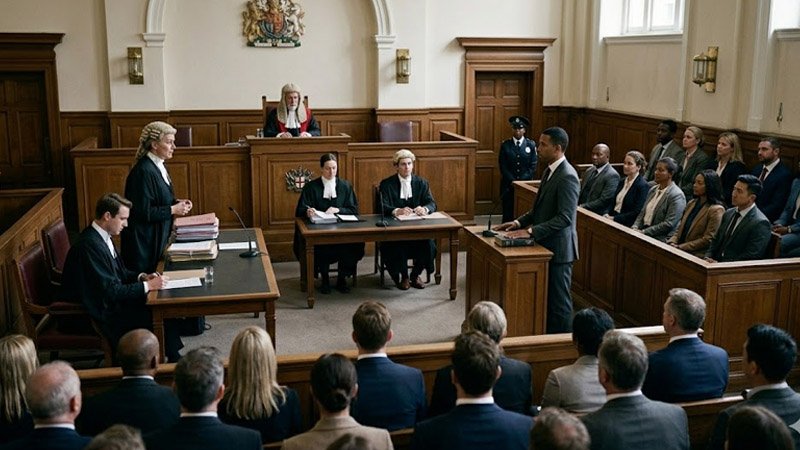
Whether you can wear a hat may also depend on why you are in court.
If You Are a Defendant
If you are appearing in court as a defendant, your appearance matters even more. You want to look respectful, responsible, and prepared. Wearing a casual hat usually does not help create that impression.
Even if no one says anything, it may still affect how others view you. In court, that is not a risk worth taking.
If You Are a Witness
Witnesses are also expected to appear neat and respectful. Since witnesses may be speaking directly before the judge or jury, their appearance should not distract from their testimony.
A casual hat may draw unnecessary attention and may be viewed as inappropriate unless there is a valid reason for wearing it.
If You Are a Juror
Jurors are usually expected to follow conservative dress standards. Courts often want jurors to appear neutral, consistent, and professional. Because of that, hats are typically discouraged unless there is a religious or medical reason.
If You Are Just Observing
Even spectators and family members attending a hearing are expected to respect courtroom rules. Being “just a visitor” does not mean dress expectations no longer apply. If you wear a hat into court, you may still be asked to remove it.
Are Religious or Cultural Head Coverings Allowed?
In many cases, yes.
Religious and cultural head coverings are usually treated differently from fashion hats or casual caps. Courts generally recognize that items such as turbans, hijabs, yarmulkes, and other faith-based or culturally significant coverings are not simply accessories.
That said, you may still be asked to cooperate with identification or security procedures. This usually does not mean the court is rejecting the head covering—it simply means courthouse rules still apply to everyone entering the building.
If you know in advance that you will be wearing religious or cultural headwear and you are concerned about how it may be handled, contacting the court ahead of time is a smart step.
What About Medical Reasons?

Medical needs can also make a difference.
Some people wear head coverings because of surgery, treatment, hair loss, scalp sensitivity, or other health-related reasons. In many situations, courts will be understanding if the headwear is clearly functional and not worn as casual fashion.
If the court appearance is important, it is wise to notify your lawyer or the court in advance. That can help avoid confusion and reduce stress on the day of the hearing.
What Happens If You Refuse to Remove a Hat?
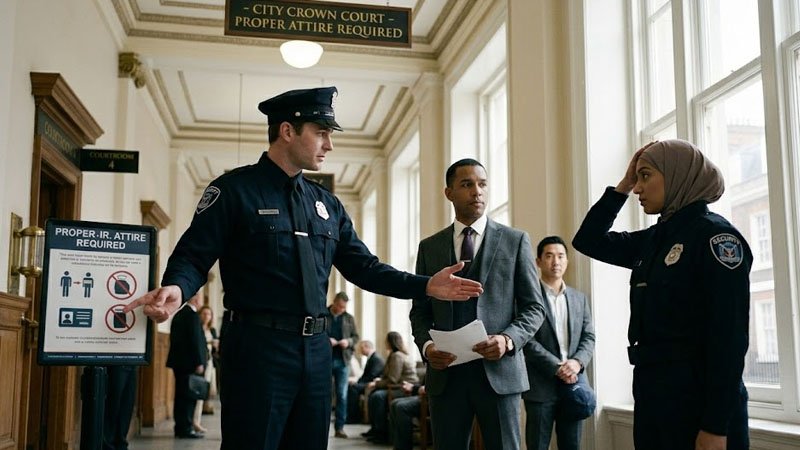
If a judge, bailiff, or court officer asks you to remove your hat, the best response is to comply politely.
Refusing a direct instruction in court can create unnecessary problems. At a minimum, you may be asked to leave the courtroom. In more serious situations, refusing to follow courtroom instructions may be seen as disrespectful or disruptive conduct.
Even if you personally feel the rule is minor, arguing about it in court is rarely a good idea. It is always better to cooperate and keep the focus on the legal matter itself.
A Practical Example
Imagine you are attending traffic court and wearing a baseball cap. Your clothing is otherwise neat and appropriate. Even so, there is a good chance that security staff or courtroom personnel will ask you to remove the cap before the hearing begins.
Now imagine a different situation. You are wearing a head covering for religious reasons. In that case, the response from the court is likely to be different. Staff may still need to confirm identity or follow screening procedures, but the head covering itself is more likely to be accommodated.
These examples show why the answer is not always a simple yes or no. The context matters.
Best Practice: What Should You Do?
If you are unsure whether wearing a hat to court is acceptable, the safest approach is very simple:
- do not wear a casual hat into the courtroom
- remove your hat during security screening if asked
- dress neatly and conservatively
- contact the court in advance if your head covering is religious, cultural, or medical
As a rule, if the hat is optional, it is usually better to leave it off.
A Note on Professional Presentation
Understanding when headwear is appropriate is not only a matter of fashion, but also of context. In formal settings, presentation can influence perception in powerful ways. As a company specializing in premium headwear development, GUANGZHOU EASTLUCKY Hat & Garment Co., Ltd. understands that hats serve different purposes across branding, uniforms, fashion, and professional use. Knowing when a hat enhances appearance—and when it may be inappropriate—is part of understanding the product itself.
Final Thoughts
So, can you wear a hat in court?
For most people, in most situations, the safest answer is no. Casual hats are usually not considered appropriate courtroom attire, and you may be asked to remove one even if there is no posted written rule.
Religious, cultural, and some medical head coverings are often treated differently, but if you are ever unsure, it is best to check with the court ahead of time.
Court appearances are serious, and the goal is to avoid distractions, show respect, and present yourself appropriately. In that setting, removing a hat is often the simplest and smartest choice.
FAQs
Can you wear a baseball cap in court?
Usually not. A baseball cap is generally considered too casual for a courtroom, and you may be asked to remove it.
Can you wear a beanie in court?
In most cases, a beanie is also discouraged unless there is a medical or other valid reason.
Are religious head coverings allowed in court?
Often yes. Courts usually respect religious head coverings, although standard security or identification procedures may still apply.
Can jurors wear hats in court?
Jurors are typically expected to follow conservative dress standards, so hats are usually discouraged unless there is an approved reason.
What if I need to wear a hat for medical reasons?
Medical needs may be accommodated. If possible, inform your lawyer or the court before your appearance.
What should I wear to court instead of a hat?
Choose clean, modest, and professional clothing. A simple and respectful appearance is usually the best option.