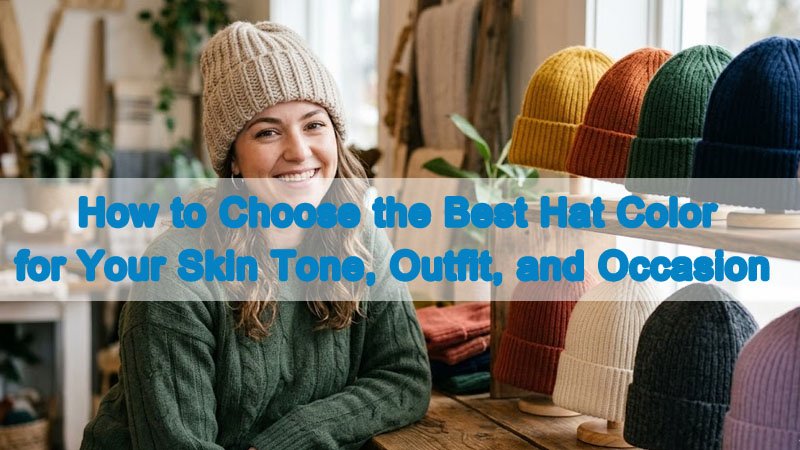
Choosing the right hat color can make a bigger difference than most people expect. Because a hat sits close to your face, its color affects how your skin looks, how balanced your outfit feels, and how polished your overall style appears.
Many people choose a hat based only on personal preference, then realize later that the color does not feel quite right once they put it on. The reason is simple: a hat is not just an accessory. It frames your face, influences visual contrast, and often becomes one of the first things people notice in your outfit.
The best hat color is not always the boldest or trendiest one. It is the color that flatters your skin tone, works with your wardrobe, suits the occasion, and reflects the image you want to project. In this guide, we will break down how to choose the best hat color in a practical and stylish way.
Why Hat Color Matters
A well-chosen hat color can make your face look brighter, your outfit look more intentional, and your personal style feel more refined. A poor color choice can do the opposite. It can make your complexion appear dull, compete with your clothing, or make the whole look feel slightly off.
That is why choosing a hat color should be treated as part of the styling process, not as an afterthought. Whether you are wearing a baseball cap, bucket hat, beanie, fedora, or snapback, color plays a major role in the final result.
Step 1: Start with Your Skin Tone
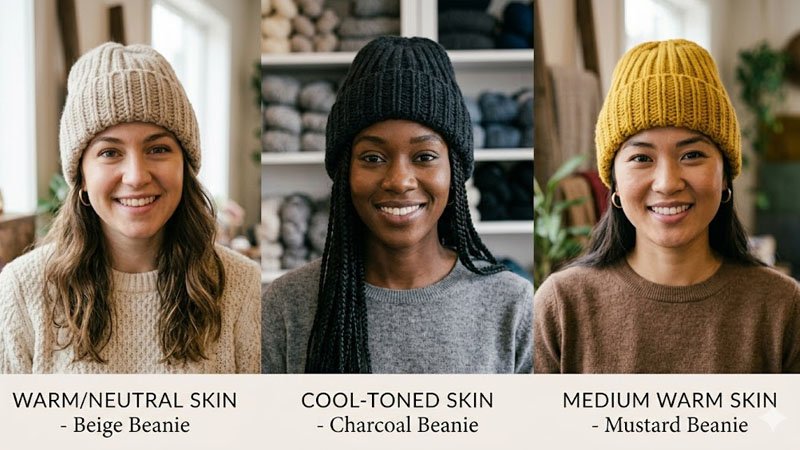
The easiest place to start is your skin undertone. In general, undertones fall into three categories: warm, cool, and neutral. Knowing your undertone can help you narrow down hat colors that naturally flatter your face.
Best Hat Colors for Warm Skin Tones
If your skin has yellow, peach, or golden undertones, you likely fall into the warm category. Warm skin tones usually look best in earthy, sun-inspired, and rich natural shades.
Good hat colors for warm skin tones include:
- camel
- beige
- brown
- mustard
- olive green
- rust
- terracotta
- warm red
These shades tend to bring warmth and life to the complexion. For example, a camel baseball cap paired with a cream T-shirt and dark denim can look effortless and flattering on someone with warm-toned skin.
Best Hat Colors for Cool Skin Tones
If your skin has pink, red, or bluish undertones, you are more likely to have a cool skin tone. Cooler complexions are often complemented by shades with blue or jewel-based depth.
Good hat colors for cool skin tones include:
- navy
- charcoal
- cool gray
- forest green
- burgundy
- plum
- lavender
- dusty rose
These colors create a cleaner contrast and often make cool-toned skin look brighter and more balanced. A navy cap or charcoal beanie is often a strong, reliable choice for people with cool undertones.
Best Hat Colors for Neutral Skin Tones
If you have a balance of warm and cool undertones, you likely have neutral skin. This gives you the most flexibility because both warm and cool shades can work well.
Good hat colors for neutral skin tones include:
- black
- beige
- taupe
- olive
- navy
- cream
- muted burgundy
- soft gray
If your undertone is neutral, focus less on strict color rules and more on the overall mood of the outfit.
How to Identify Your Undertone
If you are unsure about your undertone, here are a few simple ways to check:
Look at your veins.
Green-looking veins often suggest warm undertones. Blue or purple-looking veins usually suggest cool undertones. If it is hard to tell, you may be neutral.
Try on gold and silver jewelry.
Gold tends to flatter warm tones. Silver usually suits cool tones. If both look equally good, you may be neutral.
Pay attention to how your skin reacts to the sun.
If you tan easily, you may lean warm or neutral. If you burn quickly, you may lean cool.
Step 2: Consider Your Hair and Eye Color
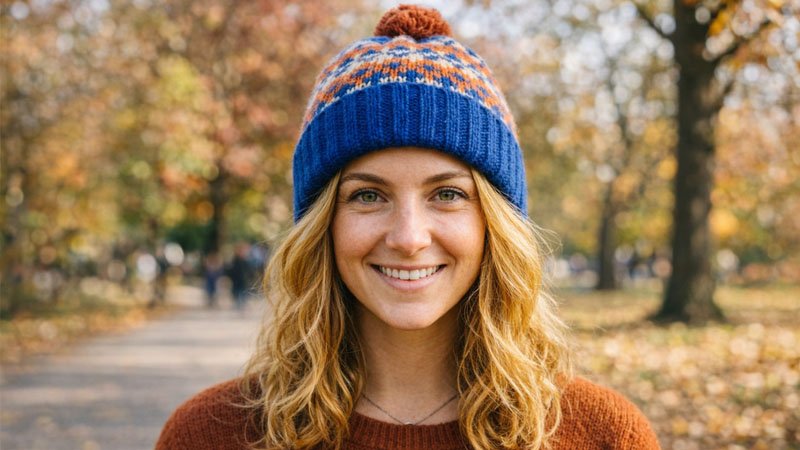
Once you understand your skin tone, the next step is to consider your natural coloring. Hair and eye color can influence which hat shades feel soft and harmonious versus sharp and high-contrast.
Best Hat Colors by Hair Color
Blonde hair usually pairs well with softer shades such as light gray, dusty blue, cream, muted pink, and navy. Extremely harsh or neon colors can sometimes overpower lighter hair.
Brown hair works well with deeper, richer shades such as burgundy, forest green, chocolate brown, charcoal, and dark navy.
Black hair can handle crisp contrast very well. Black, white, camel, emerald, burgundy, and royal blue often create strong and stylish combinations.
Red hair looks especially good with earthy and autumn-inspired tones such as olive, rust, camel, warm brown, and deep green.
Best Hat Colors by Eye Color
Blue eyes are often enhanced by navy, gray, teal, and muted blue tones.
Green eyes tend to stand out with olive, brown, plum, and earthy shades.
Brown eyes work beautifully with burgundy, deep green, navy, and jewel tones.
Hazel eyes often pair well with bronze, olive, warm neutrals, and muted gold-inspired shades.
Your hat does not need to match your eyes or hair exactly. The goal is simply to create a balanced and flattering look.
Step 3: Match the Hat Color to Your Outfit
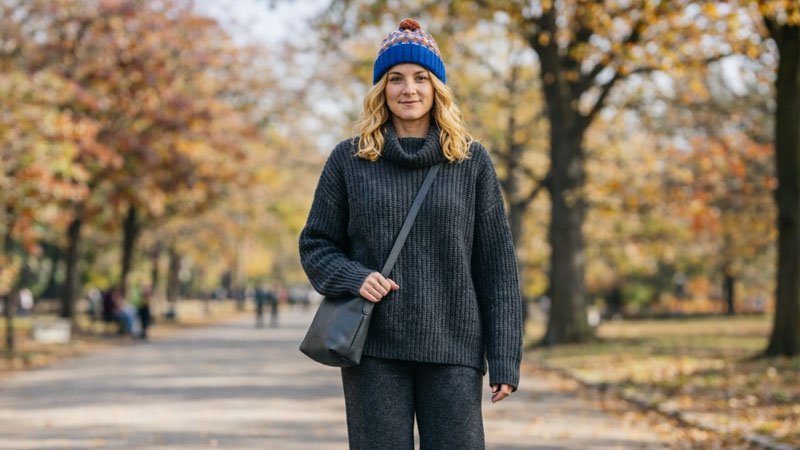
A hat should not only flatter your face. It should also work with the clothes you actually wear. If the color does not fit your wardrobe, it may look great in theory but sit unused in real life.
There are three simple ways to coordinate a hat color with your outfit.
Monochrome Styling
This approach uses a hat color that is similar to the rest of the outfit. It creates a clean, polished, and more minimal look.
Examples include:
- a black cap with a black bomber jacket
- a beige hat with a cream knit and tan trousers
- a navy cap with a navy overshirt or blazer
Monochrome styling is ideal if you want your look to feel refined without appearing too styled.
Contrast Styling
This method uses the hat to create visual tension and make the outfit more dynamic.
Examples include:
- a white cap with a dark jacket and black trousers
- a burgundy beanie with a gray sweater
- a navy cap with a light denim outfit
Contrast works especially well when the rest of the clothing is fairly simple. It helps the hat stand out without looking forced.
Accent Styling
In this case, the hat acts as the main pop of color in the outfit.
Examples include:
- a red cap with a white T-shirt and blue jeans
- a mustard beanie with a black coat and gray pants
- an olive cap with a beige overshirt and white sneakers
This can be a great approach if you like understated outfits but still want one detail to bring energy and personality.
Step 4: Choose Based on the Occasion
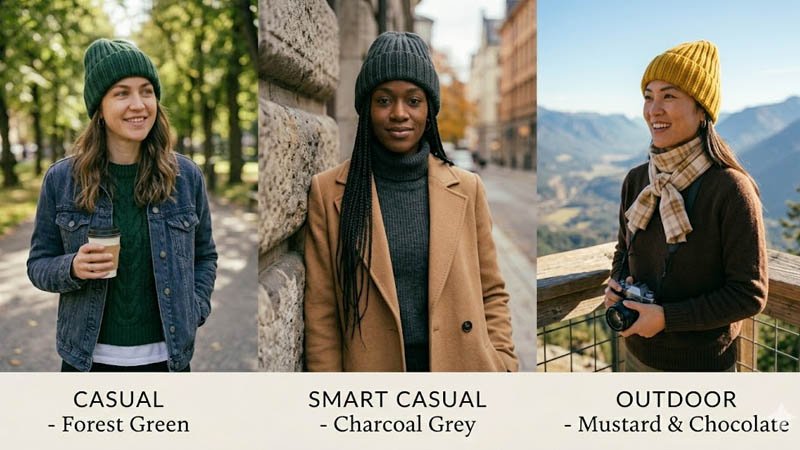
The best hat color also depends on where you plan to wear it. A shade that works for a weekend streetwear look may not feel right for a smart-casual event or a polished outdoor campaign.
Best Hat Colors for Everyday Casual Wear
For daily outfits, the most practical colors are usually the most versatile ones.
Safe and stylish choices include:
- black
- navy
- olive
- beige
- washed gray
- cream
- burgundy
These shades are easy to pair with denim, hoodies, jackets, T-shirts, and casual footwear. If you want one hat that works with most of your wardrobe, black, navy, or olive is often the best place to start.
Best Hat Colors for Smart-Casual or More Polished Looks
If you want a hat to feel more refined, darker and more understated colors tend to work best.
Strong choices include:
- black
- charcoal
- navy
- camel
- deep brown
- dark olive
- burgundy
These shades pair more naturally with tailored coats, knitwear, boots, and structured pieces. They also tend to look more mature and intentional than overly bright colors.
Best Hat Colors for Outdoor Activities
Outdoor hats need to work visually and practically. In warm weather, lighter colors can feel more seasonally appropriate and often reflect sunlight better.
Good outdoor choices include:
- white
- khaki
- sand
- beige
- light gray
- soft olive
For more rugged or utility-driven looks, deeper practical shades such as navy, olive, and charcoal can also work well, especially because they hide dust and wear more easily.
Step 5: Think About the Season
Season has a surprisingly strong effect on how natural a hat color feels.
Best Hat Colors for Spring and Summer
In warmer months, lighter and fresher colors usually feel more appropriate. These shades create an airy, relaxed look and tend to photograph well in natural light.
Good spring and summer hat colors include:
- white
- cream
- beige
- sand
- sky blue
- light gray
- soft olive
- pastel tones
A beige or cream cap is especially useful in spring and summer because it feels fresh without being too bright.
Best Hat Colors for Fall and Winter
During cooler months, richer and deeper shades usually feel more grounded and seasonally consistent.
Good fall and winter hat colors include:
- burgundy
- forest green
- mustard
- chocolate brown
- charcoal
- navy
- dark olive
- black
These tones work well with heavier fabrics such as wool, fleece, denim, and thicker outerwear.
The Safest Hat Colors If You Are Unsure
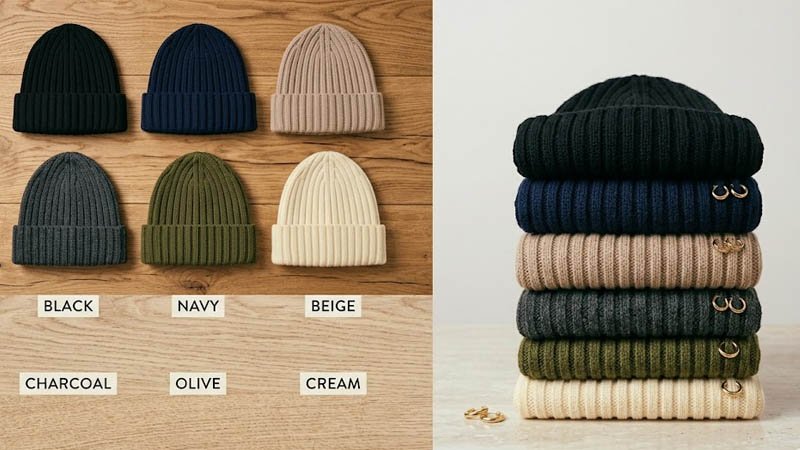
If you are buying your first hat or want a color that works with almost everything, start with the most versatile options.
The safest hat colors are:
- black
- navy
- beige
- charcoal gray
- olive green
- cream
These shades are reliable because they work across seasons, match a wide range of outfits, and suit many different personal styles. They may not always be the boldest choice, but they are usually the most useful.
When Bold Hat Colors Work Best
Bold hat colors can look fantastic when styled with intention. Bright tones are especially effective when you want the hat to become the focal point of the outfit.
Good situations for bolder hat colors include:
- music festivals
- travel outfits
- streetwear looks
- sports-inspired styling
- fashion-forward casual wear
Examples of bolder choices include:
- bright red
- cobalt blue
- mustard yellow
- orange
- emerald green
The key is balance. If your hat is vivid, the rest of the outfit should usually be simpler. A bright red cap with a white T-shirt and classic denim feels confident. A bright red cap with several competing statement pieces often feels too busy.
Choosing Hat Colors for Branding and Custom Orders
If a hat is being designed for a brand, team, event, or promotional campaign, color choice is about more than personal style. It also affects logo visibility, perceived quality, and how widely the hat will appeal to the target audience.
In custom production, neutral shades such as black, navy, beige, charcoal, and olive are often the safest choices because they are versatile, commercially proven, and easier to pair with embroidery or printed branding. High-contrast combinations also tend to perform best for logo clarity. As a professional OEM/ODM manufacturer, GUANGZHOU EASTLUCKY Hat & Garment Co., Ltd. understands that the right hat color is not only a fashion decision, but also an important factor in sampling, branding presentation, and the overall success of a finished product across different markets.
Common Mistakes to Avoid
Even a good outfit can be weakened by the wrong hat color. Here are some common mistakes people make.
Choosing a Color Only Because It Is Trendy
A color may look great in photos or on social media, but that does not mean it will suit your skin tone, wardrobe, or daily use.
Ignoring Your Face and Complexion
Because a hat sits so close to the face, it can either brighten your features or make them look dull. This is why flattering always matters more than trend.
Buying a Color That Matches Only One Outfit
Unless the hat is for a very specific event or look, choose a color that works with at least several pieces already in your wardrobe.
Going Too Bold Without Balance
Bright hats are effective when the rest of the outfit supports them. If everything is competing for attention, the result can feel messy rather than stylish.
Forgetting Practical Use
Light colors may feel fresh, but they can show dirt more easily. Very dark colors may feel polished, but they can absorb more heat in direct sun. Style and function should work together.
Final Thoughts
The best hat color is not the same for everyone. It depends on your skin tone, natural coloring, wardrobe, occasion, and personal style. Still, the process becomes much easier when you break it down step by step.
Start with what flatters your face. Then think about what fits your clothing, the season, and the setting where you plan to wear it. If you want the safest all-around options, choose black, navy, beige, gray, or olive. If you want more personality, move toward burgundy, mustard, forest green, or other richer shades that still feel wearable.
A great hat color does more than complete an outfit. It helps define it. When the shade feels right on you and works naturally with the rest of your style, the whole look becomes more confident, balanced, and memorable.
FAQs
What is the most versatile hat color?
Black, navy, beige, and charcoal gray are usually the most versatile hat colors because they work with many outfits and across different seasons.
What hat color goes with everything?
Neutral shades such as black, beige, cream, gray, and navy are the easiest to style with a wide range of casual and smart-casual outfits.
Which hat color is most flattering?
The most flattering hat color depends on your skin tone and natural coloring. Warm undertones often suit earthy colors, while cool undertones tend to look better in jewel tones, navy, and cool grays.
Is black the best hat color?
Black is one of the safest and most versatile choices, especially for everyday wear, but it is not automatically the best for everyone. Some people look softer and more balanced in navy, beige, or olive.
Are light or dark hats better?
Light hats are often better for spring, summer, and outdoor wear, while dark hats usually feel more polished and are easier to style in fall and winter.