When shopping for a baseball cap, you’ve probably come across the terms structured and unstructured hats. But what do they actually mean—and which one is the better choice for your style, comfort, or brand?
Choosing between a structured and unstructured hat can significantly affect how it looks, feels, and complements your overall appearance. The right cap not only improves comfort but can also enhance brand visibility and personal style.
Whether you’re buying a hat for everyday wear, a sports team, or custom merchandise, understanding the difference helps you make a smarter choice.
Table of Contents
-
Definitions & Core Differences
-
Design & Fit
-
Style, Branding & Decoration
-
Comfort, Durability & Packability
-
Structured vs. Unstructured Hats Comparison
-
When to Choose Each Style
-
Conclusion
-
FAQs
Definitions & Core Differences
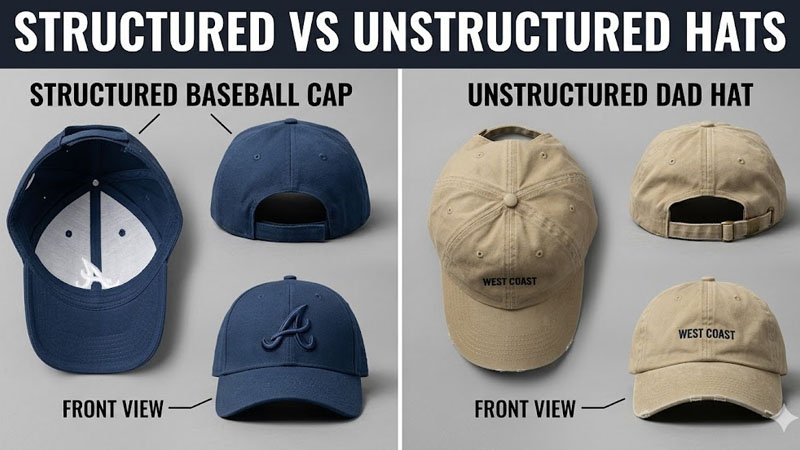
The main difference between structured and unstructured hats lies in the support of the front crown panels.
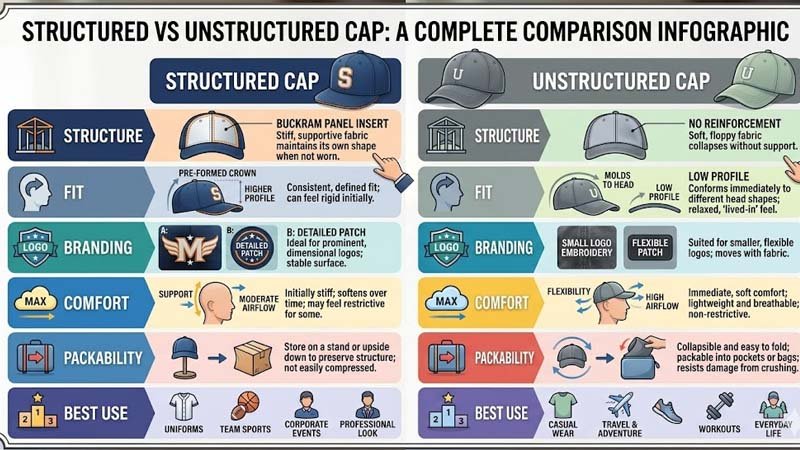
Structured hats feature reinforcement inside the front panels—usually made from buckram or foam. This internal support keeps the crown standing upright and helps the hat maintain a crisp, defined shape even when it’s not being worn. Because of this, structured caps often have a more athletic or professional appearance.
Unstructured hats, on the other hand, do not include this stiffening material. Without reinforcement, the crown becomes soft and collapsible. This results in a relaxed fit and the well-known “dad hat” style, which naturally molds to the shape of your head over time.
Between these two styles, you may also find semi-structured hats, which offer a lighter level of support while still maintaining some flexibility.
Quick recap:
-
Structured hats: Firm front panels, maintain shape, sportier appearance
-
Unstructured hats: Soft crown, collapsible structure, casual style
-
Semi-structured hats: Balanced feel with mild shape support
Design & Fit
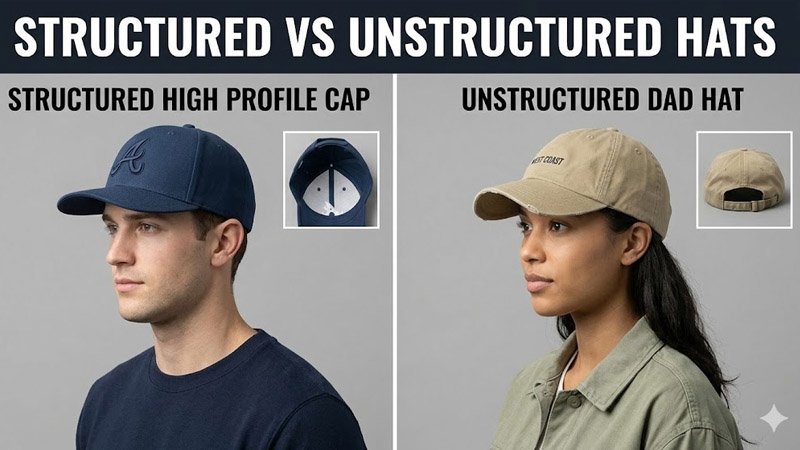
The internal structure of a hat directly affects how it fits and sits on your head.
Structured hats often create a higher profile, meaning the crown sits taller and holds a defined silhouette. This design gives the cap a more prominent look and helps logos remain visible from a distance. Because of this, structured caps are commonly used for sports teams, uniforms, and branded merchandise.
Unstructured hats generally have a lower and softer profile. Without the stiff crown, the hat follows the natural shape of your head, creating a relaxed and comfortable fit.
Typical pairings include:
-
Low-profile unstructured caps: Popular for dad hats and casual lifestyle wear
-
Mid- or high-profile structured caps: Common in sports caps, promotional hats, and uniforms
Style, Branding & Decoration
The structure of a hat also influences how well it displays branding and design elements.
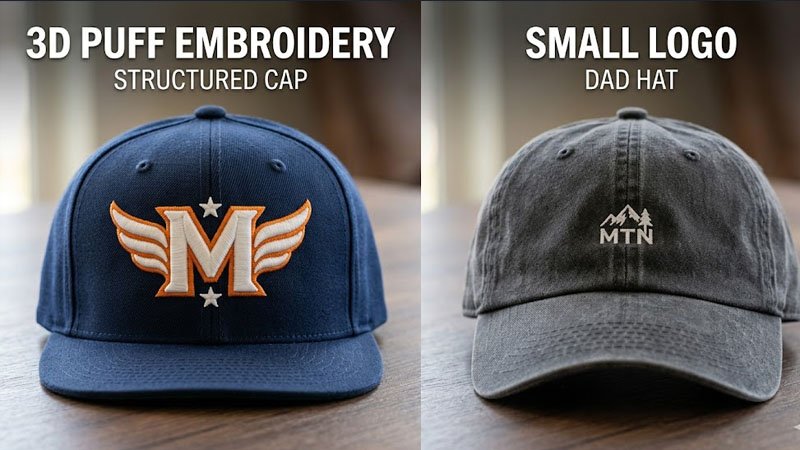
Structured hats offer a flat and stable front panel, which makes them ideal for bold embroidery, 3D puff logos, large patches, or detailed branding. Because the crown maintains its shape, logos remain clean, visible, and professional-looking.
Unstructured hats, by contrast, provide a softer surface that works better for subtle or minimalist designs. Smaller logos or simple embroidery tend to complement this style, making it popular among lifestyle brands, outdoor labels, and casual fashion collections.
For businesses planning custom hats with precise logo placement and consistent quality, working with experienced manufacturers is essential. GUANGZHOU EASTLUCKY Hat & Garment Co., Ltd., based in Guangzhou, China, has over 15 years of experience in high-end custom hats and OEM/ODM manufacturing, offering complete solutions from design sampling to mass production for global brands.
Comfort, Durability & Packability
Comfort is another factor that separates structured and unstructured hats.
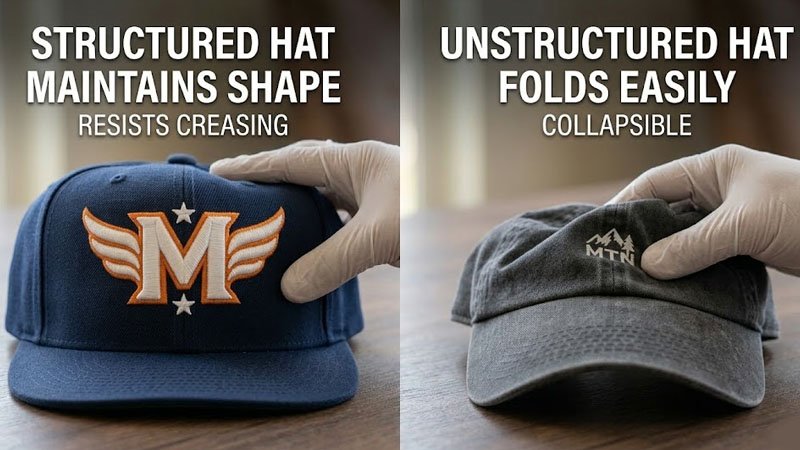
Unstructured hats are usually soft from the first wear, giving them a broken-in feel right away. Because they lack stiff reinforcement, they can also be folded or packed easily, making them convenient for travel or outdoor activities.
Structured hats are more rigid due to the reinforced crown. While they may feel slightly firm when new, they tend to maintain their shape longer, even after frequent use. This durability helps the hat look newer and more polished over time.
However, structured hats are less flexible when packing and should be stored carefully to preserve their shape.
Structured vs. Unstructured Hats Comparison
| Feature | Structured Hats | Unstructured Hats |
|---|---|---|
| Crown Support | Reinforced with buckram or foam | No stiffener; crown collapses when not worn |
| Appearance | Crisp, firm, athletic look | Relaxed, casual “dad hat” style |
| Profile Options | Often mid or high profile | Usually low profile |
| Branding Space | Firm front ideal for bold embroidery or patches | Softer front better for subtle logos |
| Comfort | Slightly firm, may require break-in | Soft and comfortable from day one |
| Shape Durability | Maintains structure over time | Adapts to head shape with wear |
| Packability | Less flexible, needs careful storage | Easy to fold or pack |
| Best Use | Sports teams, uniforms, retail branding | Lifestyle wear, travel, casual fashion |
When to Choose Each Style
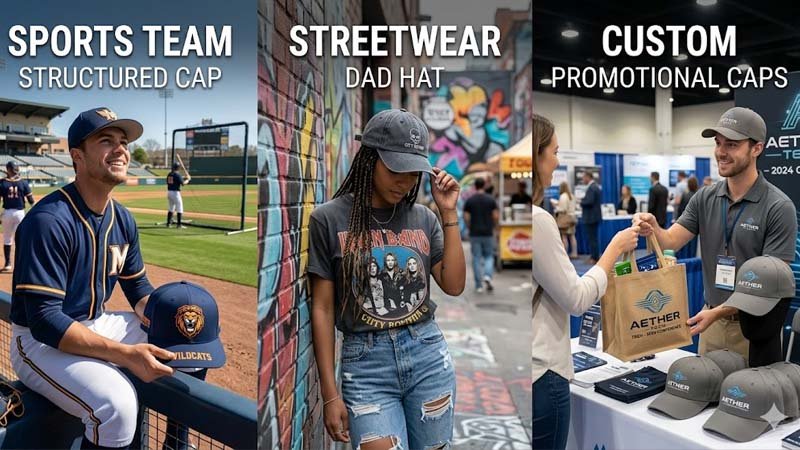
Choosing the right hat depends on your purpose and style preference.
Choose a Structured Hat If You Want:
-
A polished and professional appearance
-
Strong logo visibility for branding
-
Caps for sports teams or staff uniforms
-
Consistent shape for promotional products
Choose an Unstructured Hat If You Prefer:
-
A relaxed, casual look
-
A soft, comfortable fit
-
Hats that can easily fold or pack
-
Lifestyle or fashion-focused designs
Both styles have their advantages, so the best option depends on how the hat will be used.
Conclusion
Understanding the difference between structured and unstructured hats helps you choose the right cap for your needs. Structured hats provide a crisp, bold appearance that works well for branding and professional use, while unstructured hats deliver a relaxed, comfortable fit ideal for everyday wear.
Whether you’re selecting hats for personal style, retail merchandise, or corporate branding, choosing the right structure ensures the final product matches your vision.
FAQs
Can structured hats be made from the same materials as unstructured hats?
Yes. Both styles can use fabrics such as cotton twill, polyester, canvas, or blended materials. The difference lies in the internal crown support rather than the fabric itself.
Are unstructured hats better for hot weather?
Not necessarily. Breathability depends more on fabric type and ventilation features like eyelets or mesh panels rather than the hat’s structure.
Do structured hats fit larger than unstructured hats?
The fit usually depends on the hat’s profile and closure system rather than the structure. Adjustable straps, snapbacks, or fitted sizes determine how the hat fits.
Can I wash a structured hat in the washing machine?
Machine washing is generally not recommended, as it can damage the crown structure. Hand washing is usually the safest option.
Are semi-structured hats common in the market?
Yes. Semi-structured hats are widely available and provide a balance between firmness and flexibility.